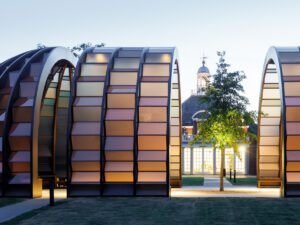
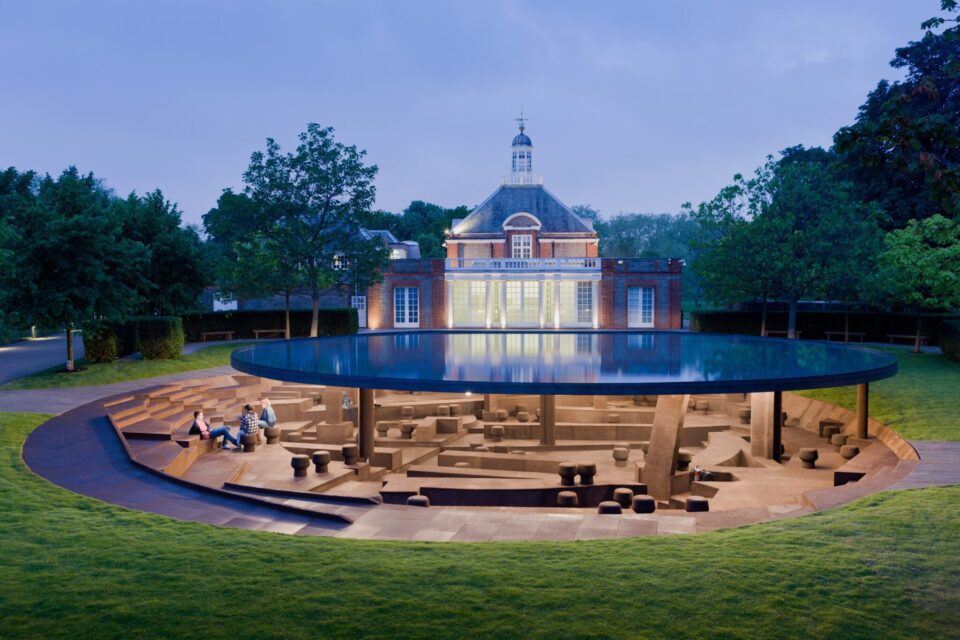
This year, the Serpentine Pavilion celebrates its 25th anniversary. The past quarter of a century has seen the annual architectural installation become one of the most highly anticipated moments in the artistic calendar. It’s a vital and powerful stage for emerging talents. Bettina Korek, Chief Executive, says: “For 25 years, the Serpentine Pavilion has been a leading global platform for architectural experimentation – first inviting internationally significant architects yet to build in London, and later championing emerging voices. It offers a rare brief: to test ambitious ideas in an open, accessible setting.”
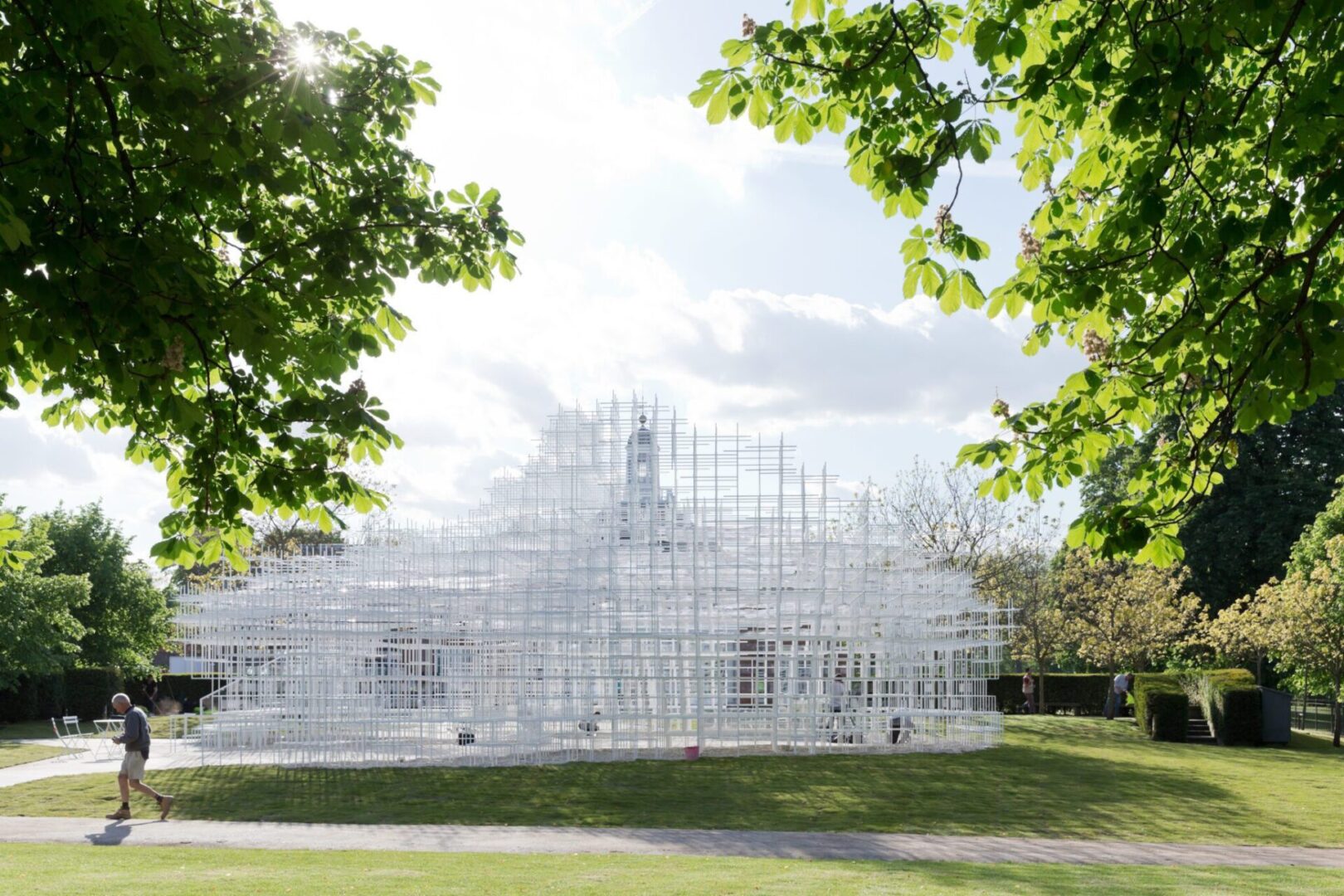
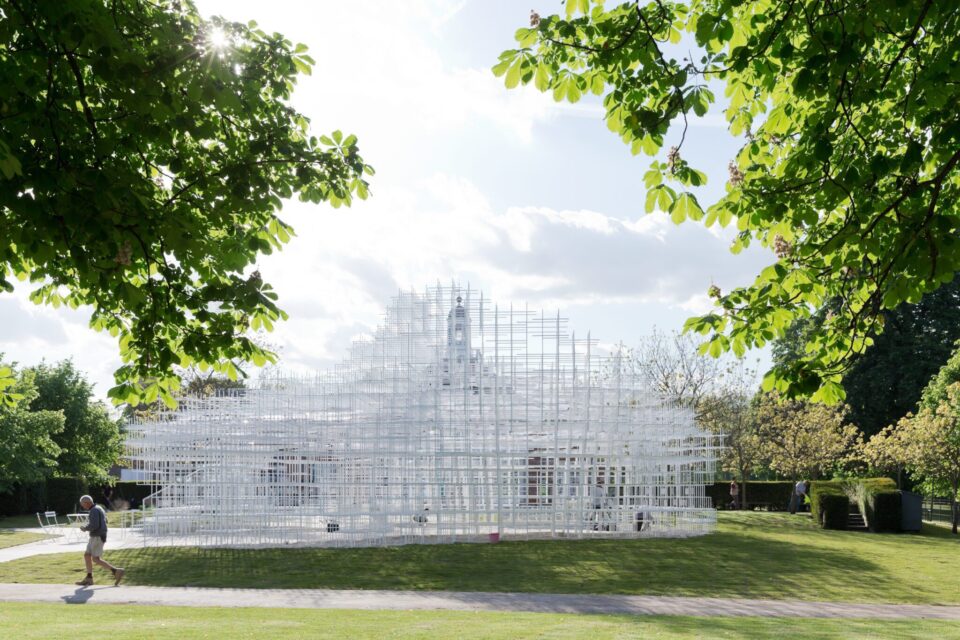
The list of those who have contributed to the Serpentine Pavilion is illustrious, offering a who’s-who of 21stcentury design. The annual installation began with Iraqi-British architect Zaha Hadid in 2000. The inaugural structure radically reinvented the accepted idea of a tent or marquee. It took the form of a triangulated roof structure spanning an impressive internal space of 600 square metres by using a steel primary structure. It set a distinct tone of ambition and innovation that continues to define the Pavilion. Other highlights include the 2008 installation, which was the first built project in England by legendary architect Frank Gehry. Meanwhile, Sou Fujimoto’s 2013 design, constructed from 20mm white steel poles in an intricate latticework pattern that seemed to rise up out of the ground like a shimmering matrix.
In more recent years, Serpentine has pivoted from spotlighting the most established names in the business, to those at the start of their career. It’s a decision that means those who are new to the industry are offered an unparalleled platform, showcasing their work to an international audience. The latest studio to take on this monumental task is LANZA atelier, founded by Isabel Abascal and Alessandro Arienzo. Their Pavilion, titled a serpentine, will be unveiled to the public at Serpentine South on 6th June. The Mexico City-based architecture studio grounds their collaborative practice in the everyday, attentive to how technology, craft and spatial intelligence emerge in unexpected conditions. Their work locates beauty in use, assembly and encounter, foregrounding dialogue and collective experience. The duo places particular emphasis on hands-on design methods such as drawing and model-making, treating these as active tools for thinking through material, form and structure. Hans Ulrich Obrist, Artistic Director at Serpentine, adds: “LANZA atelier’s architecture always involves a deep engagement with the local context, materials and lived experience. In their own words, they create contemporary spaces whose energy can last. Their spaces invite people to imagine a more connected, compassionate and creative future.”
LANZA atelier took inspiration from the English architecture feature known as a “serpentine” or “crinkle-crankle” wall. This type of brick partition, composed of alternating curves, originated in ancient Egypt and was later introduced to England by Dutch engineers. Its curvilinear form provides stability, whilst requiring fewer bricks than a typical wall. The eponymous feature also subtly nods to the nearby Serpentine lake, named for its gentle curvature, evoking the form of a snake. A second wall works in dialogue with the surrounding landscape, remaining in harmony with the tree canopy without disrupting it. A translucent roof rests lightly on brick columns, reminiscent of a grove of trees. This configuration allows light and air to permeate the space, softening the boundary between enclosure and openness. The architects describe how “the project takes the form of a serpentine wall, conceived as a device that both reveals and withholds: shaping movement, modulating rhythm and framing thresholds of proximity, orientation, and pause.”
Throughout the summer and until October, the Serpentine Pavilion 2026 will become a platform for live and events programme, providing encounters in music, film, theatre, dance, literature, philosophy, fashion and technology. The gallery will collaborate with the Zaha Hadid Foundation to commemorate her legacy and explore her groundbreaking contribution to the field, whilst connecting new and wider audiences with innovative architectural conversations. Hadid gave this enduring project the motto of “there should be no end to experimentation.” Twenty-five years on, Serpentine continues to embody the spirit of innovation.
Serpentine Pavilion 2026 opens at Serpentine South on 6 June: serpentinegalleries.org
Words: Emma Jacob
Image Credits:
1&5. Serpentine Pavilion 2013, designed by Sou Fujimoto. © Sou Fujimoto Architects, Photograph © 2013 Iwan Baan.
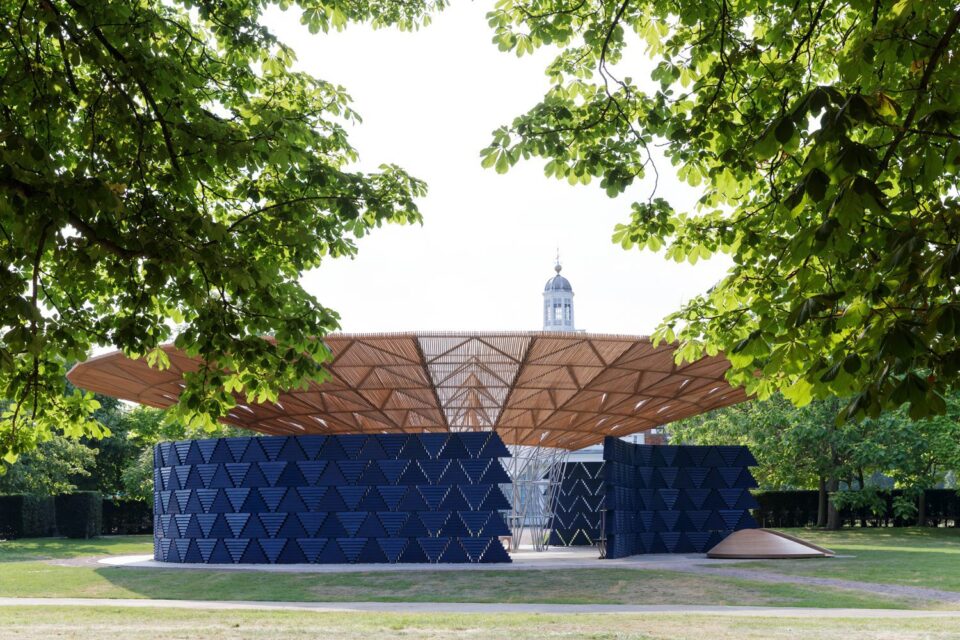
2. Serpentine Pavilion 2017, designed by Kéré Architecture. © Kéré Architecture, Photograph © 2017 Iwan Baan.
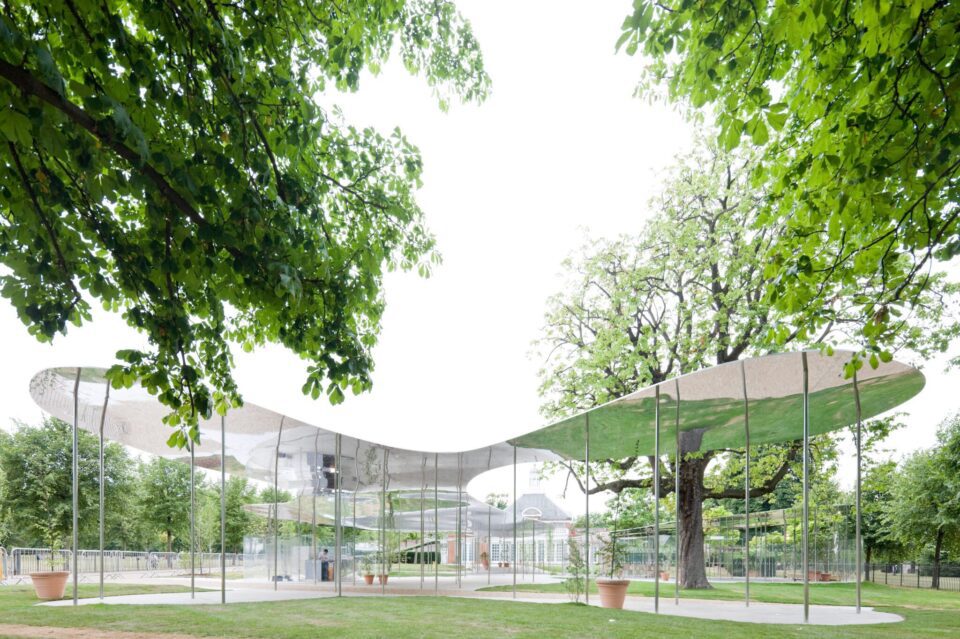
3. Serpentine Pavilion 2009, designed by Kazuyo Sejima and Ryue Nishizawa of SANAA.
4. Serpentine Pavilion 2012, designed by Herzog & de Meuron and Ai Weiwei. © Herzog & de Meuron and Ai Weiwei, Photograph © 2012 Iwan Baan.