Photography no longer captures reality – it produces it. Afterimage: Photography in the Digital Age at Photo Museum Ireland takes this condition as its point of departure, assembling a group of artists whose practices test what remains of the photographic image when its evidential authority has dissolved into computation, simulation, and networked circulation. The exhibition brings together Alan Butler, Ailbhe Ní Bhriain, Luke van Gelderen, Gregory Eddi Jones, Maria Mavropoulou, Alan Phelan, Michael Schäfer, and Linn Phyllis Seeger, each working across expanded photographic fields where capture, construction, and algorithmic processing converge. What emerges is not a taxonomy of contemporary photography but a sustained inquiry into its instability as both medium and epistemology. Image – object – memory are no longer sequential stages of visual experience but interwoven states of cultural production. In this sense, Afterimage positions photography as a condition of contemporary perception under technological saturation, where seeing is always already mediated by systems that precede and exceed the viewer.
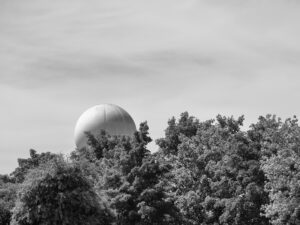
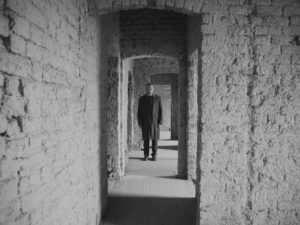
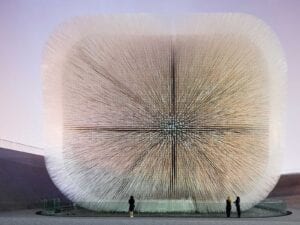
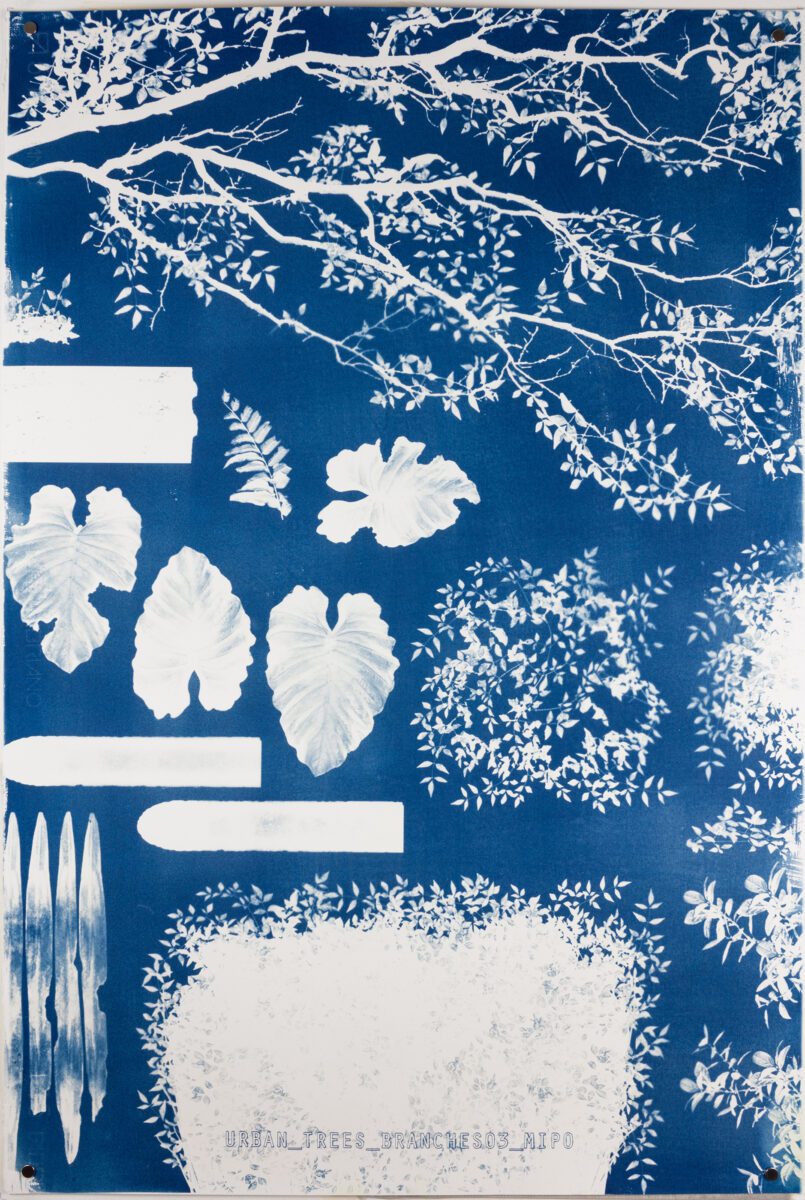
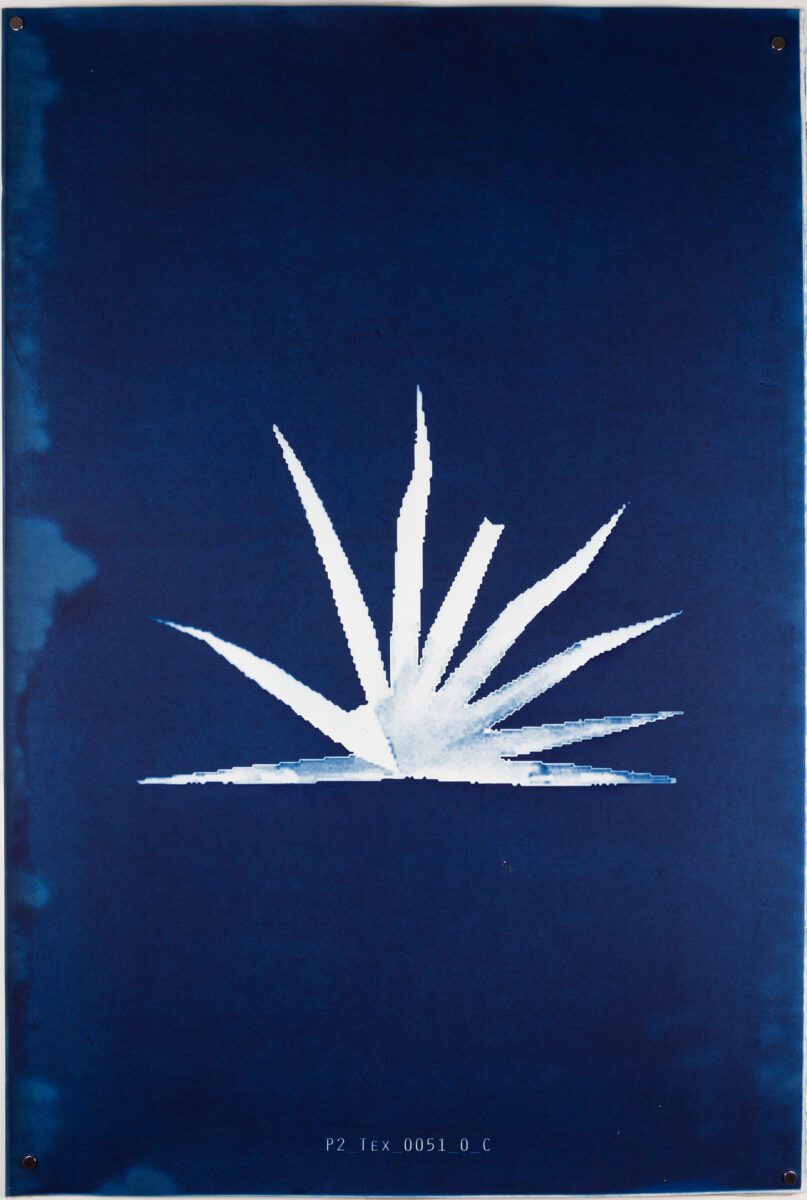
The exhibition is anchored in the recognition that photography has been fully absorbed into computational culture, where images are endlessly editable, infinitely reproducible, and increasingly detached from physical referents. However, this is not presented as rupture so much as intensification of tendencies already embedded within the medium’s history. Photography’s claim to truth has always been contingent, but what shifts here is the speed and scale at which that contingency is produced and circulated. Alan Butler’s works, which translate digital environments drawn from video games into analogue cyanotypes, stage a collision between virtual world-building and historical photographic processes. The resulting images resemble archaeological artefacts of synthetic worlds, suggesting that simulation now generates its own documentary residue. Ailbhe Ní Bhriain’s layered compositions similarly destabilise the relationship between archive and invention, reconfiguring historical fragments into speculative tableaux where temporal and spatial coherence dissolves. Across these works, photography ceases to operate as a transparent record and instead becomes a site where truth is continuously constructed, deferred, and recombined through visual systems that no longer privilege origin over iteration. What once functioned as evidence now behaves more like proposition – provisional, revisable, and structurally unstable.
This destabilisation of photographic certainty is echoed and intensified in the dense visual economies constructed by Michael Schäfer and Gregory Eddi Jones. Schäfer’s large-scale digital montages resist narrative resolution, instead producing fields of accumulation in which images compete, overlap, and fracture into unstable constellations that cannot be resolved into a single viewpoint. The eye moves across them not in search of meaning but in negotiation with overload, mirroring the conditions of contemporary digital attention itself. Jones works through appropriation and repetition, foregrounding the circulation of imagery as both aesthetic strategy and cultural condition, where meaning emerges not from singular images but from patterns of return and recognition. In both cases, photography is reconfigured as a recursive system – image – copy – circulation – feedback loop – rather than a linear act of witnessing. The viewer is not positioned before an image but within its circulation, implicated in the very structures that produce visual excess. What was once framed as documentation now appears as latency, delay, and residue within an accelerating image economy that never stabilises into final form.
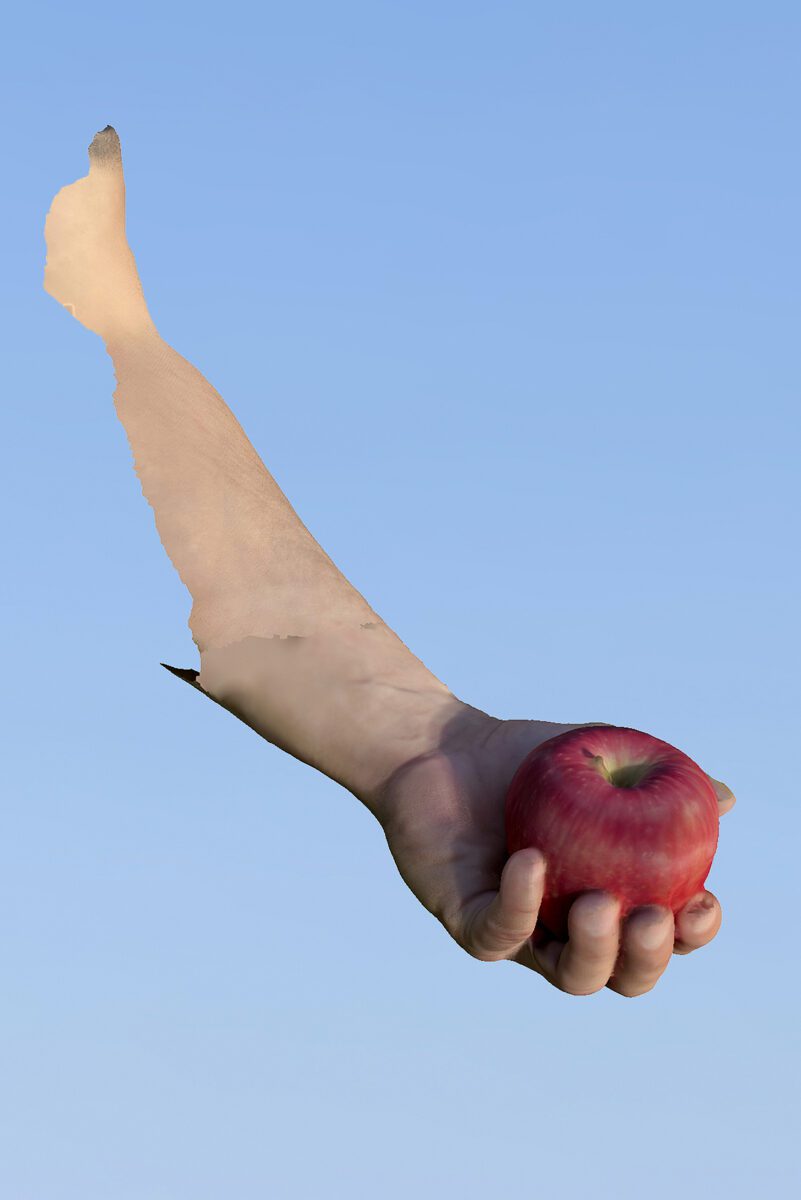
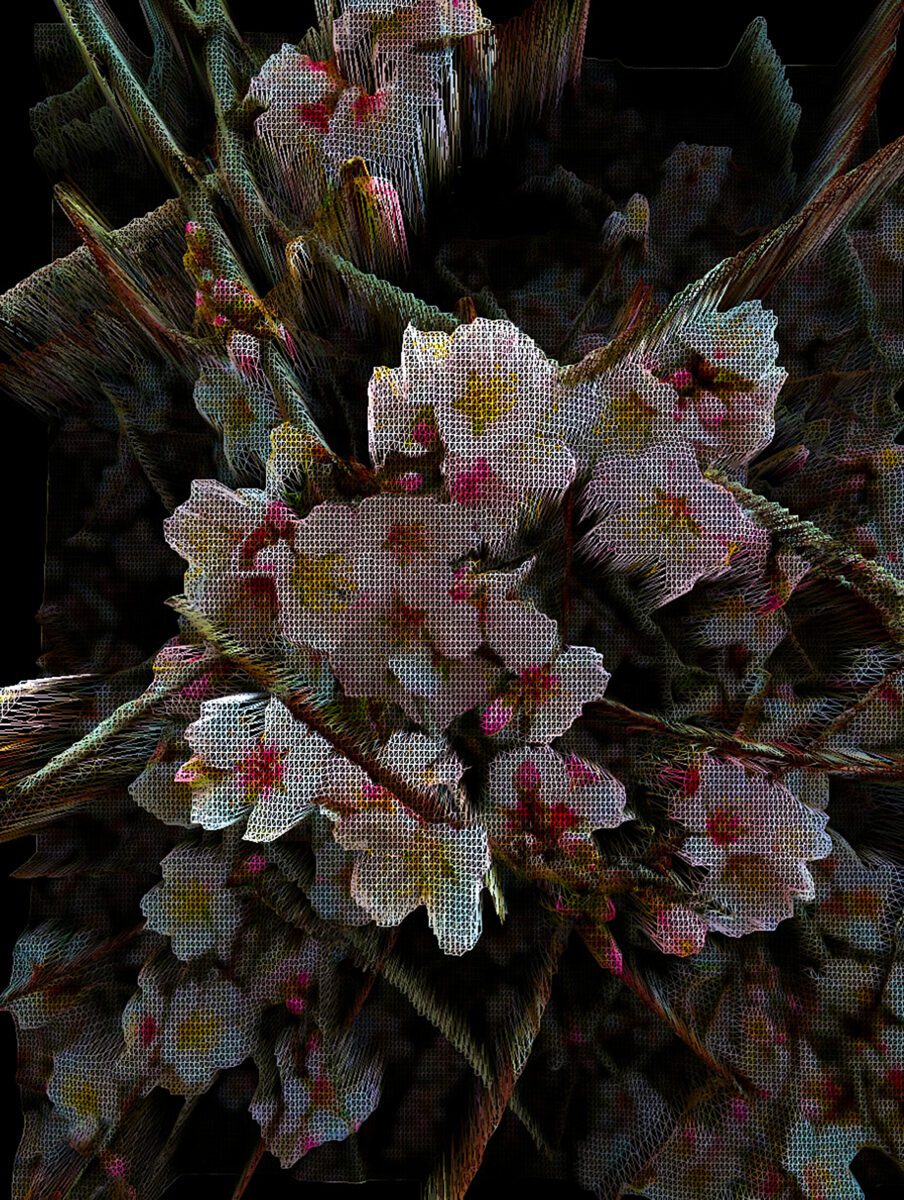
Elsewhere, Linn Phyllis Seeger and Luke van Gelderen articulate the experiential dimension of this condition, where images are no longer discrete objects, but continuous flows shaped by interface culture and platform logic. Seeger’s screen-based works evoke the intimacy and estrangement of digital looking, in which personal narrative is inseparable from systems that structure visibility, attention, and affective response. What appears intimate is already formatted, already filtered through protocols of display that govern how experience becomes shareable. Van Gelderen extends this concern into systems of mediated memory, where recollection is outsourced to algorithmic processes that reconstruct rather than retrieve experience, producing a form of remembrance that is always slightly misaligned with lived time. Maria Mavropoulou’s digitally constructed botanical environments further complicate distinctions between organic form and synthetic production, generating images that oscillate between ecological familiarity and artificial excess, as though nature itself has become a rendered surface. Alan Phelan introduces a speculative register, revisiting marginal or unrealised histories of photography in order to propose alternative genealogies for the medium – ones shaped as much by absence, failure, and discontinuity as by technological progression. Rather than functioning as discrete positions, these practices interlock to form a broader field in which photography operates as archive, interface, and speculative infrastructure simultaneously, constantly shifting between documentation and invention without settling into either.
What becomes increasingly evident is that Afterimage is less concerned with the photograph as an object rather than with the conditions under which images become thinkable at all. The question of truth is no longer located in representation but in the systems that govern production, circulation and retrieval, which increasingly determine what can be seen and how it can be understood. Within this framework, AI-generated imagery and machine learning processes are not anomalies but extensions of a longer trajectory in which photographic authority has been progressively decentralised and redistributed. Authorship disperses across datasets, training models, and user interactions, while archives shift from static repositories to dynamic systems of recombination, where what is stored is less important than how it can be reassembled. Memory itself becomes infrastructural – shaped less by recollection than by algorithmic suggestion, predictive modelling, and platformed visibility. In this environment, the image functions less as evidence than as operational unit within an ecology of perception that is continuously updating itself.
These concerns resonate beyond Dublin, aligning Afterimage with a wider curatorial turn toward post-photographic enquiry across Europe and beyond. Increasingly, institutions such as Fotomuseum Winterthur, C/O Berlin, and other key sites of contemporary photographic discourse are foregrounding questions around artificial intelligence, computational imaging, and the destabilisation of photographic truth within networked visual cultures. Across these contexts, photography is being repositioned away from its historical status as an indexical record and toward a condition in which images are constructed, circulated, and continuously re-authored through systems that exceed individual authorship or perception. What emerges is less a medium-specific debate than a broader recalibration of how images function within contemporary culture – as data, interface, and infrastructural flow. Within this field, Afterimage occupies a distinct position, less concerned with mapping technological systems in isolation than with tracing their perceptual and affective consequences. It asks what it means to inhabit an image culture defined by constant modulation, where attention is fragmented, meaning is provisional, and visual experience is shaped by repetition, interruption, and excess. Read in this context, photography no longer appears as a practice defined by capture, but as a dispersed set of operations embedded within computational life, where images behave less like fixed objects than like processes in continuous formation.
Afterimage: Photography in the Digital Age articulates photography as a threshold condition between material and immaterial states, where images persist not as stable objects but as circulating, transforming entities that resist closure. The exhibition resists any nostalgic framing of photographic loss, instead tracing the emergence of new visual logics structured by repetition, simulation, and computational processing that no longer depend on an originating moment. Across its varied practices, photography appears less as a discipline than as an ongoing negotiation between seeing and knowing, between memory and its technological reconstruction, between the human eye and machine vision systems that increasingly shape perception in advance. The afterimage, traditionally understood as a fleeting retinal trace, becomes here a model for contemporary visual culture itself – persistent, unstable, and continuously rewritten through the systems that generate it and the networks that distribute it. What remains is not the photograph as endpoint, but the image as process without resolution – an unfolding condition of contemporary life that refuses to settle into clarity, finality, or closure.
Afterimage: Photography in the Digital Age is at Photo Museum Ireland, Dublin 11 July – 23 August: photomuseumireland.ie
Words: Shirley Stevenson
Image Credits:
1. Maria Mavropoulou, The Offering, from the series A Hollow Garden, 2021. Image courtesy of the artist.
2. Alan Butler, URBAN_TREES_BRANCHES03_MIPO, 2019. Image courtesy of the artist and Green on Red Gallery, Dublin.
3. Maria Mavropoulou, Online Spring, from the series A Hollow Garden, 2021. Image courtesy of the artist.
4. Alan Butler, P2_TEX_0051_0_C, 2019. Image courtesy of the artist and Green on Red Gallery, Dublin.