

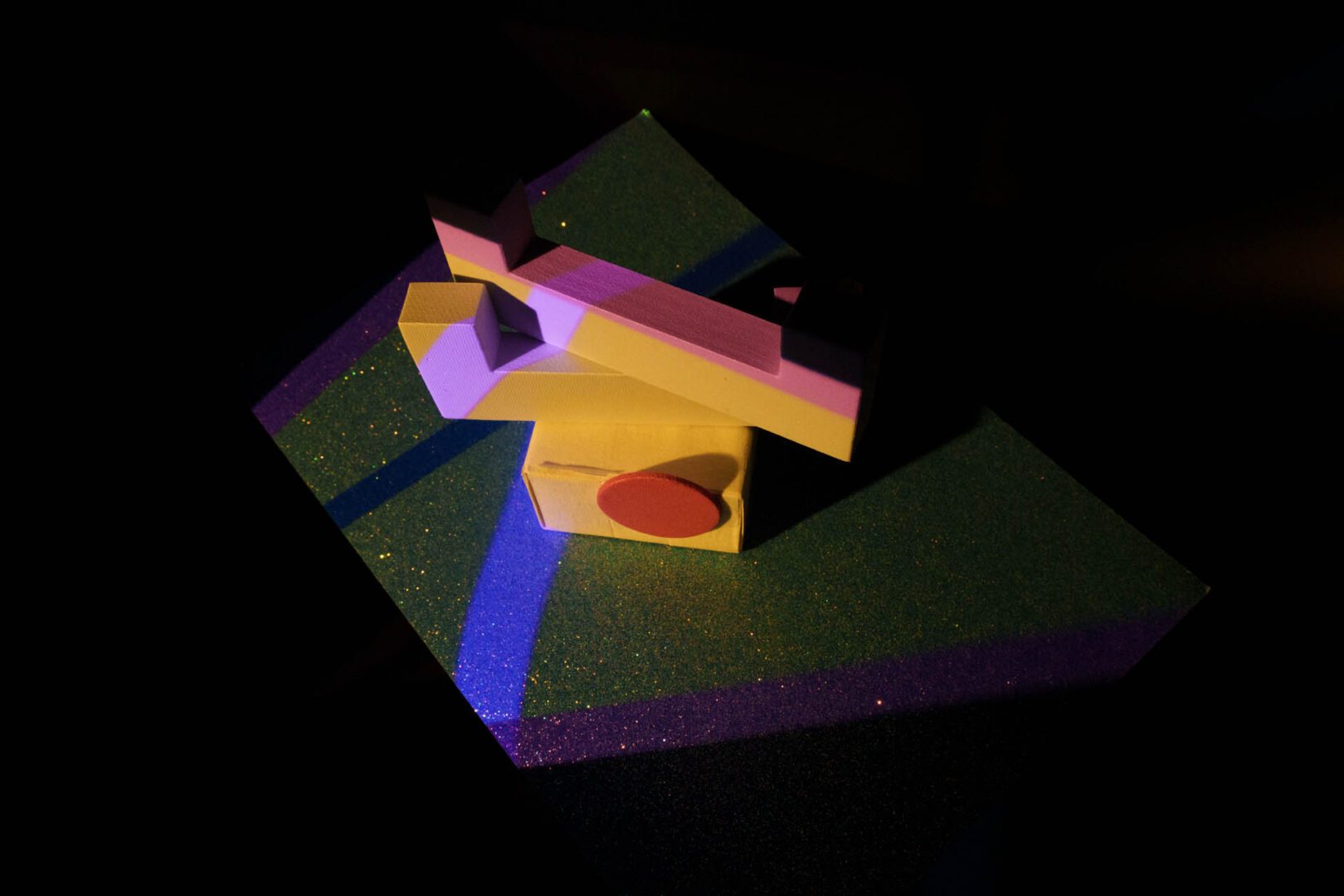
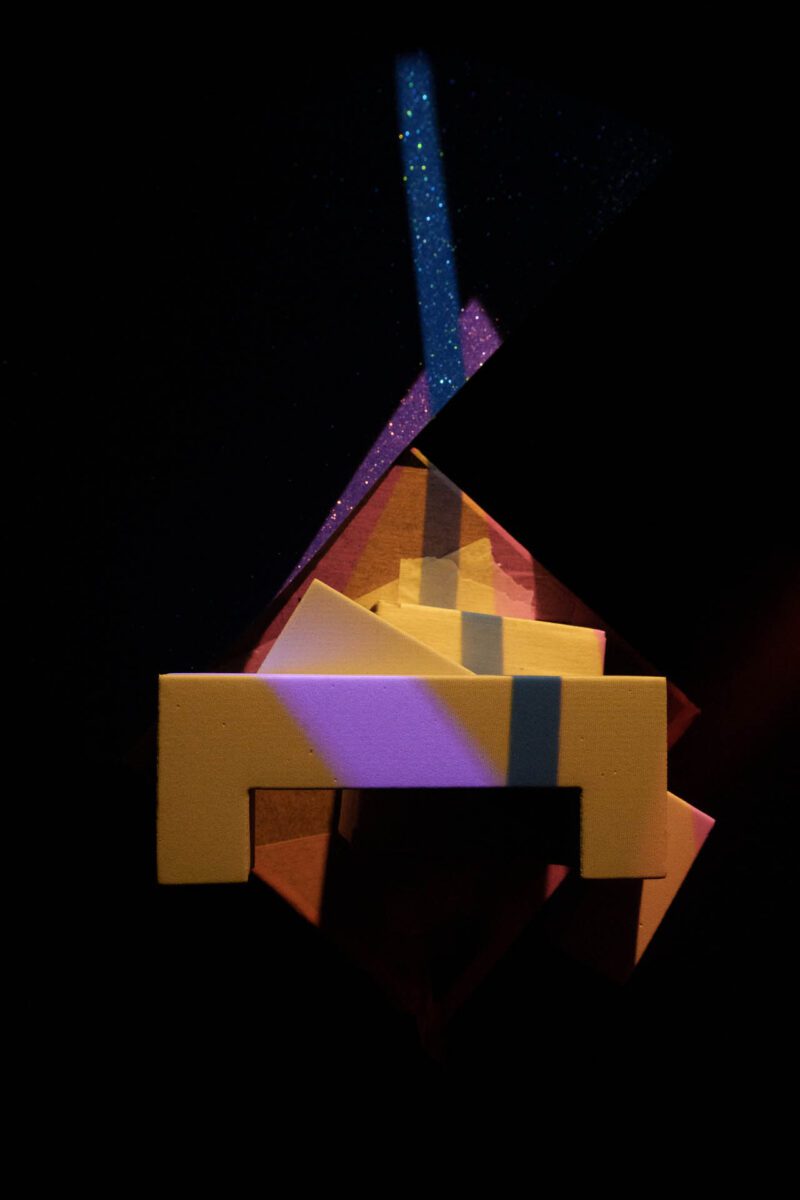
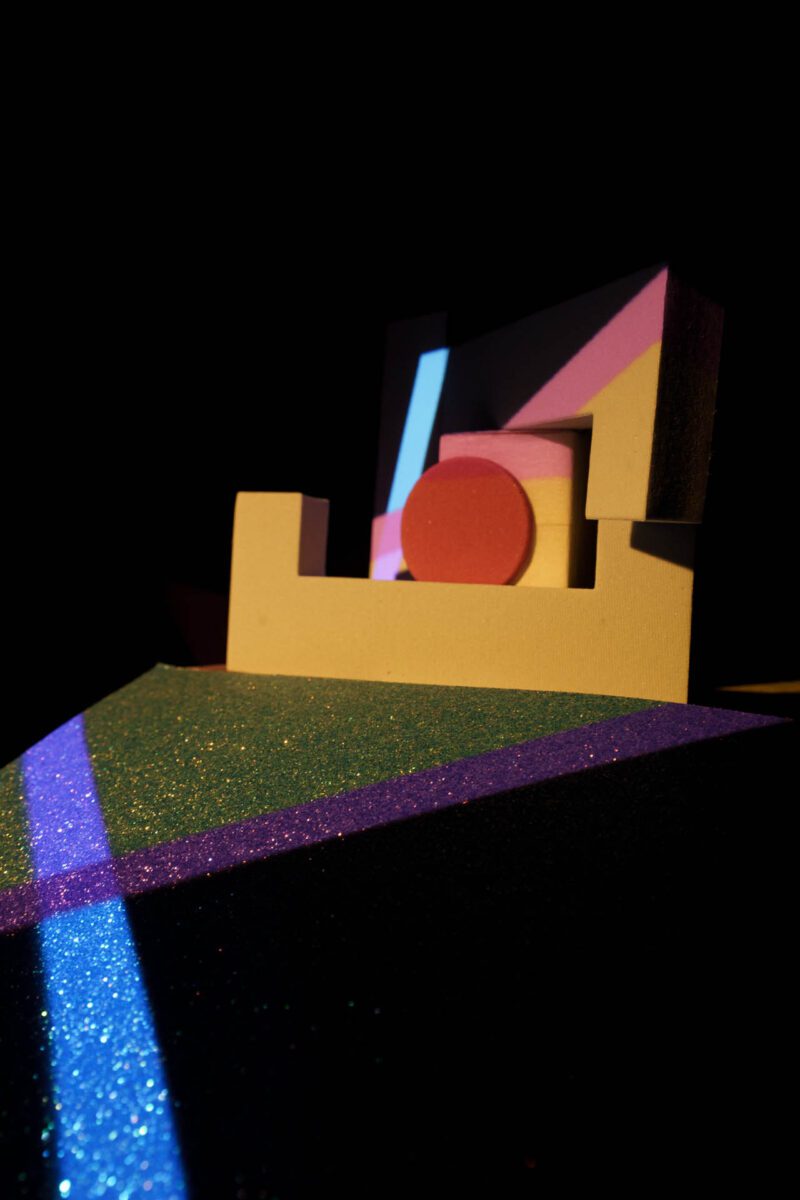
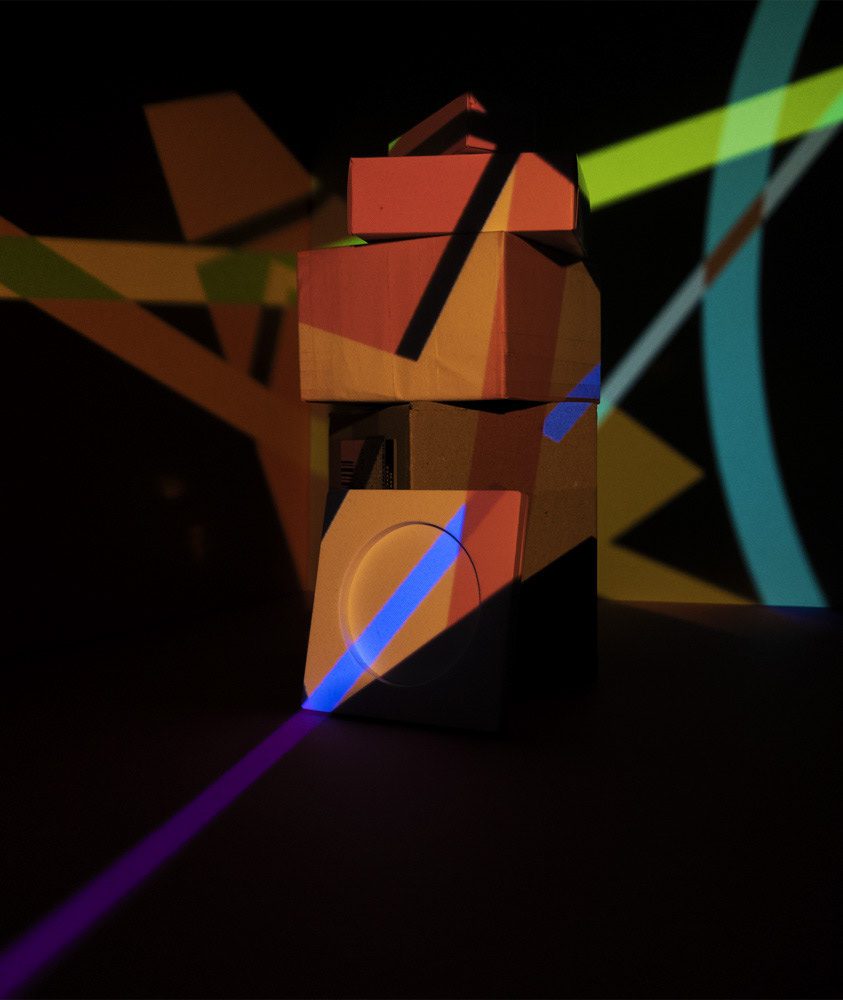
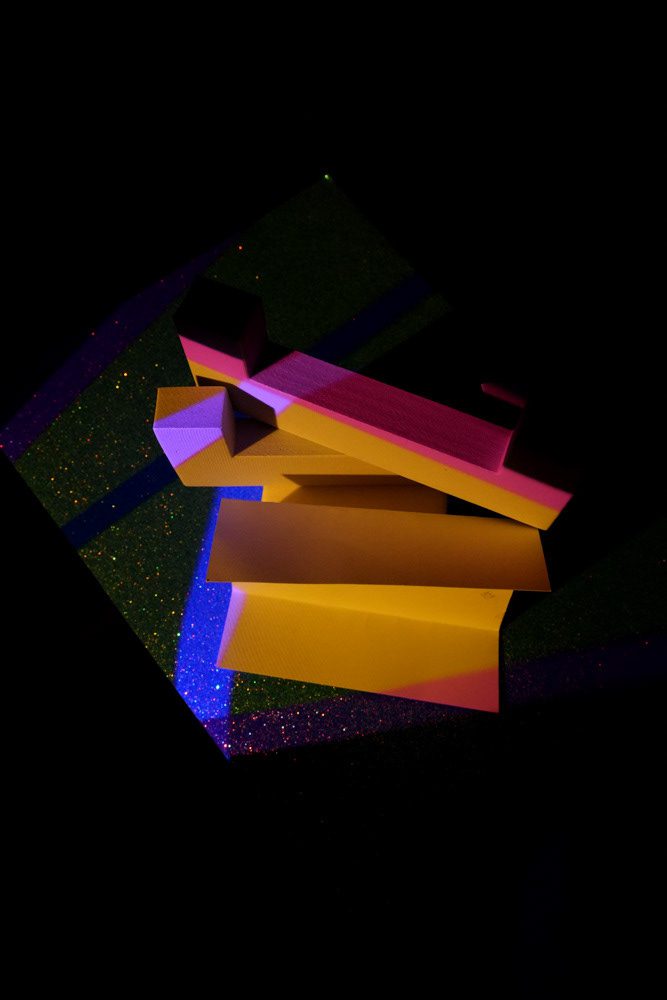
Vlad Hrynko merges a background in computer science with fine art. His Foundation series, shortlisted for the 2025 Aesthetica Art Prize, experiments with traditional still-life forms and projected light, challenging how we see ordinary objects. The work combines physical installations made of found materials – such as used cardboard – with carefully orchestrated lighting. Projected patterns, inspired by abstract painters and personal emotion, alter each scene without physical change. This approach questions how technology and mood influence perception. Hrynko minimises post-production, focusing instead on precision during creation. Foundation continues as an ongoing investigation into light, structure and form, pushing the possibilities of still life in a digital context. Aesthetica spoke to the artist to find out more about his creative process, what it meant to be part of the Prize and what’s next for the series.
A: Take us back to the beginning. How did you begin working as an artist?
VH: I was always interested in all things visual, to the point that it affected career choices. I don’t think there was a starting point, I just always made art, alongside anything else I was doing. I never had any formal art training, instead I chose computer science as a more rational way of escaping boring reality. But visuals were always a matter of interest, so projects I took part in always included image or video processing, visualisation or game development. I’ve never felt particularly interested in drawing or painting skills, so instead I experimented with pure digital art and photography. My interest in photography started as a kind of street one, transcended into architectural one and to building images out of paper and light.
A: How has your background in computer science influenced your approach to still-life?
VH: I think the main thing is an obsession with patterns and structure. I’ve always been interested in how technology can be used in a creative way, such as using both hardware and algorithms to make shapes. There’s also a ubiquitous language of abstraction that you find in maths and computer science that I’ve definitely found has influenced by creative life. In Foundation, the artworks are abstracted to the point where I’m not sure if the series is has turned into a still-life project or if its architecture.
A: You try to minimise post-production, instead focusing on precision during creation. Why do you choose this creative approach?
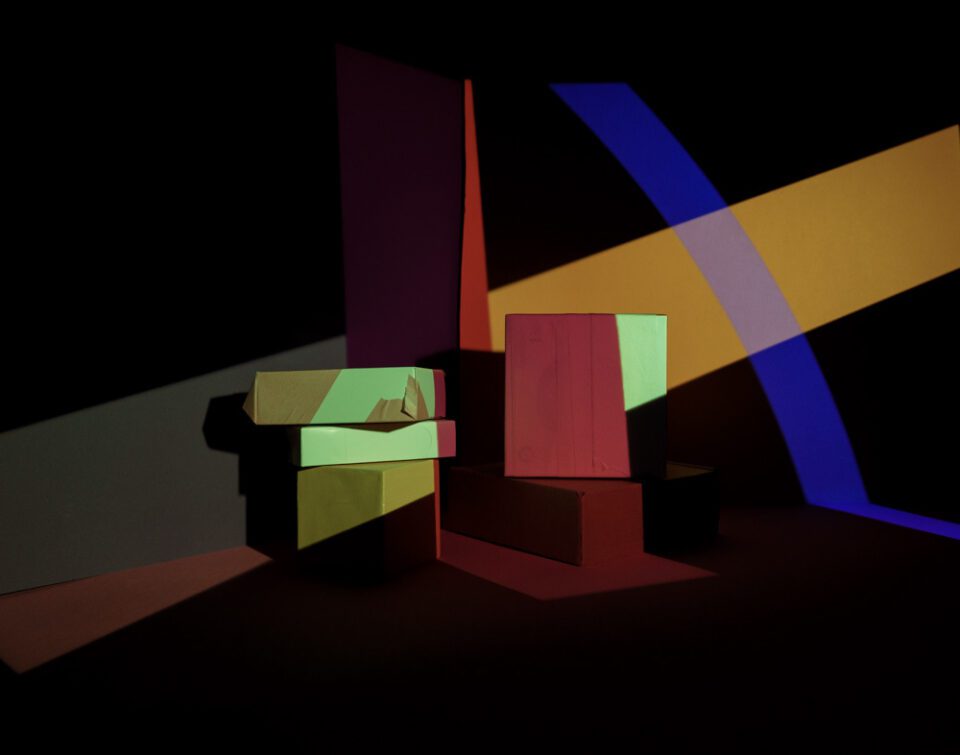
VH: The first round of image-making was very intuitive. I used cardboard boxes because they were what I had available, the lighting patterns for the projected light sources were created manually in graphic design software and the arrangement of objects, as well as the editing, was done largely on instinct. For the newer iteration, I shifted my focus towards capturing the most accurate and refined image directly in-camera. This allows me to devote more attention to aspects such as lighting and the overall scene. Since the setup is a fully controlled environment, it made sense to take full advantage of that control.
A: Foundation combines physical installations made of found materials, such as used cardboard. What draws you to these objects, and how do you decide which items belong in a composition?
VH: These objects were used as a part of initial proof-of-concept and the idea was to make something new out of what I already had. That meant I could work on a project without overcrowding my working space with things I eventually drown in. Composition decisions are mostly intuitive, even in recent projects that are created by adding paper to regular objects, it’s still something that I do based on instinct.
The series is an ongoing investigation into light, structure and form. How do you see this study evolving?
VH: At first, I worked with found objects, created light patterns by hand, and did a “dirty,” rough editing process. Then I moved to using found objects along with some paper pieces and hand-drawn patterns, while cleaning up the editing a bit. Right now, I’m focusing on colored paper pieces to emphasize color and structure, using mathematically defined lighting and cleaner editing. Later, I started making paper forms that are mathematically designed and cut with a cutting plotter, still using precise lighting and polished editing. Eventually, I realised I could simulate almost the entire process in three dimensional modeling software and then, with the algorithms I’ve built, translate it into physical form.
The Aesthetica Art Prize is Open for Applications. Win £10,000 and Exhibition. Submit Here.
The Aesthetica Art Prize Exhibition 2025 is at York Art Gallery until 25 January.
vladhrynko.pics | yorkartgallery.org.uk
Words: Emma Jacob & Vlad Hrynko.
Image Credits:
All images courtesy of Vlad Hrynko.


