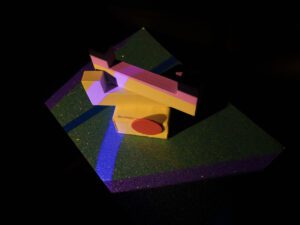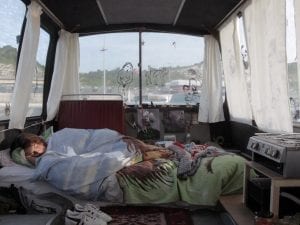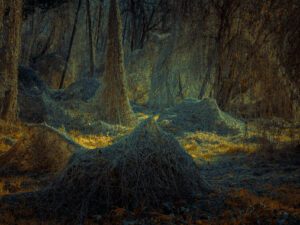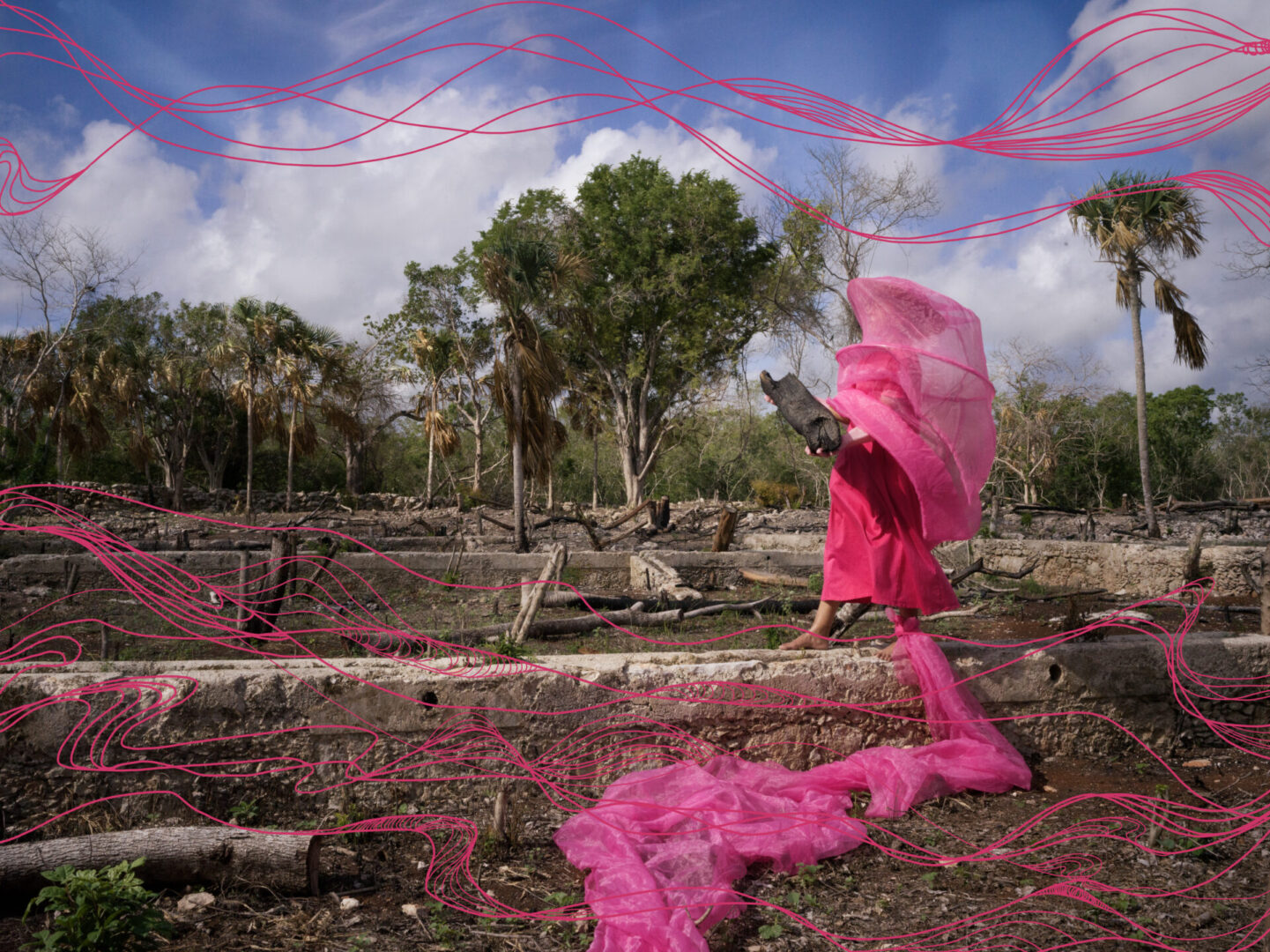
Mónica Alcázar-Duarte is a Mexican-British multi-disciplinary visual artist, whose work explores current ideals of progress while acknowledging her Indigenous heritage. Her Aesthetica Art Prize-shortlisted piece, Space Nomads, explores human origins through a dual narrative: one grounded in ancient ecological knowledge, the other in advanced astronomical research. Focusing on the Mayan stingless honeybee – essential to the Yucatán Peninsula’s ecosystem – and the James Webb Space Telescope, she contrasts two modes of understanding the universe. These bees, referenced in the Mayan Popol Vuh, symbolise continuity and life. In contrast, the telescope offers a cosmic view into the past. This work challenges viewers to reflect on their place within nature and the cosmos, urging respect for Indigenous knowledge and renewed care for the Earth. We caught up with the artist to discuss the creation of the film.
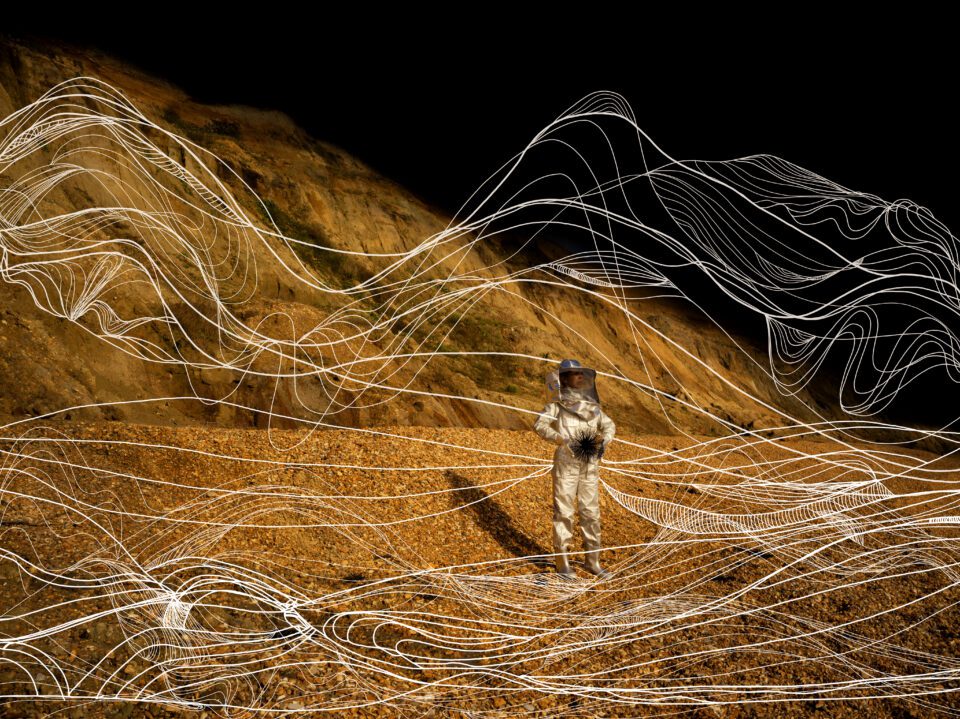
A: What drew you to pair the Mayan stingless honeybee with the James Webb space telescope in Space Nomads?
MAD: I’m interested in the concept that space exploration is a positive force for progress. In my work, I have been probing the question “who owns the future.” In the case of Space Nomads, the wisdom behind the Mayan stingless bee felt appropriate to counteract the ongoing ideas of eternal expansion and growth as indexes of progress in our society, as well as who is deserving of controlling cultural views and attitudes towards science and knowledge. With this context in mind, I wanted the Xunan Ka’ab bee to stand for the future, whilst the James Webb Space Telescope has been designed to detect the Universe’s past. This was only the foundation for the work as I didn’t want it to operate as a comparison, or a dichotomy, or even as a paradox. As I built the films, the work became about the layering of time and how while it is ticking away, we are sometimes oblivious to the momentous changes occurring around us.
A: Your work is anchored in meticulous research. Can you talk us through your creative process?
MAD: It’s a very interesting question. It takes me quite a long time to move into making the work because of all the research that precedes it. After that, producing the piece is actually very intuitive. Once I am on the go making, I allow myself to respond to everything I come across. It sounds counterintuitive in so many ways, but it is what allows me to find my way into images that are not standardised within the industry. This is related to the process of decolonising, unseeing and unlearning. At the moment, it is a way of counteracting rigid methodologies of seeing and perceiving, while being very aware of the colonial basis from which the vocabulary of making images departs.
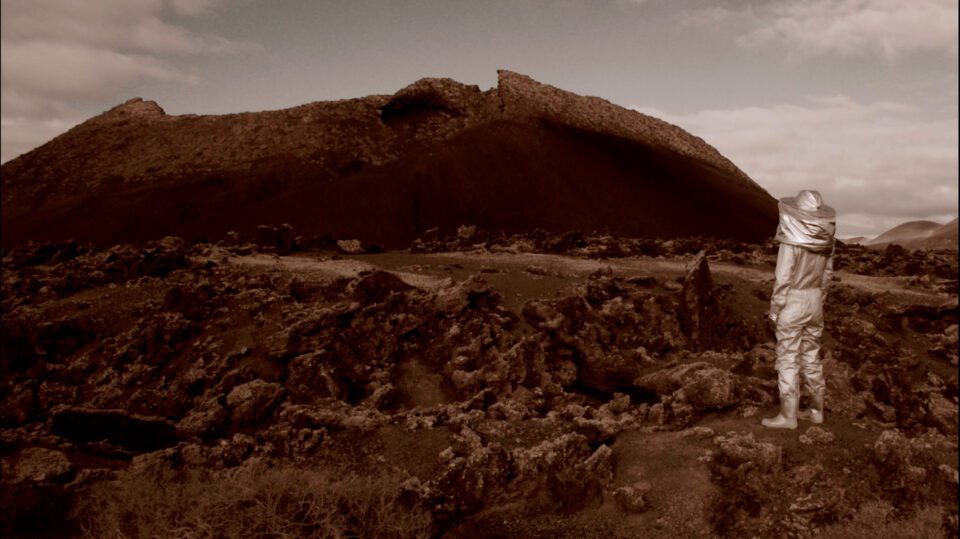
A: How can Indigenous knowledge expand our understanding of progress and our place within the cosmos?
MAD: It is very important for me not to romanticise Indigeneity, so I propose instead that we ask ourselves how different worlds may co-exist without appropriating each other. For me, there is no direct translation of Indigenous knowledge into other scenarios, as this would require a method of extraction and appropriation in itself. Just as with all my other work Space Nomads considers what it means to share ecological responsibility in our communities these days. It attempts to truly understand ideas behind stewardship and ecological justice, while highlighting how essential it is to recognise the “many” worlds on our planet. Throughout these years of making the work, I have experienced how powerful it is to focus on our fragility within the vastness of the universe. A sense of humility from smallness is a word that kept coming back while making this work.
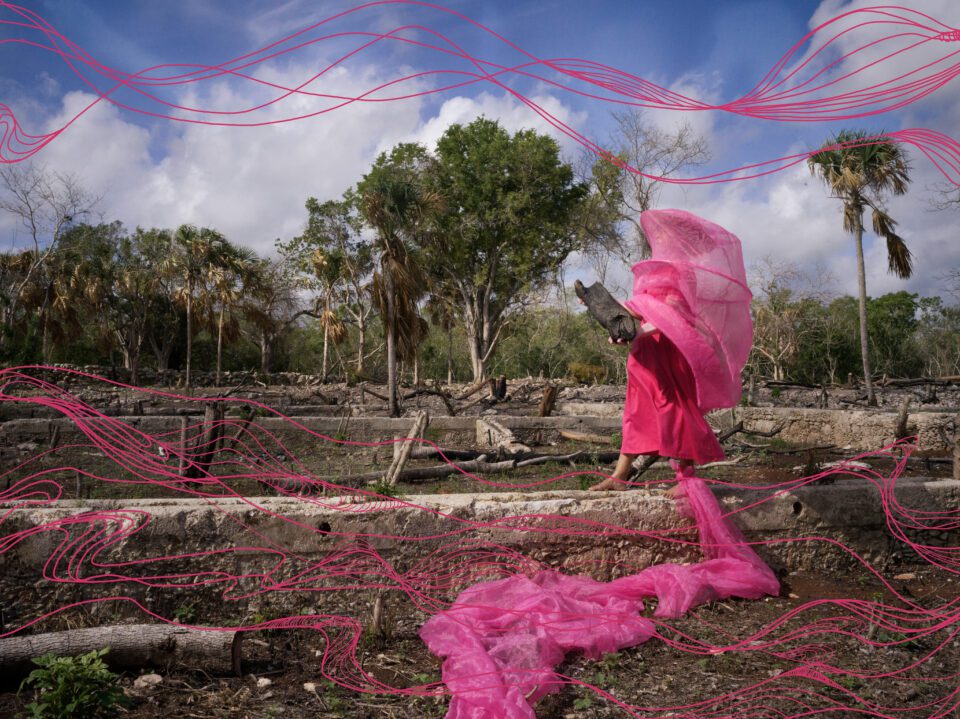
A: What are you working on now? Does it continue these lines of enquiry?
MAD: As well as preparing to be a part of exhibitions at the V&A, and with Fotografiska and Musée du quay Branly, I am starting to put my mind to new work. I am still passionate about a critique of the over-technologisation of our communities. I am currently in the research phase which involves extensive reading, looking, listening, viewing and a bit of dancing! I look forward to reaching the production phase. One thing I know for sure, It will not involve A.I.
The Aesthetica Art Prize is Open for Applications. Win £10,000 and Exhibition. Submit Here.
The Aesthetica Art Prize Exhibition 2025 is at York Art Gallery until 25 January.
monicaalcazarduarte.com | yorkartgallery.org.uk
Words: Emma Jacob & Monica Alcazar-Duarte.
Image Credits:
All images courtesy of Monica Alcazar-Duarte.