

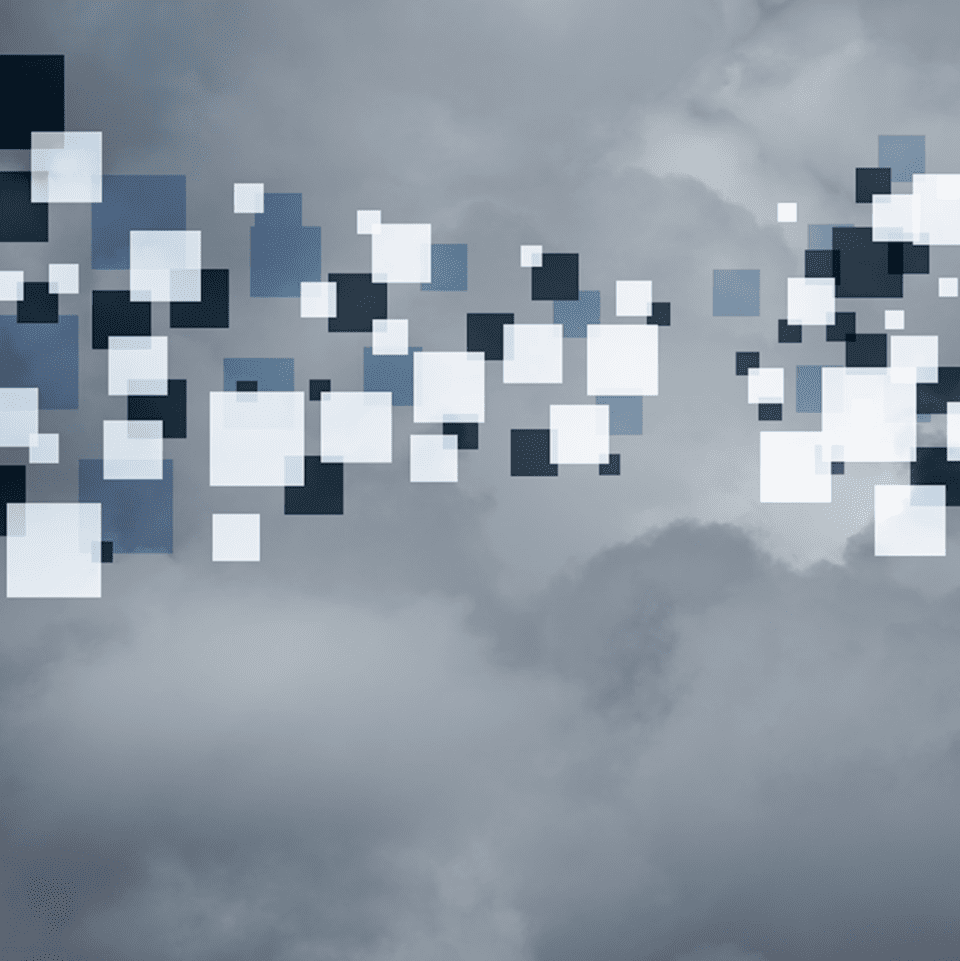
Bart Nelissen is a visual artist whose work explores how we make sense of an increasingly overwhelming digital world. In his Aesthetica Art Prize-shortlisted series Datascapes, Nelissen takes cloud-like digital images and breaks them down into small geometric fragments – tiny squares that act like pieces of data. He layers and recombines these fragments, building new visual structures that reveal hidden patterns, echoing the human effort to find meaning in the chaos of information that surrounds us. Nelissen is fascinated by our instinctive drive for progress and our belief that innovation and technology can solve the problems we face. At the same time, he critically examines the darker side of technological advancement: how it changes us, shapes the environments we live in and affects our ability to relate to a world becoming ever more industrialized and automated. Nelissen spoke to Aesthetica to reveal the inspiration behind his work and how he sees his practice changing as technology evolves and develops.
A: What initially inspired the idea of turning digital cloudscapes into geometric fragments?
BN: Datascapes began as a visual exploration of the intangible world of data – the vast, largely invisible structures that shape our digital lives. As the project developed, I became fascinated by how data itself functions as an abstraction of the natural world: an attempt to compress complexity into forms that humans can comprehend. We instinctively simplify what we cannot fully grasp and I wanted this process reflected in the work. Through experimentation, I discovered that breaking cloudscapes into randomly selected geometric fragments offered a compelling visual metaphor for perception itself: we filter, select and reassemble fragments of experience to create coherent meaning. For me, it became a way to distil chaos into visual order. It provided me with a way to turn the cognitive act of understanding into something tangible, allowing viewers to engage with the tension between complexity and clarity.
A: Talk us through the creation of the work. What is you process of selecting and fragmenting images?
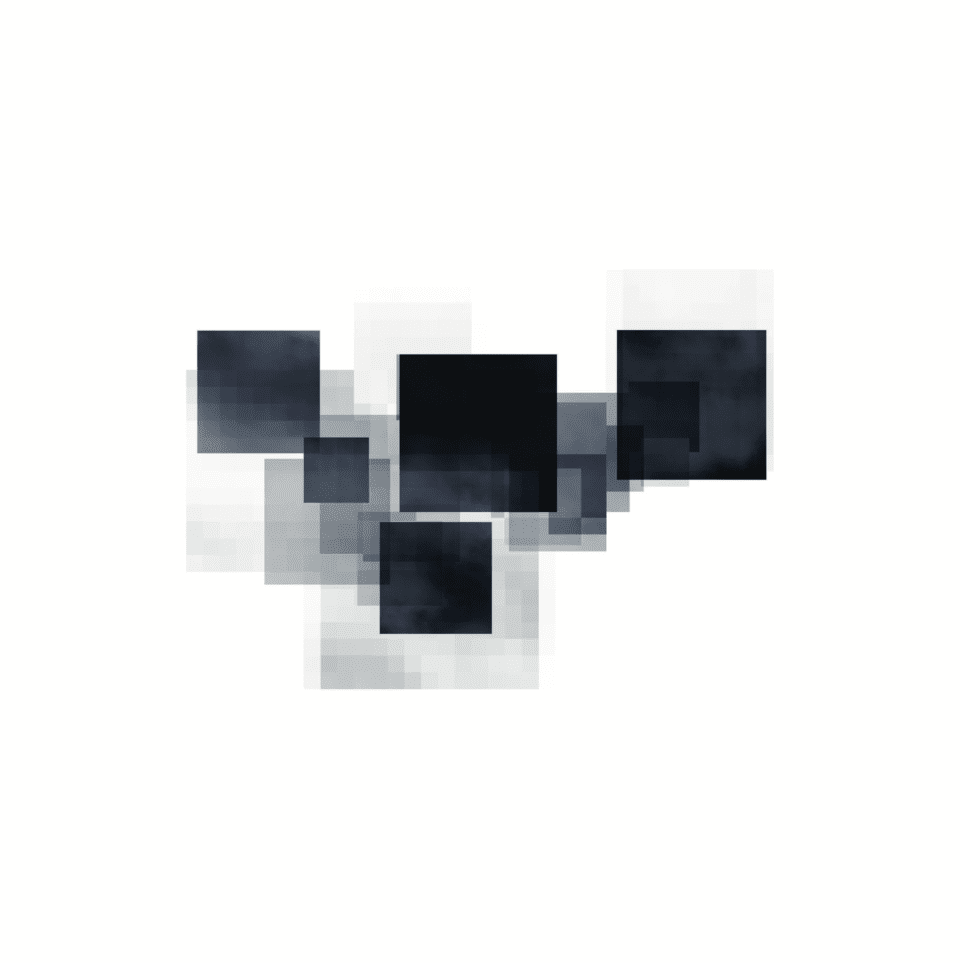
BN: The images in Datascapes come from cloud formations I have photographed over the years. I developed a custom tool that allows a computer to randomly select a fixed number of square fragments from each image, and determine their size and transparency. These pieces are then layered and recombined to reveal complex interactions where overlaps occur, creating emergent patterns that I could not have anticipated. The works arise through a dialogue between control and chance: I guide rhythm, balance and tension, while the computer introduces a layer of randomness. This interplay mirrors perception itself – we make sense of the world through what we notice, what we filter and what we leave unresolved. The resulting images visualise both the act of seeing and the human impulse to impose structure on chaos, allowing viewers to contemplate how perception, selection and simplification shape understanding. In this way, Datascapes turns the cognitive processes of pattern recognition into tangible visual forms.
A: Your work touches on the human need to give meaning to the seemingly random natural world. Do you think the urge ultimately helps or hinders us?
BN: Our drive to find meaning in chaos is both a strength and a limitation. It fuels creativity, discovery and innovation, helping us to navigate complexity and construct shared systems of understanding. Yet this impulse can also lead to over-imposing structure, mistaking our interpretations for objective truth. Frameworks provide clarity and comfort, but they can also shape what we notice and what we overlook. I see it less as a question of whether the urge helps or hinders, and more as a matter of awareness: recognising that every pattern we detect is also a projection of our own cognition. Datascapes reflects on this duality, celebrating our need to seek order, whilst acknowledging its subjectivity. The work invites viewers consider how much of what we call knowledge is ultimately a construct of perception itself.
A: How does Datascapes relate to issues like AI, digital surveillance and information overload?
BN: AI and Big Data allow us to detect patterns and correlations at scales far beyond human capacity. Yet these systems, often presented as neutral or objective, remain deeply human in origin, shaped by our biases, logic and the cognitive frameworks through which we interpret the world. Datascapes engages with this tension by questioning the illusion of objectivity that technology often promises. The work reflects on how constant streams of information can overwhelm our perception, blurring clarity rather than illuminating it. In this sense, the project also considers what these new technologies reveal about the human condition: our drive to construct order, our cognitive limitations and our attempts to make sense of an increasingly complex and technologically mediated world. It’s an invitation to pause, reflect and consider the boundaries of perception and understanding in a digital age.
A: As technology continues to rapidly advance, how do you see your work evolving?
BN: Datascapes marked a turning point in my practice as a visual artist, allowing me to move beyond traditional photography and experiment with digital compositing and video techniques. As technology evolves, I see my work continuing to explore the relationship between human intention and computational processes. Recently, I have been experimenting with generative algorithms – not as tools for data visualisation, but to mirror the fluid, unpredictable rhythms of human perception. These explorations allow me to further investigate the interplay between order and randomness, control and chance, which has started to fascinate. I remain focused on perception, pattern recognition and abstraction, using technological tools to make tangible the cognitive processes through which we structure and interpret complexity. My work will always be driven more by conceptual inquiry rather than technological novelty.
The Aesthetica Art Prize is Open for Applications. Win £10,000 and Exhibition. Submit Here.
The Aesthetica Art Prize Exhibition 2025 is at York Art Gallery until 25 January.
bartnelissenphotographics.nl | yorkartgallery.org.uk
Words: Emma Jacob & Bart Nelissen.
Image Credits:
All images courtesy of Bart Nelissen.


