The 10th edition of the Max Mara Art Prize for Women is a remarkable intersection of creativity, place and dialogue. This year, the Prize has entered a nomadic phase, leaving its long-standing London base to partner with Museum MACAN in Jakarta. By focusing on Indonesia, the Prize acknowledges a vibrant art scene, where ancestral craft traditions coexist with contemporary experimentation. Five artists – Betty Adii, Dzikra Afifah, Ipeh Nur, Mira Rizki and Dian Suci – have been shortlisted, their work spanning painting, ceramics, installation, video and sound. Each practice navigates questions of identity, memory, environment and social justice, offering reflections that resonate both locally and internationally. In supporting these voices, the Prize champions female creativity whilst fostering cross-cultural dialogue.
Since its inception in 2005 by the Max Mara Fashion Group, the Prize has offered a unique platform for mid-career and emerging women artists. Designed to provide time, space, and structural support for ambitious projects, it remains the only award of its kind in the visual arts. Recipients undertake a six-month residency in Italy, facilitated by Collezione Maramotti, before presenting their work in dual exhibitions at the partner institution and in Italy. Past winners – including Helen Cammock, Laure Prouvost, Emma Talbot and Dominique White – have achieved significant international acclaim, demonstrating the Prize’s ability to nurture artists at pivotal career moments. By combining mentorship, resources, and exposure, it encourages experimentation and turns conceptual ambition into realised work.
Cecilia Alemani, Director and Chief Curator of High Line Art in New York and chair of the jury, emphasises the dynamism of the Indonesian art scene, describing it as “extraordinarily dynamic, resilient and poetically complex,” with the five finalists “at the forefront of this energy.” Venus Lau, Director of Museum MACAN, highlights their conviction and curiosity, noting that they tackle “questions of gendered experience, ecological vulnerability, the rights of indigenous communities, nonhuman agency, and emotional resilience.” These thematic threads illustrate the contemporary urgency of their work while demonstrating the artists’ ability to translate complex ideas into tangible forms. The Prize’s international framework allows these voices to reach audiences far beyond local or regional circuits.
Betty Adii (b. 1997, Wamena, Papua) works across drawing, painting and installation, weaving personal and collective narratives that confront the political realities of Papua. Her practice carries a striking immediacy, bringing together traditional cultural references with contemporary visual languages, amplifying the voices of Papuan women while challenging dominant narratives. Recent presentations, including Sharjah Biennial 16 (2025) and Biennale Jogja 17 (2023), position her within an expanding discourse. Her installations juxtapose domestic imagery with political commentary, revealing marginalised histories.
A similar concern with tension and transformation emerges in Dzikra Afifah’s work (b. 1998, Bandung), though here it is located within the properties of the material itself. Working primarily in ceramics, Afifah begins with solid forms that are subsequently hollowed, collapsed and reshaped through an intensive process of manipulation and firing. The resulting sculptures bear the traces of both force and care, negotiating the thresholds between solidity and fragility, presence and absence. Recognised by the ARTJOG Young Artist Award (2022) and the Bandung Contemporary Art Award (2024), her practice positions making as an embodied, durational act. Through sustained engagement, Afifah reveals the expressive potential of clay as both medium and collaborator in contemporary sculptural practice.
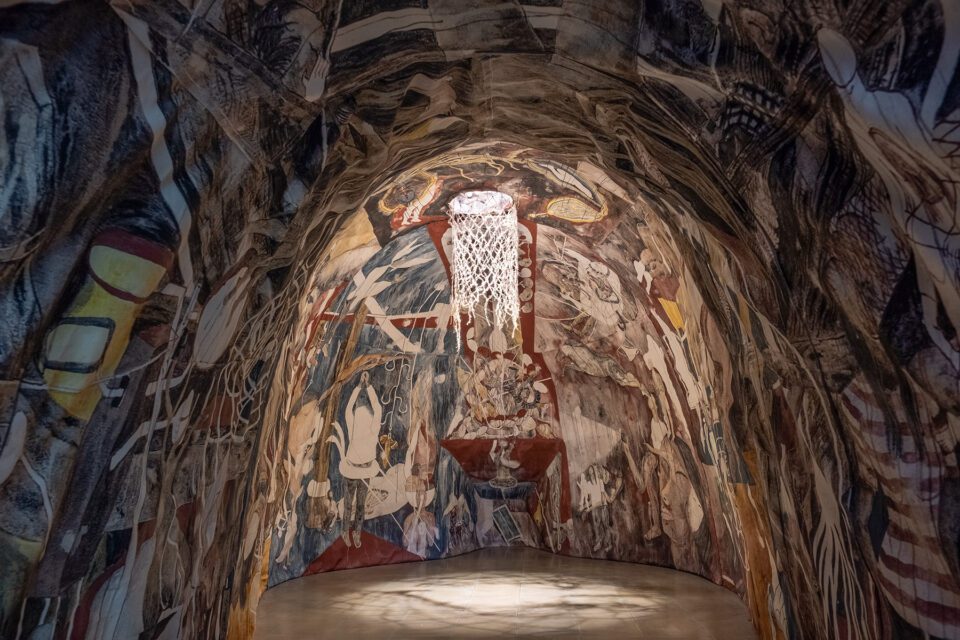
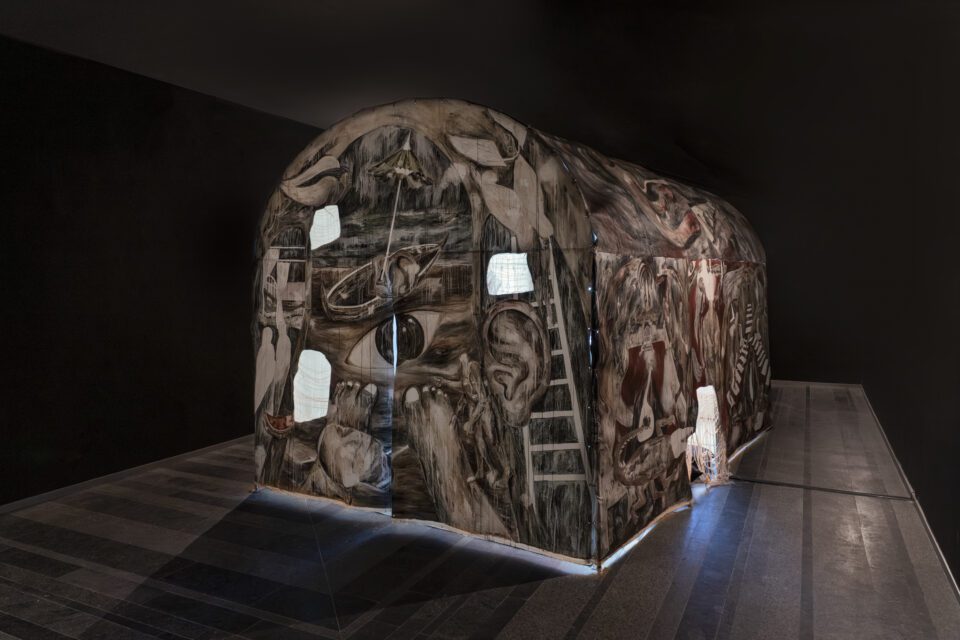
Materiality and embodiment extend into the expansive practice of Ipeh Nur (b. 1993, Yogyakarta), where they intersect with mythology, memory and maritime histories. Working across drawing, painting, sculpture, installation and video, Nur constructs layered narratives that draw on the cultural and spiritual geographies of the Indonesian archipelago. She emphasises the physicality of mark-making and process, situating the body as central to the production of meaning. Exhibitions at 47 Canal and SculptureCenter, New York, alongside her participation in Sharjah Biennial 16 (2025), underscore the international resonance of her work. Nur’s practice navigates the boundaries between past and present, myth and lived experience, offering an understanding of history as something continuously reimagined.
This movement between the tangible and intangible finds a different articulation in Mira Rizki’s work (b. 1994, Bandung), whose practice foregrounds sound as a medium of perception and memory. Rizki explores how environments are experienced aurally, attending to the subtle ways in which sound shapes people. Her projects – presented at Museum MACAN, Jakarta; ILHAM Kuala Lumpur (2025); and the Indonesia Pavilion at the Gwangju Biennale (2024)- invite audiences into heightened states of listening. Here, sound becomes a narrative device, capable of evoking memory, dislocation and intimacy.
Dian Suci (b. 1985, Kebumen) brings these threads of embodiment and experience into a political register, examining how systems of power are embedded within everyday life. Working across installation, painting, sculpture and video, she draws on her experience as a single mother to interrogate the intersections of patriarchy, state authority and economic structures. Her recent presentation at Sharjah Biennial 16 (2025) considers the domestic sphere as a site where broader ideological forces are both reproduced and resisted. Suci transforms the intimate into a lens for understanding structural inequalities.
The significance of the Max Mara Art Prize for Women is evident not only in the achievements of its winners but also in its contribution to broader cultural discourse. Past recipients – Helen Cammock, Laure Prouvost, Emma Talbot, Dominique White, but also, Emma Hart and Corin Sworn. They have all created ambitious projects that interrogate power, memory, history and ecology. Cammock’s exploration of lament and resilience, Prouvost’s immersive installations inspired by Italian aesthetics, Talbot’s reflections on late capitalism and ecological futures, and White’s reimagining of maritime narratives all demonstrate the Prize’s commitment to experimental, socially engaged work. These projects show how time, space, and structural support can amplify women’s voices in the arts, enabling formally and ambitious practice.
Despite progress, women remain underrepresented in galleries, museums and the art market, comprising around 30–35% of solo exhibitions globally and an even smaller proportion of sales value at auction. Initiatives like the Max Mara Art Prize are crucial in addressing these disparities by offering visibility, international exposure, and professional development. The Prize demonstrates the cultural significance of providing time and resources to develop complex ideas, affirming art’s role in dialogue and critical reflection. Supporting women artists has a multiplier effect: it diversifies narratives, inspires future generations, and expands the creative landscape for all.
The 2025–2027 shortlist exemplifies how contemporary art can respond to pressing social, environmental, and political concerns while remaining deeply poetic and tactile. Adii’s engagement with Papuan womanhood, Afifah’s transformative ceramics, Nur’s maritime mythologies, Rizki’s immersive soundscapes, and Suci’s politically charged domestic narratives collectively offer richly engaged perspectives that are locally rooted yet globally resonant. The Prize facilitates international engagement for these practices, demonstrating that contemporary art can be simultaneously personal and collective.
By embracing Indonesia for this edition, the Max Mara Art Prize for Women highlights transnational dialogue and cultural exchange. The shortlisted artists interrogate identity, memory, and materiality while contributing to ongoing global conversations about equity, environmental crisis, and historical narrative. Through residencies, mentorship, and dual exhibitions, the Prize celebrates creative excellence and cultivates cultural understanding, advancing the role of women in the arts.
The 10th edition of the Max Mara Art Prize for Women is both a celebration of Indonesia’s extraordinary contemporary art scene and a reaffirmation of the Prize’s mission to empower women artists worldwide. Adii, Afifah, Nur, Rizki, and Suci offer inventive, socially conscious, and formally rigorous practices, resonating internationally. In fostering these voices, the Prize strengthens cultural bridges and supports sustained artistic development, contributing to a more equitable and inclusive art world.
Find out more about the Max Mara Art Prize for Women: collezionemaramotti.org
Words: Shirley Stevenson
Image Credits:
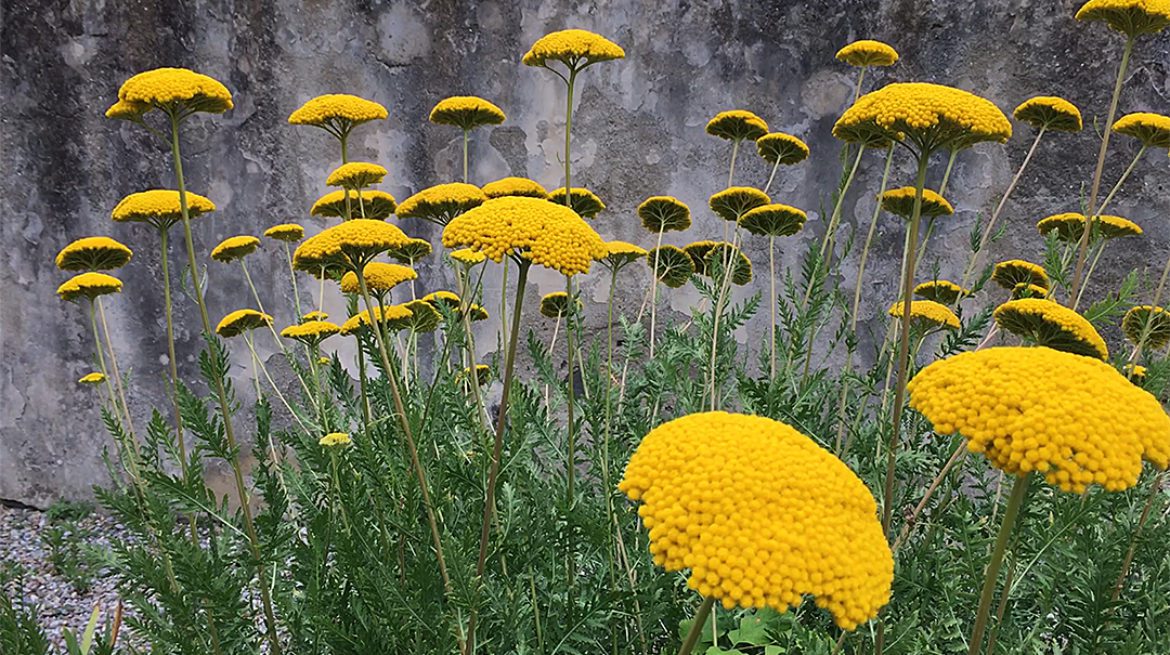
1&5. Farfromwords: car mirrors eat raspberries when swimming through the sun, to swallow sweet smells, 2013, Laure Prouvost.
2. Like a dark and mysterious sea, 2023, Ipeh Nur.
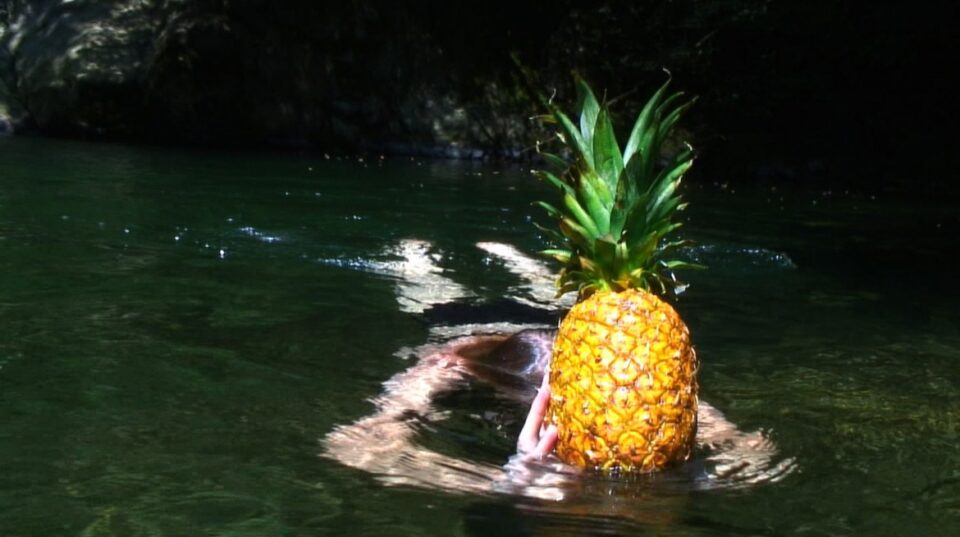
3. Farfromwords: car mirrors eat raspberries when swimming through the sun, to swallow sweet smells, 2013, Laure Prouvost.
4. Like a dark and mysterious sea, 2023, Ipoh Nur.