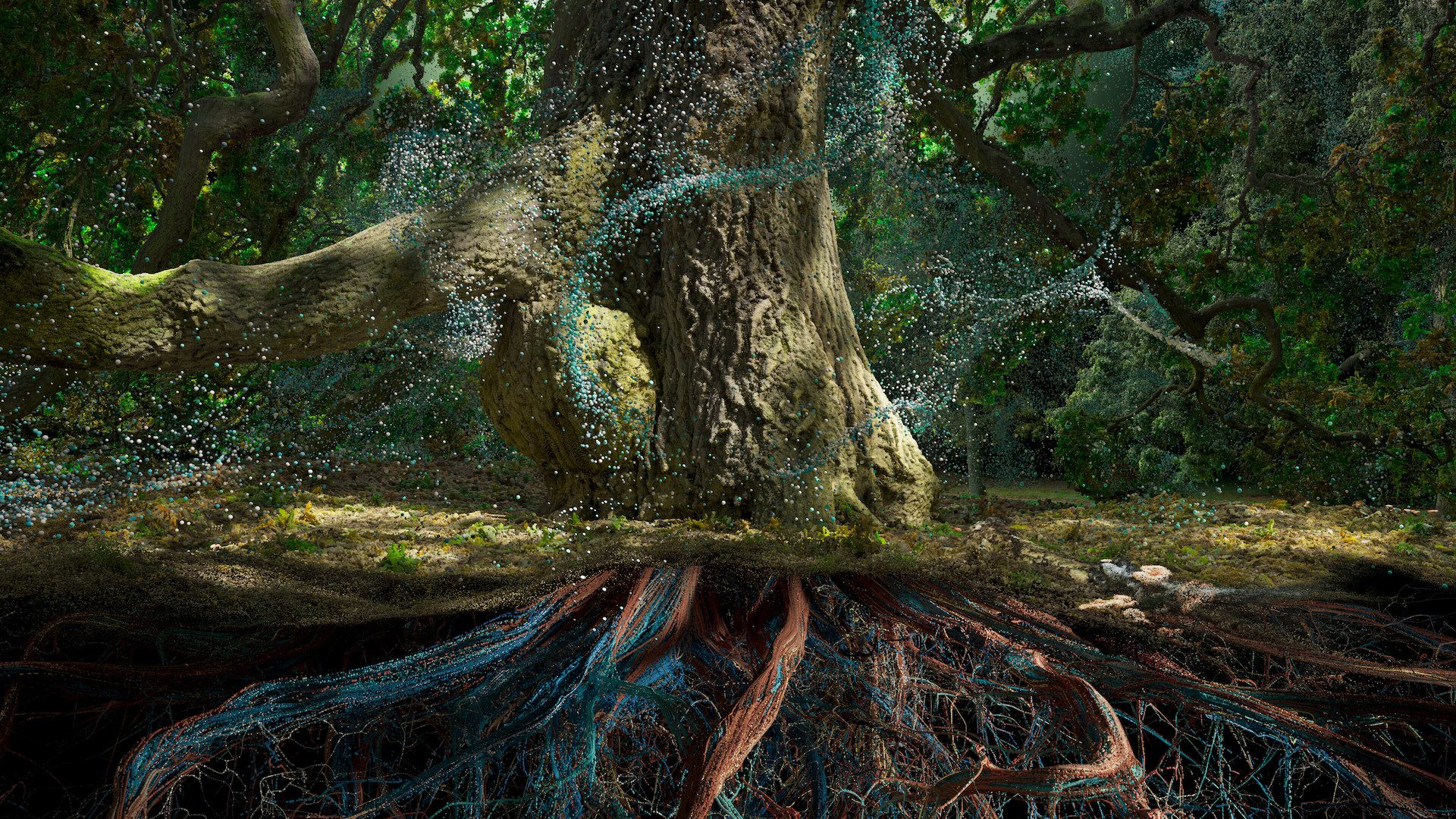
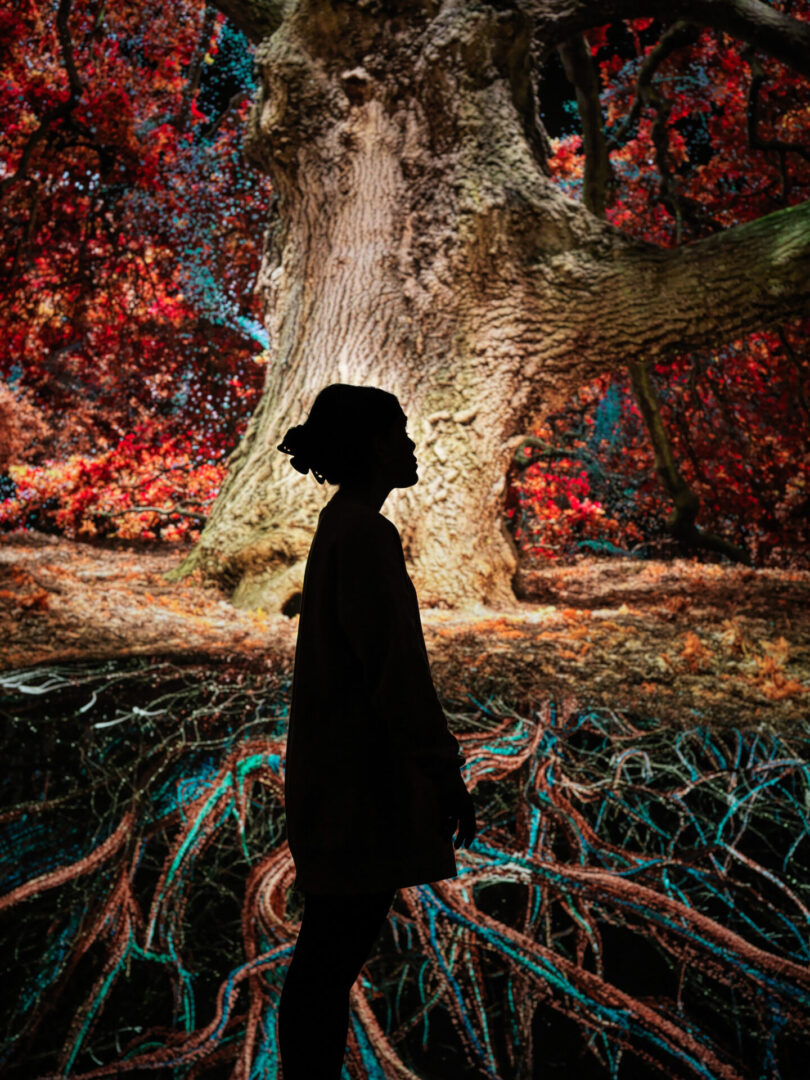
A single oak tree can support more than 2,300 species: lichens clinging to bark, birds nesting in branches, butterflies drifting through leaves and a vast underground network of fungi. In Of the Oak, now open at Yorkshire Sculpture Park, acclaimed collective Marshmallow Laser Feast (MLF) makes this extraordinary biodiversity visible. They have created a “digital double” of Kew Gardens’ majestic Lucombe Oak – one of its oldest trees – using LiDAR, radar and CT-scanning. The resulting immersive video and sound experience is as enchanting as it is educational, showing how energy and carbon flow into the soil, whilst aiming to inspire a renewed connection with the natural world. The piece now travels from London to Wakefield, following a run at Royal Botanic Gardens earlier this year. We sat down with Ersin Han Ersin, Artist and Director of MLF, to discuss how the piece came to life, and the important environmental messages it holds.
A: How would you describe Marshmallow Laser Feast and what you do?
EHE: Marshmallow Laser Feast is an experiential artist collective led by myself, Robin McNicholas and Barney Steel. Our practice is rooted in telling stories that deepen our relationship with the living world and often uses emerging technologies to expand our understanding of what it is to be other than human.
A: What first inspired the idea for Of the Oak?
EHE: Exploring the world through the portal of trees has been a central line of enquiry for the past decade. This deepened when we came across a dataset published in 2019, by Dr Ruth Mitchell and colleagues, listing more than 2,300 species in relationship with oak trees, especially the English oak, Quercus robur. It was a revelatory moment. We already understood the importance of oaks, but this research showed the extent of their entanglement with their surroundings and how many species live in, on or around them. In some cases, they exist because of them. A tree is never an individual, but a nexus of relationships.
A: The piece was commissioned by Royal Botanic Gardens, Kew. How did it come to life?
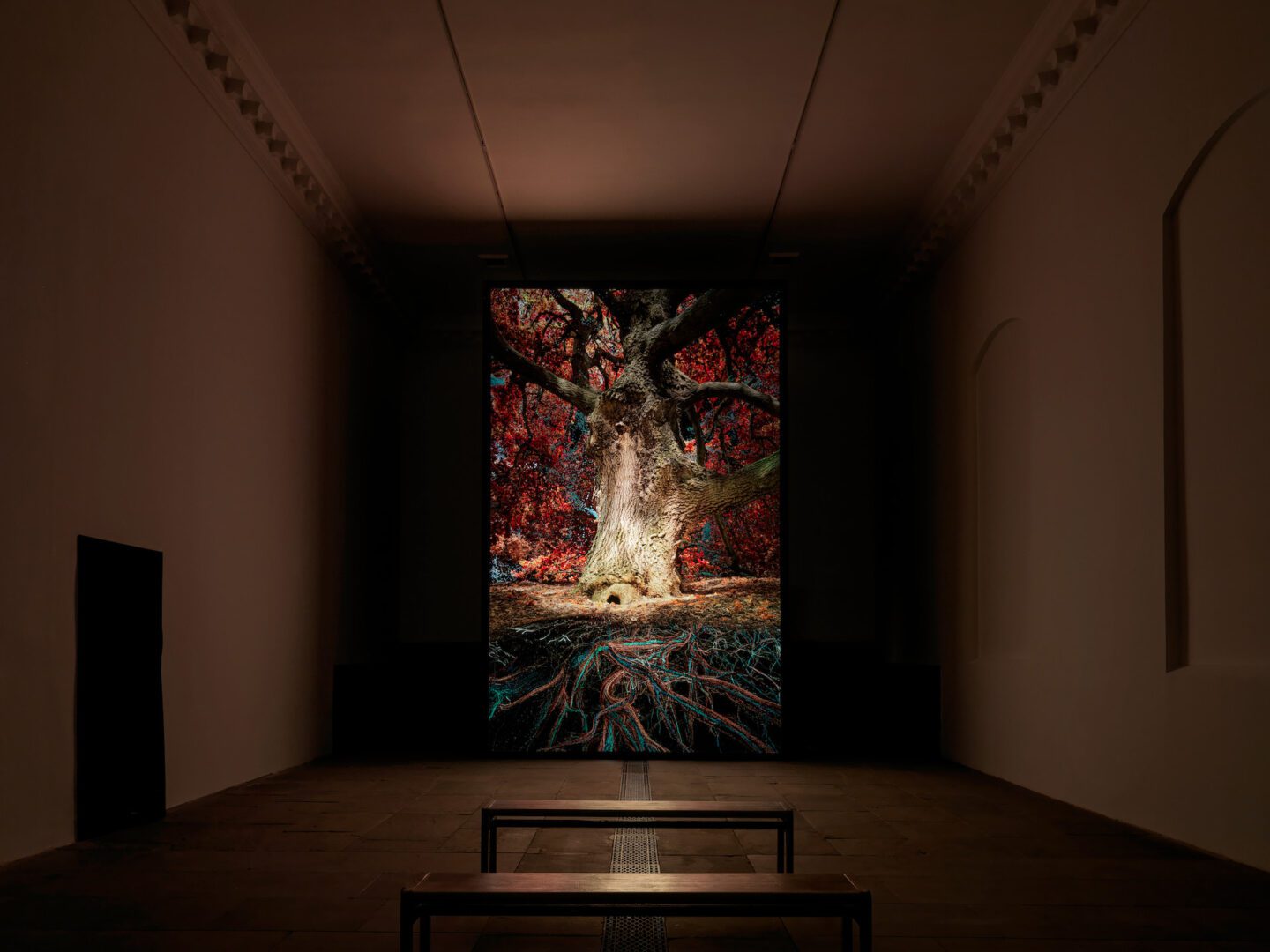
EHE: When Kew Gardens invited us to propose an idea for their new outdoor commission, we wanted to explore the oak’s entanglement as a vibrant relational field across seasons and species. With the support of Kew, we began a journey that traced the many relationships surrounding oaks and identified one of the oldest and most majestic trees in the gardens, the Lucombe oak, as the central subject of this inquiry. With Of the Oak, we set out to create an artwork that brings into view what so often goes unseen. The project unfolded into a large-scale interactive video installation that reveals hidden animism usually invisible to the human eye. We also created a series of open-eyed meditations in collaboration with Daisy Lafarge, Ella Saltmarshe, Laline Paull and Merlin Sheldrake. They offer poetic and contemplative entry points into the experience of being with trees, inviting reflection grounded in imagination and embodied attention. The third pillar of the project is the online field guide, which serves as a portal into the many life forms sustained by oak trees and invites visitors to explore the species associated with them.
A: You mentioned emerging technologies. What techniques were employed here?
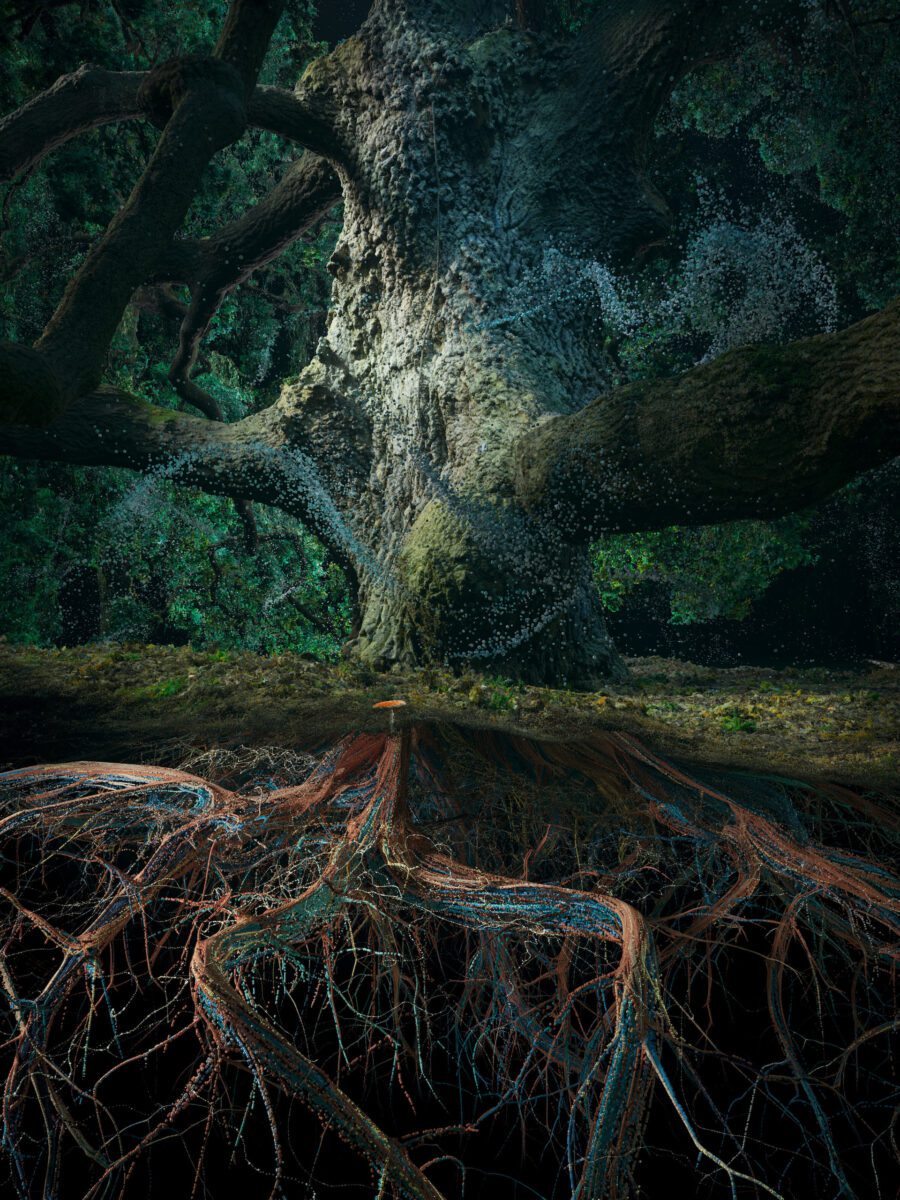
EHE: We used an array of tools and technologies to reveal parts of the tree beyond human sight. These included photogrammetry; LiDAR to map the tree with laser pulses; and CT scanning of soil samples to reveal hidden worlds below ground. Ground-penetrating radar traces the intricate root network, whilst a series of 24-hour live audio recordings, supported by Kew’s Tree Gang, brings its soundscape to life.
A: Why focus on a single oak tree, rather than a forest or woodland?
EHE: This single subject acts as a portal into a vibrant tapestry of life. Through the body of one tree we can open a dialogue about the land and its many inhabitants. It anchors us to a place and a moment, yet it also allows us to drift into countless ways of being. As this project has showed us, a tree is never singular. It is a network of relationships, and it’s hard to define where it begins and ends.
A: Did you learn anything new or interesting about the species from making this piece?
EHE: Oaks harbour wondrous insect and plant species with names such as Angle Shades, Buff Footman, Club Pincushion and Dark Dagger. Giving these names a face was a joyful process. We conducted a dozen interviews with ecologists and botanists and each conversation revealed something new. The central theme echoed Rachel Carson’s words: “in nature nothing exists alone.” But, at the same time, it became evident that oaks are in danger, especially in the UK. Scientists predict we might lose 50% of them by the end of the century due to factors such as Acute oak decline, pests and stressors of climate change.
A: What were the joys – or challenges – of putting this piece together?
EHE: The best part of the process is we get to sit with the tree for a very long time. We study their features in a long, meditative manner. It teaches us innately, not always through a device, but through our own senses – which is almost always beyond words. But also studying the tree through various technological lenses from CT scanning that reveals the level of complexity and livingness in microscopic level to wood tissue studies which shows the complexity beneath its bark and often goes unseen.
A: What will audiences experience at Yorkshire Sculpture Park? What do you hope they take away?
EHE: Yorkshire Sculpture Park holds a special place for us. It brings art, land and story into a single expression where human and more-than-human worlds meet. We are thrilled to have had the opportunity to bring Of the Oak to YSP, transforming its Chapel into a place of communion with trees. We’re also augmenting the Park’s landscape and its veteran trees with guided meditations that offer a new way of engaging with the living world. For more than a million years, oaks have taken root in Britain’s soil. Their story is woven into the fabric of the land. Today, these rooted beings stand at a threshold. What once felt eternal now leans toward fragility, shaped by our capacity to care. Our hope is that visitors leave sensing the preciousness of a tree – not as a towering form, but as something pulsing with life.
Marshmallow Laser Feast: Of the Oak is at Yorkshire Sculpture Park until 15 March.
Words: Eleanor Sutherland & Ersin Han Ersin
Image Credits:
1. Marshmallow Laser Feast, Of the Oak, 2025. Commissioned by Royal Botanic Gardens Kew. Photo Copyright Marshmallow Laser Feast, Courtesy YSP.
2. Of the Oak, by Marshmallow Laser Feast at Yorkshire Sculpture Park. Image: Mark Reeves.
3. Of the Oak, by Marshmallow Laser Feast at Yorkshire Sculpture Park. Image: Mark Reeves.
4. Marshmallow Laser Feast, Of the Oak, 2025. Commissioned by Royal Botanic Gardens Kew. Photo Copyright Marshmallow Laser Feast, Courtesy YSP.