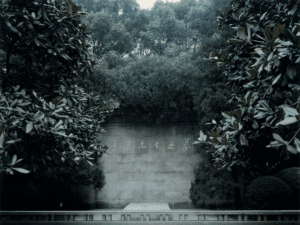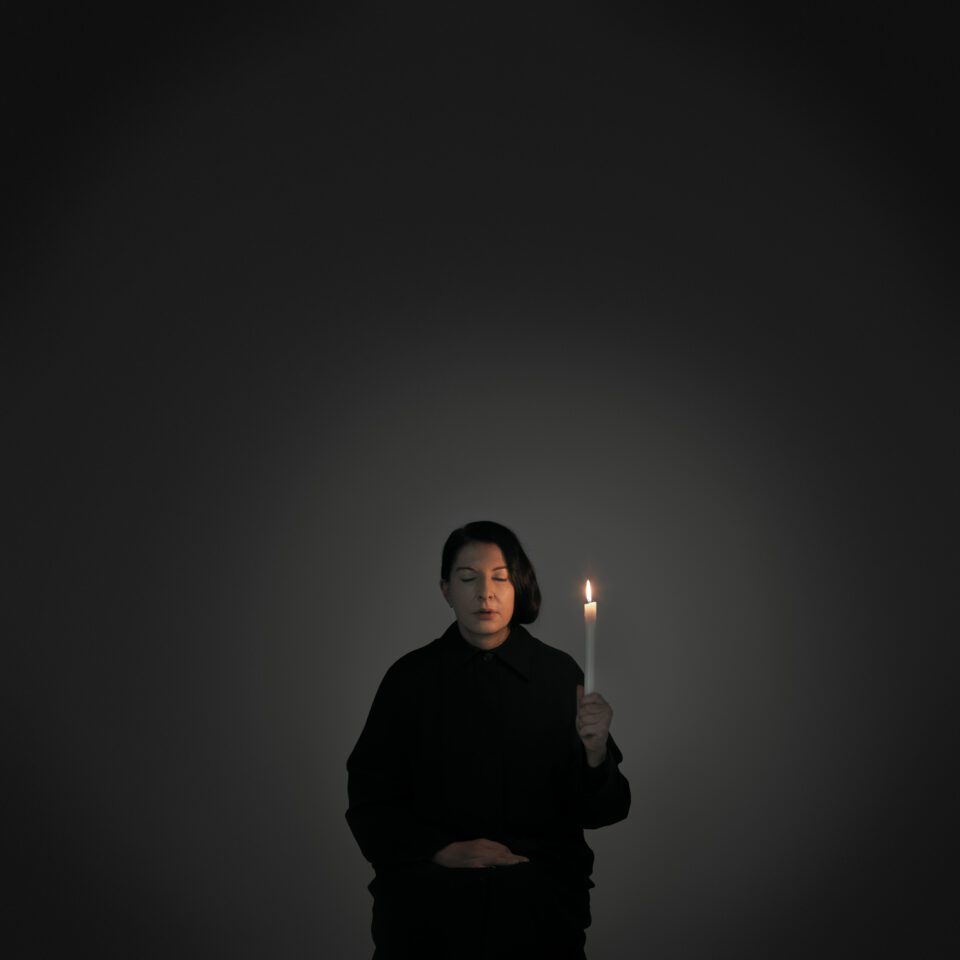
Marina Abramović is unequivocally one of the most important living artists today, a singular force whose work has reshaped the very language of contemporary performance art. In the context of female avant-garde practice, she stands alongside pioneers such as VALIE EXPORT whose daring performances in Vienna challenged patriarchal notions of the female body; Carolee Schneemann who explored corporeality, sexuality and ritual; and Ana Mendieta whose ethereal earth-body works fused identity, nature and spirit. These artists forged paths in which the body itself becomes both canvas and medium, and Abramović inherits and expands this legacy in ways that remain unparalleled.
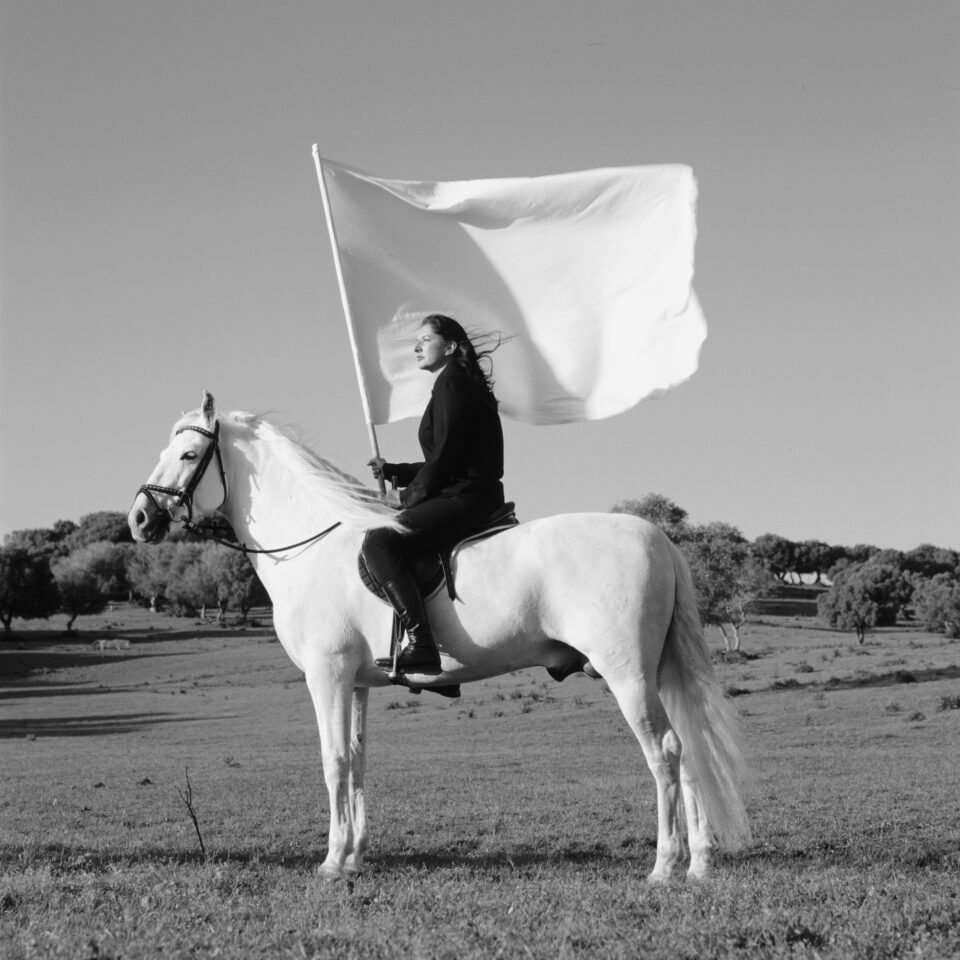
Born in 1946 in Belgrade, Yugoslavia, Abramović’s life and art have been inseparable from the political, spiritual and physical landscapes she has traversed. The daughter of partisan fighters, she grew up amidst the rigidities of a post-war communist household, which would shape her early explorations of discipline, endurance and the tension between personal freedom and societal constraints. Her formative years, immersed in painting and later conceptual art studies, laid the foundation for a practice that would consistently probe the limits of the human body and consciousness. By the 1970s, Abramović was performing works that would become foundational to performance art itself, from the rhythmical endurance experiments of the Rhythm series to the collaboration with Ulay in their iconic Relation Works.
Now, the Albertina Modern in Vienna presents the first major Austrian retrospective of Abramović’s oeuvre, running until 1 March 2026. Curated by Bettina M. Busse and developed in close collaboration with the artist, the exhibition encompasses over a hundred works and four live performances including Imponderabilia, Luminosity, Nude With Skeleton and Art Must Be Beautiful – Artist Must Be Beautiful. Visitors are invited not only to witness but to participate, inhabiting the space where Abramović’s body, energy and presence intersect with their own. The exhibition spans early works in Belgrade, collaborative performances with Ulay, and landmark pieces such as Balkan Baroque and Four Crosses.
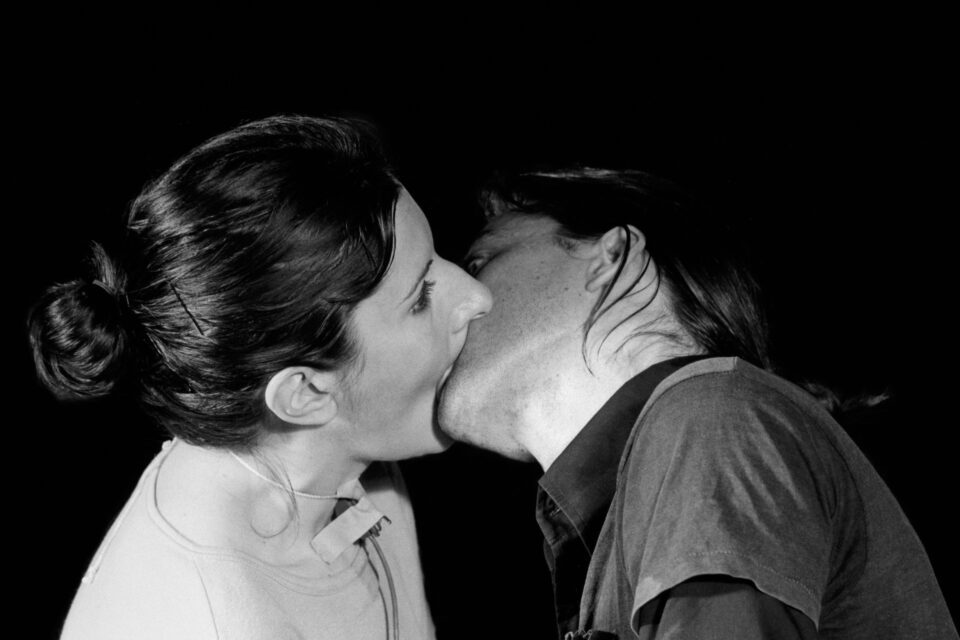
What distinguishes this retrospective is the way it foregrounds the transformative power of duration, presence and audience engagement. From the silent gaze of The Artist Is Present (2010) to the elemental force of Luminosity and the haunting spirituality of Four Crosses (2019), Abramović’s work is always a dialogue between endurance and empathy, physicality and metaphysical inquiry. Here, visitors encounter the artist not as an untouchable icon but as a conduit for reflection, a mirror that both challenges and opens the self. Abramović’s influence on subsequent generations of artists is profound, though no one replicates her singular presence. The transgressive performance work of Tino Sehgal, the participatory installations of Cassils and the ritualistic body explorations of Amalia Ulman all bear traces of Abramović’s pioneering engagement with corporeal and psychic endurance. Each artist, in their own way, extends the conversation about participation, presence and the ethical responsibilities of performance. Yet Abramović remains a figure unto herself: her rigor, vulnerability and the sustained intensity of her practice set a standard that is not only aspirational but almost mythic in its magnitude.
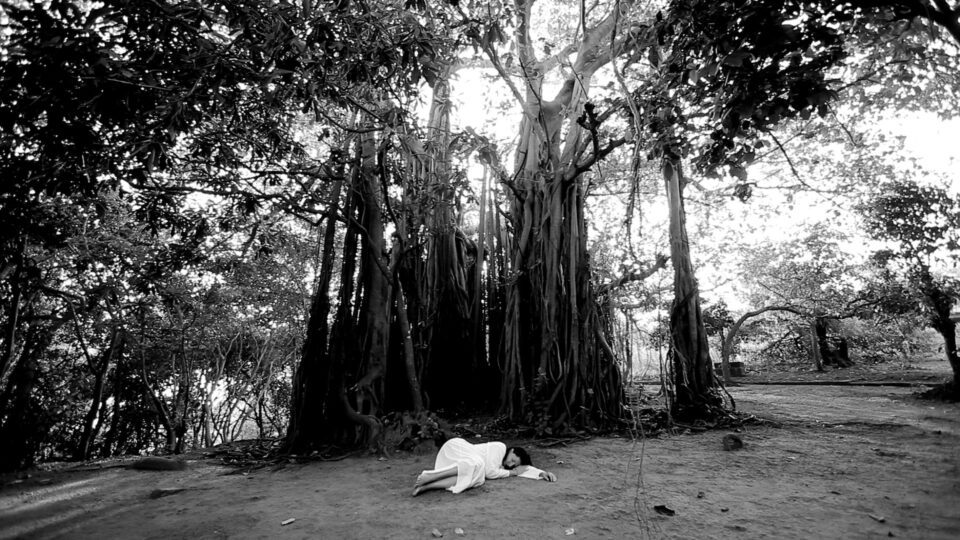
Her works interrogate the intersections of history, politics and spirituality. In Balkan Baroque (1997), she confronts the violence of the Yugoslav Wars, scrubbing a mountain of cattle bones in a ritual of cleansing and lamentation. In The Hero (2001), she engages with personal and national memory, intertwining homage to her father with reflections on mortality and resilience. Meanwhile, the Transitory Objects and Dragonsseries reveal her continuing fascination with energy, expanding performance beyond the immediacy of the artist into participatory and meditative experiences for viewers.
The exhibition also chronicles her early encounters with restrictive ideological structures, from her childhood in a rigid communist household to the cutting, ritualized performances of the 1970s, including Lips of Thomas and Rhythm 5. These works speak to a lifelong pursuit: testing boundaries, confronting pain and harnessing suffering to catalyze transformation. Across decades, Abramović has transformed endurance into a form of transcendence, the body into a vessel for empathy and insight, the performance into an act of spiritual exchange. Yet, it is in her singularity that her legacy is most apparent. While countless artists acknowledge her influence, and while performance art has flourished in the decades since her groundbreaking work, the quiet intensity of Abramović herself—the way she embodies time, presence and consciousness—remains unmatched. She has created a lineage by example, inspiring artists to explore the limits of their own bodies, minds and spirits while maintaining a path that is uniquely hers.
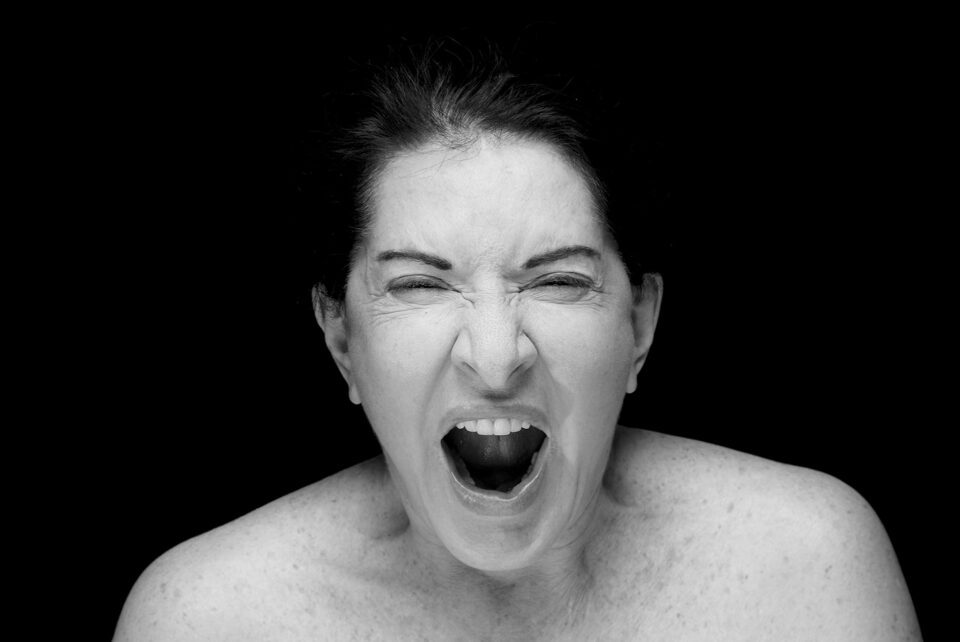
Visitors to the Albertina Modern are invited not merely to witness history but to participate in it, to engage with a living artist whose work continues to challenge, illuminate and expand the possibilities of art itself. In the arc from the Rhythm series to Four Crosses, from Ulay collaborations to solitary encounters, the exhibition encapsulates an oeuvre that is as much about the artist as it is about the audience, and in this intimate exchange, one perceives the profound truth: while others may follow in Abramović’s wake, there is – and likely will never be – anyone quite like Marina Abramović.
Marina Abramović is at Albertina Modern, Vienna, until 1 March 2026.
Words: Anna Müller
Image Credits:
1. Marina Abramović, Artist Portrait with a Candle (A), 2012. Fine art pigment print. Courtesy of the Marina Abramović Archives, and Galerie Krinzinger © Courtesy of the Marina Abramović Archives / Bildrecht, Vienna 2025.
2. Marina Abramovic, The Hero, 2001, Single-channel video (black and white, sound), vitrine containing objects that belonged to Vojin Abramović, video: 14 minutes 21 seconds; objects: dimensions variable. Courtesy of the Marina Abramović Archives, and Galeria Luciana Brito © Courtesy of the Marina Abramović Archives / Bildrecht, Vienna 2025
3. MARINA ABRAMOVIĆ Ulay / Marina Abramović, Breathing In, Breathing Out, April 1977. Performance, 19 minutes, Studentski kulturni centar (SKC), Belgrad, Courtesy of the Marina Abramović Archives © Ulay/Marina Abramović. Courtesy of the Marina Abramović Archives / Bildrecht, Vienna 2025
4. Marina Abramović, Sleeping Under the Banyan Tree, 2010. Performance for video, 56 minutes 43 seconds. Courtesy of the Marina Abramović Archives, and Sean Kelly Gallery, New York © Courtesy of the Marina Abramović Archives / Bildrecht, Vienna 2025
5. Marina Abramović, Four Crosses, 2019 each 550 x 357 x 29 cm, Corian, aluminum, iron, oak with LED panels. Courtesy of the Marina Abramović Archives © Courtesy of the Marina Abramović Archives / Bildrecht, Vienna 2025.