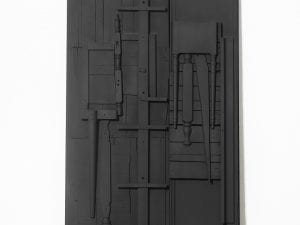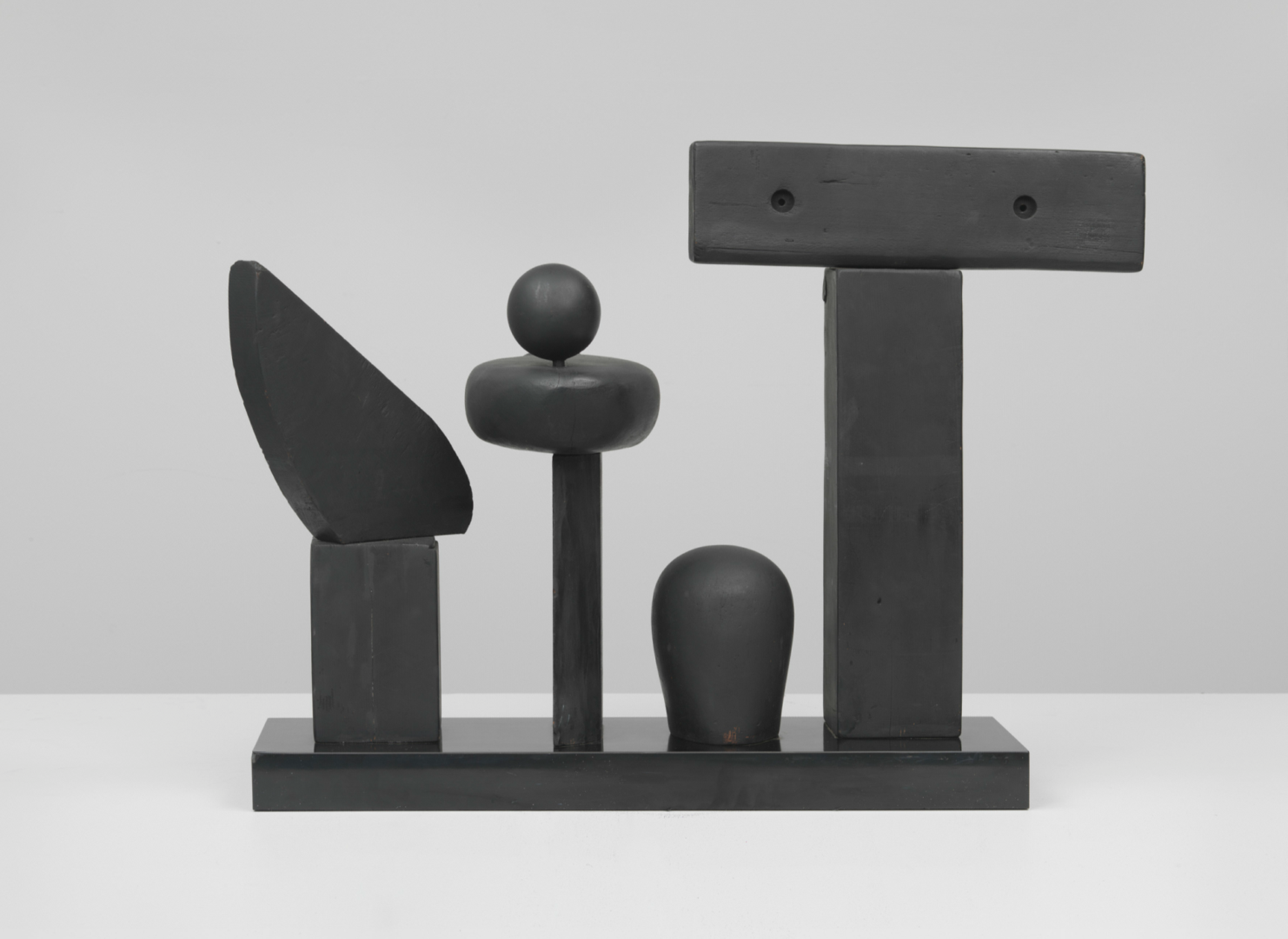
Fifty years after her last exhibition in France and three decades following her death, Louise Nevelson returns to the European stage with Mrs. N’s Palace, the first retrospective of this magnitude devoted to the artist on the continent. Opening at the Centre Pompidou-Metz, the exhibition celebrates a figure whose influence continues to ripple through contemporary art. It is a rare opportunity to immerse oneself in a visionary universe, where sculpture transcends objecthood to become a total and enveloping experience.
Kiev in 1899 was the city of her birth, before she emigrated with her family to the United States in 1905 and eventually made New York her permanent home. Architecture and the fine arts formed the basis of her early training, under the guidance of Hans Hofmann, immersing her in the energy of avant-garde circles. By the 1930s, dance and performance had begun to inform her practice, foreshadowing the fluidity and movement that would characterise her later sculptures. Early terracotta figures depict articulated, moving bodies, reflecting a lifelong fascination with rhythm, gesture and the human form in motion. Travels to Mexico and Guatemala in 1950 introduced a monumental, geometric sensibility infused with mysticism, further enriching a visual lexicon that would redefine 20th century sculpture.
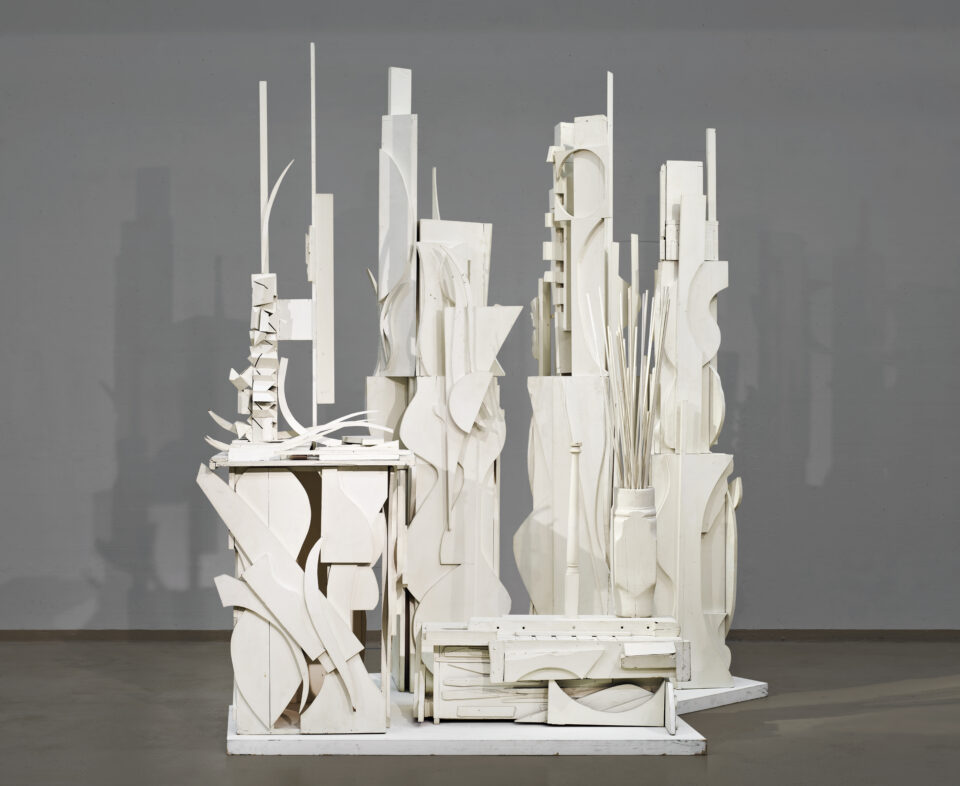
The first large-scale environment, Moon Garden + One, was staged at Grand Central Moderns in New York in 1958, featuring the vertical “wall” that would become her signature. Sky Cathedral marked the beginning of a radical approach to space and perception. Lighting became a decisive element, with certain sculptures enveloped in blue light to heighten shadows and disorient the viewer. In these installations, spectators were invited to inhabit the work physically rather than merely observing it. Such experiments laid the groundwork for later pieces, including Dawn’s Wedding Feast at the Sixteen Americans exhibition at MoMA in 1959, and The Royal Tides at Martha Jackson Gallery in 1961. For Mrs. N’s Palace, many of these seminal see are being reactivated, allowing audiences to experience her spatial vision in unprecedented form.
Nevelson’s work throughout her career was defined by the interplay of abstraction, narrative and ritual. Famous monochrome “walls,” often constructed from the detritus of New York City, were more than assemblages; they became immersive structures transforming discarded materials into ethereal, architectural forms. Black, white, and gold veils unify fragments into columns, podiums, and altars, evoking the sacred and the domestic simultaneously. In the Dream Houses series of the early 1970s, these walls evolved into palatial structures, reflecting the rise of feminist discourse. Sculpture and storytelling intertwined, turning urban refuse into environments that invite reflection, reverie and transcendence.
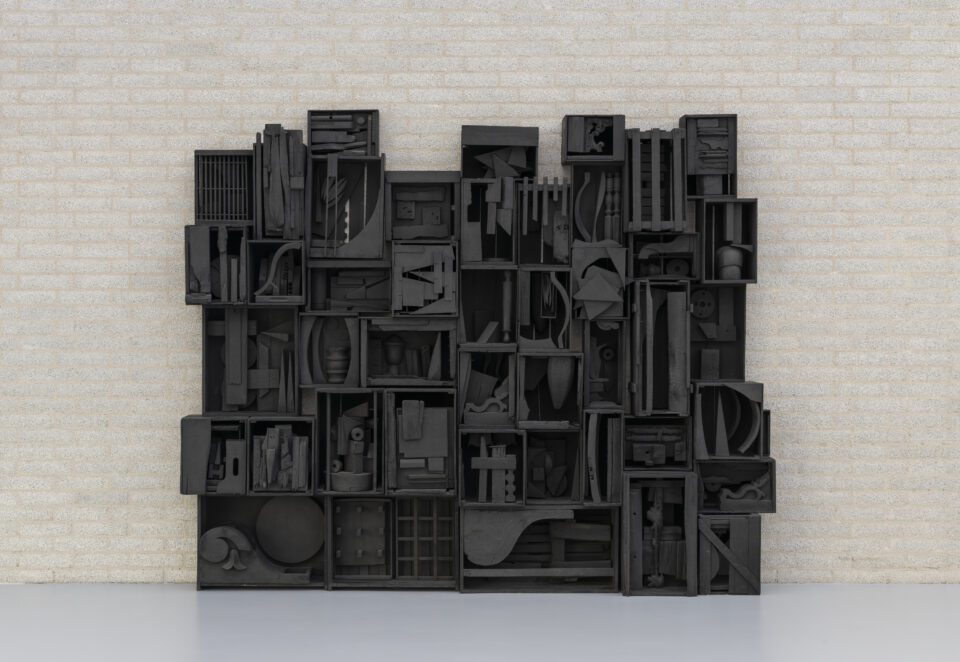
Themes of rhythm, mysticism and theatricality underpin much of her output. Two decades studying eurythmy with Ellen Kearns, alongside a lifelong fascination with Martha Graham, infused the work with corporeal intensity. Dance informed the gesture of her assemblages, each piece choreographed through light, shadow and form. Monumental architecture and Mayan spirituality from Mexico further imbued the work with sacred resonance. The culmination of these influences is perhaps best seen in Mrs. N’s Palace, begun in the mid-1960s and realised over thirteen years. A life-sized shrine of wood painted panels and sculptural fragments invites visitors into a world of suspended time, where dusk and dawn coexist, mythic figures emerge, and narrative is woven into the architecture itself.
Impact has resonated across the globe. From Sky Cathedral in New York to An American Tribute to the British People in London, installed at Tate in 1965, her environments have been celebrated for formal daring and spatial innovation. Retrospectives in Moscow, Tokyo and São Paulo have foregrounded interdisciplinary approaches, while exhibitions in Los Angeles, Chicago and Mexico City have highlighted a unique capacity to merge architecture, sculpture and performance. Across continents, the works have been activated as living spaces, recalling the insistence that art is encountered through movement, light and time.
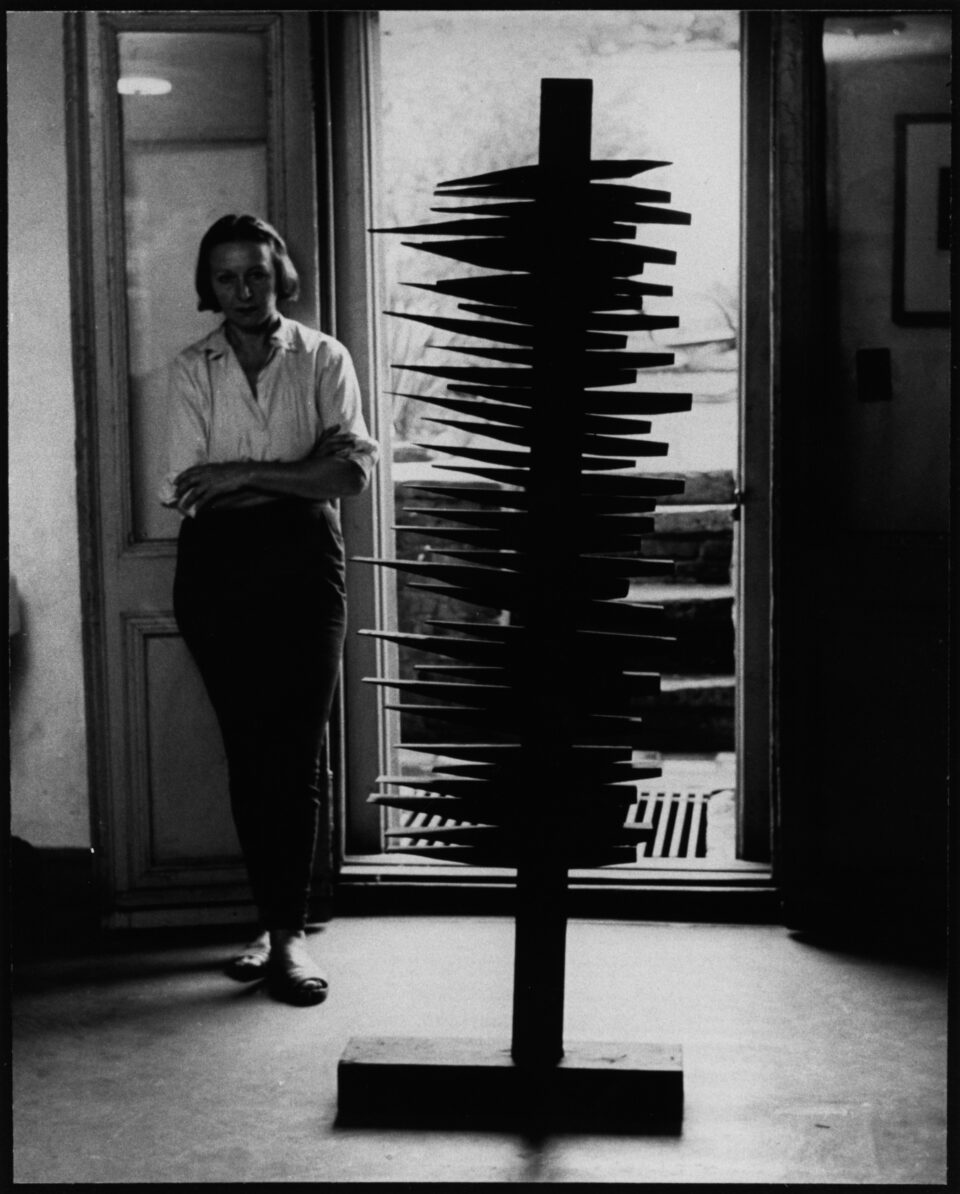
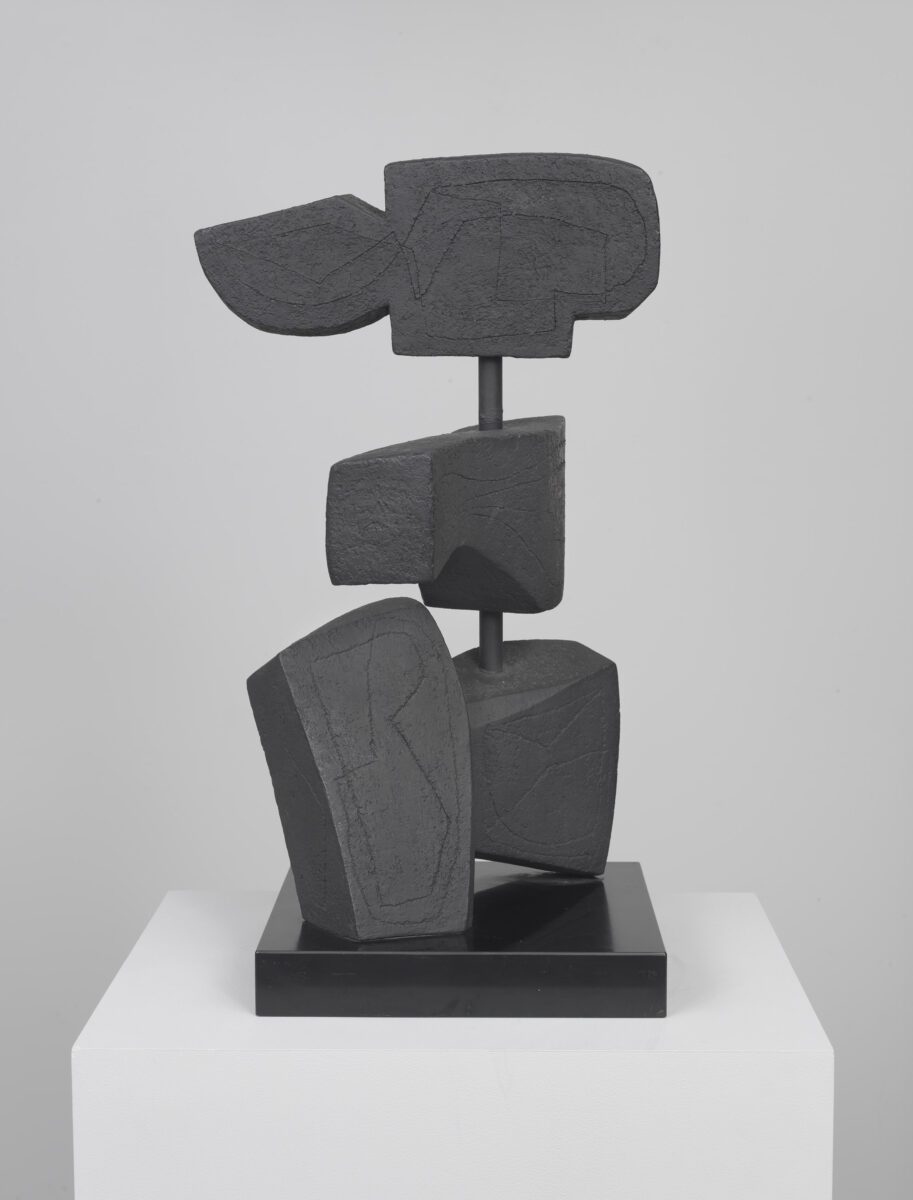
The immersive and transformative qualities of this practice continue to inspire contemporary female artists working across media. Tara Donovan transforms everyday objects into vast sculptural installations, where repetition and accumulation evoke the monumental walls. Chiharu Shiota’s labyrinthine thread installations weave memory, identity and architecture into spaces that absorb and envelop the viewer, echoing the totemic and narrative qualities of these palaces. Cornelia Parker converts found objects into suspended, enigmatic installations that play with shadow, light and gravity, creating immersive experiences that confront the viewer with the uncanny in the everyday. These artists reflect an enduring interest in transforming ordinary materials into spaces of contemplation, ritual and transcendence.
The ability to transform the mundane into the monumental lies at the heart of her genius. Assemblages of discarded wood, metal and paper transcend their materiality to become totems, altars and architectural interventions. Environments function as arenas for experience, where light, shadow and human scale merge in an orchestrated performance. Through meticulous construction of “walls,” space was claimed for herself, for women in the arts, and for audiences willing to engage with the unfamiliar. The theatricality of presence – turbaned, adorned and commanding – mirrored the drama of the work.
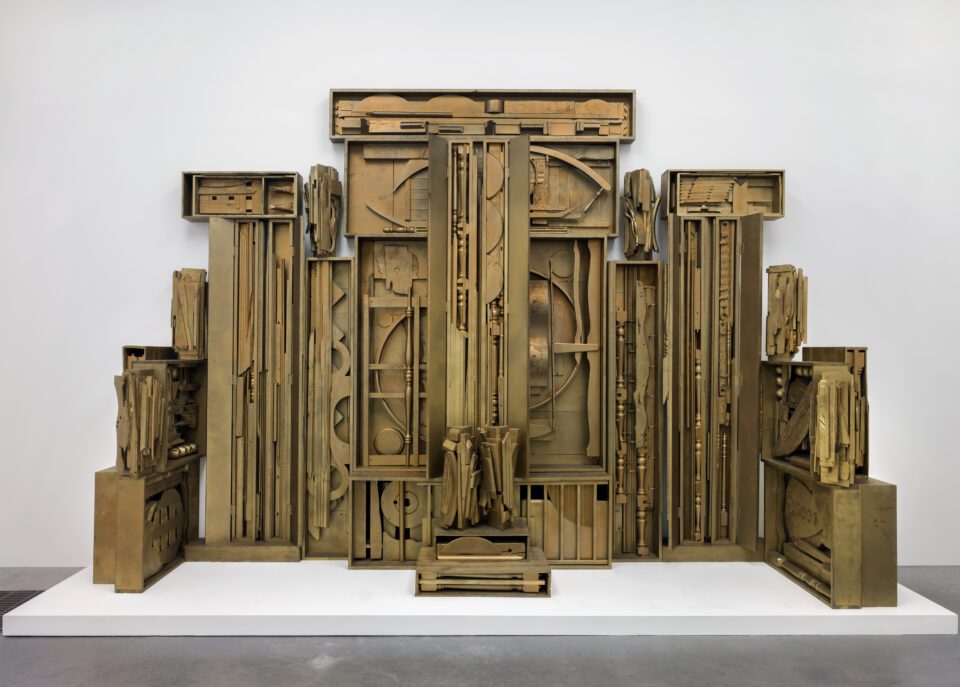
Returning to Mrs. N’s Palace at Centre Pompidou-Metz, the significance of this exhibition cannot be overstated. The largest European retrospective devoted to the work; it offers a rare opportunity to trace the arc of a career from early terracotta sculptures to monumental installations. Curator Anne Horvath has orchestrated an experience that foregrounds interdisciplinary impulses, situating the work at the intersection of sculpture, performance and ritual. Visitors encounter early prints alongside environmental installations, monumental “walls” alongside intimate works inspired by dance and spirituality, all within a narrative emphasising a pioneering role in the emergence of installation art.
More than a retrospective, Mrs. N’s Palace invites visitors into the mind of an artist whose influence extends far beyond the gallery. Found objects become sacred, architecture becomes theatre, and sculpture becomes lived experience. The exhibition demonstrates that mastery of form and space went hand in hand with visionary thinking, insights that continue to inform contemporary debates around materiality, performance and gender. Monumental palaces of wood and shadow carve a space for the imaginative.
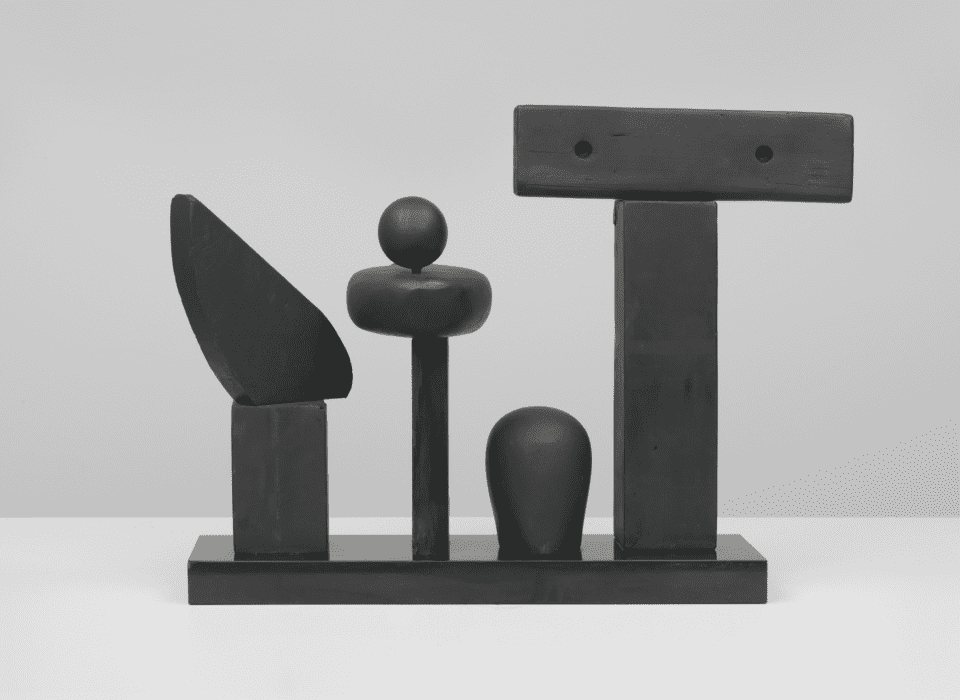
For those encountering these environments for the first time, the exhibition offers a revelation: the chance to witness how a wall, a room, or a fragment of the city can transform into a portal to a mythic realm. For those familiar with the work, it is a homecoming, a celebration of a lifetime dedicated to expanding perception and elevating the everyday to the extraordinary. Within Mrs. N’s Palace, the enduring power of sculpture to shape not only space but consciousness itself is asserted once more.
Louise Nevelson. Mrs N’s Palace is at Centre Pompidou Metz until 31 August: centrepompidou-metz.fr
Words: Simon Cartwright
Image Credits:
1&7. Louise Nevelson, Black Majesty, 1955.
2. Louise Nevelson, Dawn’s Presence II, 1969-1975.
3. Louise Nevelson, Sky Cathedral III, 1959.
4. Louise Nevelson at home, with First Personage, 30th Street, New York, circa 1954.
5. Louise Nevelson, Moving-Static-Moving Figure, circa 1945.
6. Louise Nevelson, An American Tribute to the British People, 1960-1965.