Experimentation, modernism and the shifting boundary between art and commerce define Lillian Bassman: Bazaar and Beyond, a compelling new exhibition at The Metropolitan Museum of Art. Drawing on a transformative gift from the artist’s estate, the presentation reframes fashion photography as a site of radical visual inquiry rather than mere commercial output. Across more than 60 works, the exhibition reveals a practice grounded in process, materiality and reinvention. Here, the magazine page becomes an arena for aesthetic risk, where gesture and atmosphere displace clarity and precision. The show foregrounds the tension between control and spontaneity, tracing how Bassman’s work resists fixity. As Max Hollein notes, “Lillian Bassman: Bazaar and Beyond shows an outstanding photographer and trailblazing art director transforming magazine pages into a premier artistic project of experimentation and impact.”
Born in Brooklyn in 1917 and raised within a bohemian circle of Russian émigrés in the Bronx, Lillian Bassman’s early life unfolded within a creative milieu that blurred the boundaries between disciplines. As a teenager, she moved through New York’s downtown art world, working as a nude model and later assisting on Works Progress Administration murals. These formative experiences shaped an approach that would remain fluid and collaborative throughout her career. Her encounter with Alexey Brodovitch at the New School proved decisive, introducing her to the principles of European modernism. Under his guidance, she absorbed the visual languages of Surrealism, Bauhaus design and Constructivism, translating them into the context of editorial production. At Harper’s Bazaar, alongside figures such as Diana Vreeland and Carmel Snow, she contributed to a wider effort to reimagine the magazine as a dynamic visual field.
Bassman’s work as art director at Junior Bazaar between 1945 and 1948 extended these ideas into new territory, adapting modernist strategies to the visual language of youth culture. Her layouts transformed everyday concerns, combining geometry and montage with a sense of immediacy and play. It was also here that she fostered emerging talent, offering early assignments to photographers including Richard Avedon. Yet, financial limitations curtailed the publication’s ambitions, prompting Bassman to reconsider her own creative direction. This shift marked the beginning of her transition from art direction to photography. Encouraged by her husband, Paul Himmel, she began to explore the camera as a tool for interpretation rather than documentation. What followed was a radical rethinking of fashion imagery.
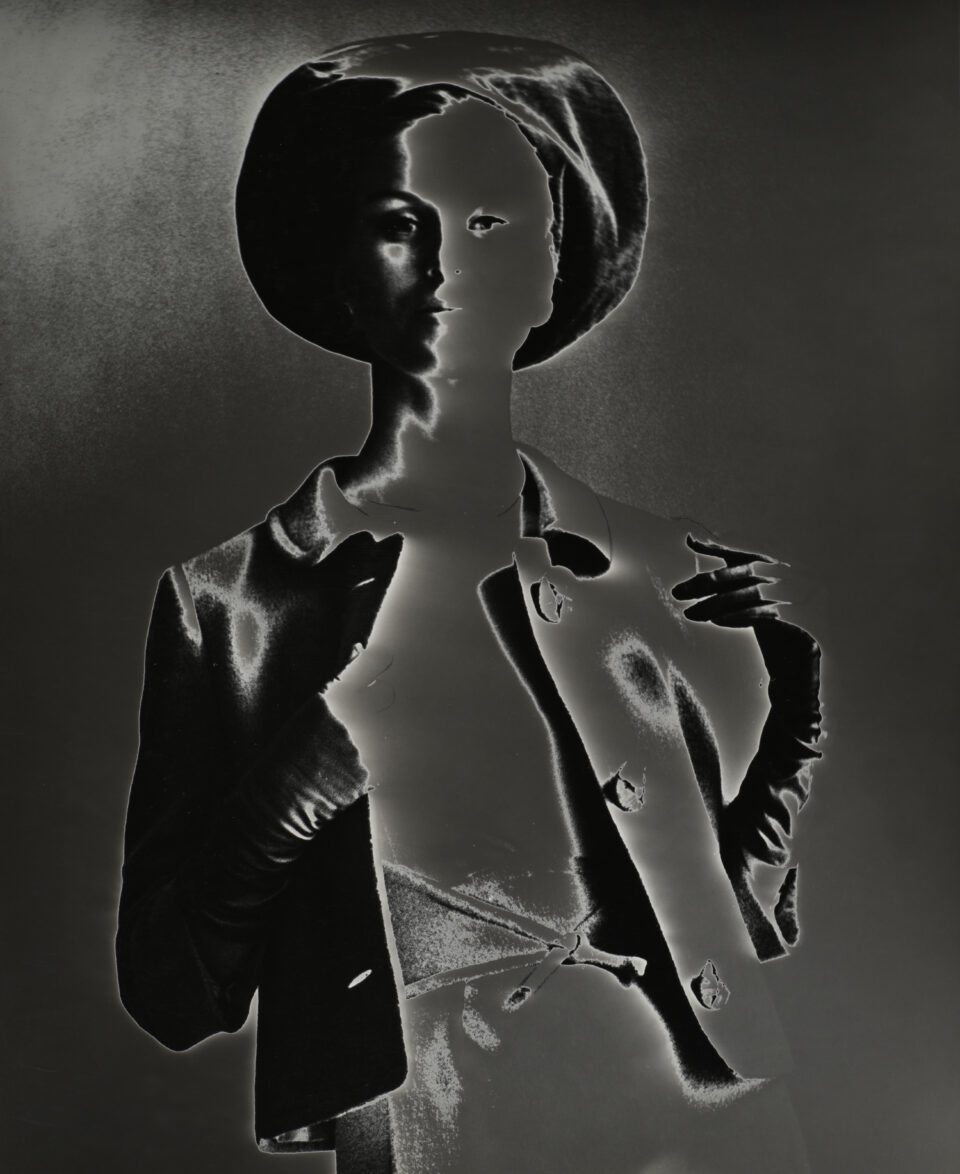
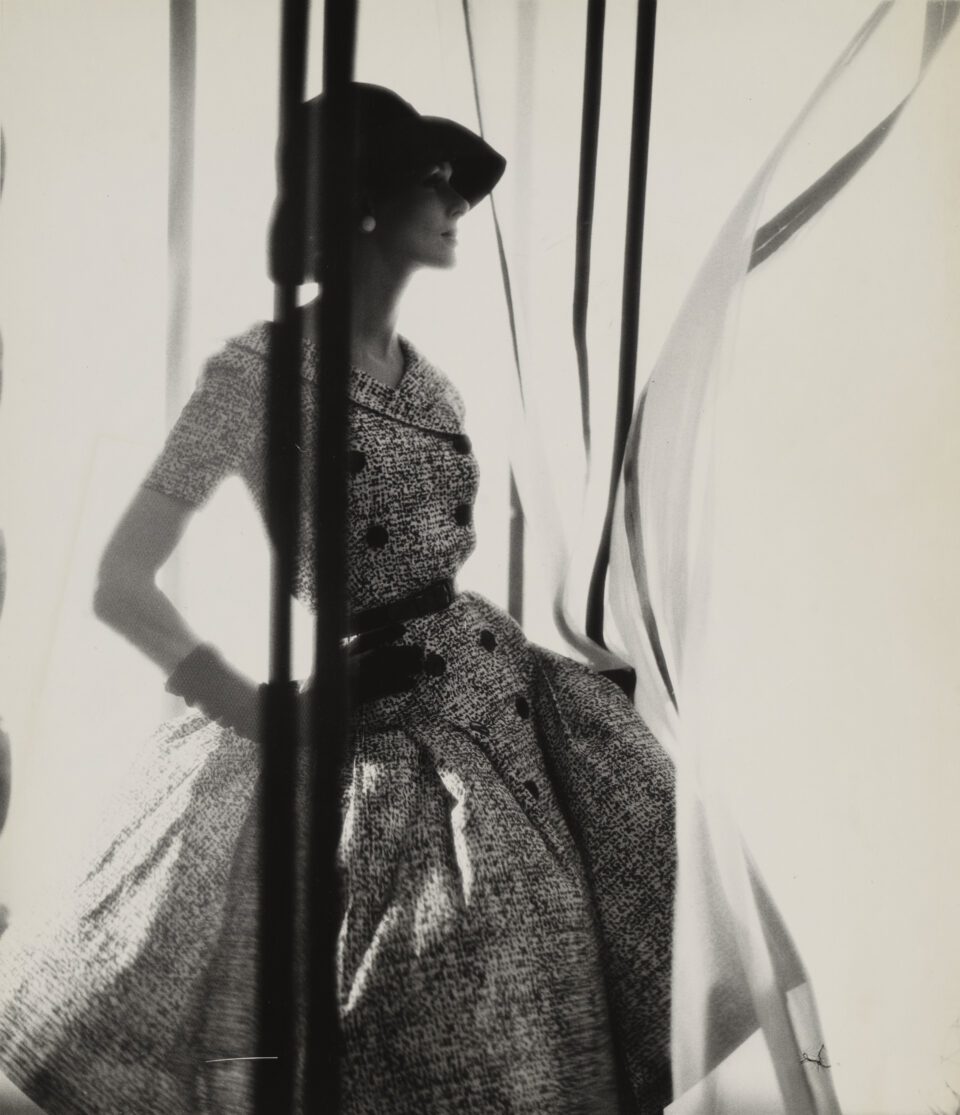
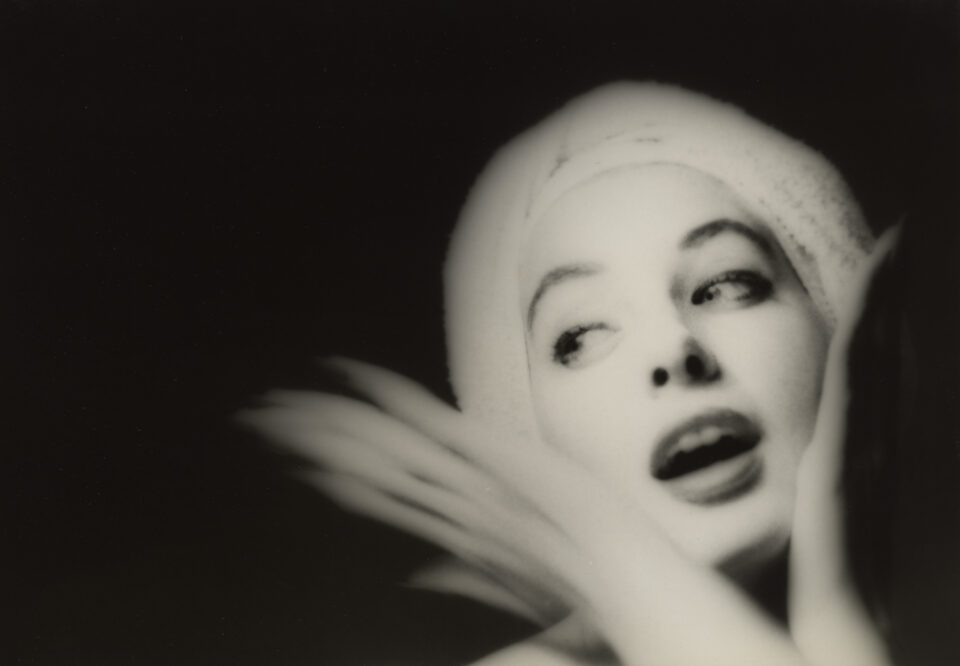
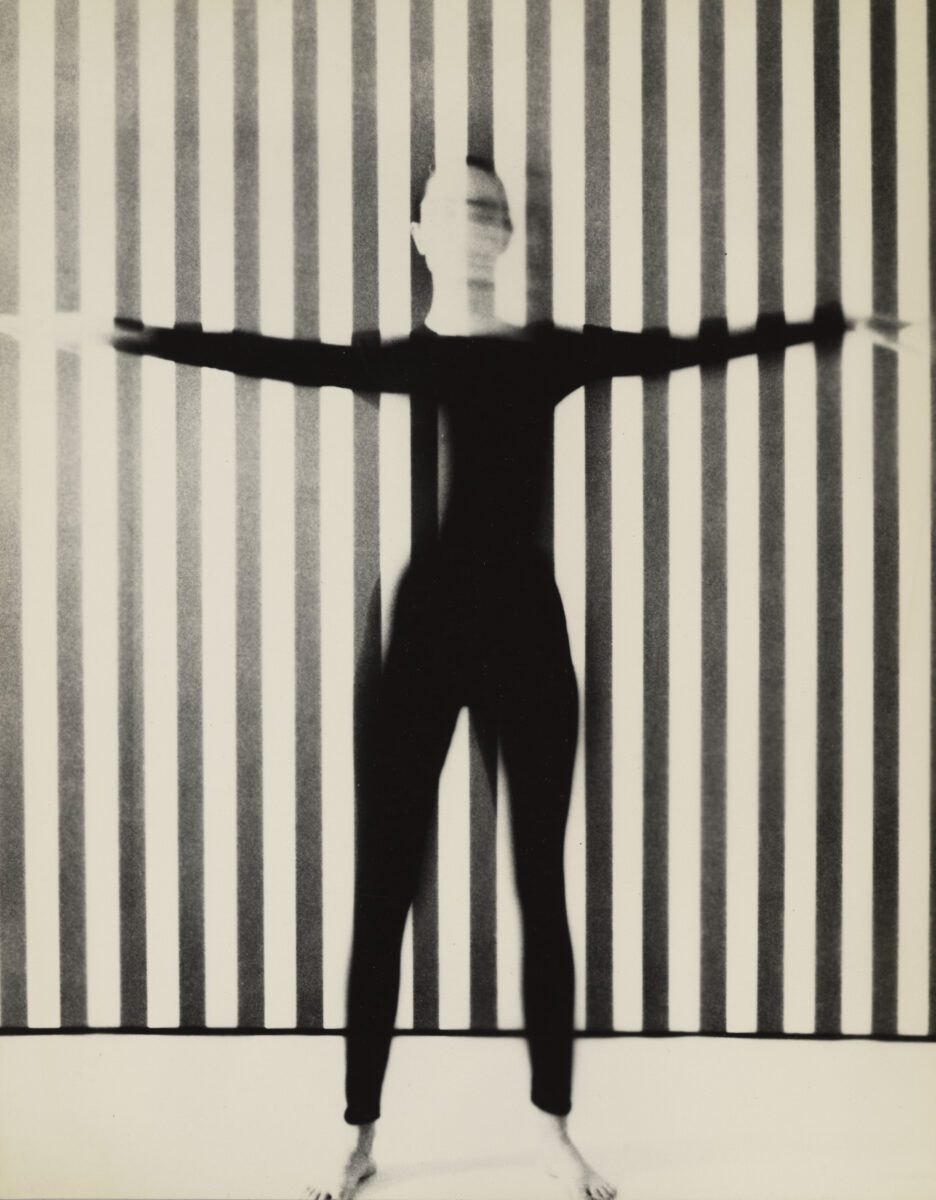
Her photographic work distils garments into their essential forms, privileging movement, line and atmosphere over descriptive detail. In works such as her blurred, high-contrast studies of evening gowns from the 1950s, figures dissolve into fields of shadow and light, their contours hovering between presence and absence. Through experimental darkroom techniques involving tissues, brushes and bleach, Bassman manipulated the surface of the image, allowing chance and intervention to shape the final composition. These processes pushed her work towards abstraction, challenging the conventions of commercial photography at the time. What is withheld becomes as significant as what is shown, inviting viewers to engage imaginatively with the image. This approach positioned Bassman at the forefront of a new visual language that blurred the boundaries between fashion, art and expressionism.
The current exhibition brings these developments into sharp focus, presenting a wide range of materials that trace Bassman’s evolution across decades. Vintage prints sit alongside editorial layouts, collages and maquettes, revealing the iterative nature of her practice. The installation invites viewers to follow each project from conception to publication, highlighting the transformations that occur along the way. “In this exhibition of more than 60 works are inventive layout designs, editorial assignments, and darkroom experiments with which Basman advanced new possibilities for photography in print.” Anchored by a gift of 70 works, the show also includes rare publications and a rediscovered poster design. These elements construct an alternative history of modernism, one rooted in the pages of the popular press.
A particularly resonant aspect of the exhibition is its focus on Bassman’s return to her archive in the 1990s, decades after she had stepped away from the field. Revisiting her early negatives, she produced new prints that pushed her imagery further towards abstraction. These late works found renewed relevance among contemporary audiences, whose visual sensibilities had been shaped in part by her earlier innovations. The dialogue between past and present underscores the enduring vitality of her practice. It also reveals the cyclical nature of influence, where ideas resurface and evolve across time. In this sense, Bassman’s work operates beyond its original context, continuing to shape contemporary visual culture.
Her influence can be traced in the work of contemporary photographers such as Sarah Moon, Viviane Sassen and Elizaveta Porodina, all of whom explore the expressive potential of fashion imagery. Like Bassman, these artists privilege atmosphere and ambiguity, using light, movement and abstraction to disrupt conventional representations of the body. Their practices extend her legacy into the present, demonstrating the continued relevance of her experimental approach. By situating Bassman within this broader lineage, the exhibition highlights her role as both innovator and precursor. It becomes clear that her work did not simply respond to its time but actively shaped the visual language of future generations.
At the same time, the exhibition invites reflection on the relationship between material process and image-making in an increasingly digital age. Bassman’s tactile manipulations stand in contrast to the seamless surfaces of contemporary imagery. This emphasis on process foregrounds the labour behind the image, challenging the notion of photography as a purely mechanical act. It also reasserts the importance of experimentation within commercial contexts, suggesting that innovation often emerges from within systems of constraint. As Hollein remarks, “We are proud to continue to celebrate extraordinary fashion photography as a catalyst of profound innovation and expression.” Bassman’s work exemplifies this ethos, demonstrating how artistic vision can transform even the most conventional formats.
Bassman’s personal connection with the museum itself, adding a layer of poignancy to the presentation. Reflecting on her early visits, she once remarked, “We were only interested in getting our education from The Met. That’s where I immersed myself in fashion.” This sense of return resonates throughout the show, as her work is placed in dialogue with the collections that first inspired it. The result is a nuanced exploration of artistic development, influence and memory. By bringing her images back into this institutional context, the exhibition completes a conceptual circle. It affirms Bassman’s place within the broader history of modern art while also highlighting her continued relevance. Bazaar and Beyond is not simply a retrospective but a reactivation of a singular vision that continues to shape how we see.
Lillian Bassman: Bazaar and Beyond is at Metropolitan Museum of Art, New York until 26 July: metmuseum.org
Words: Anna Müller
Image Credits:
1. Lillian Bassman (American, 1917–2012). Solarized fashion study, ca. 1960. Gelatin silver print 13 × 11 in. (33 × 27.9 cm) The Metropolitan Museum of Art, New York, Gift of Lizzie and Eric Himmel, 2025 (2025.889.34)© Estate of Lillian Bassman.
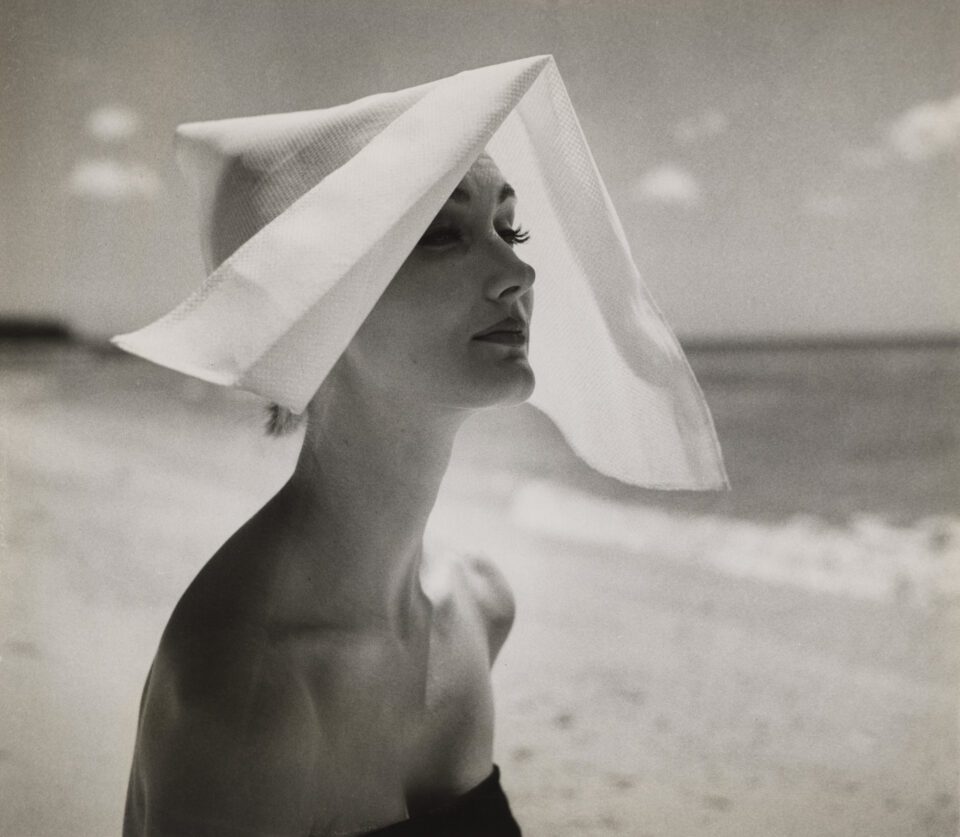
2. Lillian Bassman (American, 1917–2012). The Starched Coif, 1954. Gelatin silver print 10 × 11 1/2 in. (25.4 × 29.2 cm) The Metropolitan Museum of Art, New York, Gift of Lizzie and Eric Himmel, 2025(2025.889.29)© Estate of Lillian Bassman.
3. Lillian Bassman (American, 1917–2012), Summer Supplements: Daytime Editions, 1959. Gelatin silver print11 × 14 in. (27.9 × 35.6 cm) The Metropolitan Museum of Art, New York, Gift of Lizzie and Eric Himmel, 2025(2025.889.36)© Estate of Lillian Bassman.
4. Lillian Bassman (American, 1917–2012) A Report to Skeptics 1952. Gelatin silver print 8 3/4 × 12 1/2 in. (22.2 × 31.8 cm) The Metropolitan Museum of Art, New York, Gift of Lizzie and Eric Himmel, 2025(2025.889.27)© Estate of Lillian Bassman.
5. Lillian Bassman (American, 1917–2012), Exercises for Skeptics 1952. Gelatin silver print 10 x 9 ¼ inchesThe Metropolitan Museum of Art, New York, Gift of Lizzie and Eric Himmel, 2025 (2025.889.28) © Estate of Lillian Bassman.