How do people define “home” in the 21st century? Can we still refer to it as a singular place, when concepts of belonging have become increasingly plural? Has home as a geographical location had its day? How do people continually form new definitions of home for themselves? Even in an increasingly globalised and digitised society, people still harbour a longing for home, despite – or perhaps because – many lives are shaped by migration and constant change. We live in a time where one in every 74 people on Earth have been forced to flee their home. At the end of 2022, the UN calculated that 35.2 million of these were refugees, meaning they had crossed borders to escape violence, persecution or human rights violations. Tell Me Where Home Is, at Kunstmuseum Wolfsburg, explores these developments through the lens of 21st century art, in which artists address pressing questions around home, migration and belonging.
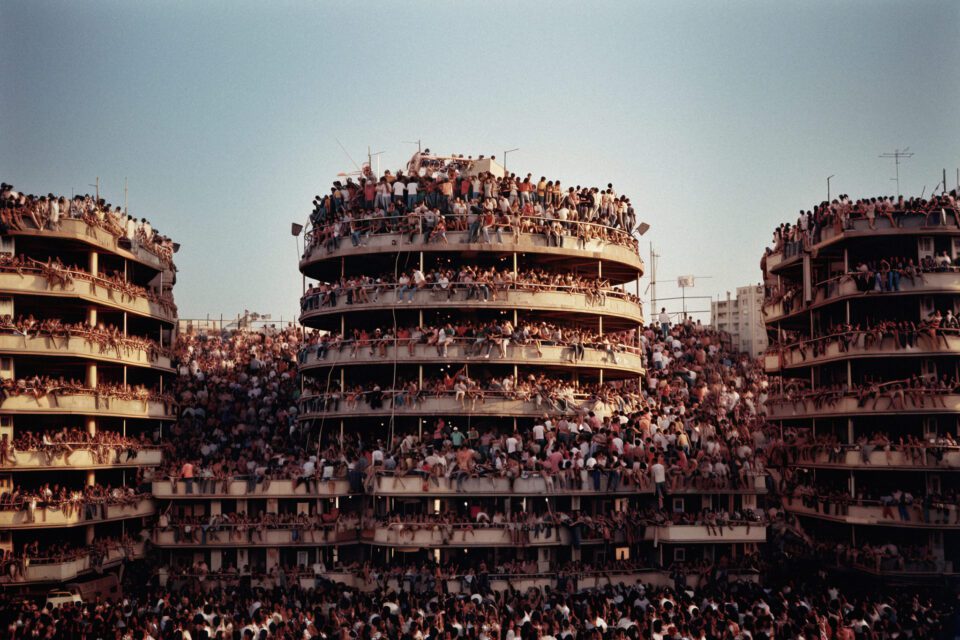
The show features 160 pieces, inviting audiences to consider personal and collective concepts of home. The exhibition seeks to foster a stronger understanding of the traumas experienced by forcibly displaced people and to encourage the acceptance of diversity as an essential part in the formation of new communities. It builds on the foundational principle of “homes everywhere, for everyone.” Artists spotlight how the spectrum of reasons for forced and voluntary migration are manifold, and ongoing processes of forming a sense of home are deeply rooted in shared traditions. The central question of the show is whether and how people find a sense of home within turbulent social structures.
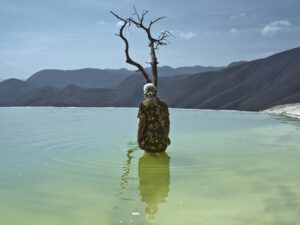
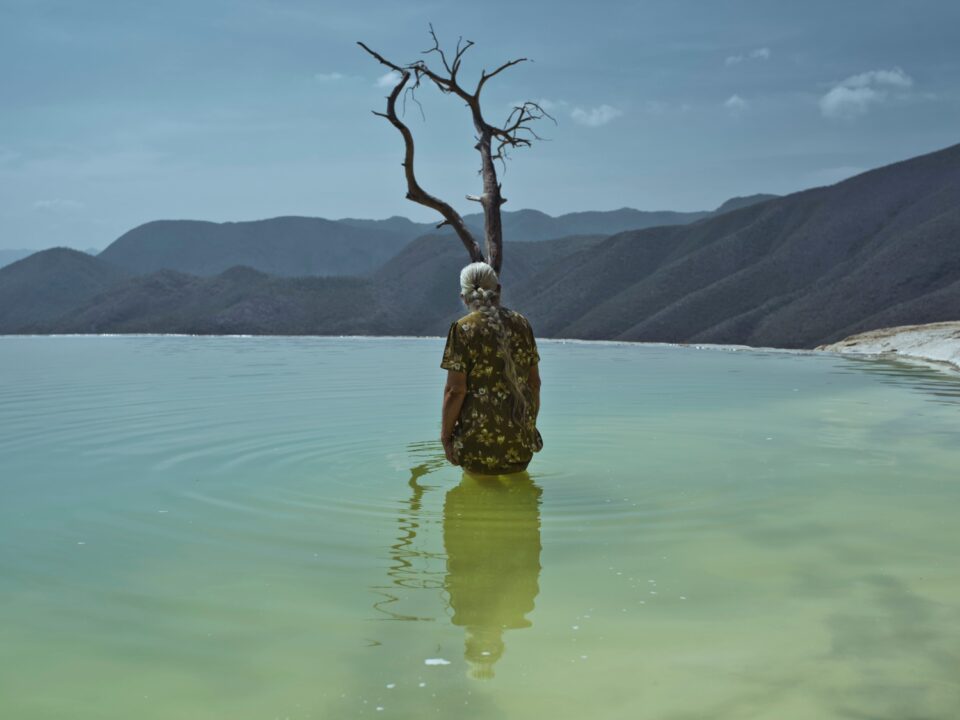
Cristina de Middel’s Journey to the Center presents the Central American migration route across Mexico as a heroic and daring passage, rather than a desperate escape. The artist borrows the atmosphere and structure of the Jules Verne book Journey to the Center of the Earth. She combines straight documentary photography with constructed images and archival material to create multi-layered narratives that reflect the complexity of human migration today. In de Middel’s work, the starting point is Tapachula, the Southern border of Mexico with Guatamala, and the journey ends in Felicity, a small town in California that is officially “Center of the World.” She describes: “The absurdit of this landmark, from where you can see the border fence, just adds a layer of dystopic disappointment and becomes the perfect colophon for a contemporary version of a heroic jest, where the final destination is little less than a roadside attraction.”
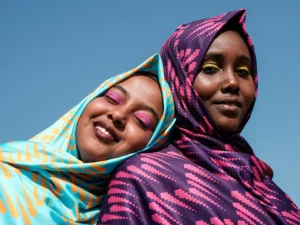
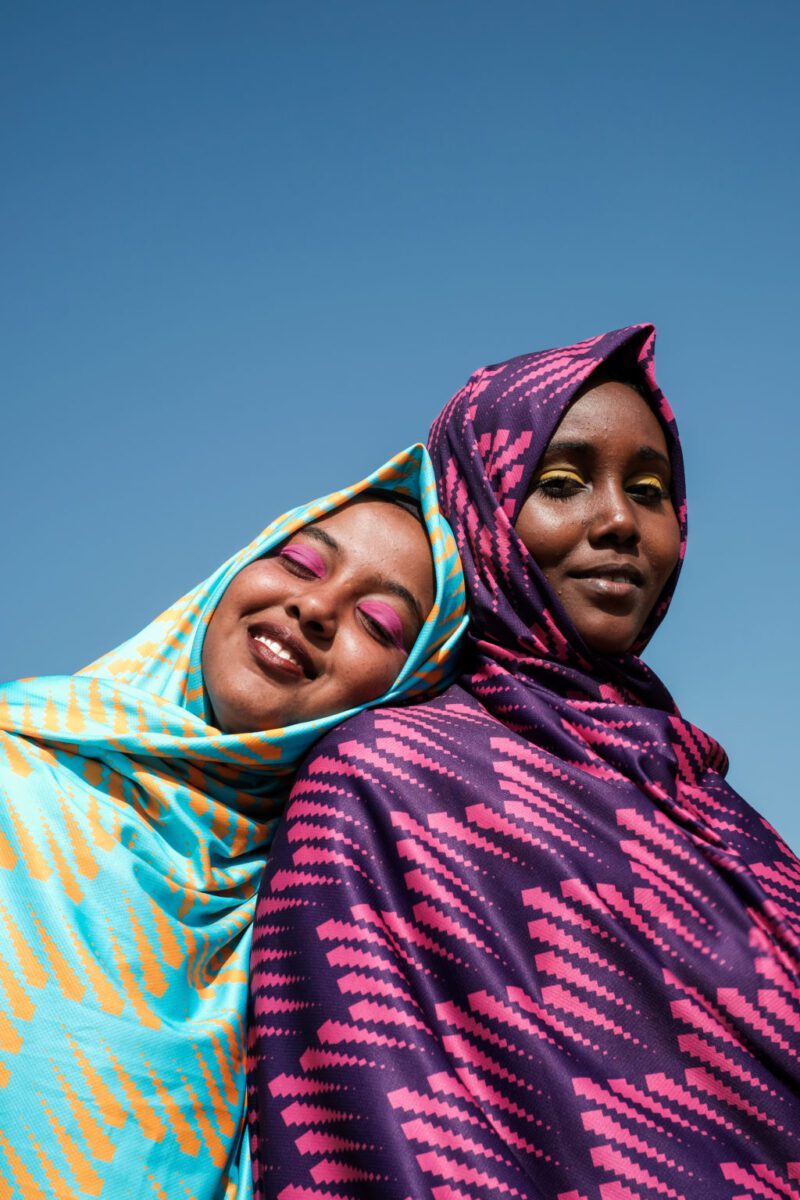
Elsewhere, Coco Olakunle captures portraits of those living in refugee camps in Kalobeyei, Kenya and Lesbos, Greece. In doing so, she aims to break through existing stereotypes and shift the visual narrative around asylum seekers, empowering their personal voices. Rustem, a young boxer from Afghanistan stares down the lens, fists raised and stance wide. Two women lean against one another, dressed in brightly-coloured fabrics and matching eye make-up. A Somalian woman smiles as she lifts her face to the Kenyan sun. These are portraits of defiance in times of unimaginable adversity.
Tell Me Where Home Is is an impressive undertaking, encompassing a vast array of perspectives and understandings to offer a vivid and nuanced portrait of home and migration in today’s unsettled global climate. Migration is a topic at the forefront of political discourse, and Kunstmuseum does something that is too often overlook; it places the people at the heart of the narrative. This is a call for empathy, a call for compassion, and a call for us all to consider the communities and lives affected by displacement. At its heart, there is one key message: everyone deserves to find, and define, their own home.
Tell Me Where Home Is is at Kunstmuseum Wolfsburg from 19 September – 1 January: kunstmuseum.de
Words: Emma Jacob
Image Credits:
1&3. Coco Olakunle, Hibo & Hani from Somalia, Kakuma, Kenya, 2018, Courtesy die Künstlerin, © Coco Olakunle.
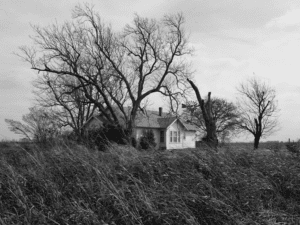
2. Alkan Avcıoğlu, Symphony No. 1 in D Major, Op. 3, Presto: “Convergence”, 2023. Aus der Serie Overpopulated Symphonies, 2023 Archivpigmentdruck auf Baumwollpapier 67,6 x 101,6 cm (Druck) 72 x 105 cm (Rahmen) Ed. 5 + 2 AP. Courtesy der Künstler und Fellowship © Alkan Avcıoğlu.
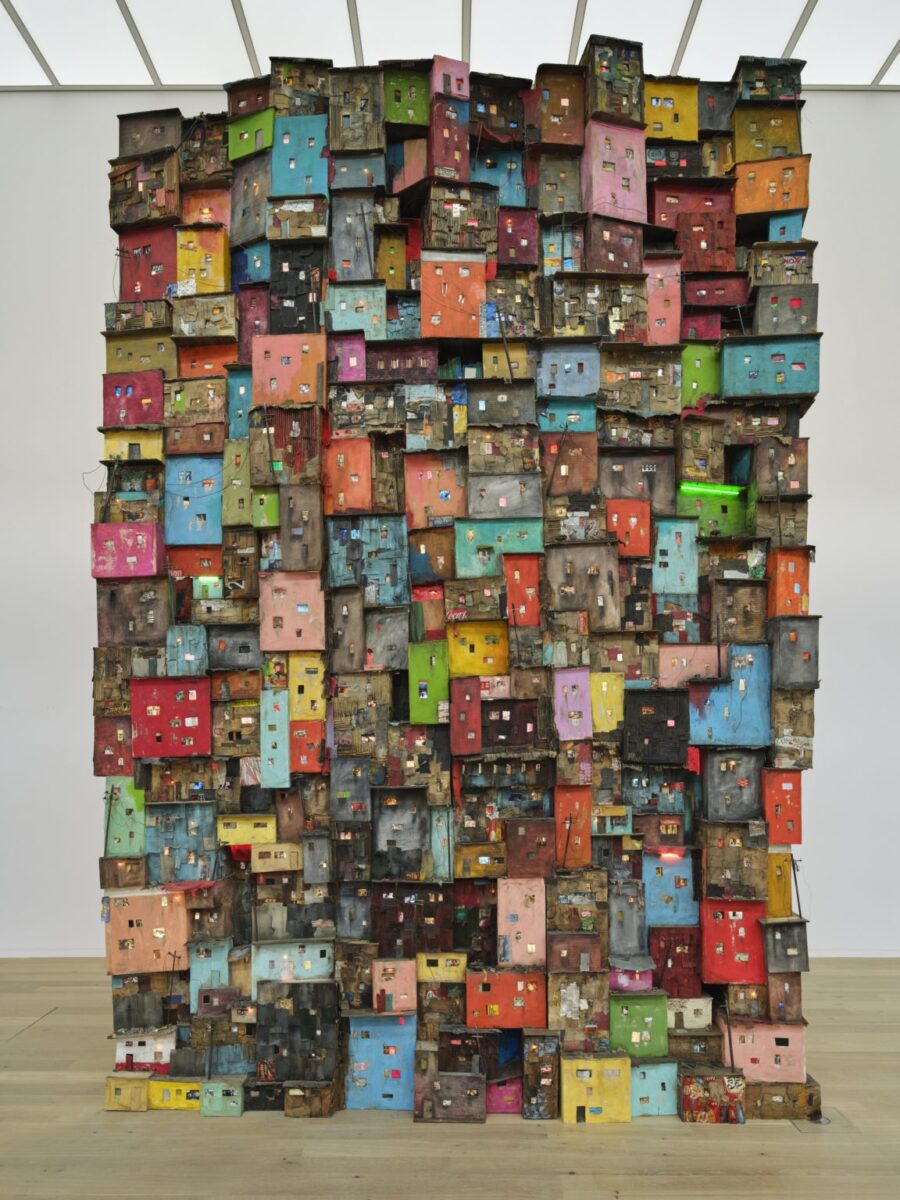
4. Tracey Snelling, One Thousand Shacks, 2016, mixed media installation with video, 475 x 310 x 40 cm, Installation view, Spaces Embodied, 2024, Courtesy of the artist, © Draiflessen Collection, Mettingen, Photo: Henning Rogge
5. Cristina De Middel, Hierve el Agua are petrified waterfalls and sulfuric spring source located in the state of Oaxaca. Despite the growing affluence of tourists, it remains a sacred place for natives. Mexico, 2019, © Cristina De Middel/Magnum Photos