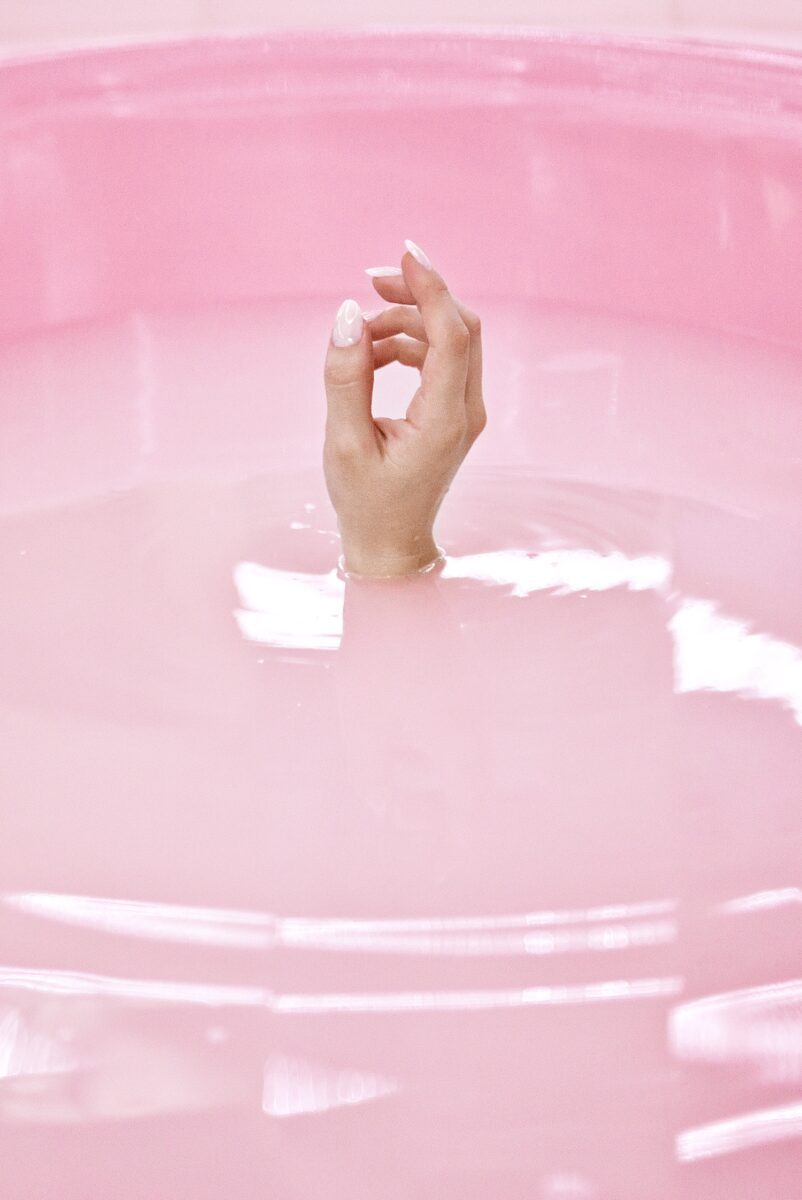
Juno Calypso (b. 1989) is the protagonist of her own retro-futurist world. Her alter-ago, Joyce, is a “bored, frustrated, lonely housewife of her imagination” and often staged in surreal settings. Her sinister, alluring portraits are a critical take on modern rituals of beauty and seduction. They’ve become part of a wider cultural moment across art and literature, where audiences are leaning into media about “feminine rage.” Consider horror films like The Substance or Ready or Not, projects that are often cited as “good for her” genres. One of her images graced the cover of Eliza Clark’s She’s Always Hungry, a short story collection that explores human desire. In the shot, a discoloured, green hand pokes out of a pink bathtub, it’s nails perfectly painted and manicured. In Calypso’s work – as in Clark’s writing – there’s a disquieting sense of disillusionment with modern beauty standards and gender expectations. Immersed in a trademark palette of pastel pinks and bruising blues, the artist explores these of femininity, solitude, despair and desire.
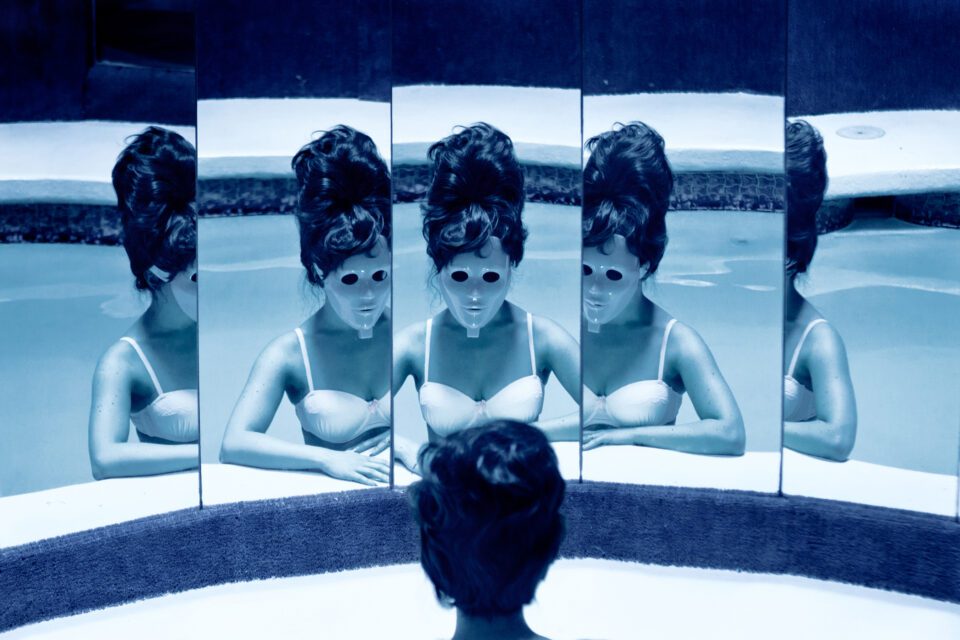
Empty Pleasures, set to go on display at The Print Sales Gallery at The Photographers’ Gallery, brings together highlights from previous projects with new works that incorporate collage and found imagery for the first time. Using new photographs, alongside found images from the 1970s and 1980s, Calypso cuts, mirrors and recombines fragments to create images which feel both nostalgic and uncanny. The artist describes this way of working: “Photo manipulation has always been a part of my work. I would blend two images, copying and pasting elements of each photograph together to create an illusion of perfection and harmony.” In the new forms, Calypso pushes this concept further. Her figures multiply into kaleidoscopic forms and ghostly apparitions as the pursuit of perfection begins to unravel and the distinction between physical reality and reimagining becomes increasingly blurred.
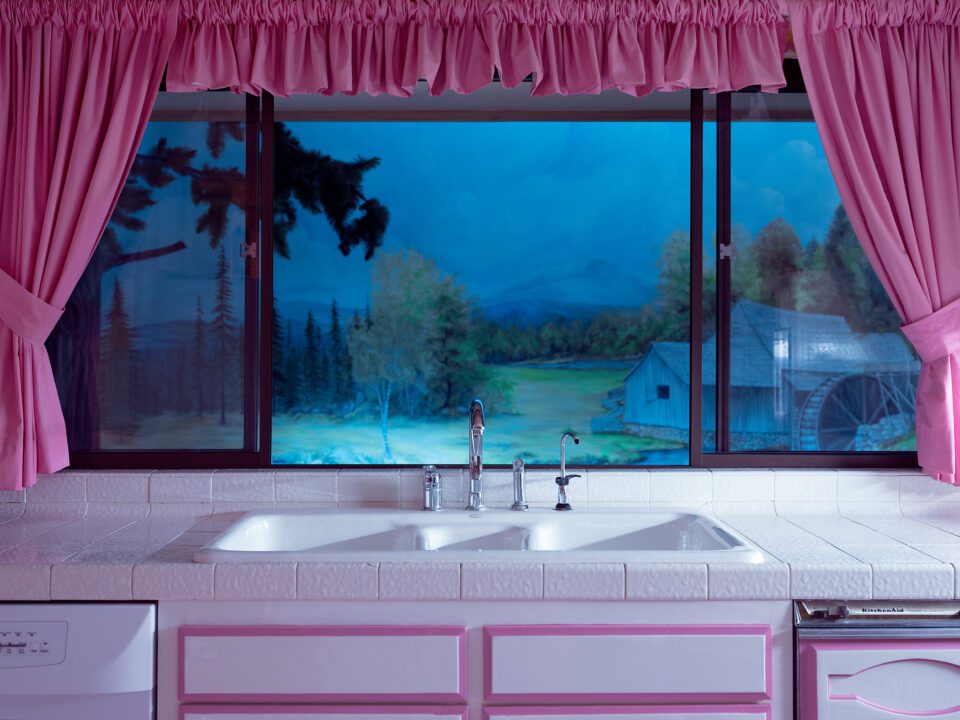
These images feel like a natural continuation from Calypso’s earlier work. She keeps a list of dream locations to shoot in, from an underground bunker in Las Vegas to romantic hotels in Pennsylvania. Here, contemporary locations give way to historic ones, where traditional scenes of mountain ranges are overlayed with a modern kitchen. In Tuesday in Eternity, wooden structures collide with dishwashers, allowing time to crumple in on itself. Elsewhere, a snapshot of a room is disrupted by the white silhouettes of two figures, almost like ghostly apparitions. Unusual for Calpyso, they’re figures without distinct character – perhaps echoing another facet of the female experience.
Calypso’s work really does conjure up another world. Audiences are taken through the looking glass, into an uncanny scene that echoes aesthetics we’re familiar with, without giving way to them entirely. In doing so, she reminds us that everything is not always as it seems – we just need to pay attention.
Juno Calypso: Empty Pleasures is at The Print Sales Gallery at The Photographers’ Gallery, London until 24 January: thephotographersgallery.org.uk
Words: Emma Jacob
Image Credits:
1. Juno Calypso, IYCLWM.
2. Juno Calypso, Tuesday in Eternity.
3. Juno Calypso, Untitled, Blue from The Honeymoon.