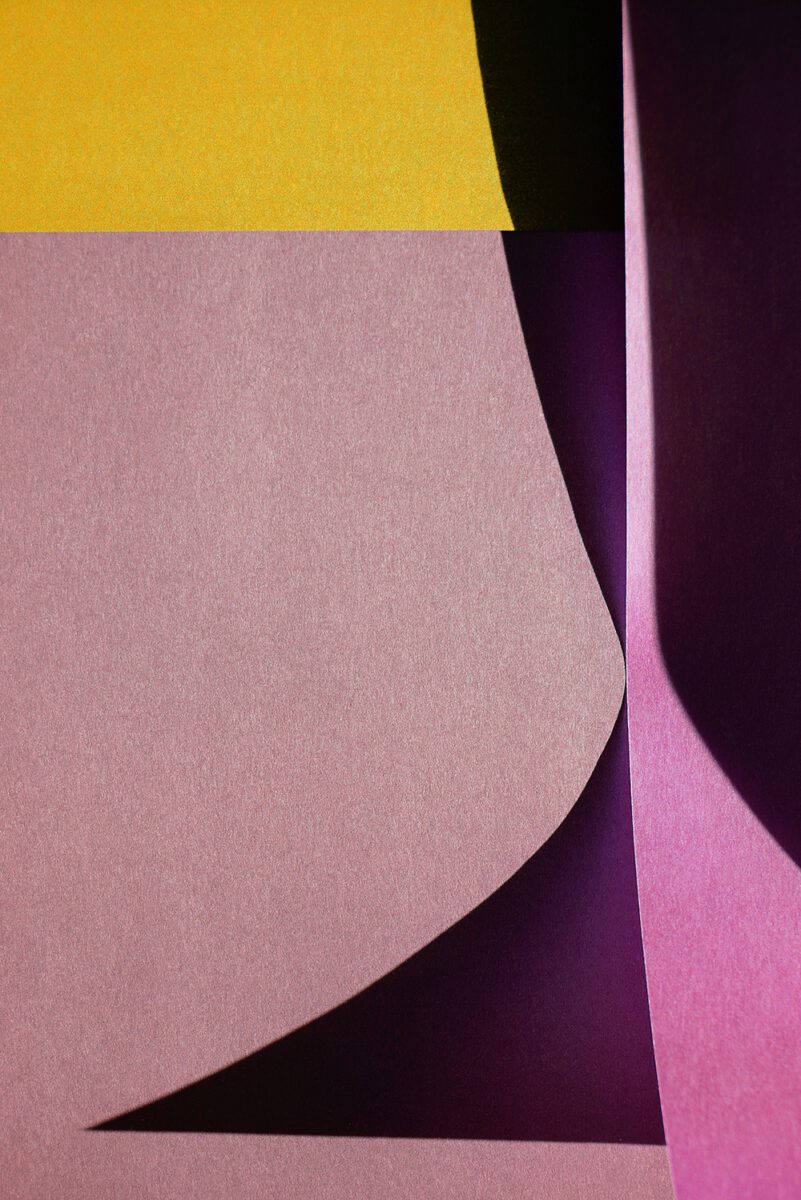
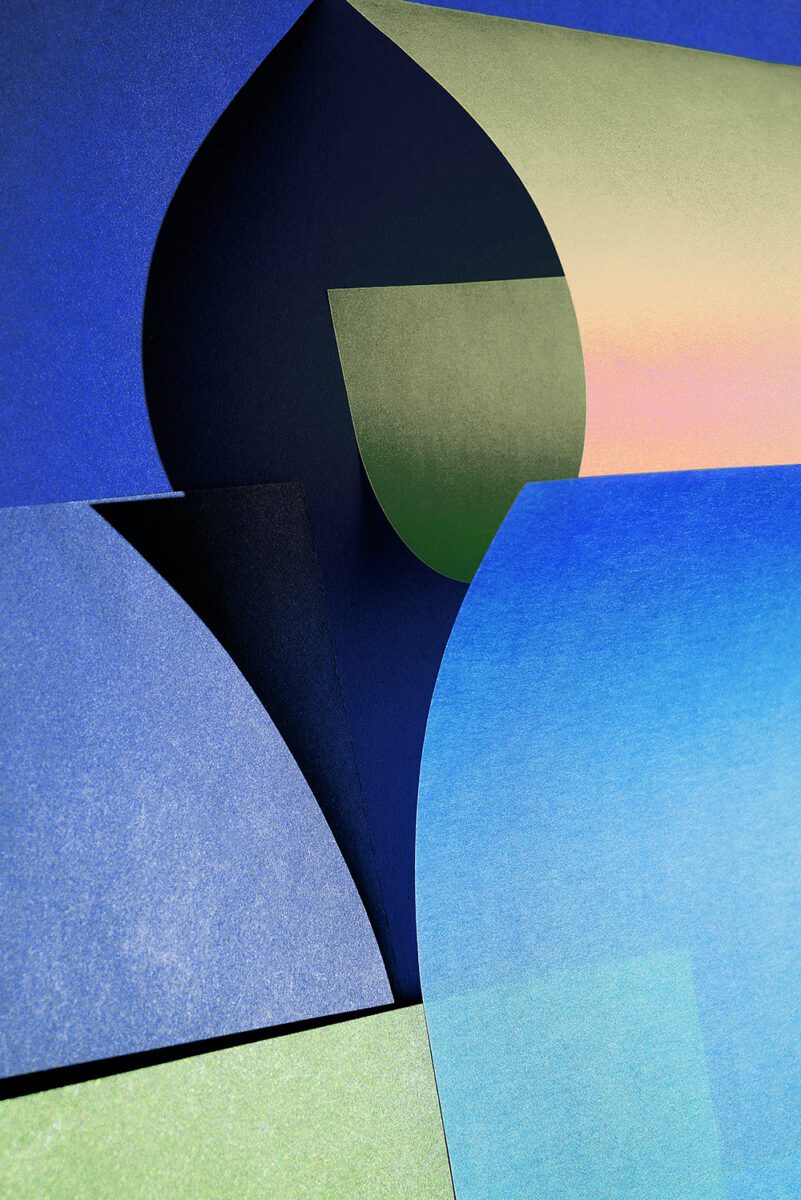
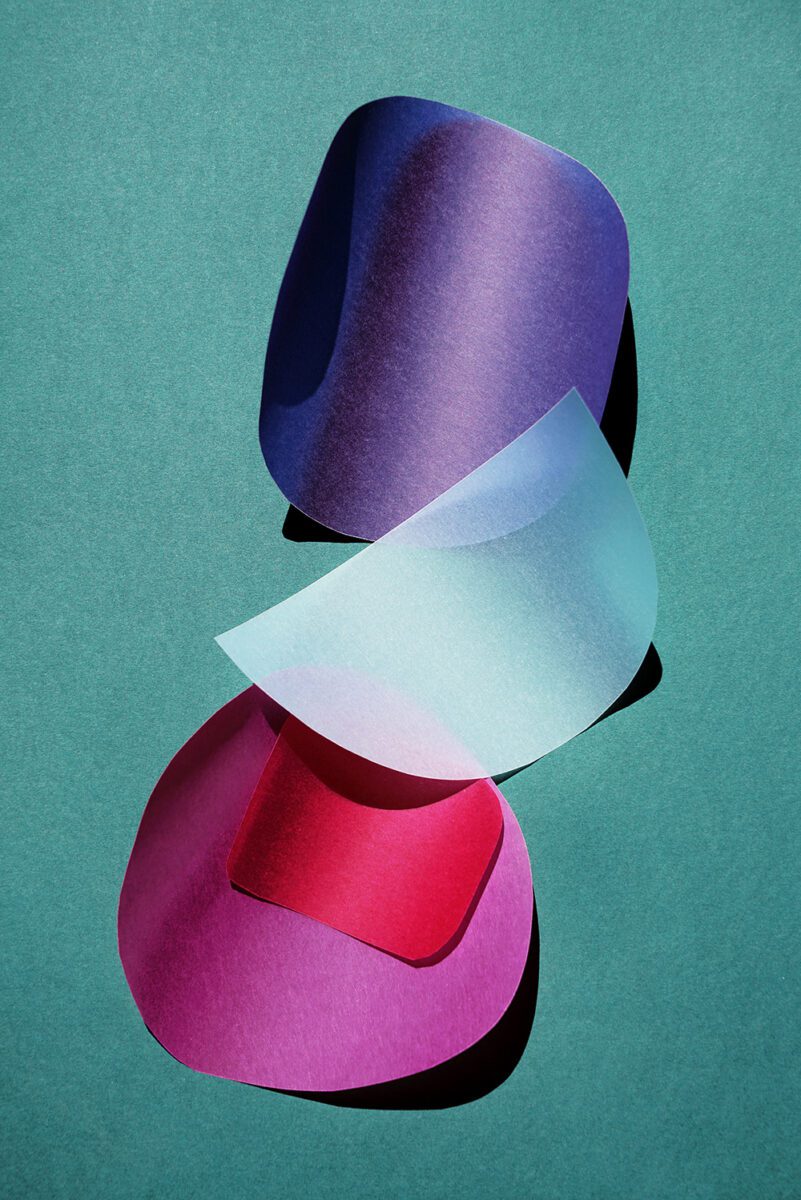
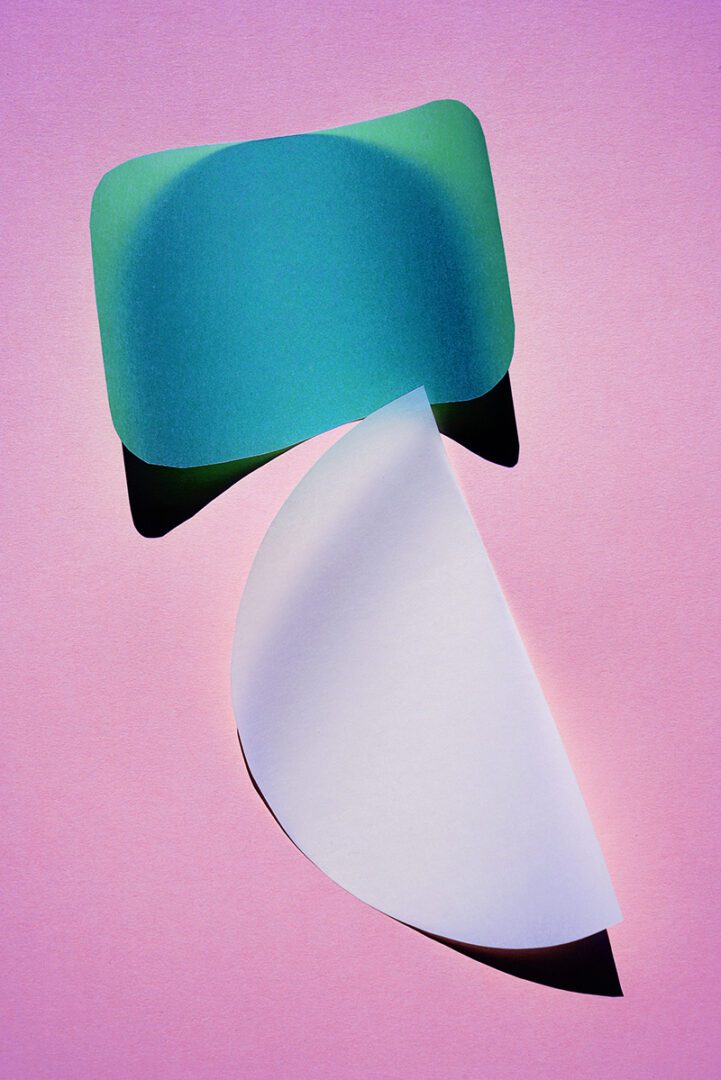
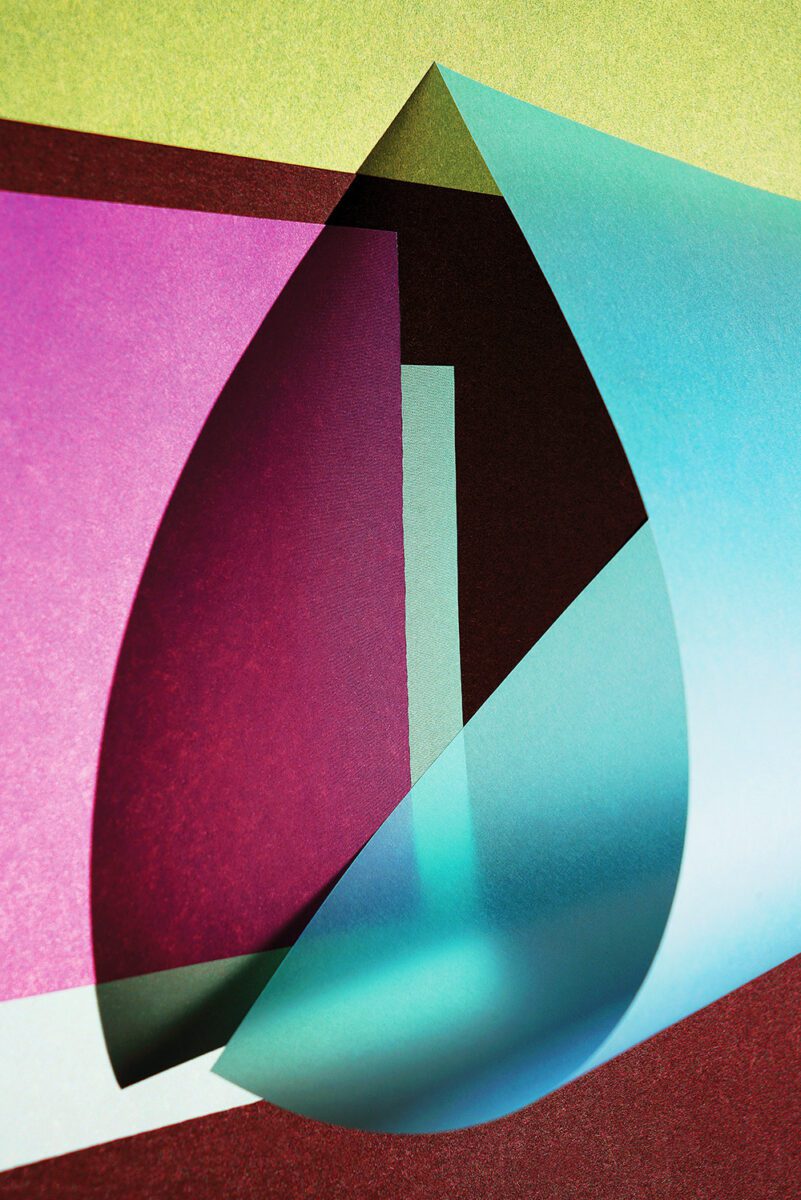
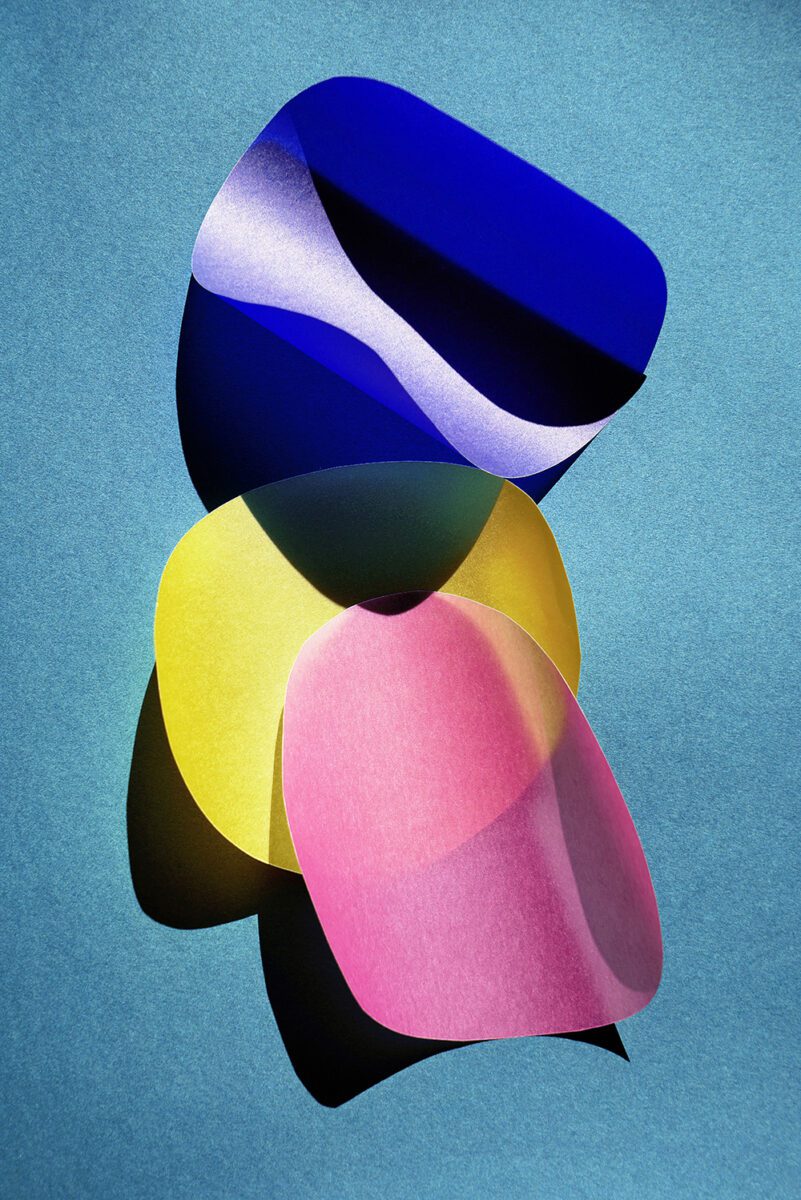
Jessica Backhaus (b. 1970) is an artist who strips photography back to its fundamentals: light, shadow, colour. Her work is rooted in documentary practice, expanding the tradition through a lyric, abstract visual language. In her series, Cut Outs (2021), she arranged paper shapes until the relentless Berlin sun, capturing the pieces as they curled and bent, freezing their movement in a split second. In Plein Soleil, close-up and zoomed in pictures show turquoise pages coiling and casting shadows over contrasting magenta sheets. Now, FFFrankfurt presents a major retrospective of the artist, considered one of the most influential German practitioners working today. Shadows Might Dance brings together works from the past 25 years, from early documentary pieces, through her gradual shift towards abstraction, right up to her new series, Papyrus, presented for the first time. The show is a unique and wide-ranging insight into Backhaus’ artistic oeuvre, revealing her unique sensitivity to materiality, texture and colour. We spoke to the artist ahead of the opening to find out what it was like to reflect on a quarter of a century of work.
A: Shadows Might Dance spans 25 years of work. What was the process of curating this show?
JB: The act of putting together the show felt daring, as you go through the normal process of self-doubts and questions. It allowed me to reflect and see how one can change. I believe the true challenge as an artist is to evolve, whilst trying to stay authentic at the same time. Co-curating this exhibition with Celina Lunsford, the artistic director of the FFF, and Andrea Horvay felt more like tracing a long thread through my work, rather than revisiting milestones. I wasn’t interested in a mid-career survey in the traditional sense. Instead, we asked which pieces still held tension, vulnerability or curiosity. Those became the anchors of the show. The process revealed how ideas I thought I’d left behind had quietly evolved, shifted or returned in unexpected ways. The final stage was thinking about how the audience would move through the space. We have treated the exhibition like a choreography – how one series leads into another, where pauses happen or density gives way to quiet. The aim was to create an experience where time collapses, so viewers aren’t aware they’re crossing decades, only that they’re moving through a shared atmosphere.
A: How has your creative vision evolved over the past 25 years?
JB: In the beginning, my practice was about finding and developing my own voice – testing what I could say and how far I could push it. Over the years, the work has shifted toward listening: to materials, space, what the work itself seems to ask for. The vision has become less declarative and more responsive, open to uncertainty and intuition. I want my photographs to peel back the layers of ordinary details and materials – whether found in everyday life or arranged in my studio – to reveal something about our innermost sense of self. This can happen within a deceptively simple abstract ensemble of colour, shape and shadow; or can emerge within the textures and composition of a naturally occurring scene. My work consists of an interplay between reality and abstraction. I enjoy exploring these various worlds. Finally with time and experience, I have become daring and free. Each phase of my creative path has been a response to the influences around me, whether it was the vibrant world of theatre, the stark beauty of photography or the expansive freedom of abstraction. My personal and creative journey is a continuous exploration, driven by an insatiable curiosity about life and a deep connection to the arts in all their forms.
A: Your early series, like Jesus and the Cherries, is narrative-driven, while later works such as Papyrus are more abstract. What has drawn you towards abstraction?
JB: It has captivated me for the past eight years, and with every day that passes, my fascination only deepens. There’s something profoundly liberating and mysterious about abstraction – it allows me to step beyond the limits of representation and into a realm where imagination is unbound. For me it creates a space to dream, feel and explore my own perceptions of the world. In abstraction, each viewer is invited to have their own interpretations and emotional responses. This makes the experience deeply personal and varied. In this context, a dialogue opens between the seen and the unseen.
A: Can you walk us through your typical process when developing a new series?
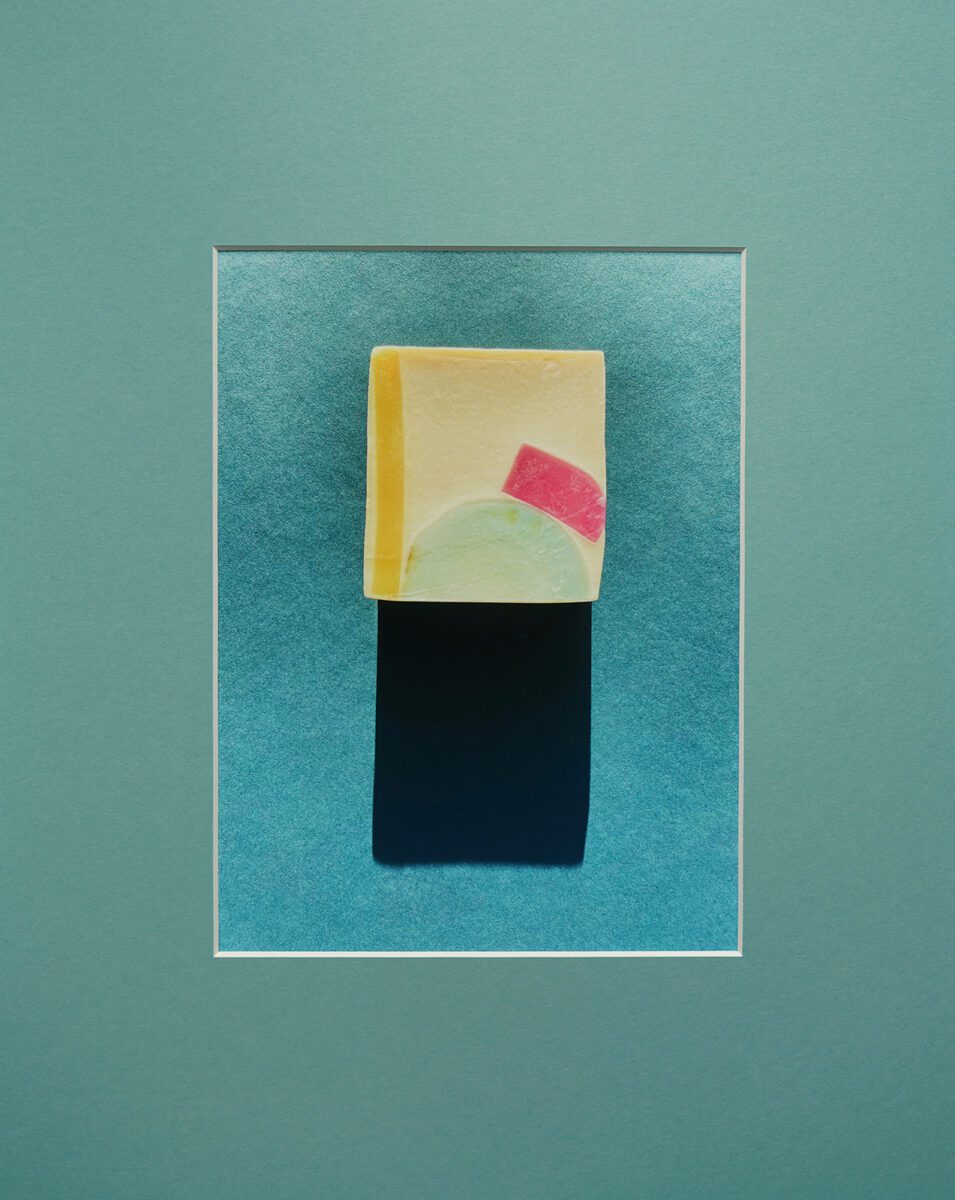
JB: It is typically very intuitive and often guided by the materials themselves. I’m also inspired by readings, as well as what I see and discover while visiting exhibitions, lectures, theatre plays or performances. For the last three series, Cut Outs, Plein Soleil and Papyrus, two key elements were very important: the various coloured papers that I have used and the bright sunlight. The interplay of light and shadow created rich, deep contrasts. The way the shadows stretched and shifted fascinated me. I took my camera and began capturing these fleeting moments, documenting the ephemeral beauty of the paper combinations and their changing patterns. It’s always a bit of a performance – each photograph is a record of something that won’t last. I am shifting and turning the papers in subtle gestures, so each composition is a moment in time. Music often accompanies me in this process. The rhythm and melody seem to connect directly with the movements of the papers, and I become immersed in the experience. I follow the emotions that arise. It’s an organic, almost meditative way of working, where I’m both participant and observer.
A: Your series Cut Outs used the heat of the Berlin summer sun to shape, curl and bend paper. How much did you influence the outcome, or was the series also about relinquishing control to the sunlight?
JB: The process was a balance between control and trust in the unknown. Once I placed the cut outs on the coloured paper in the heat of the sun, I could no longer fully predict how they would respond. That tension between purpose and release was essential. The sunlight wasn’t simply a tool – it became an active partner. This way of working required me to step back and have faith in the materials. Each new composition introduced a degree of unpredictability. That openness transformed the process into something deeply joyful and energising, not despite the uncertainty, but because of it.
A: Who, or what, are you biggest creative inspirations?
JB: Some of the influences who nourish my inspirations are Etel Adnan, Jean Arp, Sonia Delaunay, Helen Frankenthaler, Raoul de Keyser and Mark Rothko. Plus, Yves Klein’s blue will never cease to move me. Otherwise, I am inspired by the emotional landscapes we navigate as humans – connection, distance, presence, absence, certainty and doubt. Everyday experiences, conversations and states of being flow into my pieces. They shape its atmosphere rather than its imagery, something felt instead of represented.
A: The exhibition emphasises form, colour and light as defining elements. How do you see these aspects connecting the different series on display?
JB: They have become a shared language across the different series. They speak to deeper, often unspoken aspects of our human experience – things that are felt rather than articulated. In working abstractly, I have discovered new ways of expressing emotion, thought and perception. Each project feels like a step further into a landscape where form is less about recognition and more about essence – how light occupies space, how colour carries mood and how subtle shifts can evoke feeling. Seen together, the works reflect an ongoing evolution: a process of pushing abstraction further and considering how simple things can evoke the most profound emotional responses. This exploration is both a way of understanding the world around me and a way of staying connected to my own artistic voice, which is still constantly developing.
A: You’ve said that colours are “like emotions, they have their own language.” Tell us more about that.
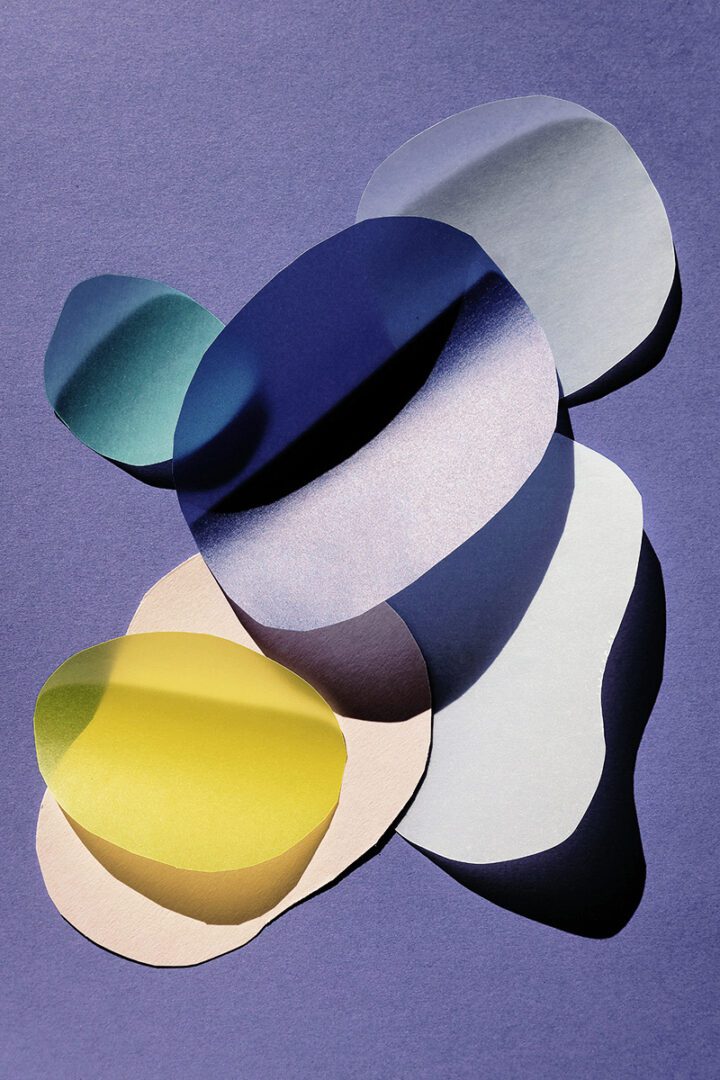
JB: Colour has its own poetry. In its purest form, it carries a narrative without needing explanation – each hue is alive with emotion, memory and association. It operates like a language that doesn’t rely on words. It communicates directly and intuitively. In my work, each shade is chosen for its emotional weight and its ability to suggest presence or absence, intensity or quiet. Like emotions, colours shift depending on context; they respond to light, form and what surrounds them. I’m not trying to describe something but evoke a state of being. I embrace colour in all its magic, yet I have always had a strangely ambivalent relationship with black. Over the years, working with black – as shadows – has taught me how essential it is: without shadow, the light and colour cannot fully exist. In my exhibition at the FFF in Frankfurt, shadows and colour move together, quietly dancing, carrying feeling where words cannot reach.
Jessica Backhaus: Shadows Might Dance is at FFFrankfurt from 31 January – 26 April: fffrankfurt.com
Words: Emma Jacob & Jessica Backhaus
Image Credits:
1. Jessica Backhaus: Cut Out 46, 2020, from the series Cut Outs, © Jessica Backhaus, 2025, courtesy of Robert Morat Galerie.
2. Jessica Backahus: Untitled 21, 2024, from the series Plein Soleil, © Jessica Backhaus, 2025, courtesy of Robert Morat Galerie.
3. Jessica Backahus: Untitled 6, 2024, from the series Plein Soleil, © Jessica Backhaus, 2025, courtesy of Robert Morat Galerie.
4. Jessica Backhaus: Cut Out 90, 2020, from the series Cut Outs, © Jessica Backhaus, 2025, courtesy of Robert Morat Galerie.
5. Jessica Backhaus: Cut Out 11, 2020, from the series Cut Outs, © Jessica Backhaus, 2025, courtesy of Robert Morat Galerie.
6. Jessica Backahus: Untitled 2, 2024, from the series Plein Soleil, © Jessica Backhaus, 2025, courtesy of Robert Morat Galerie.
7. Jessica Backahus: Sunrise, 2022, from the series The Nature of Things, © Jessica Backhaus, 2025, courtesy of Robert Morat Galerie.
8. Jessica Backhaus: Cut Out 16, 2020, from the series Cut Outs, © Jessica Backhaus, 2025, courtesy of Robert Morat Galerie.
9. Jessica Backhaus: Cut Out 46, 2020, from the series Cut Outs, © Jessica Backhaus, 2025, courtesy of Robert Morat Galerie.