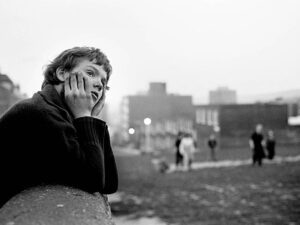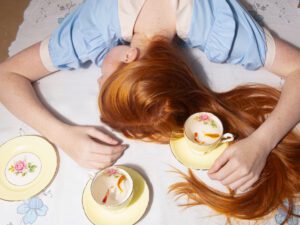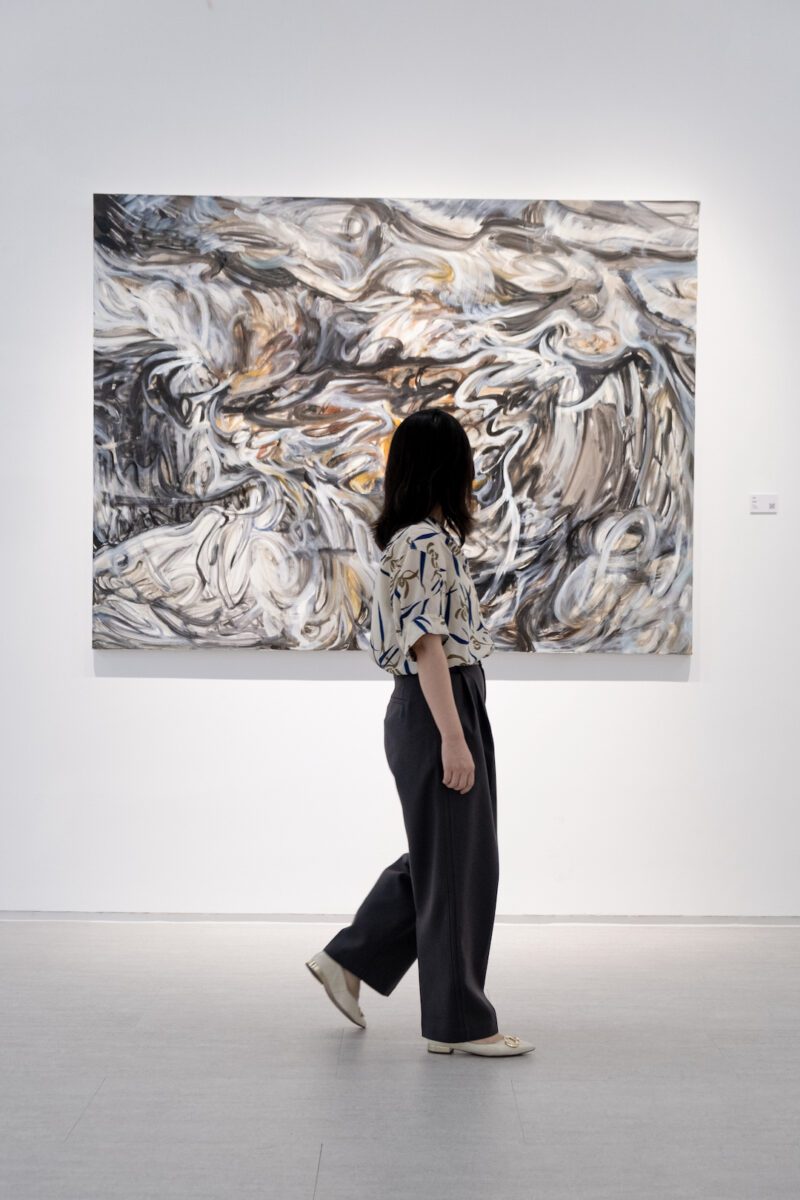
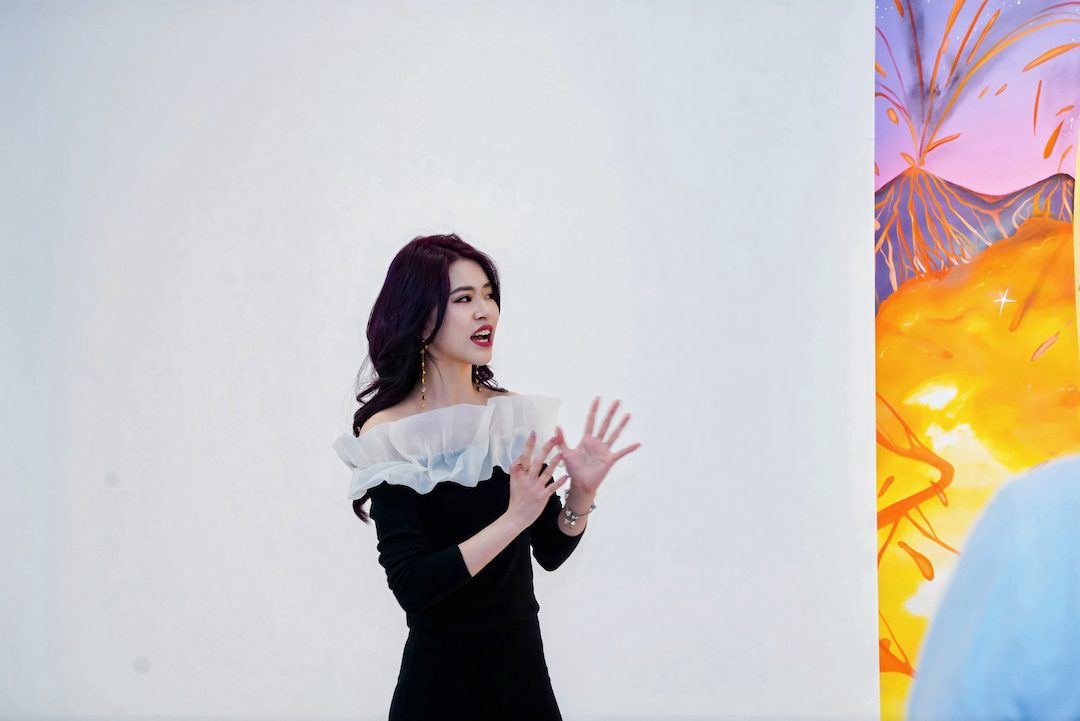
“Art can’t just be a formal exercise; it has to come from lived experience. Creation has to be grounded in something real.” Artists’ stories are central to Ziyan Xu, a contemporary art curator who has gained recognition for exhibitions grounded in the firsthand realities of creatives. She showcases their work as a means of exploring broader questions of belonging, representation and selfhood. Xu, who holds a long-term position at XIMA Gallery in Hangzhou, China, founded Whiteshepherd Art in London in 2025. Through these dual roles, she brings emerging contemporary voices from the UK to growing audiences in China – and vice versa – fostering cross-cultural dialogue through studio visits and the establishment of long-term relationships. “I want to understand the person behind the work, not just the output,” she says.
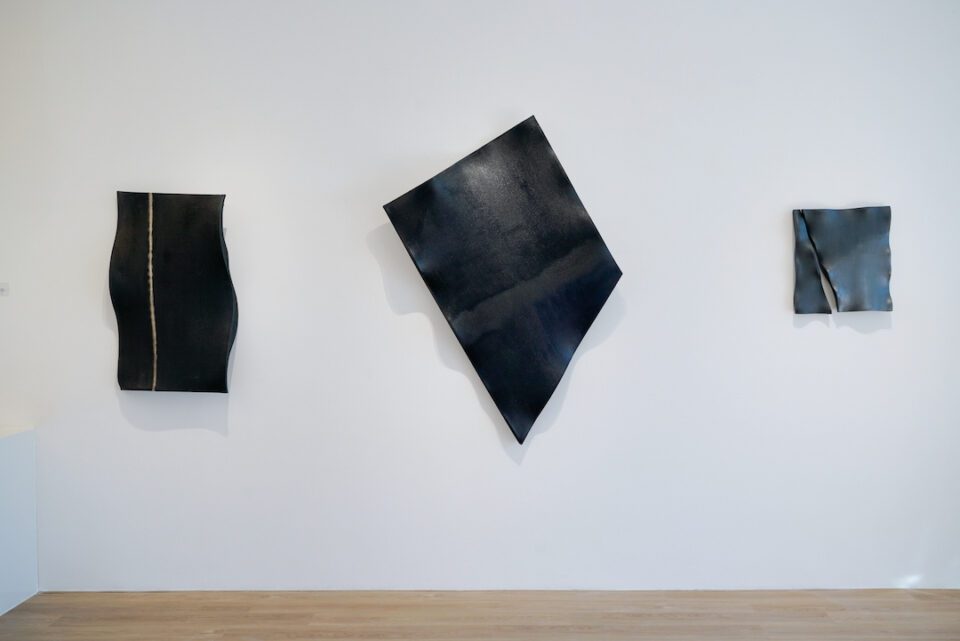
Gender identity is a key theme that emerges from Xu’s curatorial practice. In late 2025, Xu opened Unnamed Shapes in Hangzhou. The show foregrounded Dirk Tsai and Yang Wan, practitioners from the Asian diaspora who “employ abstraction as a queer strategy.” They present non-figurative forms as a means “of questioning who gets seen and who remains invisible.” Tsai’s three-dimensional shapes ripple and peel off the walls, existing in “a state of transformation and ambiguity.” Wan, meanwhile, uses painting to suggest alternative ways of understanding time and history that don’t conform to Western models. “With Tsai and Wan, it was their refusal of fixed shape that struck me,” Xu reflects. “Tsai in particular is doing something I hadn’t seen before. He makes canvas sculptures, stretched over hand-shaped wooden strips into warped, wave-like forms that refuse to hang flat against a wall. His work sits in the gap between sculpture and painting, and that refusal to be one or the other is itself the argument about identity.”
Bringing different perspectives into conversation requires careful balance. “The hardest part of curating around gender and diasporic identity is not letting the work become evidence for an argument you’ve already decided on,” Xu continues. “I try to let the artists’ positions sit in tension with each other. Tsai’s rejection of the wall as a metaphor for power and Wan’s circular structuring of time are two quite different logics of resistance, and that friction is more honest than a tidy thematic statement.”
Unnamed Shapes is not the first of Xu’s projects to explore themes of selfhood. In 2023, Moonlight in Fragments, which also unfolded across XIMA Gallery, celebrated 10 international artists whose work investigates how identity is constructed, using mirrors as a central motif. It drew on Charles Cooley’s concept of the “looking-glass self”, the idea that we shape our individuality based on how others perceive us. From serpents snaking up the walls, to mirrors encased in fences, the works asked: “Who are we when no one is watching?” Here, Xu harnesses a popular art world trend (think Kusama’s infinity mirror rooms or Kapoor’s reflective sculptural forms) to make a vital point about who we are in the digital age.
Fast forward to 2026, and Xu’s most recent display at XIMA Gallery followed suit. Glass Theatre, the first solo show in China for Romania-born painter Ioana Băltan, examined how beauty standards and digital culture are reshaping how we see ourselves. Filled with unicorns, lollipops and Barbie houses, it invited viewers into a hyper-feminine, glossy pink dreamscape that, whilst beautiful, contained a critique of the fetishisation of female bodies. Like much of Xu’s work, it built on theory: this time, Laura Mulvey’s feminist idea of the “male gaze,” as published in her landmark 1975 essay, Visual Pleasure and Narrative Cinema.
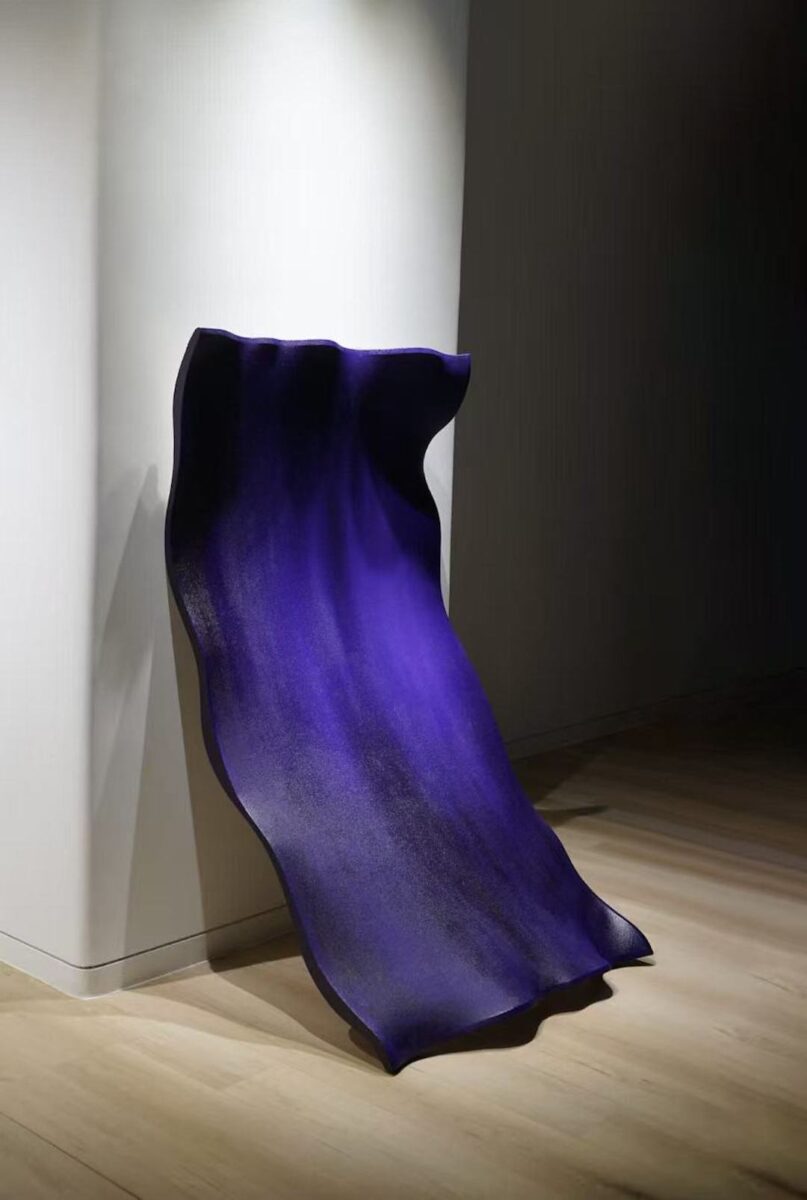
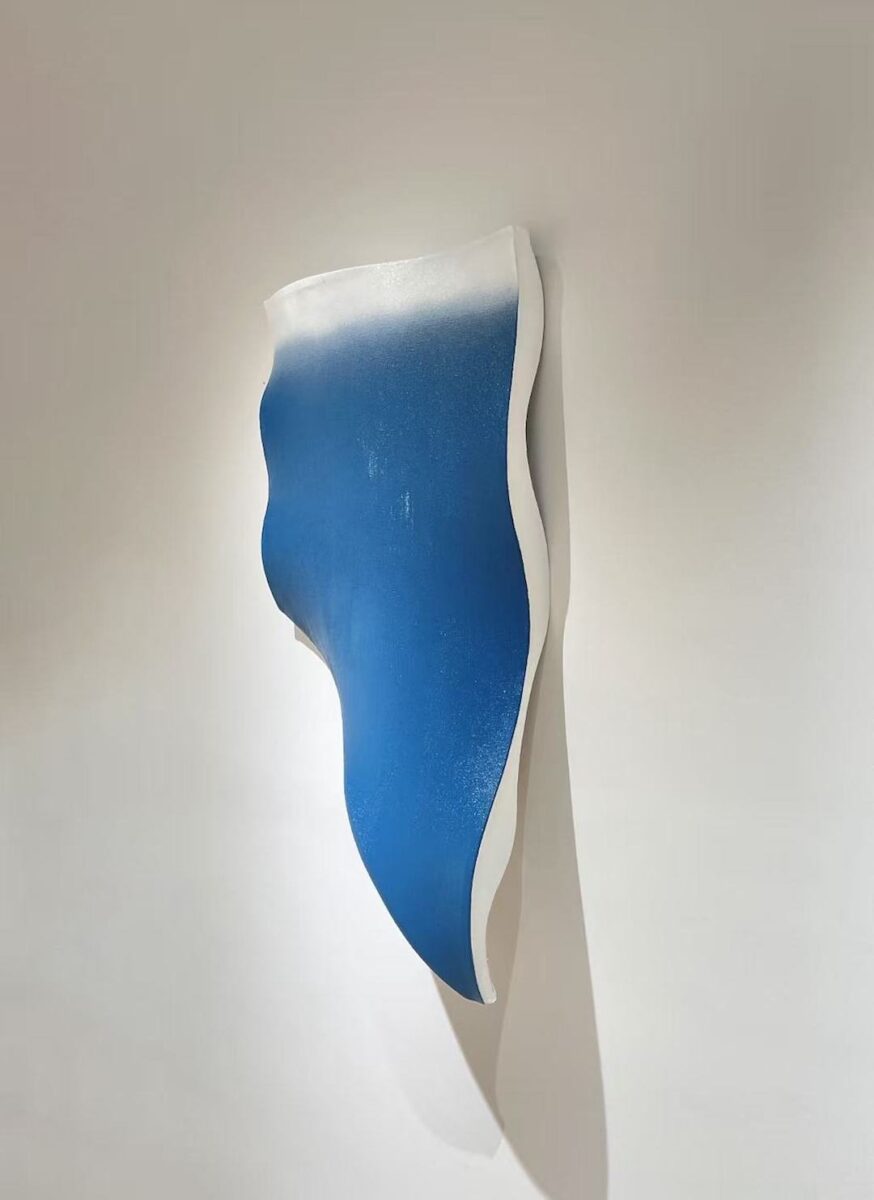
Together, these three shows highlight a central concern in Xu’s curatorial approach: supporting artists whose work explores identity in open-ended ways, rather than fitting into fixed categories. Palimpsest, which opened at Whiteshepherd Gallery in winter 2025 and marked the London location’s second major presentation, is another such example. Here, Xu was looking at experiences of displacement, highlighting the works of Juna Kim and Seohyun Oh, two Korean diasporic artists working in London, to do so. The title derives from ancient Greek – a parchment that has been written on, scraped clean, and written on again, yet retains traces of earlier inscriptions beneath. “This becomes a powerful metaphor for diasporic identity: we are repeatedly overwritten by new cultural contexts, yet never fully erased, carrying visible and invisible traces of origins we can neither fully inhabit nor completely abandon,” Xu explains.
It was a sense of resistance that drew Xu to these two artists. “Visiting Seohyun Oh’s studio, I saw that her layering only arrived after countless trials: different palettes, thick strokes tested against thin ones, and failed canvases stacked against the wall. In Juna Kim’s studio, the floor was covered in masking tape and pencil studies. The sharp, taped-off edges in her finished paintings came out of that same accumulation of attempts. She told me the elements in her work draw on memories of Korea layered against the unfamiliar textures of life in London.” Through canvas, installation and mixed media, both artists powerfully articulate the complexities and struggles of being a Korean woman navigating British art organisations.
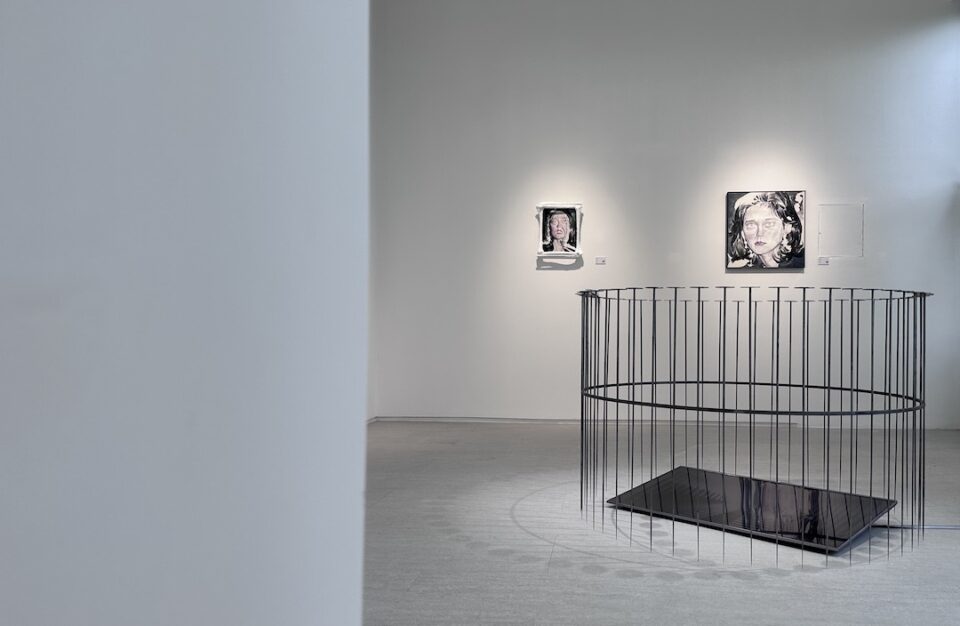
Power structures and institutions form another recurring thread in Xu’s thinking. She returned to Hangzhou in 2025 to launch Beyond the Castle, which took Franz Kafka’s 1926 novel as departure point for examining established systems of control. “In Kafka’s work, the castle represents an impenetrable bureaucratic system that simultaneously controls and excludes the protagonist,” Xu explains. “It’s a metaphor for how institutions (governmental, cultural, educational) exercise power through opacity, inaccessibility and arbitrary rules.” Seven London-based makers investigated contemporary “castles”, such as museums, galleries, art markets and other cultural institutions. These are spaces “which claim to be democratic and accessible yet maintain hierarchies of exclusion.”
Beyond the Castle was underpinned by curatorial questions which feel particularly relevant in today’s world, where access to the arts is becoming increasingly limited. She asked: Who gets to enter the castle? Who remains perpetually outside? How do institutions reproduce power even as they claim to democratise culture? Again, Xu taps into key questions of our times – offering a contemporary take on Institutional Critique movement that emerged in the 1960s. Later that year, Xu built on this success with Waiting Room at Whiteshepherd. Once again, the exhibition brought together artists from around the world to examine our relationship with place. This time, Xu turned attention to liminal spaces, including hospitals, immigration offices, bureaucratic institutions. The works examined different forms of waiting: for visa decisions, medical diagnoses, political change and, more widely, a sense of belonging.
whiteshepherdgallery.com | ximagallery.com
Words: Eleanor Sutherland
All images courtesy Ziyan Xu.
1. Installation view, Moonlight in Fragments.
2. Installation view, Unnamed Shapes.
3. Installation view, Unnamed Shapes.
4. Installation view, Unnamed Shapes.
5. Installation view, Moonlight in Fragments.
6. Portrait of Ziyan Xu.