Scholars Andrew Higgott and Timothy Wray state that “the photograph is not ‘taken’, as in common parlance, but ‘made’.” Far from frozen truths, any pictures we see physically or digitally, circulated at truly overwhelming rates, must be understood as constructions. In the age of the Internet and AI, it is necessary to stay vigilant about how visual media is never neutral, but instead provides a carefully assembled, often manipulated representation of a person or place. This should lead us, as viewers, to a constant, essential – if tiresome – line of questioning: who made the image, and why?
A new book by Professor Ari Seligmann – author, longtime researcher in Japan, and Associate Dean of Education in the Monash University Faculty of Design & Architecture – argues that a critical understanding of the constructed nature of images is vital to architectural photography, in particular. KA ME RA, forthcoming with Thames & Hudson, specifically hones in on the development of Japanese architectural imagery by exploring its history, key makers, theories and writings on how the country’s postwar structures and environments have been captured and then disseminated worldwide.
WWII left Tokyo and other Japanese cities devastated by extensive conventional bombing, compounded by the atomic destruction of Hiroshima and Nagasaki. Yet Japan underwent a remarkably rapid postwar reconstruction, which culminated in the “Japanese economic miracle” – a period of industrial expansion spanning from the mid-1950s to the early 1970s.Seligmann grounds the book with commentary on the discipline, and the necessity of revising how we approach and historicise it. “Architectural photography is a dynamic field that continues to transform with the digital production and dissemination of architecture and its images […] Photographs of architecture have a number of roles – publicising, producing, reviewing, recording, critiquing, etc. … [they] should be considered as separate forms of architectural constructions that frame, portray and illuminate projects in particular ways.”
This is a gold mine for readers already interested in Japanese architecture, but is simultaneously relevant for anyone fascinated by how the production and consumption of images shape public understandings of place. From the earliest developments in photography, the way we think of other countries – and even act – has been significantly shaped by the media we consume. A powerful example: the images that came out of Vietnam during the first “television war.” Forests devastated by napalm were broadcast to homes and printed in globally-circulated publications like LIFE – influencing a major countercultural movement in the USA and turning the tide of public opinion towards an anti-war, pro-peace stance.
Moreover, photography can reveal, or at least providemore material for us to interrogate. places and societies that are deliberately closed off and vulnerable to propaganda. One example is when Guardian journalist and photographer Oliver Wainwright travelled to Pyongyang on an architectural tour and subsequently published the 2018 photobook, Inside North Korea. Many viewers had never seen the country’s interior prior. Wainwright visually recast, to an extent, preexisting stereotypes or assumptions of the country as drab, grey and oppressive. Instead, he highlighted Wes Anderson-esque aspects of the urban environment, full of pastels, symmetry and surrealism. Whether these images say more about the photographer’s gaze or Pyongyang’s actual atmosphere is up to us to discern. Are the film set aspects of the city-synonymous-with-country its own deliberate staging of itself, or an assertion of Wainwright’s particular lens? Either way, it’s an example of how depictions of a place are as much performances as the built environments themselves.
When we think of Japan, specifically, we might imagine stereotypical shots from anime, cinema, social media and magazines. One vision is of clean lines, empty spaces and lots of light – think Iwan Baan – emphasising minimalism and calm. Other depictions, like those of post-1980s Tokyo and Osaka by Liam Wong or Greg Girard, focus on the city’s neon-lit, uber-efficient hyperfuturism, contributing to wider notions of Japan as a glittering, economically powerful tech metropolis.
KA ME RA uses a combination of well-researched text, archival images and the biographies and backgrounds of nine photographers to offer a wider view. It foregrounds figures who have influenced how we regard Japan’s postwar architecture in manifold ways, letting the reader “travel” the nation through their lenses over time. Several of these names have been left out of, or underappreciated by, the accepted canon.
Moving chronologically through generations, we begin with Yoshio Watanabe (1907 2000), one of the first people to be recognised as a specialist, who is known as the “grandfather of the field.” Then there’s Chuji Hirayama, (1909–2005), chief photographer for the renowned professional periodical Shinkenchiku, helping fuel the explosion of Japanese architectural culture at large. Seligmann crucially explores institutions and outlets like Shinkenchiku, building a timeline of wider developments in the field that includes its stakeholders.
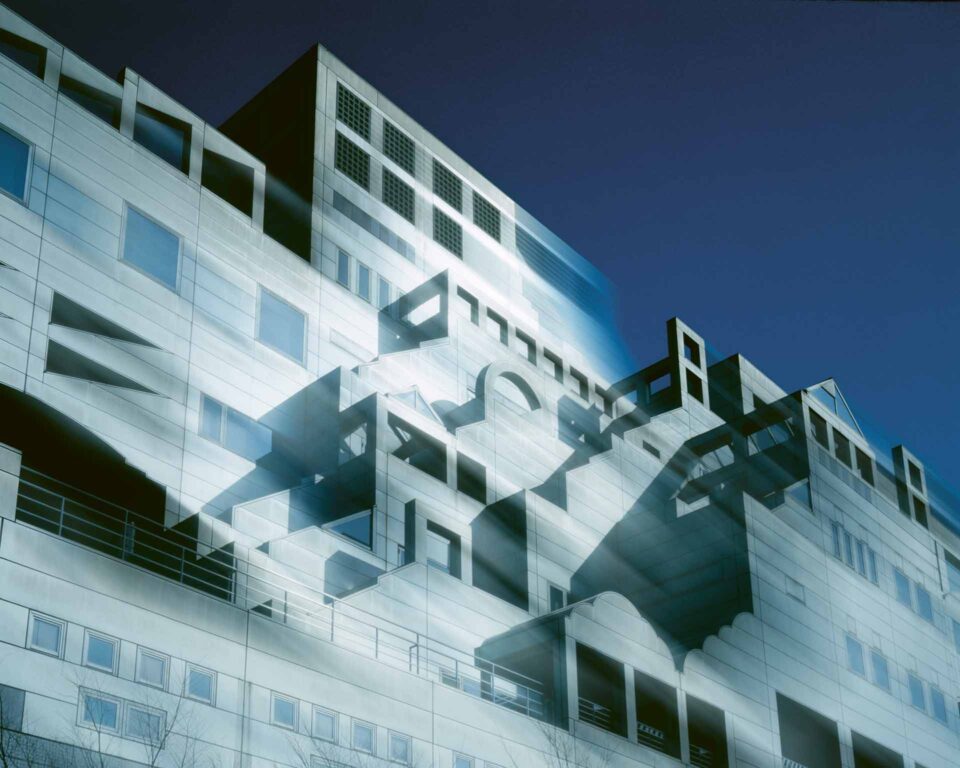
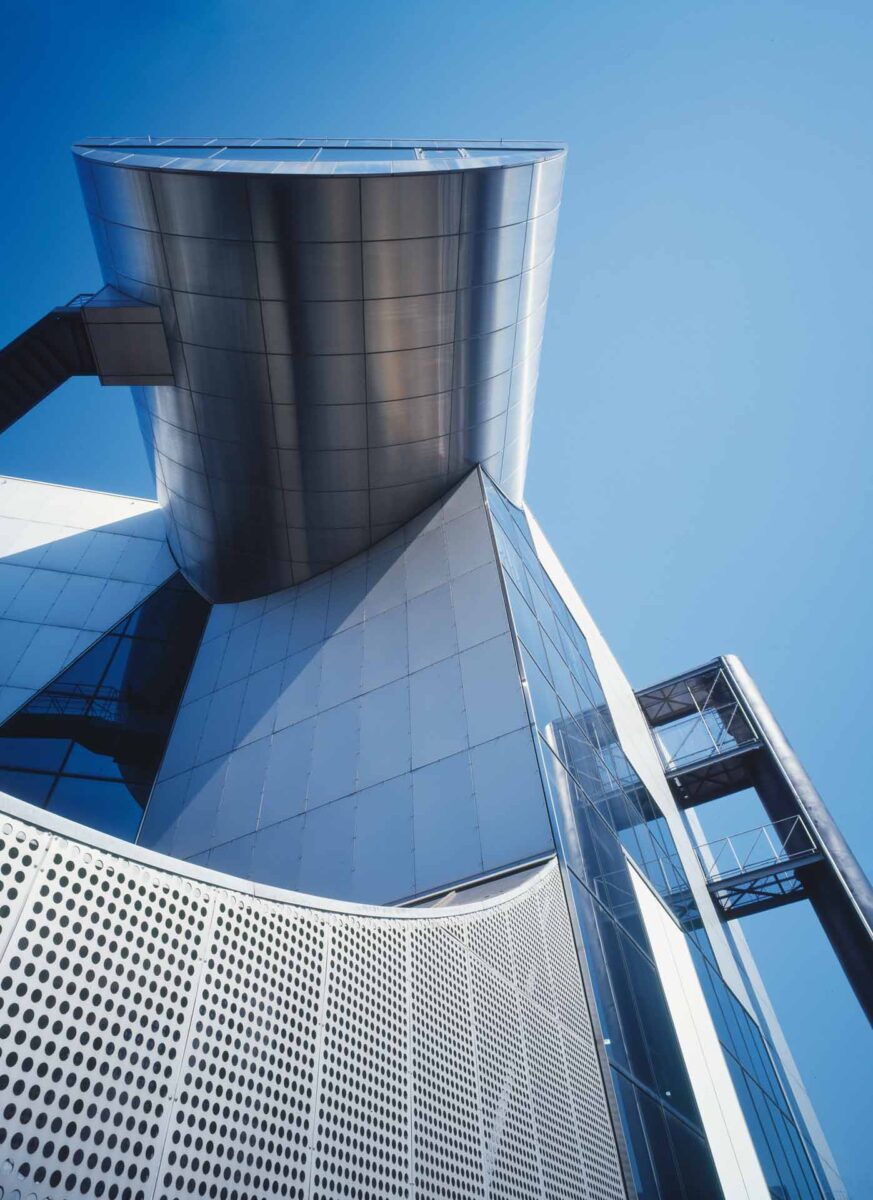
Akio Kawasumi (1923–2007), meanwhile, is dubbed a “rare pioneer”, epitomising “a new breed … who brought training in architecture to the photographic construction of buildings.” Take, for example, Kawasumi’s dynamic 1987 picture of Kazuo Shinohara’s TIT Centennial Hall – from afar, it appears like an enormous silver moka pot descending from a cascade of chrome and glass. It is set against a sky so blue, one can only associate it with a forward-looking optimism, and the angle of the picture – taken from below – makes the structure appear monumental in size. Equally radical is Kawasumi’s depiction of the Hiroshi Hara-designed Yamato International Building. Blurred and smudged, it appears as if in motion – catapulting into the future. These shots show Kawasumi’s proposal for a dynamic, expressive method of picturing the urban environment, playing with cropping and the light and textural effects of different surface materials.
“Kawasumi eloquently described [architectural photography] as a new entity, beyond the reality of the building,” states Seligmann. The photographer is listed along with Osamu Murai (1928– 2016) and Yukio Futagawa (1932–2013) as representing “a golden age” for the genre. Murai spent his whole career as a freelancer, and was a significant figure in the generation who came up in the 1950s – a time of aggressive economic progress and a burgeoning of architectural media outlets in Japan. He “championed an individual approach and the expansion of conventions”, according to Seligmann, seeing photography less as a medium of documentation and rather as framed “looking glasses.” Murai, like many featured in the book, was adamant that he was not an “architectural photographer”, but rather someone who “created windows“ through which to see buildings. He worked across a range of other interests, including sculpture and public art, and wanted to “express rather than explain” through his own abstractions and impressions. From this time forward, image-makers became known for working with more widespread, mixed-media approaches, wearing different hats.
Next, Seligmann marks Tomio Ohashi (1932–2017) as a “key transitional figure” for his role in shifting from standard 4×5 large-format cameras to the new scopes of 35mm, and for ushering in an era of fresh approaches to 1970s design. Most notably, Ohashi is positioned as emblematic of “the invisible photographer” – a concept to which most of us are accustomed, where official images of buildings are regarded as neutral or objective. (It is easy to visualise an iconic structure off the top of our heads, but not so much name the photographer). This phenomenon may be the reason why Ohashi did not receive the same levels of global recognition and engagement maintained by the likes of Futagawa and Murai.
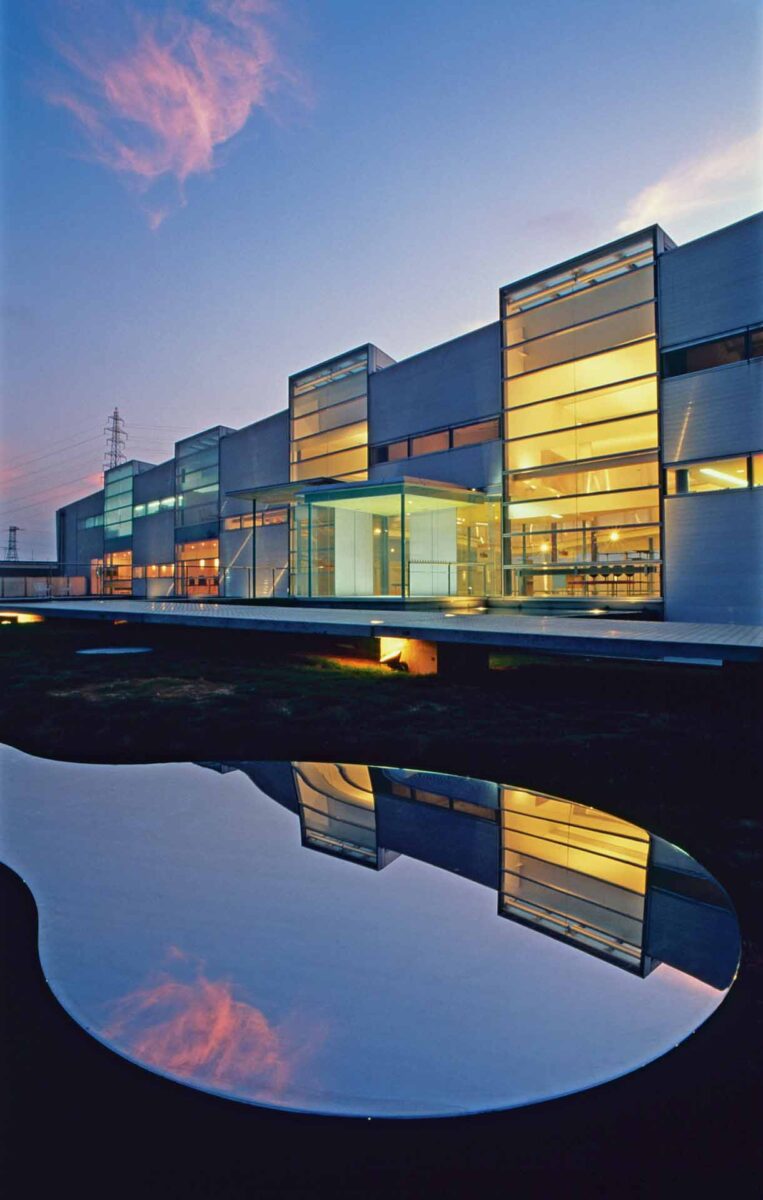
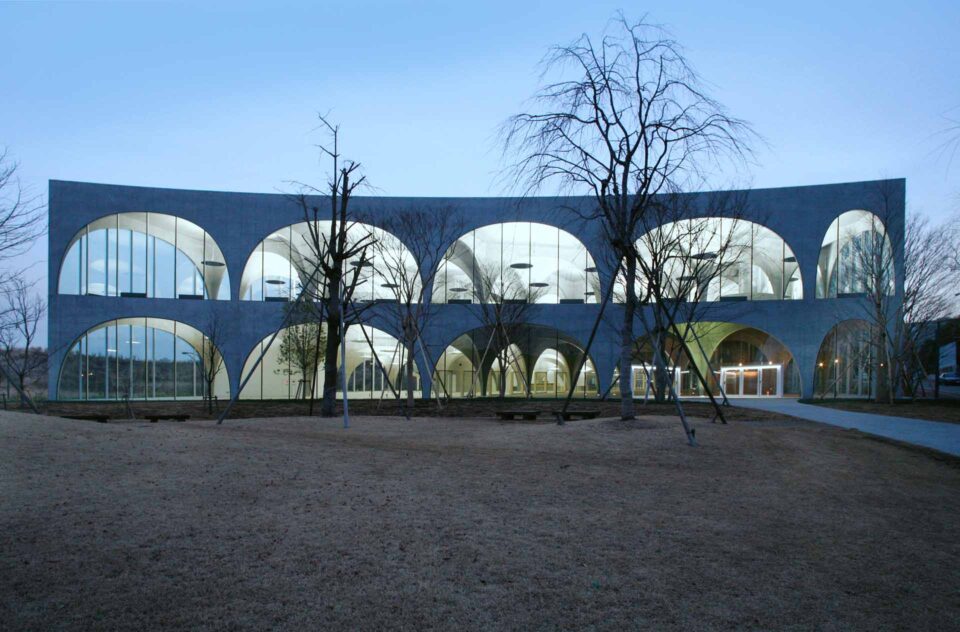
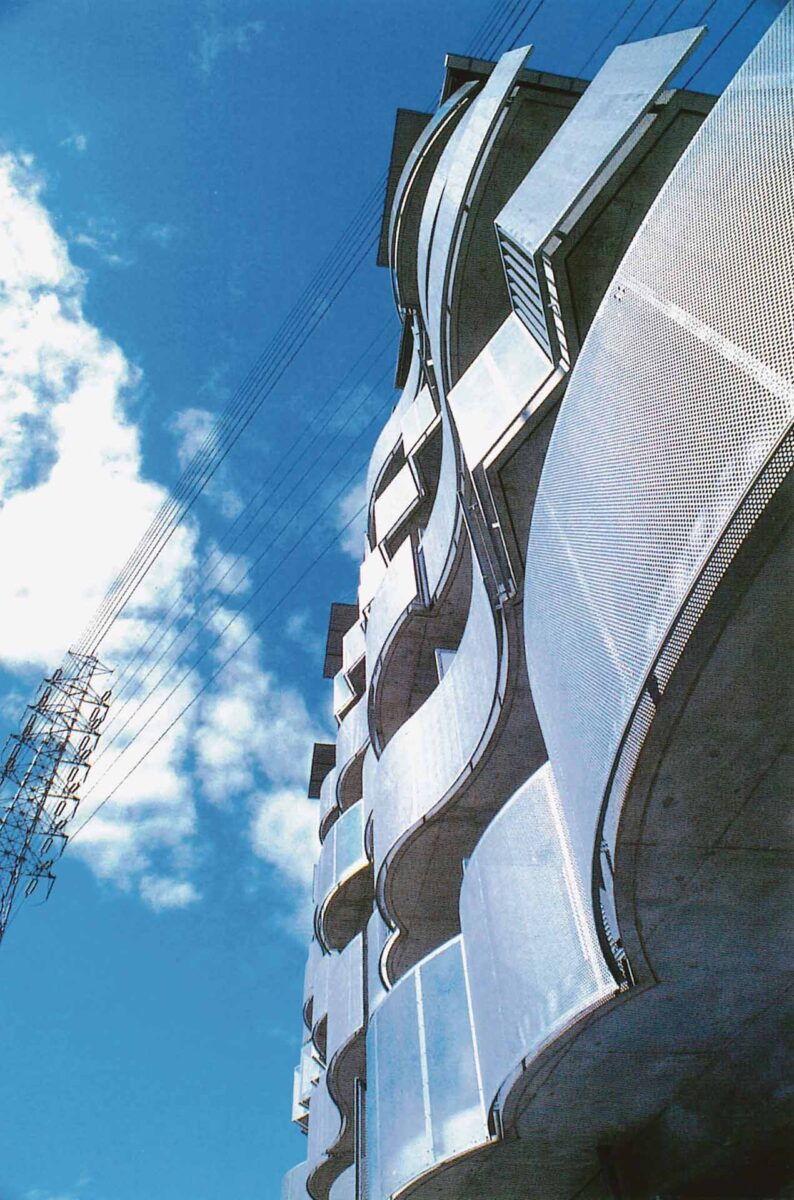
Ohashi’s iconic shots of places like the Nakagin Capsule Tower (1972), Centennial Hall (1988), Kyoto Station (1997) and even Itsuko Hasegawa’s Oshima-Machi Picture Book Museum (1994) are widely-known, yet there has been limited interest in the identity or intentions of the man behind the lens. Seligmann fills in the gaps – asserting Ohashi as worthy of critical analysis and naming him as undersung and therefore necessary addition to KA ME RA. He was a “crucial but unacknowledged producer of our images of Japanese architecture.” His work demonstrates a common gold standard for the more broadly recognisable pictures of major buildings and national landmarks we typically expect to see today. As the timeline progresses, the artists’ careers diversify further, noting different collaborators, priorities and media. Kiyoshi Takai (b. 1938) did not produce commissioned pictures. Instead, he disseminated images of minka (folk houses) and expanded the field through education. Shuji Yamada (b. 1939) also made the genre more elastic. Originally an ambitious graphic designer, he “stumbled” into architectural photography – despite rejecting its conventions – from 1965, before pivoting to become a kawara man (tilemaker)in 1982. After that, he shot only selected projects, like Itsuko Hasegawa’s Cona Village (1990), which incorporated his tiles.
The last entry in KA ME RA is devoted to Mitsumasa Fujitsuka (b. 1939), who approached buildings from a subjective point of view, and was interested in how humans interact with space. In contrast to Futagawa, he preferred to capture structures “in use rather than pristine,” and to portray “architects operating at the margins rather than canonical work.” He oriented to general rather than solely professional readerships, opting to work for lifestyle and design publications over specialised media. His characteristic “strong shades and shadows” instil images with drama, appealing to a wide audience.
So, can documenting architecture ever be neutral? The short answer is no. “Photographs of buildings represent distinct modes of engagement that differ from firsthand experience of built structures,” Seligmann concludes. Architectural “photographers [therefore] mobilise buildings to make images and also make buildings mobile.” This is a revealing compendium, but it is not a strict historical record. Seligmann relevantly cites Rene Magritte’s The Treachery of Images (1929) here, especially the iconic surrealist painting Ceci n’est pas une pipe, which cemented the philosophical provocation that his picture was not a pipe but a painting of it. But this is the fun of image-making – the slipperiness of the looking glass.
KA ME RA Thames & Hudson | Published 19 March
Words: Vamika Sinha
Image Credits:
- Page 100, 0.55 Oshima-Machi Picture Book Museum c. 1994 by Itsuko Hasegawa, 1994. © Tomio Ohashi, image provided by Masanori Ohashi.
- Page 111, 0.64a Tama Art University Library, Hachioji campus 2007 by Toyo Ito 2007. © Tomio Ohashi, image provided by Masanori Ohashi.
- Page 93, 0.51 TIT Centennial Hall c. 1990 by Kazuo Shinohara, 1987. © Akio Kawasumi, image provided by KKPO.
- Page 96, 0.54a Cona Village c. 1990 by Itsuko Hasegawa, 1990 . © Shuji Yamada, provided by Itsuko Hasegawa Atelier.