At its heart, Felicità is an exhibition about perception and the quiet optimism found in mindful looking. It explores happiness not as extravagance or display, but as attentiveness, slowness, and curiosity. Luigi Ghirri’s photographs propose the image as a site of reflection rather than consumption, a surface where the world folds back on itself. Photography becomes a thinking tool, a way of rehearsing how reality is constructed, framed, and endlessly reproduced. Felicità insists on consciousness, the ethics of seeing, and the pleasure of recognising the mechanics behind representation. The exhibition encourages viewers to slow down, noticing not just what is seen but how and why it is framed.
Presented across Thomas Dane Gallery’s two Duke Street spaces, the exhibition is curated by Alessio Bolzoni and Luca Guadagnino, a pairing that underscores its sensitivity to narrative, rhythm, and atmosphere. Rather than reiterating Ghirri’s most iconic images, the show highlights overlooked and previously unseen photographs, reframing his practice as urgently contemporary. It is not a retrospective in the conventional sense but a recalibration, positioning Ghirri as an artist whose concerns resonate powerfully with today’s visual world. By emphasizing process and reflection, the exhibition foregrounds the active engagement of the observer. Each work prompts contemplation, suggesting that looking is both an intellectual and ethical act. Through this, Felicità transforms Ghirri’s legacy into a living dialogue.
Ghirri’s career unfolded against the backdrop of late modernity, yet his thinking feels strikingly anticipatory. The oft-cited anecdote of his response to The Blue Marble photograph from the Apollo mission is not treated here as myth but as a conceptual anchor. That image overwhelmed him not because it showed the world but because it contained all prior images of the world, revealing representation as cumulative, recursive, and inescapable. From that moment, his work turned inward—not away from reality, but toward its mediation. Felicità takes this insight seriously, treating photography as both subject and material, a medium through which to examine how images shape understanding.
This approach resonates with contemporary artists such as Wolfgang Tillmans, whose images of everyday life oscillate between intimacy and abstraction, and Thomas Ruff, whose manipulations of found imagery expose the technological and ideological frameworks shaping visual culture. Like Ghirri, both refuse the illusion of neutrality, insisting that images are constructed objects shaped by systems of power, desire, and habit. Ghirri’s photographs, though quieter, operate with similar critical acuity, asking viewers not what they see but how and why. His work anticipates debates about the politics and ethics of image-making. In this way, his quiet images carry the weight of contemporary visual consciousness.
The first section of the exhibition foregrounds surface, fragmentation, and layering. Here, Ghirri dismantles the visual language of mass culture through subtle acts of recontextualization. Postcards, newspaper clippings, signage, and posters are stripped of their original function, hovering as autonomous forms. Mirrors reflect mirrors, creating vertiginous loops that deny any stable point of reference, while atlases are cropped until geography dissolves into colour fields and lines. These works flirt with abstraction while remaining tethered to the world, suggesting that reality has become a collage of representations.
Literary echoes are evident, particularly the influence of Jorge Luis Borges. Ghirri’s fascination with infinite libraries, maps that expand to the size of territories, and systems attempting to catalogue everything finds visual expression in these works. Photography becomes a metaphor for knowledge production and the human impulse to order the ungraspable. Seen today, these images resonate with digital culture, with its endless archives and algorithmic taxonomies, yet Ghirri’s touch remains tactile and analogue, grounded in material presence rather than virtual abstraction. The works feel both historically situated and uncannily contemporary, bridging memory and mediation.
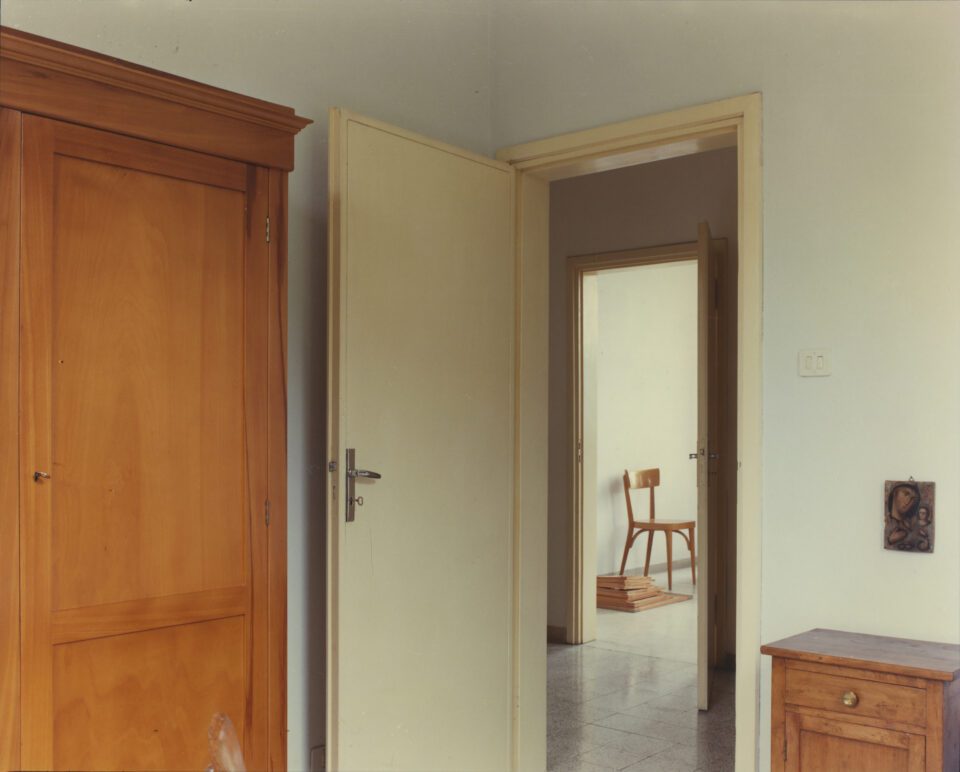
This tension between the conceptual and the sensuous is central to Ghirri’s practice and finds a contemporary parallel in artists like Rinko Kawauchi, whose photographs imbue the ordinary with quiet transcendence while remaining acutely aware of framing and sequencing. Like Kawauchi, Ghirri locates meaning in modest gestures and peripheral details, resisting grand narratives in favour of cumulative resonance. Felicità thrives on this sensibility, allowing small shifts in attention to accrue into something expansive. The exhibition’s rhythm encourages contemplation, and the cumulative effect of careful observation becomes immersive and transformative. In this way, subtlety becomes a strategy and reward.
The second gallery deepens these concerns through interiors and architectural fragments. Wallpapers, panelling, and written surfaces flatten space, collapsing depth and turning rooms into pages. Text on walls mirrors text on paper, reinforcing the idea that every surface is already an image, already mediated. These photographs feel almost proto-digital in their logic, anticipating the screen-based experience dominating visual culture. Yet they remain resolutely physical, attentive to texture, light, and imperfection. Ghirri’s work bridges materiality and meaning, demonstrating the sensuous intelligence of photography.
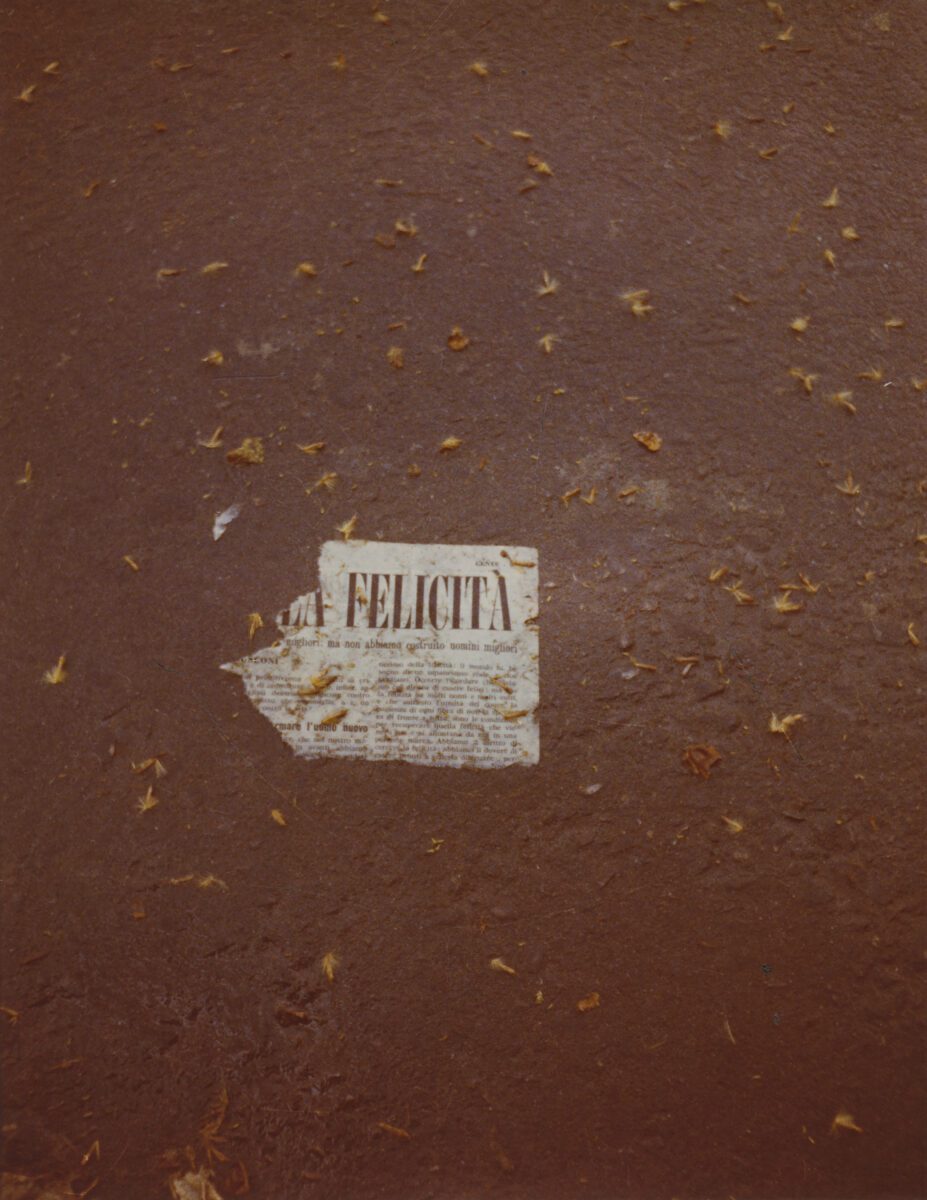
A group of photographs taken in Giorgio Morandi’s studio introduces a quieter dialogue with Italian art history. Morandi’s disciplined reduction and suspicion of symbolism find an echo in Ghirri’s refusal of expressive excess. Both pursue clarity through restraint, understanding that meaning emerges not from accumulation but from precision. Ghirri’s proximity to Arte Povera and Conceptual practices in Modena during the 1960s and 70s shaped this approach, encouraging an art of ideas grounded in everyday materials and lived experience. These works reveal how attentiveness and minimalism generate subtle yet profound visual insights, emphasising the intelligence embedded in careful observation.
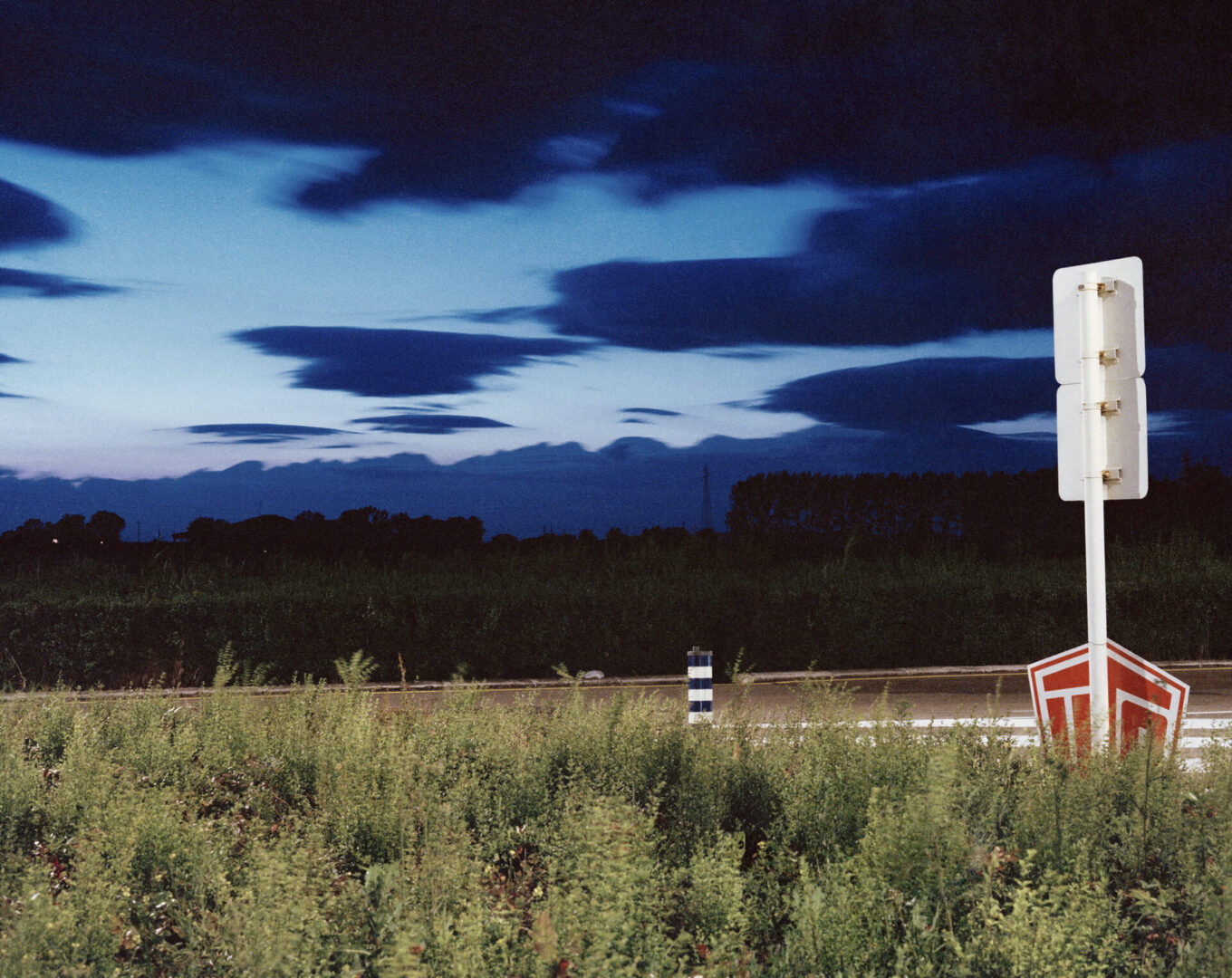
The final chapter of Felicità turns to landscape, though not conventionally. Ghirri’s Paesaggio Italiano series often subverts picturesque tropes, but here the emphasis lies on framing itself. Horizons are interrupted by signs, fences, and industrial structures, and colours verge on the artificial, recalling William Eggleston’s cinematic palettes or Ed Ruscha’s deadpan Americana. These scenes are seductive yet estranged, offering beauty without consolation. What emerges are landscapes understood through their representations in film, tourism and media. Ghirri neither laments nor celebrates this condition; he makes it visible.
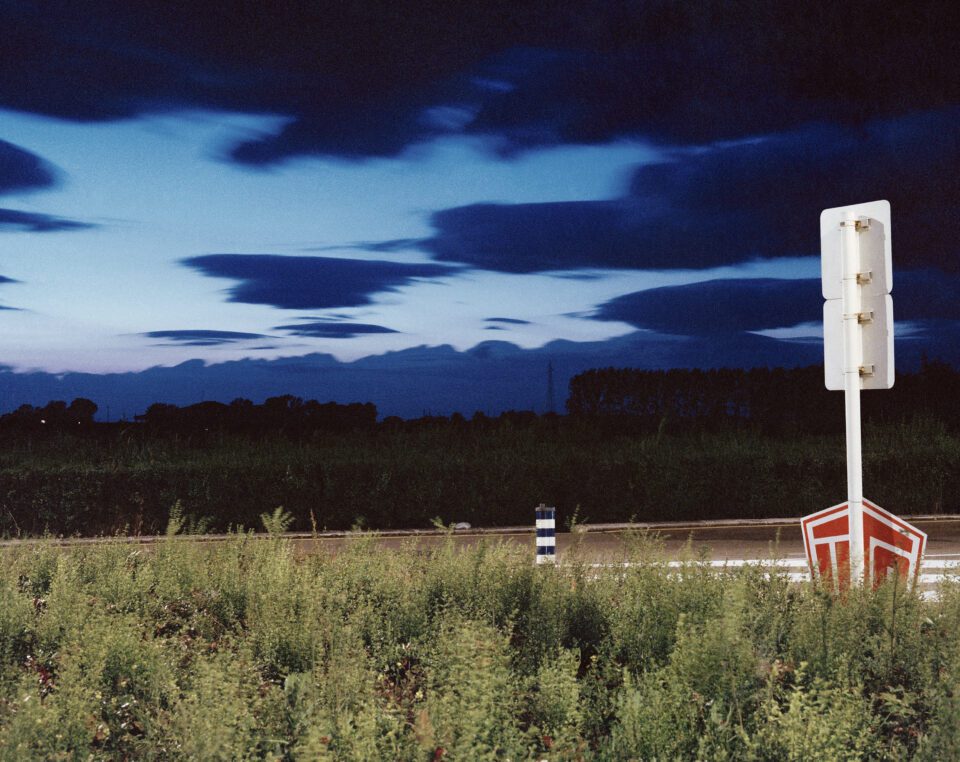
His photographs remind us that perspective is not innate but constructed, that vanishing points converge where perception meets ideology. In doing so, he implicates the viewer, making looking an active and ethical process. The importance of Felicità lies precisely in this invitation to reconsider our relationship with images. In a moment when photography is ubiquitous and attention increasingly fragmented, Ghirri’s work offers a model of resistance through thoughtfulness. His images slow us down, encouraging reflection rather than reaction, demonstrating that happiness can be a mode of engagement.
By foregrounding lesser-known works and situating Ghirri within a broader contemporary dialogue, the exhibition reframes his legacy as ongoing rather than historical. Felicità reveals an artist who understood, long before it became commonplace, that the world would increasingly be experienced through images. His response was neither cynical nor nostalgic but curious, generous, and rigorously intelligent. That his work continues to yield new insights speaks to both its foresight and humility. Ghirri reminds us why it matters: each photograph is an invitation to see not only the world but the process of seeing itself.
Felicità is at Thomas Dane Gallery, London from 23 January – 9 May: thomasdanegallery.com
Words: Simon Cartwright
Image Credits:
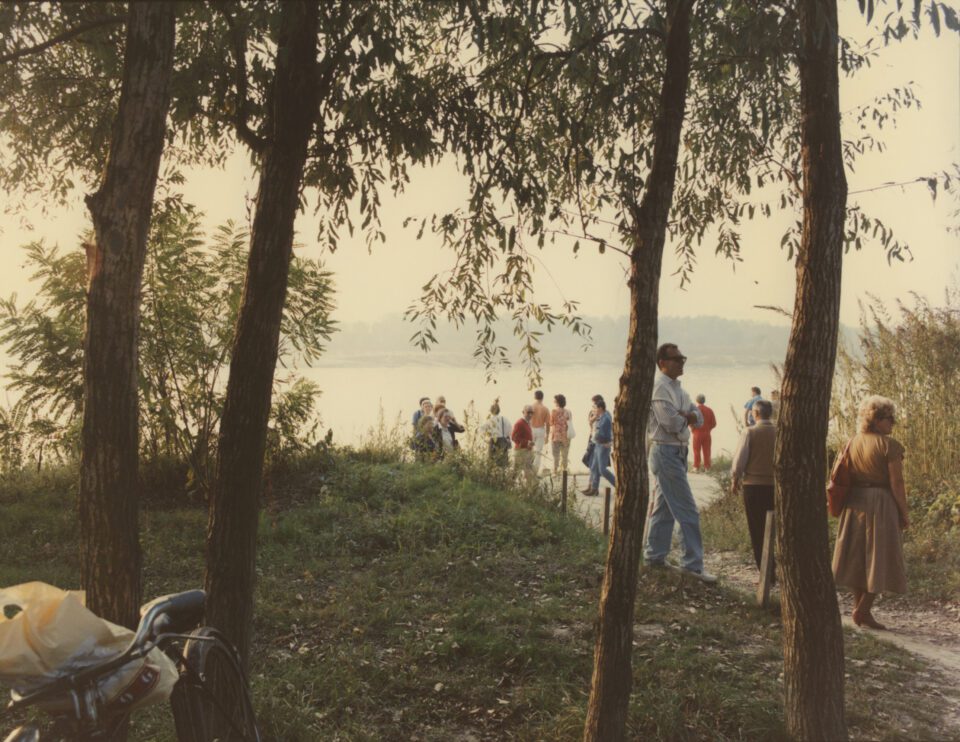
1&6. Luigi Ghirri, Campogalliano, 1985c-print, 36 x 45 cm.14 1/4 x 17 3/4 in.© The Estate of Luigi Ghirri. Courtesy Thomas Dane Gallery, Matthew Marks Gallery, New York and Los Angeles, and Mai 36 Galerie, Zurich and Madrid.
2. Luigi Ghirri, Verso la foce, 1988-89c-print, 19 x 26 cm.7 1/2 x 10 1/4 in. © The Estate of Luigi Ghirri. Courtesy Thomas Dane Gallery, Matthew Marks Gallery, New York and Los Angeles, and Mai 36 Galerie, Zurich and Madrid.
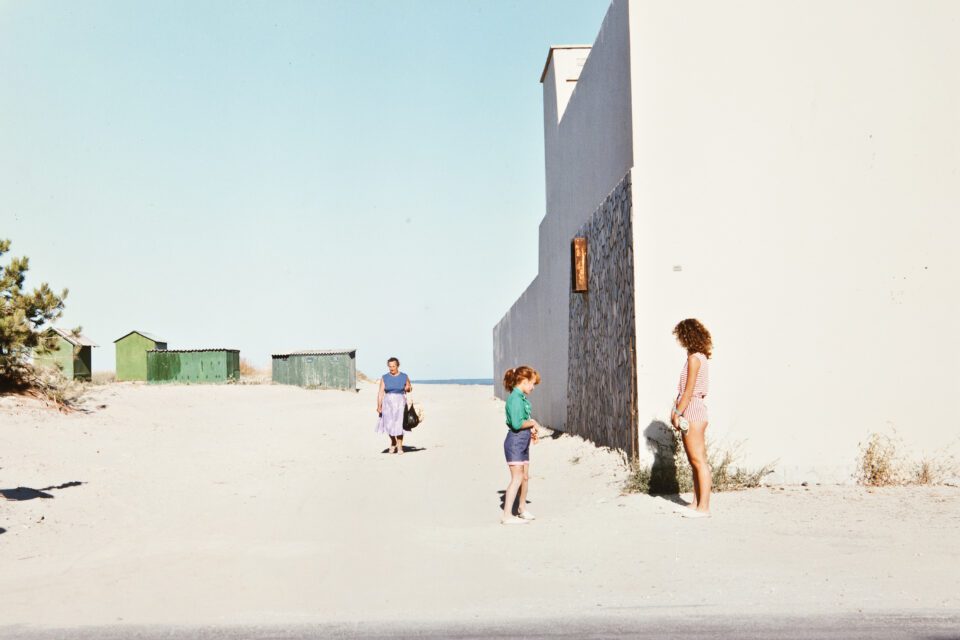
3. Luigi Ghirri, Marina di Ravenna, 1986c-print, 32 x 47.2 cm.12 1/2 x 18 1/2 in.© The Estate of Luigi Ghirri. Courtesy Thomas Dane Gallery, Matthew Marks Gallery, New York and Los Angeles, and Mai 36 Galerie, Zurich and Madrid.
4. Luigi Ghirri, Bologna, Grizzana, 1989-90c-print 19.2 x 24 cm.7 1/2 x 9 1/2 in.© The Estate of Luigi Ghirri. Courtesy Thomas Dane Gallery, Matthew Marks Gallery, New York and Los Angeles, and Mai 36 Galerie, Zurich and Madrid.
5. Luigi Ghirri, Modena, 1971c-print 22.2 x 16.9 cm.8 3/4 x 6 3/4 in.© The Estate of Luigi Ghirri. Courtesy ThomasDane Gallery, Matthew Marks Gallery, New York and Los Angeles, and Mai 36 Galerie, Zurich and Madrid.