Few contemporary photographers have expanded the conceptual field of image-making with the sustained clarity of Catherine Opie. Across more than four decades, her practice has treated photography as a relational system in which identity is produced through environment, architecture and social exchange. Rather than isolating portraiture as a study of the individual, Opie approaches it as a distributed condition that extends into streetscapes, domestic interiors and vast geographic formations. This refusal of categorical separation places her in dialogue with a broader history of photographic thought in which the everyday, the social and the spatial are continuously renegotiated. In this sense, her work tests not only what a portrait can be, but what a subject might become when extended across space.
A crucial historical point of reference for this expanded field is the 1975 exhibition New Topographics: Photographs of a Man-Altered Landscape at the George Eastman Museum in Rochester, New York. The photographers associated with New Topographics reoriented landscape photography away from Romantic spectacle and toward the constructed realities of post-industrial space. In doing so, they reframed the environment as a site shaped by human intervention. Opie inherits this attentiveness to the built and social dimensions of place, but she alters its affective register. Where New Topographics often privileges detachment, Opie introduces duration, intimacy and relational pressure into the act of looking.

This difference becomes clearer when placed in dialogue with Stephen Shore, whose colour images of American vernacular space articulate a world structured by repetition, signage and everyday architecture. Shore’s photographs isolate moments where ordinary environments reveal their formal logic, producing a quiet taxonomy of postwar American space. Opie shares this sensitivity to constructed environments, particularly in her attention to infrastructure and the coded language of place. Yet her images resist the neutrality often associated with Shore’s observational distance, instead foregrounding the encounter between photographer and subject as an active, situated relationship.
A more narratively charged approach emerges in the work of Joel Sternfeld, whose large format colour photography often positions landscape as a site of cultural memory and latent social tension. Sternfeld’s images allow stories to hover at the edge of visibility, where place becomes a container for historical and ethical implication. Opie similarly works with ambiguity, yet she shifts the emphasis away from implied narrative toward sustained presence. Meaning is suggested through the accumulation of looking over time. The landscape becomes less a backdrop for narrative than a structure for perception itself.

If Sternfeld opens landscape toward cultural narrative, Richard Misrach intensifies its environmental and political dimension. His vast desert photographs expose the ecological consequences of human intervention, rendering landscape as both aesthetic field and site of damage. Opie shares this awareness that environment is never neutral, but her approach avoids the forensic distance of evidentiary imagery. Instead, she works through proximity and duration, where attention itself becomes the primary ethical mode. The result is less documentation than sustained relation, in which looking is framed as a form of responsibility. The question of duration is also central to portraiture, particularly in the work of Rineke Dijkstra, whose portraits of individuals in transitional states rely on stillness and temporal exposure. Dijkstra’s images construct psychological intensity through the tension between subject and frame, where identity emerges gradually through sustained observation. Opie extends this temporal logic beyond the human figure, suggesting that mountains, coastlines and built environments can hold similar affective charge. Portraiture, in her practice, becomes a structural condition rather than a bounded genre.
This expansion of relational portraiture finds another register in the work of Laura Aguilar, whose images collapse distinctions between body and landscape through embodied presence within terrain. Aguilar situates identity within space rather than in front of it, producing images where geography becomes an extension of corporeality. Opie’s work resonates with this dissolution of boundaries, though her method is less performative than accumulative. She constructs meaning through series and repetition, allowing identity to emerge across multiple encounters. Landscape, in both cases, becomes a site of belonging rather than background. A different temporal and psychological register appears in the work of Sally Mann, whose Southern landscapes are saturated with memory, decay and historical residue. Mann’s images often feel suspended between epochs, where atmosphere carries the weight of time itself. Opie’s landscapes are less mythologised, yet they similarly resist temporal fixity. Weather, light and geological form reconfigure perception, producing images that remain contingent. Where Mann leans toward the poetic density of memory, Opie remains closer to the conditions of seeing as it unfolds in real time.
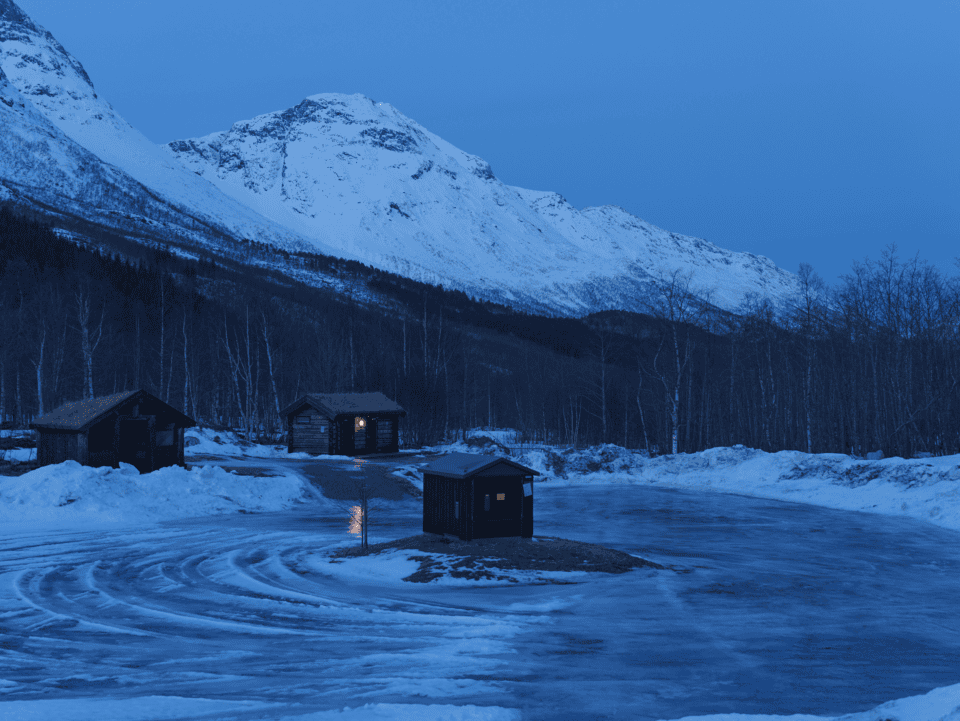
This conceptual terrain is made explicit in Catherine Opie: Portraits at the National Portrait Gallery in London, where the exhibition functioned as a structural argument. Rather than treating portraiture as a genre of likeness, it revealed it as a method of relation extending across bodies, spaces and infrastructures. Early works depicting queer communities in Los Angeles sat alongside images of suburban architecture, highways and civic environments, demonstrating that Opie’s subject has never been limited to the human figure. Instead, the exhibition traced a logic in which identity is distributed across spatial and social systems. In her practice, portraiture expands until it becomes indistinguishable from landscape.
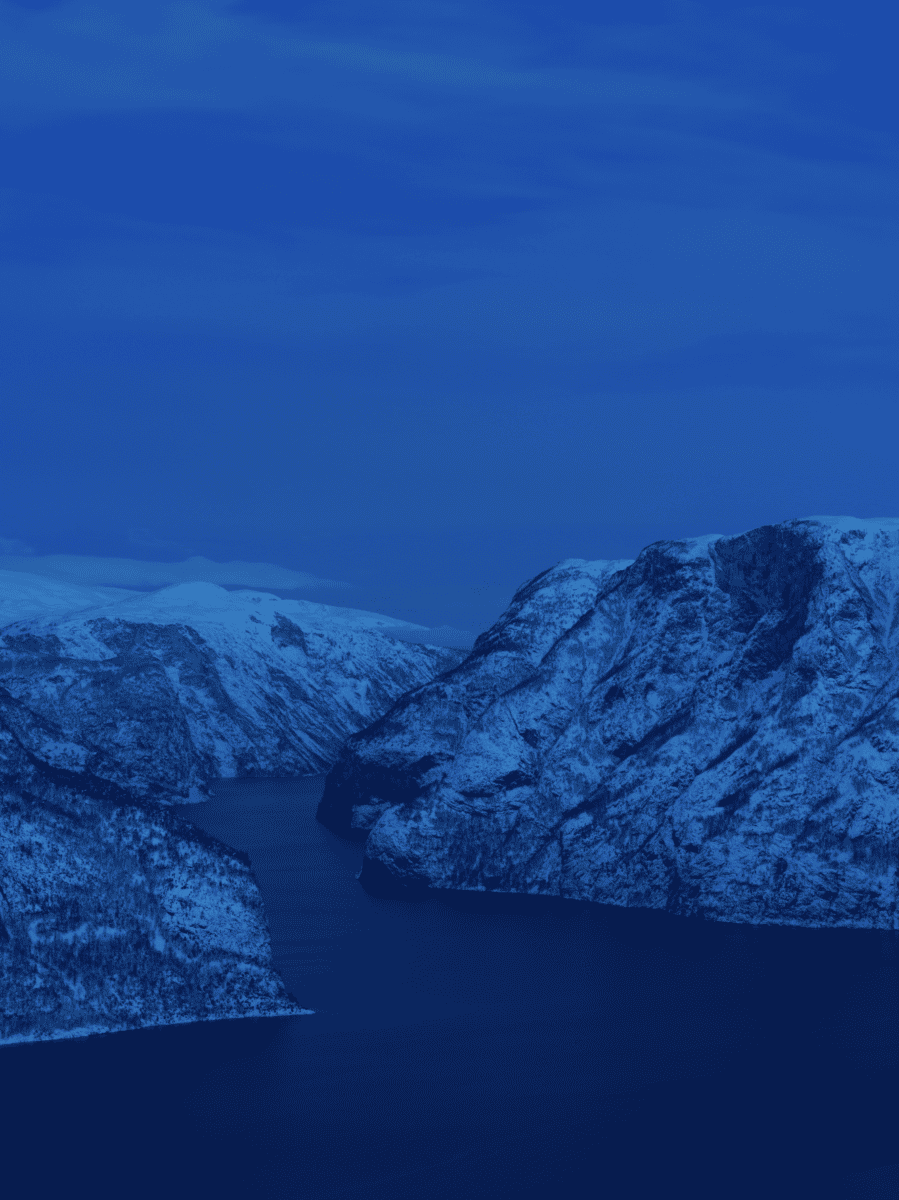
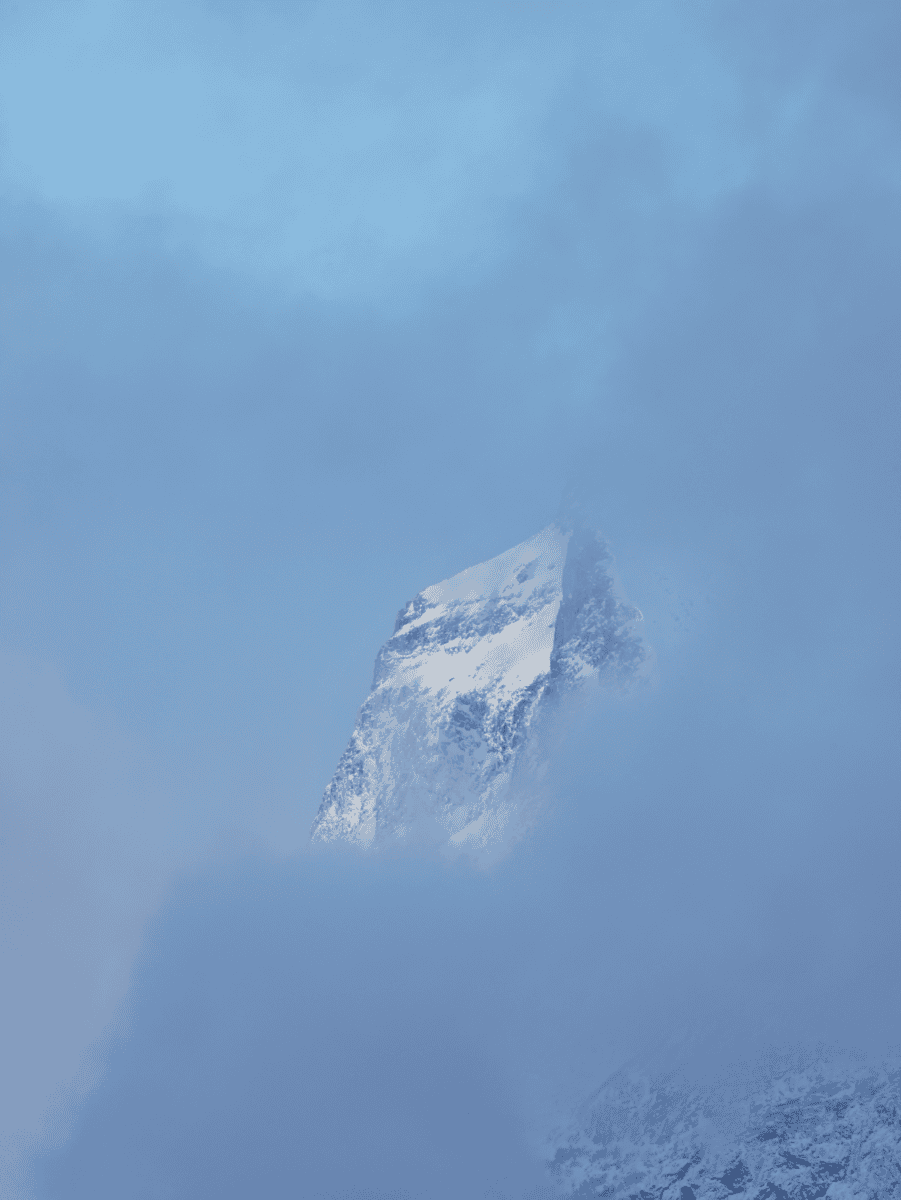
That expansion finds its most recent articulation in Mountains Don’t Know Their Names, presented at PoMo in Trondheim. Created during a three-week immersion in the Norwegian winter landscape in 2024, the series approaches mountains, fjords and vernacular traces with the same attentiveness that defines Opie’s portrait work. The landscape is not treated as spectacle but as interlocutor, encountered through repetition, return and duration. Opie describes this process: “I spent days with each mountain, waiting for hours outside, getting to know each other. In that manner, I could best feel their energy, their specificity and create real portraits of this unique part of the world. My original goal was to look for the blue light and portray the mountains but, as things unfolded on the road trip, appeared the idea of the vernacular, the cliché – these relationships to landscape and photography are what ended up being played out for me.” The language of relation is central here, repositioning photography as encounter rather than capture.
At the level of visual philosophy, the work also resonates with John Berger, whose Ways of Seeing insists that perception is always historically constructed rather than neutral. Opie’s refusal of a singular viewpoint reflects this understanding, particularly in her attention to framing, duration and positionality. Each image acknowledges the conditions through which it is produced, from shifting light to bodily proximity and temporal exposure. Photography becomes a site where seeing is revealed as constructed rather than transparent, shaped by both material and cultural frameworks. A parallel lens can be drawn from Rebecca Solnit, whose writing on walking frames landscape as a space of embodied knowledge produced through movement and attention over time. Although Opie is not walking in the traditional sense, her prolonged engagement with each mountain echoes this logic of durational encounter. Landscape becomes legible only through sustained presence, where meaning accrues through slowness rather than extraction. This emphasis on duration positions her work against accelerated modes of contemporary image consumption.
Across the 53 photographs of the Norwegian series, repetition becomes a structuring principle. Mountains are revisited under shifting atmospheric conditions, their forms altered by snow, mist and low winter light. This recalls the systematic attention of New Topographics, yet Opie departs from its detached taxonomy by insisting on intimacy and relation. Each image functions as part of a larger perceptual field in which landscape is not resolved but continuously re-seen. The series operates less as an extended meditation on how perception itself is constructed over time. The accompanying 30 ceramic mountain forms extend this logic into material practice. Developed at Anderson Ranch Arts Center in Colorado before and after her time in Norway, they exist between anticipation and recollection. Some are speculative, others mnemonic, all translating photographic encounter into tactile form. Photography and sculpture operate here as interdependent systems, each revealing the limitations of the other. The shift between mediums underscores Opie’s broader concern with how images are continually reconfigured.
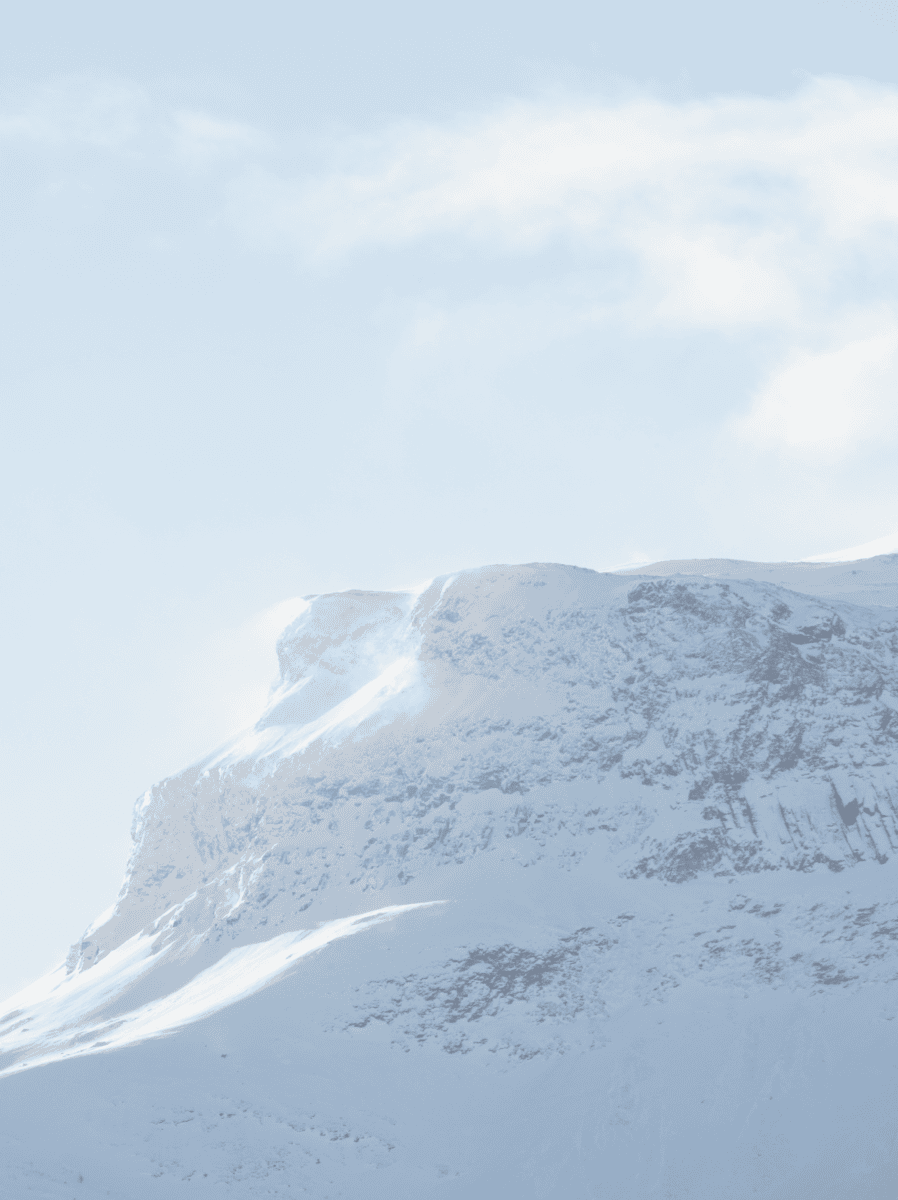
Colour, particularly the pursuit of northern blue light, functions as both atmospheric condition and conceptual problem. Blue carries a long art historical genealogy, associated with distance, transcendence and emotional depth, yet in Opie’s work it is grounded in perceptual instability. Light shifts continuously, reconfiguring the landscape rather than stabilising it. Rather than operating symbolically, colour becomes a way of thinking through time, attention and environmental change.
Mountains Don’t Know Their Names extends the conceptual trajectory articulated in Catherine Opie: Portraitsat the NPG whilst shifting its focus from social environments to geological form. Portraiture, in Opie’s expanded sense, becomes a method for understanding relation itself, whether between people, spaces or landscapes. In collapsing the distinction between portrait and landscape, she repositions photography as a practice of sustained attention. Meaning emerges not from what is depicted, but from the duration and quality of looking that brings it into view.
Catherine Opie – Mountains Don’t Know Their Names is at PoMo, Trondheim until 3 January: pomo.no
Words: Anna Müller
Image Credits:
1. Catherine Opie, Untitled #4 (Fjord), 2024. © Catherine Opie. Courtesy the artist; Regen Projects, Los Angeles; Lehmann Maupin, New York, Hong Kong, London, and Seoul; Thomas Dane Gallery. London and Napoli.
2. Catherine Opie, Untitled #1 (Norway Mountain), 2024. PoMo Collection © Catherine Opie.
3. Catherine Opie, Untitled #3 (Norway Mountain), 2024. PoMo Collection © Catherine Opie.
4. Catherine Opie, Circle of Ice, 2024. © Catherine Opie. Courtesy the artist; Regen Projects, Los Angeles; Lehmann Maupin, New York, Hong Kong, London, and Seoul; Thomas Dane Gallery. London and Napoli.
5. Catherine Opie, Untitled #1 (Meditation), 2024. © Catherine Opie. Courtesy the artist; Regen Projects, Los Angeles; Lehmann Maupin, New York, Hong Kong, London, and Seoul; Thomas Dane Gallery. London and Napoli.
6. Catherine Opie, Untitled #1 (White Mountain), 2024. © Catherine Opie. Courtesy the artist; Regen Projects, Los Angeles; Lehmann Maupin, New York, Hong Kong, London, and Seoul; Thomas Dane Gallery. London and Napoli.