

In an age defined by uncertainty, upheaval and profound transformation, art continues to offer a mirror, a window, and – perhaps most importantly – a doorway. The Aesthetica Art Prize: From Memory to Possibility, presented in 2025 at York Art Gallery, brings together 25 artists from around the world who are not only responding to the state-of-play as it is, but also envisioning what it could become. Their practices are urgent, poetic and deeply rooted in the emotional and political complexities of contemporary life. The work on display speaks to global turbulence – climate emergency, digital overwhelm, racial injustice and diasporic memory – whilst offering glimpses of resilience, healing and possible futures.
At Aesthetica, we are doing something different. Unlike many awards that focus solely on competition, the Aesthetica Art Prize is a platform for cultural dialogue, creative activism and innovation that transcends borders and disciplines. This commitment to fostering genuine exchange has not gone unnoticed. In 2024, Jonathan Jones, critic for The Guardian, named the Aesthetica Art Prize among the top five exhibitions of the season – advising audiences to “wear your thinking cap.” It’s a rare accolade for a prize show, signalling its significance in shaping conversations. This recognition reinforces what we have long known: the Art Prize is a vital space where emerging artists can shape the questions of our time
History, identity and memory are the heart of From Memory to Possibility. Àsìkò draws from Yoruba traditions and Caribbean heritage in the photo series New World Giants (2022), whilst Hussina Raja’s STATION (2022) uses archival footage to weave different cultural moments: the arrival of South Asian and Caribbean communities in post-war Britain, anti-racist protests in Tower Hamlets, and Asian Dub Foundation in the early 2000s. It’s just one of several powerful films on view, including Ayo Akingbade’s The Fist (2022), which focuses on the 1962 opening of the Guinness factory in Ikeja, Lagos, linking Nigeria’s post-independence era to global industrialisation. Susanna Wallin’s Lizzy (2024), meanwhile, is a more personal moving-image piece; the result of days in the aftermath of the death of a neighbour in Tampa, Florida.
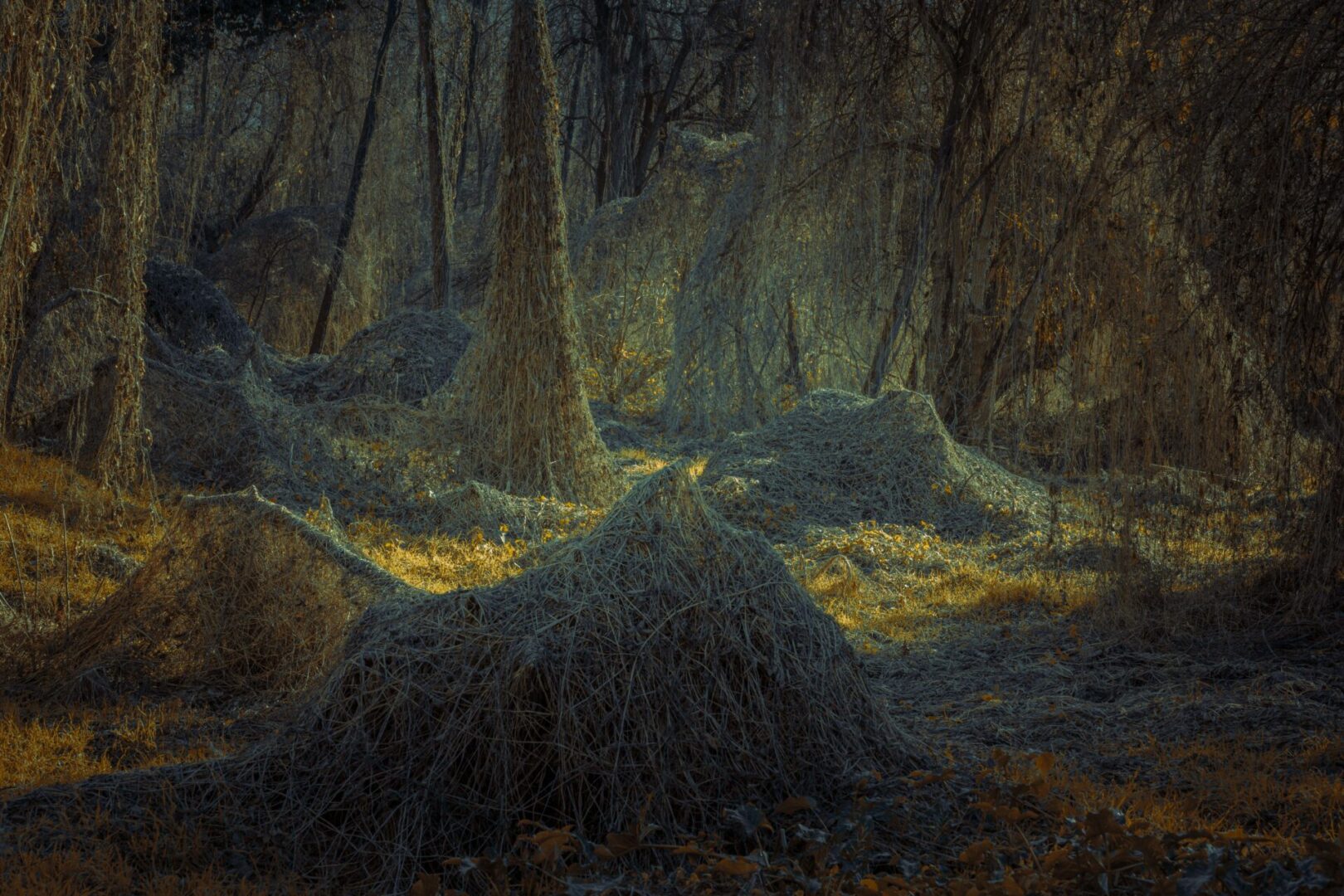
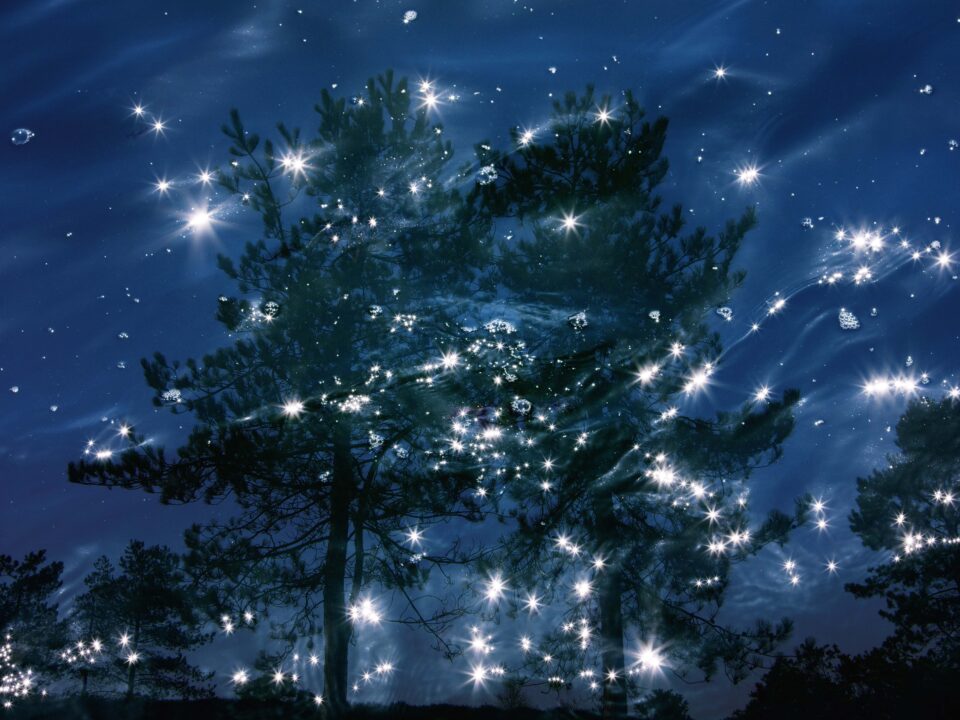
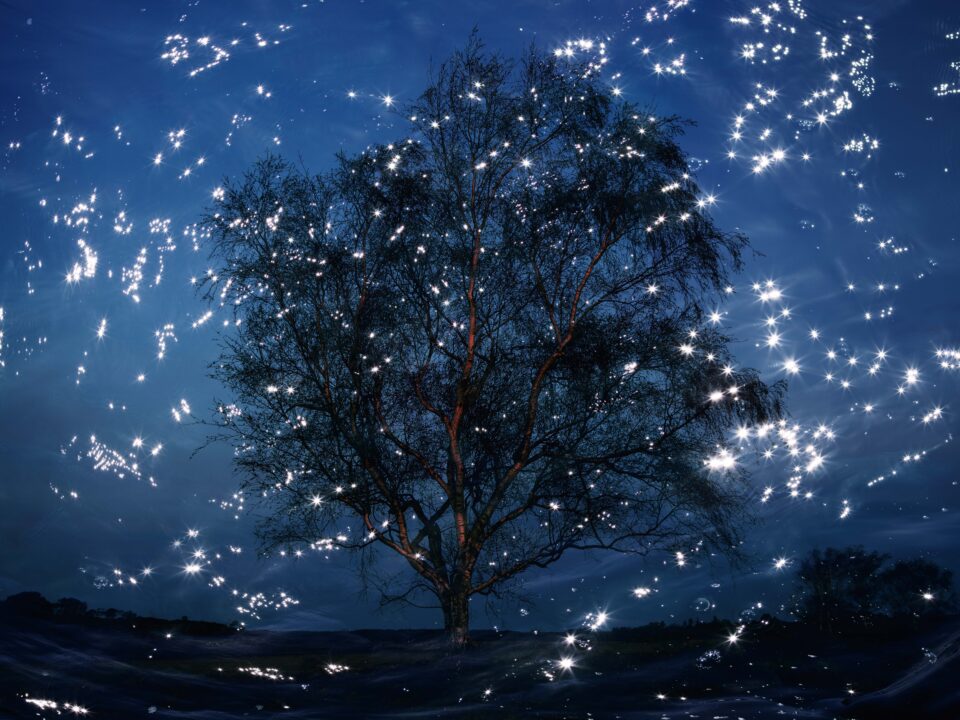
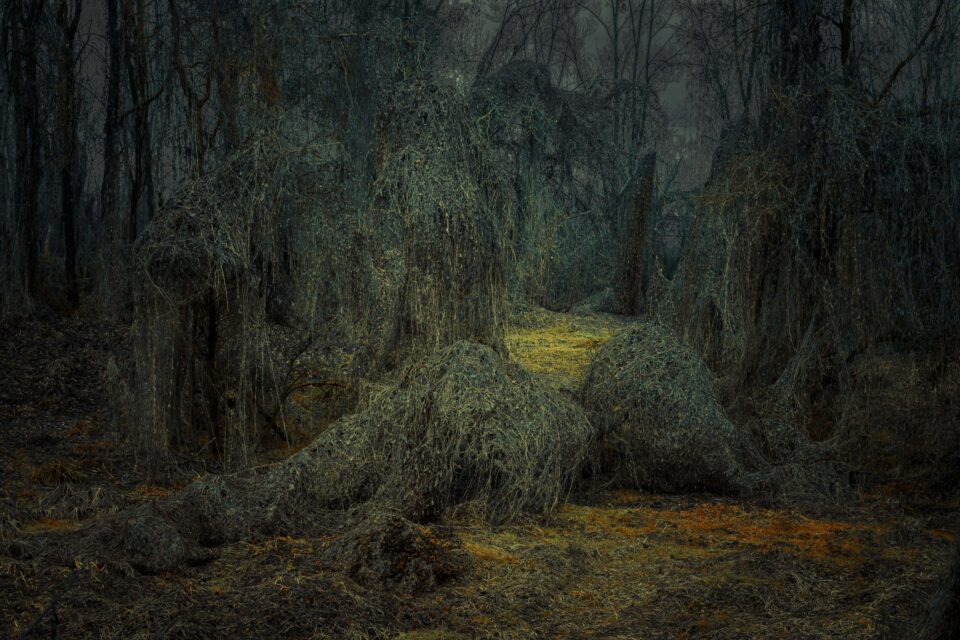
The ecological thread of the exhibition is equally urgent, reflecting the current emergency. In photography, Ellie Davies reflects on rising sea levels through multi-layered compositions, whilst Michelle Blancke invites us into timeless woodlands. Kate Hrynko visualises melting ice in colourful abstractions, and Liz Miller Kovacs visits scarred landscapes impacted by extractive economies. Meanwhile, Mónica Alcázar-Duarte’s installation Space Nomads (2024) explores human origins from two perspectives: ancient Yucatán ecological knowledge, and the James Webb Space Telescope. In painting, Stephen Johnston’s hyperreal Flowers in Jar (2024) visualises the never-ending cycles of life, death and decay.
Together, the Aesthetica Art Prize’s eco-engaged works go far beyond simply documenting crisis; they connect human and more-than-human worlds, past and future, science and spiritual, inviting us to reconsider how we might coexist on planet Earth. This dialogue recalls the practices of Edward Burtynsky, Maya Lin and Olafur Eliasson, artists who have made climate consciousness central to modern art discourse.
Technology and digital culture form a third vital current in the show. Brendan Dawes, shortlisted for an Academy Award, presents a 168-hour real-time generative film, commissioned by Venice Biennale Musica 2023. Bart Nelissen visually represents the overwhelming accumulation of data in today’s world, whilst Vlad Hrynko incorporates a background in computer science into his abstract still lifes. Sof presents an interactive sculpture that shifts and responds to interaction. Elsewhere, Gala Hernández López riffs on crypto culture and digital capitalism, and Princess Arinola Adegbite’s Afrofuturist film, Time Pops Like Chewing Gum (2024), launches two lovers into a space shaped by algorithms, disconnection and desire. These works do not simply incorporate technology but critically investigate its role in shaping our social world – embracing the awe and alienation of the digital age. This situates From Memory to Possibility within key conversations led by pioneering figures such as Refik Anadol, known for immersive data sculptures, or by Hito Steyerl, whose critical essays and video artworks probe the politics of surveillance.
Representation, voice and authorship are major throughlines. In photography, Joanne Coates and Sujata Setia challenge institutional silences and cultural invisibilities through feminist, working-class and diasporic perspectives. Coates collaborated with women living and working in rural or agricultural settings in North East England to make The Lie of the Land (2022), whilst Setia’s A Thousand Cuts (2023) emerged from a similarly socially-engaged practice: interviewing 21 South Asian women who are survivors of domestic abuse. Elsewhere, Sarah Maple presents Mother Tongue (2024), recalling what it was like to grow up in a Punjabi-speaking household but never learn the language, and Jarman Award shortlistee Morgan Quaintance presents a layered, emotional film reflecting on adolescence, class and the human condition in London. Finally, Rayvenn Shaleigha D’Clark’s precise facial sculptures challenge art historical portrayals – and omissions – of Black anatomy. These works are intimate yet incisive, turning everyday objects, personal histories and cultural gaps into potent materials for reasserting presence
Their critical stance aligns with the legacies of several key names, including Cindy Sherman, who revolutionised contemporary understandings of representation, Shirin Neshat, who foregrounds gender, exile and cultural politics, and Kara Walker, whose haunting explorations of racial history continue to influence conversations around memory and identity.
The show also embraces embodied knowledge and experiences of queerness and neurodivergence, through work by Emma Scarafiotti, Peter Spanjer, Tobi Onabolu and Sam Metz. Spanjer’s film, SWIM (2024), creates a powerful connection with the sculptures of D’Clark – examining the queer Black
body in spaces often marked by exclusion. Onabolu’s Danse Macabre (2023) explores spirituality, mental health and the human psyche through ancestral memory, Jungian psychology, Yoruba cosmology and dance. Meanwhile, on 16mm film, Scarafiotti introduces an androgynous protagonist; the body is portrayed as fluid, shifting and open to transformation. Metz’s sculpture, Porosity (2023-2025), reflects their sensory experience of the Humber Estuary; bright yellow modular structures echo how they see reflections in water through ocular albinism. They ask: “what might an embodied ethics of encounter look like that centred neurodivergence?”
York’s significance as a UNESCO City of Media Arts provides a fitting backdrop for From Memory to Possibility. The city has become a hub for collaboration and innovation at the intersection of art, technology and activism. The synergy between the Aesthetica Art Prize and York Art Gallery has nourished a fertile environment where emerging talent can flourish and challenge traditional frameworks. It runs alongside another exhibition, Future Tense, featuring pioneers Liz West and Squidsoup, both Aesthetica Art Prize alumni. They use light and digital technology to craft immersive experiences that explore perception, presence and connectivity. Vibrant installations transform space and invite optimism, reinforcing the Prize’s role in nurturing practices that push limits
Equally vital to the Aesthetica Art Prize ecosystem is the Future Now Symposium, which in 2025 celebrates its 10th anniversary. This annual gathering is a platform for artists, curators, producers and thinkers to convene, exchange ideas and foster collaborations. Over a decade, it has established itself as an essential space where creative voices come together to shape the future of cultural practice. As Aesthetica Director Cherie Federico, who is curator of the Art Prize and Future Tense, states: “Future Now is about breaking down barriers between disciplines and communities – it’s where conversations spark change.” It’s also a place to interrogate “how art can intervene in real-world issues with urgency and care.”
This year, the topics of discussion at the Future Now Symposium include the future of curation, immersive practice and community-building. All these activities place emphasis on the importance of cross-cultural dialogue in developing sustainable, innovative creative ecosystems. This commitment has helped position the Art Prize as more than a show; it’s a living, evolving conversation about art’s role in society. Reflecting on the award’s history, we see how it has launched the careers of many significant contemporary artists who continue to shape cultural discourse today. Several film alumni, including Andrea Luka Zimmerman, Hope Strickland, Jasmina Cibic, Jenn Nkiru, Larry Achiampong, Maryam Tafakory, Michelle Williams Gamaker and others have been recognised by the prestigious Jarman Award, whilst others have gone on to exhibit at the likes of Tate, The Photographers’ Gallery, MoMA PS1, Foam Amsterdam, V&A, Barbican, Guggenheim, Saatchi Gallery, Centre Pompidou and more. The Aesthetica Art Prize fosters a dynamic ecosystem that supports artistic risk-taking and meaningful cultural impact.
From Memory to Possibility refuses to shy away from complexity. It challenges us to think deeply about the role of history in shaping identity, how technology reconfigures time and presence, and the way the environmental crisis is demanding new forms of activism and empathy. Yet, it also offers a message of hope – that through resilience, creativity and connection, new pathways can be forged. This exhibition is a testament to art’s role as a witness and agent of change in an ever-shifting world, that is still very much “in the making.”
In the face of global uncertainty, The Aesthetica Art Prize: From Memory to Possibility holds a mirror to our fractured present while opening a door to new beginnings. As Federico says: “It is about more than art on walls – it’s about art in the world, engaging with urgent conversations and inviting us to imagine and act differently.” It’s this blending of immediacy and vision that makes the Prize unique and essential. Jones’ recognition of the show as a must-see underscores how, at Aesthetica, we are redefining what a prize can be. It’s not simply a competition but a platform for dialogue, diversity, and transformation – a place where artists from every corner of the world come together to speak truth, share and dream.
The Aesthetica Art Prize, York Art Gallery
18 September – 25 January
artprize.aestheticamagazine.com
Words: Anna Müller
Image credits:
1. Michelle Blancke, Detail of Secret Garden No. 329, (2023)
2. Michelle Blancke, Detail of Secret Garden No. 331, (2023).
3. Ellie Davies, Seascapes Triptych, (2023).
4. Ellie Davies, Seascapes Triptych, (2023).
5. Michelle Blancke, Detail of Secret Garden No. 325, (2023).


