Fotografiska has become one of the most visible forces reshaping how photography is exhibited and experienced in the contemporary museum landscape. Founded in Stockholm, 15 years ago, now it has expanded internationally to cities including Berlin, New York and Tallinn, it operates less as a conventional institution and more as a fluid cultural platform. Its programming model is built around scale and accessibility – presenting major photographic names alongside emerging practitioners in ways that collapse hierarchy while retaining curatorial clarity. Recent years have seen a steady sharpening of its global identity, with exhibitions that move between documentary urgency, staged spectacle and conceptual experimentation, often within the same institutional breath. This is not neutrality but positioning – Fotografiska consistently frames photography as a lived, contested space where image-making intersects with politics, identity and cultural memory. In Tallinn, this ethos has matured into a distinct rhythm over seven years of programming, shaped by Baltic specificity and international dialogue.
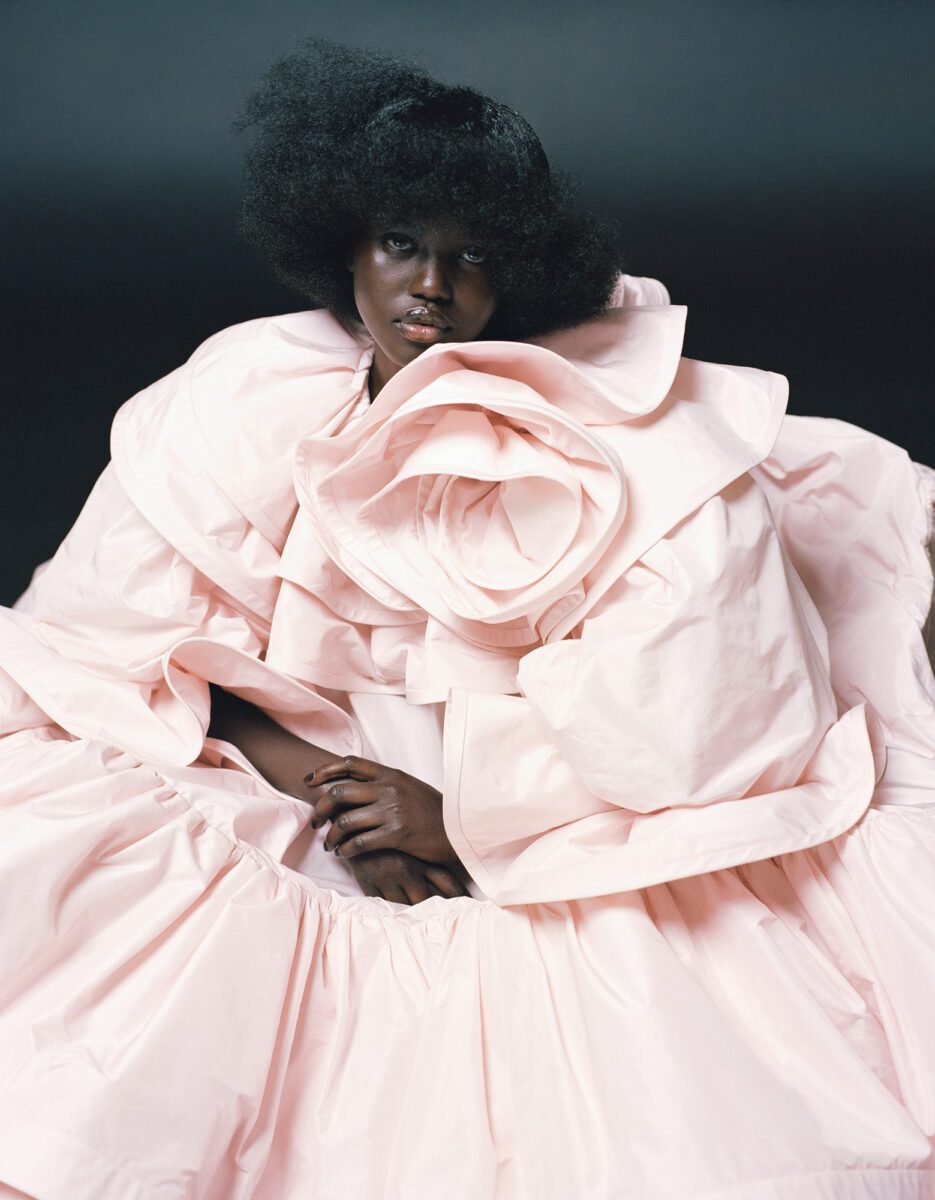
The season Fotografiska Tallinn opens with two concurrent exhibitions that define the institution’s dual commitment to legacy and future-facing practice. Photography in Power: Making Worlds Visible brings together approximately 127 photographers whose work has shaped the visual grammar of contemporary culture, including Helmut Newton, Robert Mapplethorpe, Richard Avedon, David LaChapelle and Paolo Roversi. Alongside this, Emerging Artists 2026: The Baltics & Finland introduces a new generation of practitioners selected through an open call spanning Estonia, Latvia, Lithuania and Finland. The first exhibition situates photography within a dense historical field of image-making, while the second tests its elasticity through experimental and intimate approaches. Both, however, share a central proposition – that photography is not simply a record of the world, but a mechanism through which the world is continually constructed. Together, they establish a curatorial structure built on tension.

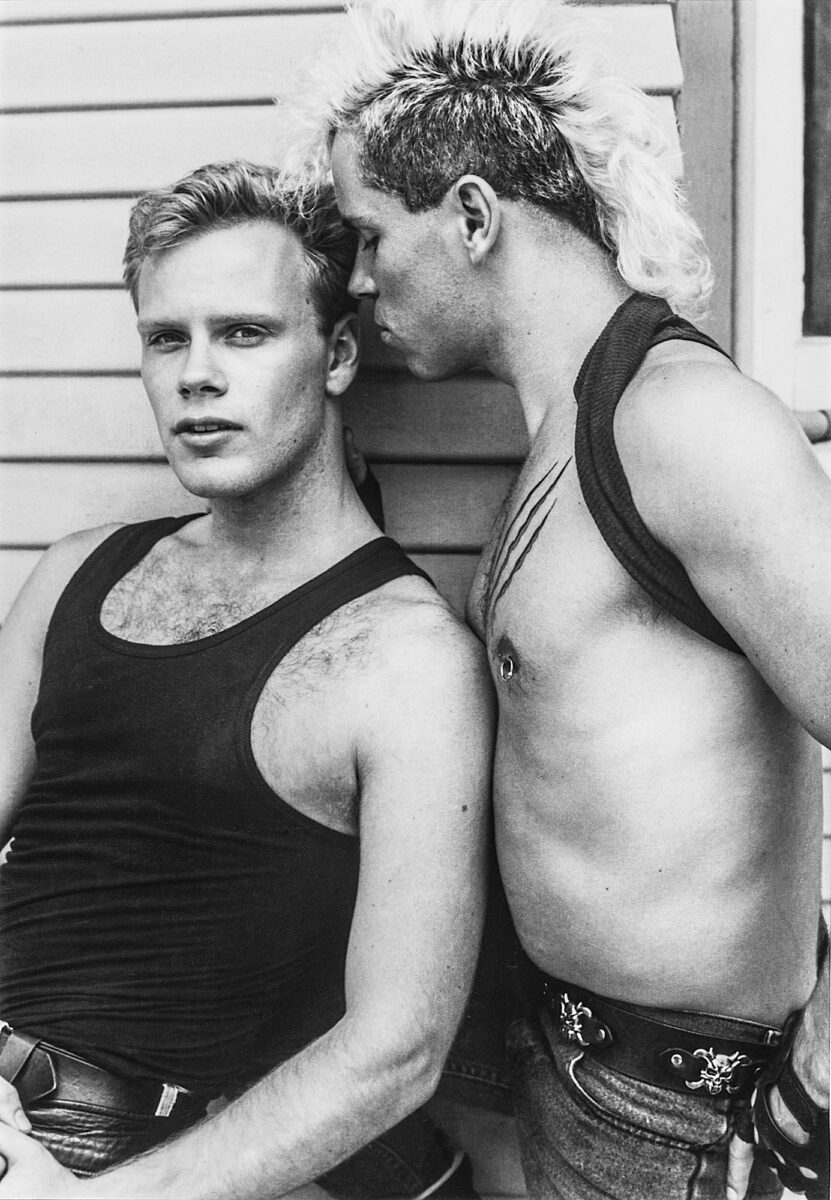
Photography in Power operates less as a retrospective than as an argument about influence. The inclusion of figures such as Helmut Newton, Robert Mapplethorpe and Richard Avedon anchors the exhibition within a recognisable history of photographic authorship, where the image is shaped as much by control as by observation. Yet this stability is deliberately unsettled by the presence of artists like David LaChapelle, Ellen von Unwerth, Peter Lindbergh and Refik Anadol, whose practices destabilise the boundaries between fashion, documentation, digital construction and theatricality. The result is not a linear narrative but a field of competing visual logics, where the photograph becomes an unstable site of negotiation. Across the exhibition, questions of power are not illustrated so much as embedded – in the staging of bodies, the framing of desire, the aesthetics of celebrity and the constructed nature of visibility itself. Photography here is a form of choreography, directing attention, whilst concealing its mechanisms.
What is most striking is the exhibition’s refusal to settle into a single reading of photographic authority. Images associated with beauty, glamour or editorial polish sit alongside works rooted in documentary urgency or social observation, creating friction rather than coherence. The presence of Lars Tunbjörk’s observational distance, Herb Ritts’ sculptural precision and Alison Jackson’s staged appropriation of celebrity imagery produces a shifting field in which authenticity becomes unstable. This instability is not presented as crisis but as condition – a recognition that contemporary photography no longer operates within a fixed hierarchy of truth and fiction. Instead, it circulates within overlapping systems of representation, where meaning is constantly reassembled by context. The exhibition’s scale amplifies this effect by insisting on photography’s multiplicity as its defining characteristic.
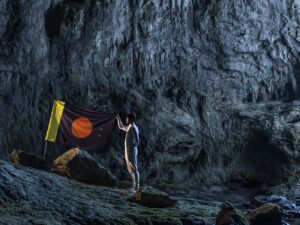
In parallel, Emerging Artists 2026: The Baltics & Finland shifts attention away from canonical authority and towards processes of becoming. The selected artists – including Anna-Liisa Kree, Andra Rahe, Karl Ketamo, Shia Rówan Conlon, Ieva Baltaduonytė and others – represent a generation working across staged photography, documentary gesture and conceptual image-making. What unites them is not style but sensitivity to conditions of contemporary life: digital selfhood, regional memory, fragmented landscapes and shifting social identities. Their work often operates at the threshold between observation and construction, where the act of photographing becomes inseparable from the act of interpretation. Rather than positioning photography as a finished statement, the exhibition frames it as an ongoing negotiation with the world, one that remains deliberately unresolved.
There is a notable looseness in how these emerging practices approach the medium, particularly in their refusal of photographic certainty. Some works lean into staged artificiality, constructing images that acknowledge their own fabrication, while others retain a documentary immediacy that resists aesthetic smoothing. Across the exhibition, humour, ambiguity and introspection appear as recurring strategies, suggesting a generation less interested in photographic authority than in its instability. This is not a rejection of tradition but a recalibration of it – a way of working within inherited forms while quietly undoing their assumptions. In this sense, Emerging Artists does not simply present new talent; it reveals how photography itself is being redefined through shifting cultural and technological conditions.
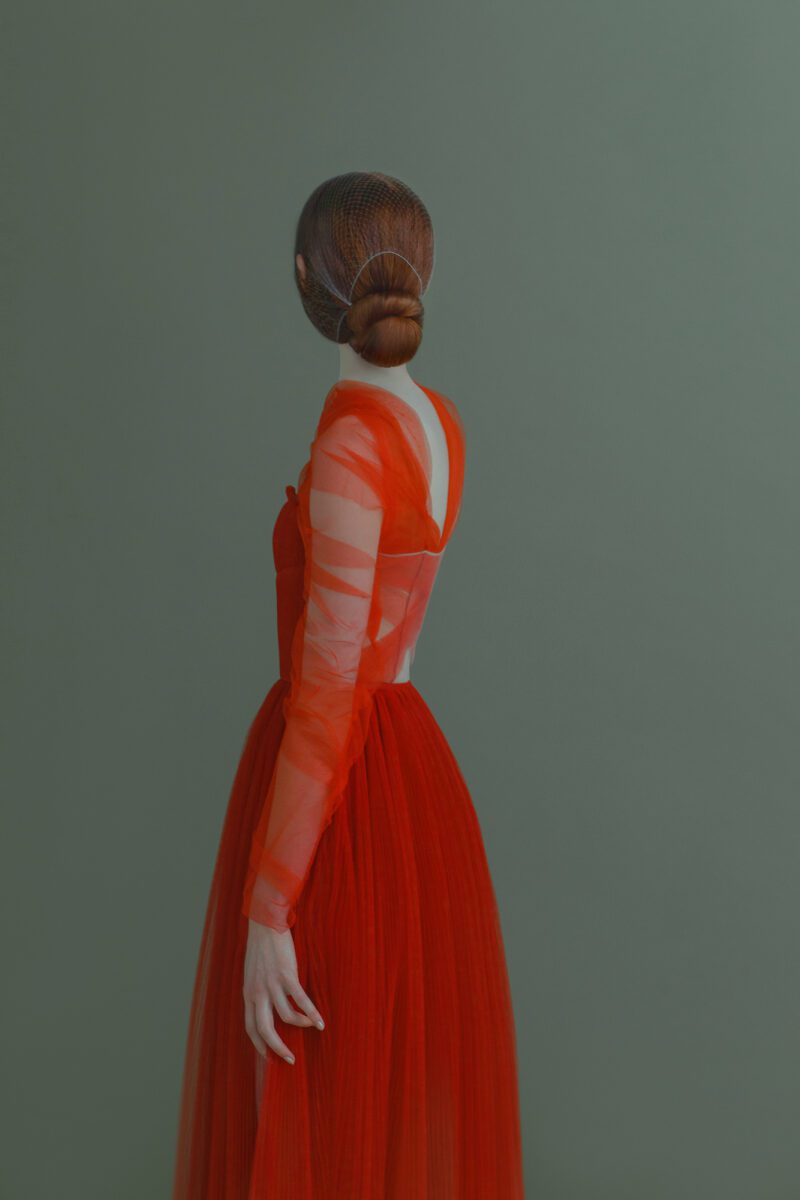
The relationship between the two exhibitions is where Fotografiska Tallinn’s curatorial proposition becomes most explicit. Photography in Power asserts the weight of historical image-making, while Emerging Artists tests its permeability. One operates through accumulation, the other through fragmentation, yet both are concerned with how meaning is constructed through images rather than contained within them. This dual structure resists the idea of photography as a single discipline, instead presenting it as a field of competing temporalities. The past is not closed, nor is the future speculative in isolation; both are entangled within the present moment of viewing. What emerges is less a narrative of progression than a sustained inquiry into how photography continues to function as cultural infrastructure.
Public programming extends this inquiry beyond the gallery space, introducing a discursive layer that situates photography within broader ethical and political contexts. Conversations around truth, manipulation and visual culture reflect the increasingly unstable status of the image in contemporary media environments. Talks featuring figures such as James Nachtwey foreground photography’s continued entanglement with conflict, testimony and witnessing, particularly in relation to ongoing crises such as the war in Ukraine. These events do not resolve the tensions raised by the exhibitions but rather intensify them, reinforcing photography’s dual position as both document and interpretation. The institution thus becomes a site not of resolution, but of sustained friction between image, context and interpretation.
Alongside these major presentations, Inta Ruka’s Places Called Home introduces a quieter register into the summer programme. Her images, characterised by their unforced intimacy and attention to lived environments, offer a counterpoint to the scale and conceptual density of the surrounding exhibitions. There is a sustained attention to time here – to the slow accumulation of memory within domestic and rural spaces, where photographic observation becomes an act of care rather than assertion. In this context, photography is stripped of spectacle and returned to its simplest condition: attention. The effect is not nostalgic, but reflective, suggesting that the medium’s power often lies in its refusal to overstate itself.
Taken together, the summer programme at Fotografiska Tallinn articulates a complex vision of photography as both historical archive and speculative field. It resists the temptation to stabilise meaning, instead allowing images to exist in relation, tension and contradiction. What is presented is not a definitive statement about photography, but a sustained exposure to its instability – its capacity to hold multiple truths at once without resolving them. In this sense, Fotografiska operates less as an arbiter of photographic value and more as a space of negotiation, where images are continually re-seen, re-framed and re-understood. The result is a programme that does not explain photography, but instead insists on its ongoing incompleteness – its refusal to settle, and its persistent ability to generate new ways of seeing.
Photography in Power: Making Worlds Visible and Emerging Artists 2026: The Baltics & Finland is at Fotografiska, Tallinn from 6 May – 13 September: tallinn.fotografiska.com
Words: Simon Cartwright
Image Credits:
1&5. Photography in Power. Adut Akech, 2019 © Campbell Addy.
2. Emerging Artists 2026. ‘Untitled 2‘, from the series ‘Traces of Displacement’, 2025 © Ieva Baltaduonytė.
3. Photography in Power. Dior, 2017 © Evelyn Bencicova.
4. Photography in Power. Tom & Tom Katt, 1984 © Tom of Finland.