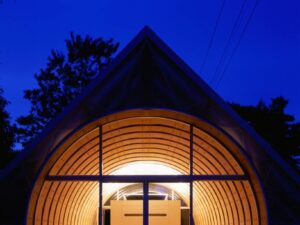
Shigeru Ban has spent over four decades redefining what architecture can achieve, merging innovation with social conscience to create spaces that are as humane as they are visionary. From paper-tube shelters in disaster zones to landmark cultural institutions, his work demonstrates that architecture can transcend aesthetics, offering both dignity and hope. The Manggha Museum of Japanese Art and Technology in Krakow now presents a new exhibition that traces this remarkable career, situating Ban’s practice within a global dialogue of design, material experimentation and humanitarian ambition.
Born in Tokyo in 1957, Ban studied architecture in the United States, a period that profoundly shaped his sensibility. He began at SCI-Arc in Los Angeles, an experimental environment housed in a repurposed warehouse where Ray Kappe encouraged students to test boundaries and rethink materials from the ground up. In 1980 he transferred to Cooper Union in New York, studying under John Hejduk whose poetic, conceptual approach to structure left a lasting imprint. This transcontinental education, bridging the improvisational energy of California with the disciplined formalism of New York, laid the foundation for Ban’s work, in which material experimentation coexists with a deep ethical commitment.
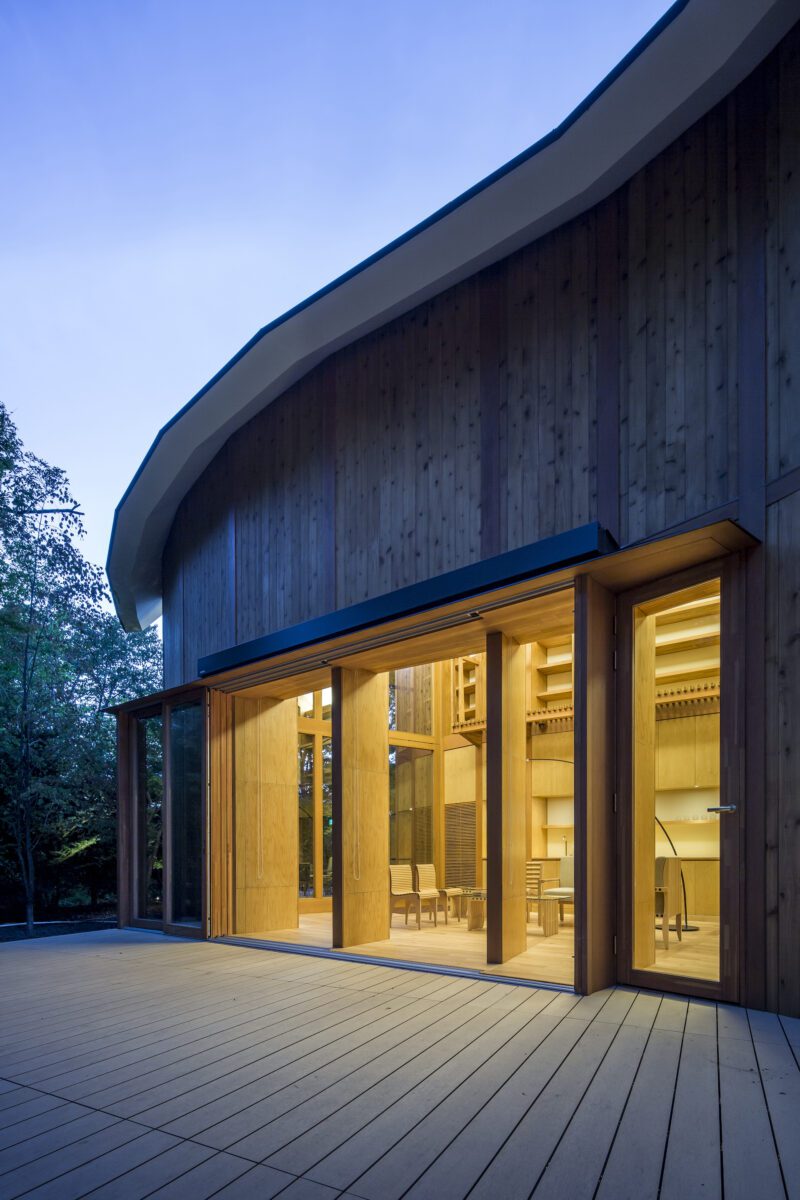
His early professional years began under Arata Isozaki, whose influence is evident in Ban’s sensitivity to structure, proportion and spatial fluidity. In 1985, at twenty-eight, Ban opened his own practice. A decade later he became a consultant to the United Nations High Commissioner for Refugees and founded the Voluntary Architects’ Network, marking the start of a lifelong commitment to humanitarian work. For Ban, architecture has never simply been an exercise in form, rather it is an ethical practice, one that is capable of restoring dignity, offering shelter and rebuilding communities in crisis.
Ban’s emergency structures remain among his most radical and defining contributions to contemporary architecture. The Paper Log House, Paper Partition System and other deployable shelters have been deployed in Haiti,, Japan, Rwanda, Ukraine and countless other sites where natural disasters or conflict created urgent, often overwhelming humanitarian needs. Each intervention demonstrates an extraordinary understanding of how architecture can combine speed, efficiency and human dignity. These shelters are designed to be rapidly assembled, often by residents themselves or with minimal technical expertise, yet they maintain structural integrity and comfort in extreme conditions. Their primary material, paper tubes, is deceptively simple – lightweight, inexpensive, recyclable – yet, through ingenious engineering, becomes remarkably resilient. Arranged in grids or layered forms, these tubes can support walls, floors and even roofs, taking fragile-looking components and transforming them into robust frameworks that are capable of sheltering families and entire communities.
Beyond their physical function, Ban’s designs respond to psychological and social needs. The Paper Partition System, for example, allows large communal spaces to be subdivided into private zones, granting families a measure of personal space in otherwise impersonal relief camps. This attention to spatial dignity reflects a fundamental ethos: that temporary solutions need not compromise humanity. By reimagining a material traditionally associated with ephemerality, Ban subverts conventional hierarchies of material value, demonstrating that architecture’s worth is determined not by cost or permanence but by adaptability, efficiency and the capacity to restore a sense of normalcy in crisis. In Ban’s hands, paper is not merely a building component; it becomes a symbol of resilience, hope and creative problem-solving, a material through which architecture asserts its ethical, humanitarian potential.
The ingenuity of these shelters extends to their environmental and logistical design. Paper tubes are not only recyclable but often locally sourced or easily transported in bulk, minimizing the ecological footprint and logistical challenges of disaster relief. Many of Ban’s designs are modular, allowing them to be scaled up or down depending on the number of people to be housed. In Haiti, families affected by the 2010 earthquake could inhabit units within days, gaining protection from the elements while participating in the construction process themselves, fostering agency and community ownership. In Rwanda and Japan, similar interventions demonstrated that even in contexts of extreme vulnerability, architecture could provide beauty, order and reassurance, proving that emergency structures need not be purely utilitarian or aesthetically barren. These projects illustrate a radical, almost philosophical stance toward architecture: that the discipline’s highest calling may be to respond to human need with both practicality and empathy.
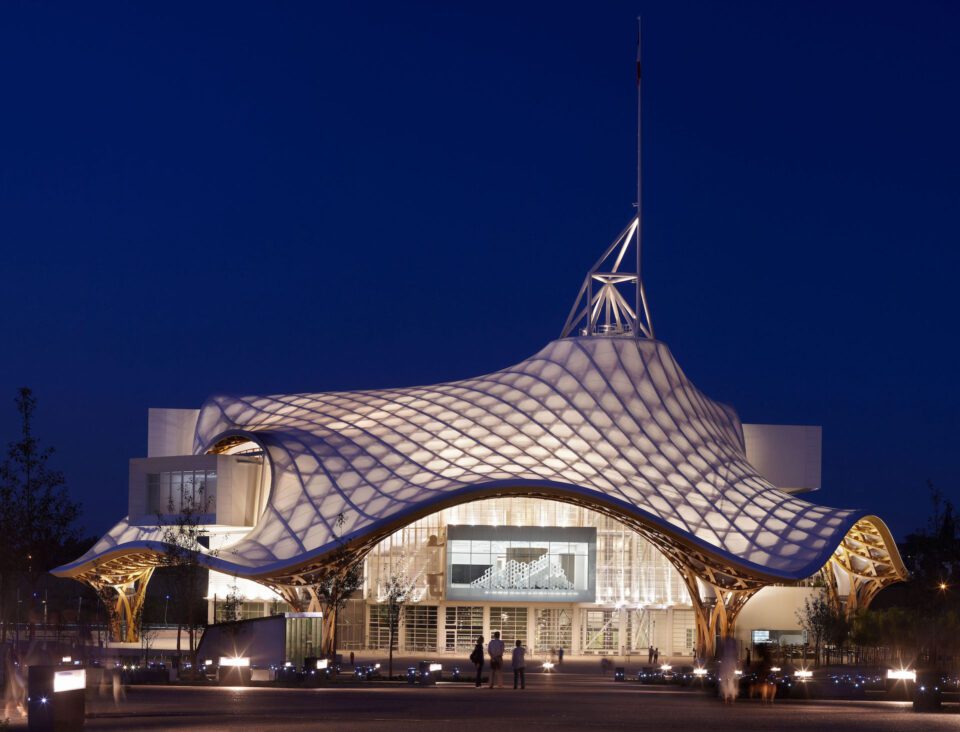
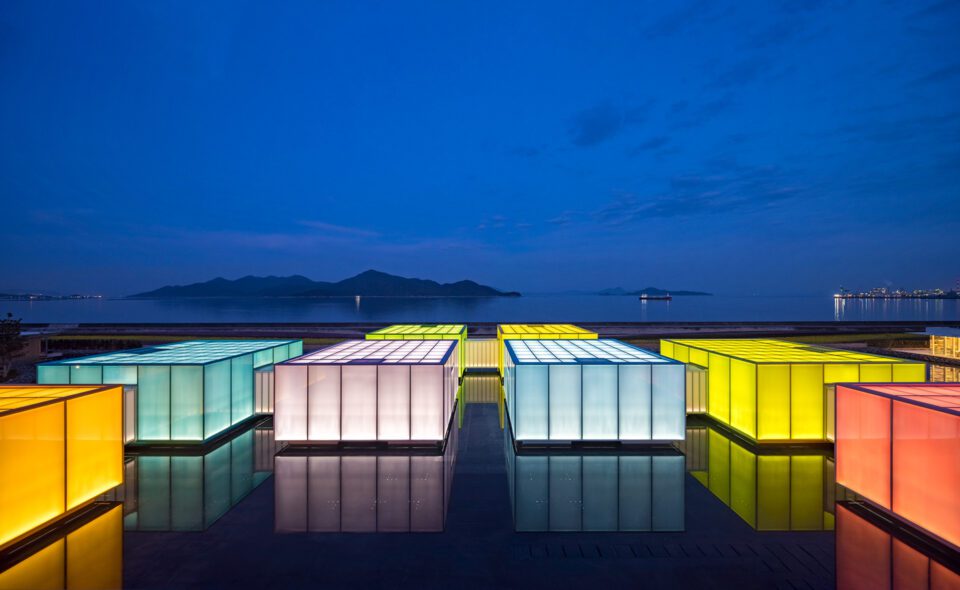
Such humanitarian work stands in dialogue with Ban’s cultural and civic projects. The Centre Pompidou-Metz, completed in 2010, is a masterclass in structural choreography, where a vast timber roof unfurls like a woven canopy. The Simose Art Museum in Hiroshima echoes a similar sensitivity to landscape, materials and light. His pavilions for World Expos, including Hanover 2000 and the upcoming 2025 Osaka edition, demonstrate his capacity to push structural ideas into compelling and often surprising forms. Across each project, whether a museum or a disaster shelter, Ban’s architecture embodies clarity and purpose. At Manggha, visitors encounter this spectrum through models, drawings and documentary materials that reveal the depth of Ban’s process. The exhibition encourages slow, attentive engagement. Hidden details become visible: the precise calibrations of timber joints, the tactility of paper tubes, the layered considerations behind each spatial decision. Rather than presenting Ban solely as a prolific architect, the museum positions him as a thinker whose ideas resonate far beyond the field.
The curatorial framing highlights Ban’s belief that architecture must serve society at all scales. His shelters respond with immediacy, yet also embody long-term thinking about sustainability and material innovation. His cultural institutions define new ways for communities to convene, reflect and participate in public life. This duality reinforces the notion that architectural vision is not limited to monumental projects but includes the capacity to act decisively and compassionately in moments of crisis. Ban’s influence extends into academia. Over the years he has held professorships at numerous universities, sharing insight with emerging architects who increasingly recognise the necessity of socially driven design. His teachings challenge students to consider the lifecycle of materials, the environmental cost of construction and the ethical implications of their decisions. The impact of this pedagogical work is not easily quantified, yet it reverberates across the next generation of practitioners who seek to build with conscience.
Recognition has followed accordingly. Ban received the Pritzker Prize in 2014 for his commitment to humanitarian design and his ability to expand the possibilities of sustainable materials. The award placed him firmly among contemporary architecture’s leading figures, though Ban often redirects praise toward the communities he serves and the teams with whom he collaborates. His humility underscores a larger truth: architecture does not exist in isolation but is part of a broader ecological and social network.
The Manggha exhibition situates Ban’s contributions within this continuum. More than a retrospective, it becomes an inquiry into the evolving role of design in a world reshaped by climate change, conflict and mass migration. As visitors move through the thoughtfully staged works, they are invited to consider how architecture might operate differently, how material innovation might support social resilience and how design can bridge the divide between the urgent and the beautiful. Ban’s work resists binaries, showing that humanitarian solutions can possess elegance, monumental buildings can embody restraint and sustainability can coexist with architectural ambition.
The museum itself becomes an apt lens through which to examine these ideas. Isozaki’s original building was conceived as a gesture of cultural exchange between Japan and Poland, a structure that flows with the logic of water and landscape. Ingarden’s later extension continues this ethos, creating spaces intended not for spectacle but for contemplation. Housing Ban’s work within this architectural lineage reinforces the international dialogue that runs through his practice. In presenting this first chapter of its new programme, Manggha highlights a fundamental truth: buildings can be both visionary and catalytic. They shape not only urban environments, but the ways societies imagine themselves. Ban’s career offers an alternative blueprint, in which design is measured not by extravagance but by its capacity to transform lives. His exhibition in Krakow is a reminder that architecture at its best operates with conscience and creativity, establishing cultural spaces while meeting some of the most critical humanitarian needs of our time.
The result is an exhibition that feels urgent, reflective and optimistic. It positions Shigeru Ban as a pivotal figure whose work argues for a more compassionate architectural future. In doing so, Manggha reaffirms its role as a cultural institution that champions not only aesthetic innovation but the deeper values that underpin design. Through Ban’s example, visitors are invited to consider how architecture can act as a social force, offering both shelter and inspiration in a rapidly changing world.
Shigeru Ban. Architecture and Social Contributions is at Manggha Museum until 3 May 2026.
Words: Simon Cartwright
Image Credits:
1. Simose Art Museum. Photo: Hiroyuki Hirai.
2. Shishi-iwa House. Photo: Hiroyuki Hirai.
3. Centre Pompidou Metz. Photo: Didier Boy de la Tour.
4. Simose Art Museum. Photo: Hiroyuki Hirai.