
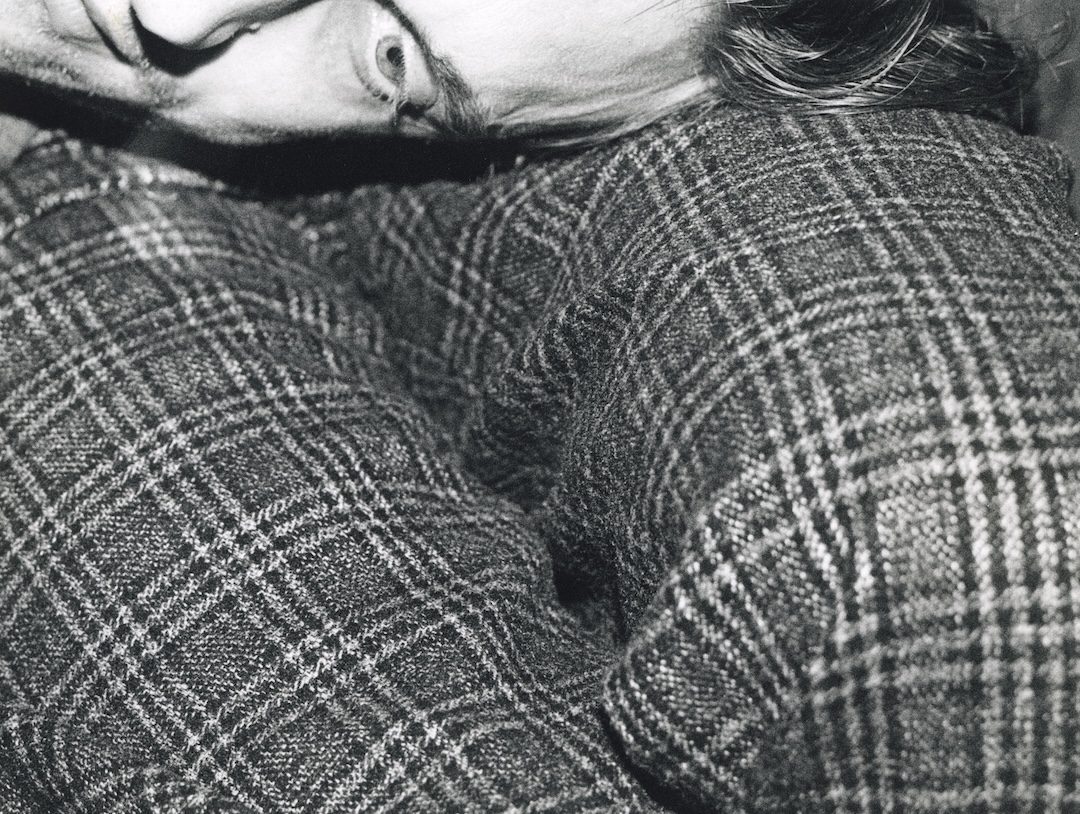
Photography is understood as a means of preserving what might otherwise disappear. However, an image can withhold as much as it records. This tension runs through the work of Polish artist Joanna Piotrowska, whose photographs examine the psychological structures underpinning everyday relationships. Family histories, domestic environments and bodily gestures become points of departure for considering how individuals negotiate authority, vulnerability and social expectation. In BURROWED, her first solo exhibition at an Italian institution, these concerns extend into a new body of photography and collage, conceived specifically for the Project Space at Palazzo Strozzi. Curated by Leonardo Bigazzi, the presentation considers the psychological significance of retreat, asking what happens when the search for security becomes entangled with the conditions from which individuals seek protection.
A burrow is an architecture of necessity. Constructed through an instinctive movement inwards, it offers a place of shelter while establishing a boundary between the individual and the outside world. Piotrowska’s choice of title introduces a tension between this impulse towards refuge and the circumstances that make withdrawal necessary. Its past participle, BURROWED, suggests something already excavated and inhabited, a space carrying the traces of its formation. Rather than treating retreat as an uncomplicated gesture of self-preservation, the exhibition considers the psychological consequences of creating private territories. The domestic sphere becomes particularly significant here: a setting associated with familiarity and care, but one that can also accommodate dependency, unequal relationships and forms of control.
Throughout Piotrowska’s practice, the body is a register of these less visible dynamics. Her carefully constructed photographic situations draw attention to posture, proximity and gesture, allowing physical arrangements to suggest relationships that are difficult to articulate. A body is never simply present within the frame; its position in relation to others, and to the surrounding environment, carries implications about agency and constraint. This attention to physical behaviour reflects the artist’s wider interest in the conventions governing familial and interpersonal relationships. Drawing on family archives and psychotherapeutic methods, she examines how learned patterns of behaviour become embedded in ordinary interactions. The photographs resist the idea that intimacy is synonymous with emotional transparency, exposing instead the complicated negotiations that take place within close relationships.
The space between what an image records and how it has been constructed is equally important to Piotrowska’s use of photography. Her compositions occupy an ambiguous position between documentation and staging, retaining the visual authority of the photographic image while making its conditions of production central to the experience of looking. The viewer encounters situations that appear psychologically charged, yet their precise circumstances remain withheld. This uncertainty prevents the photographs from functioning as straightforward illustrations of experiences. Instead, they draw attention to the interpretative habits through which viewers assign meaning to bodies, gestures and relationships. Piotrowska’s images are therefore concerned not simply with the representation of human behaviour, but with the assumptions that shape our reading of it.
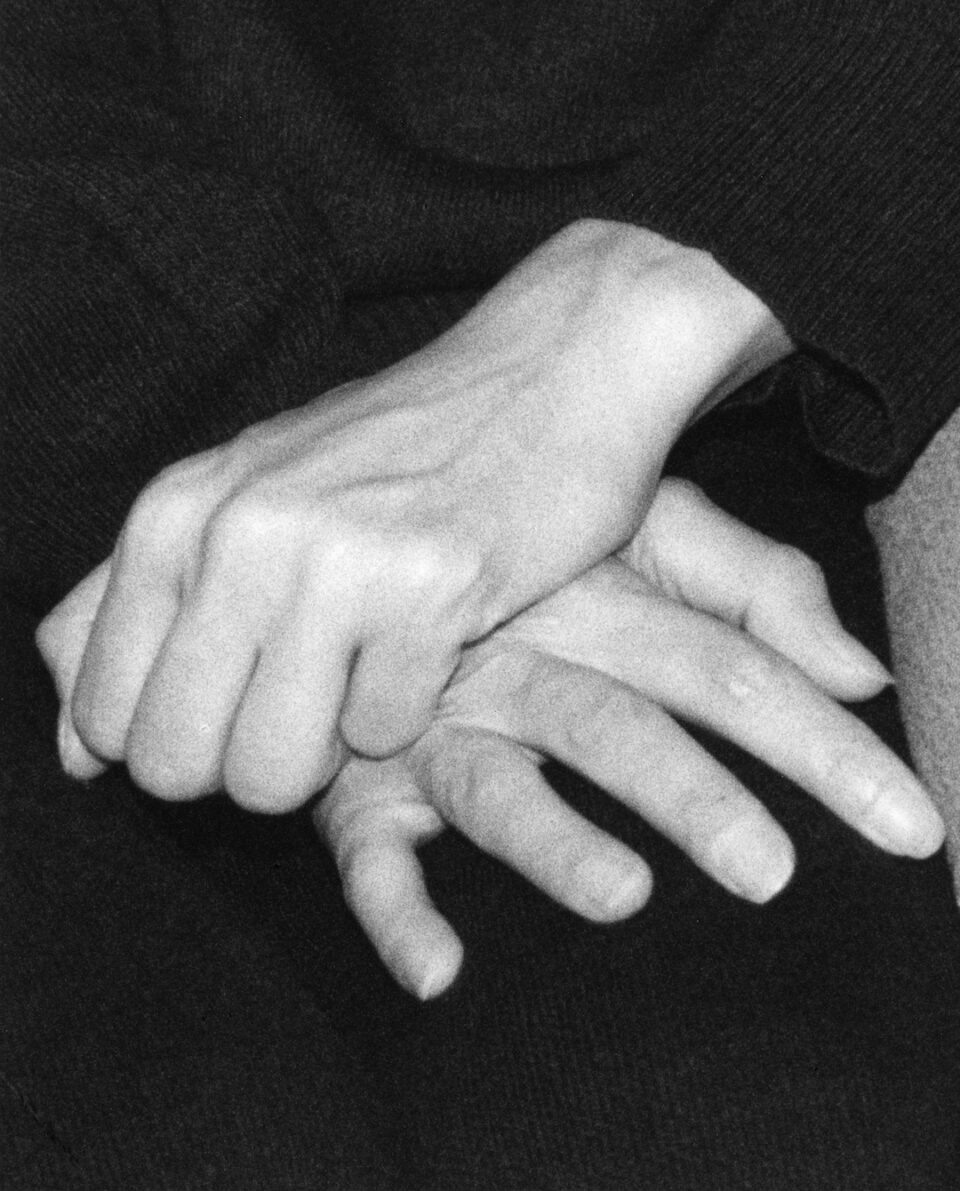
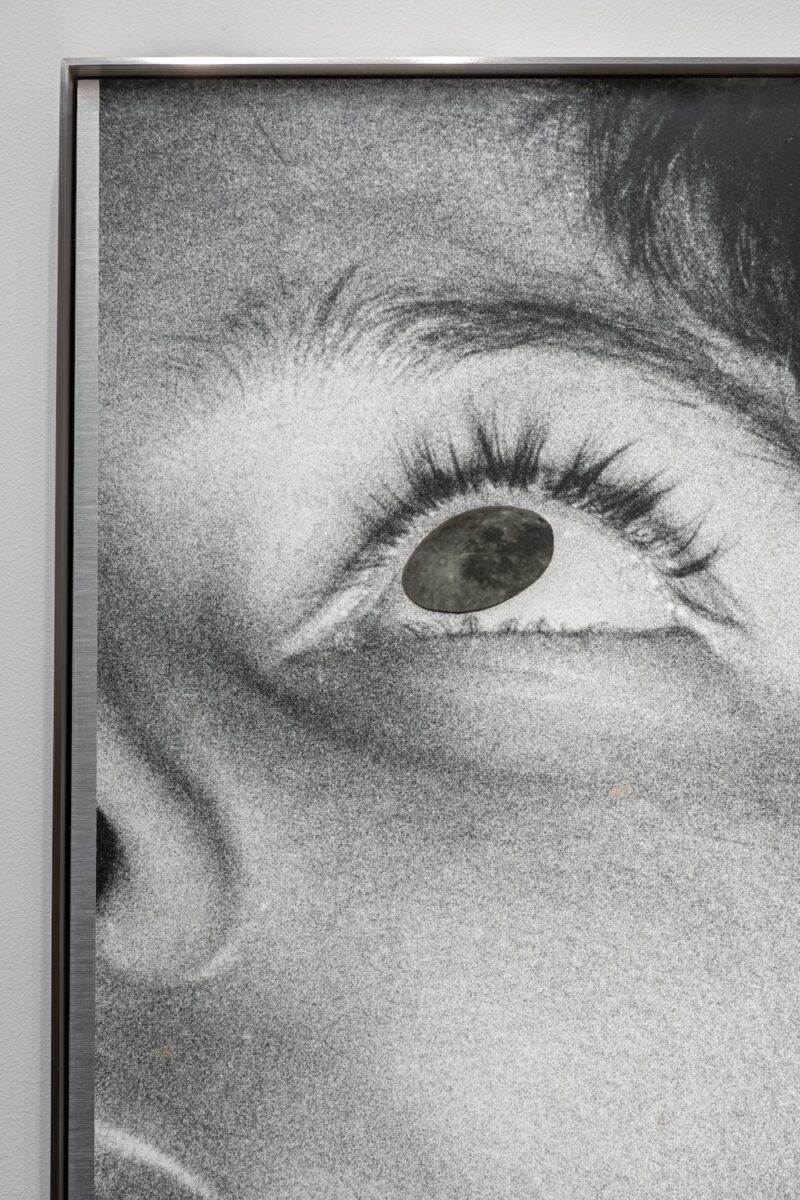
Material processes deepen this investigation. The exhibition brings together silver gelatin prints and collages, establishing a relationship between photographic precision and the possibilities of fragmentation. Silver gelatin photography carries a particular material presence: light and shadow are translated into tonal gradations, while the printed surface preserves the physical evidence of the image’s production. The medium’s historical association with documentary photography lends these works an additional complexity, particularly when considered alongside the constructed nature of Piotrowska’s compositions. Collage allows photographic fragments to be brought into new relationships rather than remaining confined to their original contexts. The image becomes something that can be dismantled and reassembled, reflecting the unstable processes through which personal histories and memories form.
This approach to photographic construction also places the exhibition within a wider history of artists questioning the authority of the camera. Documentary photography has frequently been associated with truth and evidence, despite the inevitable influence of selection, framing and interpretation. Contemporary photographic practice has increasingly challenged this presumed neutrality, exploring the space between recorded reality and constructed experience. Piotrowska’s work is particularly attentive to the psychological consequences of this ambiguity. Her staged situations do not simply imitate documentary images; they expose the extent to which visual evidence depends upon the viewer’s willingness to accept a particular reading. The photographs offer no definitive account of the relationships they depict, making interpretation an active and sometimes uncomfortable process.
The domestic environment provides a further dimension. Feminist art criticism has long challenged the separation of private experience from public and political structures, examining how gendered expectations and social hierarchies are reproduced within the home. Piotrowska’s attention to familial relationships engages with this discourse through the language of physical interaction rather than explicit social commentary. Familiar gestures acquire a different significance when considered in relation to dependency, authority and expectation. The home emerges as a space shaped by inherited behaviours, where affection and obligation can become difficult to distinguish. Rather than imposing a single political reading, the artist allows these contradictions to remain present within the images, acknowledging the complexity of relationships that cannot be reduced to simple divisions between power and powerlessness.
Memory introduces another layer of uncertainty. Family photographs are often treated as reliable records of personal history, yet the family archive is necessarily selective, preserving certain moments while allowing others to disappear. Its contents are shaped by individual choices, emotional attachments and the conventions through which families represent themselves. Piotrowska’s engagement with archival material challenges the idea that such images offer a complete account of the past. Through processes of selection, association and collage, fragments can acquire new meanings, while familiar visual references become detached from their original narratives. The archive is consequently transformed from a repository of fixed memories into a site of reinterpretation. What matters is not simply what an image remembers, but how its meaning changes when it enters into dialogue with other fragments.
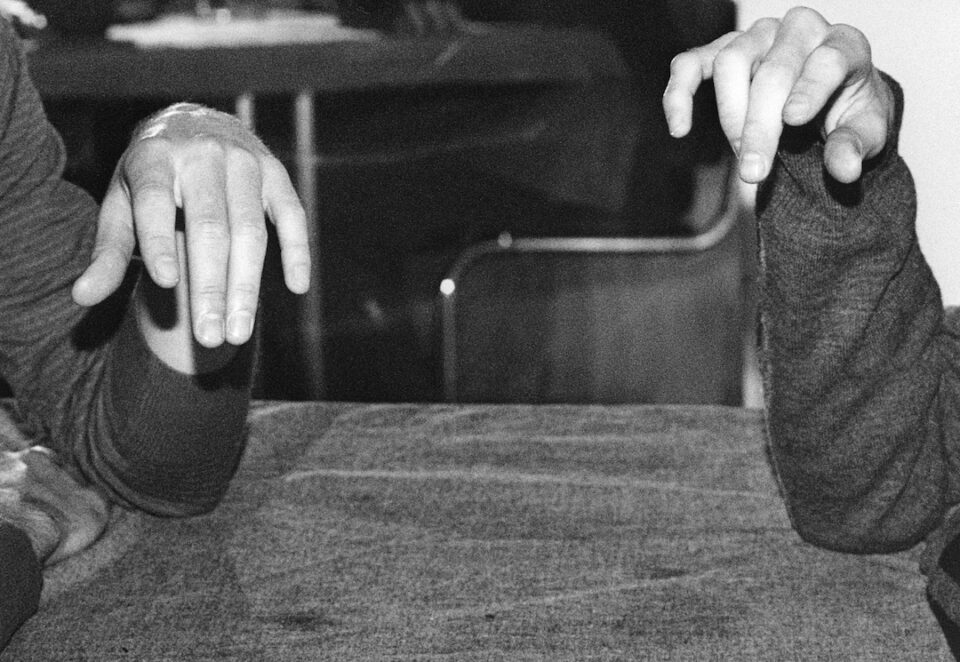
This fragmentary understanding of experience informs the exhibition’s relationship with psychoanalytic thought. Dreams, recollections and unconscious associations rarely produce coherent narratives; their significance emerges through repetition, displacement and the connections established between seemingly unrelated details. Piotrowska’s photographs invite a comparable process of interpretation, encouraging viewers to construct relationships between images without offering a definitive account of their significance. Curator Leonardo Bigazzi’s presentation of the new body of work within the Palazzo Strozzi Project Space provides a setting for these associations to develop. Rather than approaching the exhibition as a straightforward survey, the curatorial framework foregrounds the connections between photographic material, memory and psychological experience. The viewer’s movement between works is part of this, allowing individual images to acquire different meanings through their proximity to others.
Piotrowska’s international exhibition history reflects the growing significance of her contribution to contemporary photography. Her work has been presented at Tate Britain in London, MoMA in New York, the Stedelijk Museum in Amsterdam, Le Bal in Paris and the 59th Venice Biennale, among other institutions. In 2023, she received the Camera Austria Award for Contemporary Photography, recognising a practice that consistently interrogates the relationship between photographic representation and lived experience. What distinguishes her approach is the attention given to the physical and psychological dimensions of everyday behaviour. Rather than relying on dramatic incidents or explicit narratives, she finds complexity in the organisation of bodies, the construction of domestic scenes and the visual traces of personal histories. These elements allow individual experiences to resonate beyond their immediate circumstances, connecting private relationships to broader questions about identity and social behaviour.
BURROWED draws attention to the instability of the images through which people understand themselves and others. Its photographs and collages resist the certainty traditionally associated with visual documentation, instead presenting experience as something assembled from incomplete memories, physical gestures and shifting interpretations. The exhibition’s interest in shelter is therefore inseparable from its investigation of the structures that shape personal identity. A domestic space, a family photograph or a seemingly ordinary interaction can carry histories that are not immediately visible yet continue to influence how individuals relate to one another. Piotrowska’s work makes these underlying structures perceptible without attempting to resolve their contradictions. What remains is an encounter with photography as a means of examining not only what has been preserved, but also the assumptions, omissions and emotional histories that determine how an image is read.
Joanna Piotrowska. BURROWED is at Palazzo Strozzi, Project Space, Florence, until 24 January.
Words: Anna Müller
Image Credits:
1. Joanna Piotrowska, Untitled (2026), 21 x 27 cm. Silver gelatin print. Courtesy of the artist and Consonni Radziszewski – Lisbon, Milan, Warsaw.
2. Joanna Piotrowska, Untitled (2026), 40 x 30 cm. Silver gelatin print. Courtesy of the artist and Consonni Radziszewski – Lisbon, Milan, Warsaw.
3. Joanna Piotrowska, Photo Ela Bialkowska, OKNO Studio.
4. Joanna Piotrowska, Untitled (2026), 60 x 50 cm. Silver gelatin print. Courtesy of the artist and Consonni Radziszewski – Lisbon, Milan, Warsaw.


