Photography is both a record of the world and an instrument through which it is understood. For its 17th edition, Planches Contact Festival takes Generations as its theme, exploring how personal histories intersect with wider social and political change. Coinciding with the bicentenary of photography, the programme considers the medium’s capacity to preserve experience, question inherited narratives and give form to histories that might otherwise remain unseen. Sixteen international photographers have been invited to work in Normandy, producing projects that move between family archives, documentary observation and imagined geographies. Together, their practices examine what it means to inherit a past.
An archive is never a neutral account of what came before. Family albums, documentary records and vernacular photographs preserve fragments of individual and collective experience, but their significance changes according to who looks at them and when. An image can offer evidence of a moment while leaving its circumstances unexplained; what is absent may be as revealing as what remains visible. Across the festival, artists return to photographs and personal histories to examine the relationship between memory and truth, connecting private recollection with questions of class, politics and place. They approach the archive as something active: a source of knowledge that can be questioned, reconstructed and passed on.
For Ed Alcock, this process begins with an unexpected discovery. The Sorrowful and Immaculate Heart of Mary takes its starting point from a concealed strongbox disguised as a dictionary, opening a route into the life of the photographer’s grandmother, Mary, born into a working-class family in north-east England in 1923. Photographs, letters and archival records bring to light the stories of Florence, an English military nurse who survived the battlefields of Ypres, and her French partner, known only as Mademoiselle. The women raised Mary under the discreet protection of a man whose convictions challenged the conventions of his time. Combining documentary photography, text and fragmented narrative, Alcock assembles a family history marked by concealed relationships, social constraint and the pursuit of personal freedom.
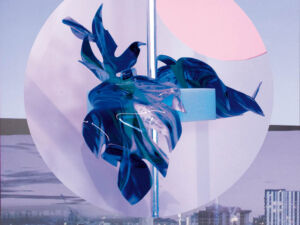
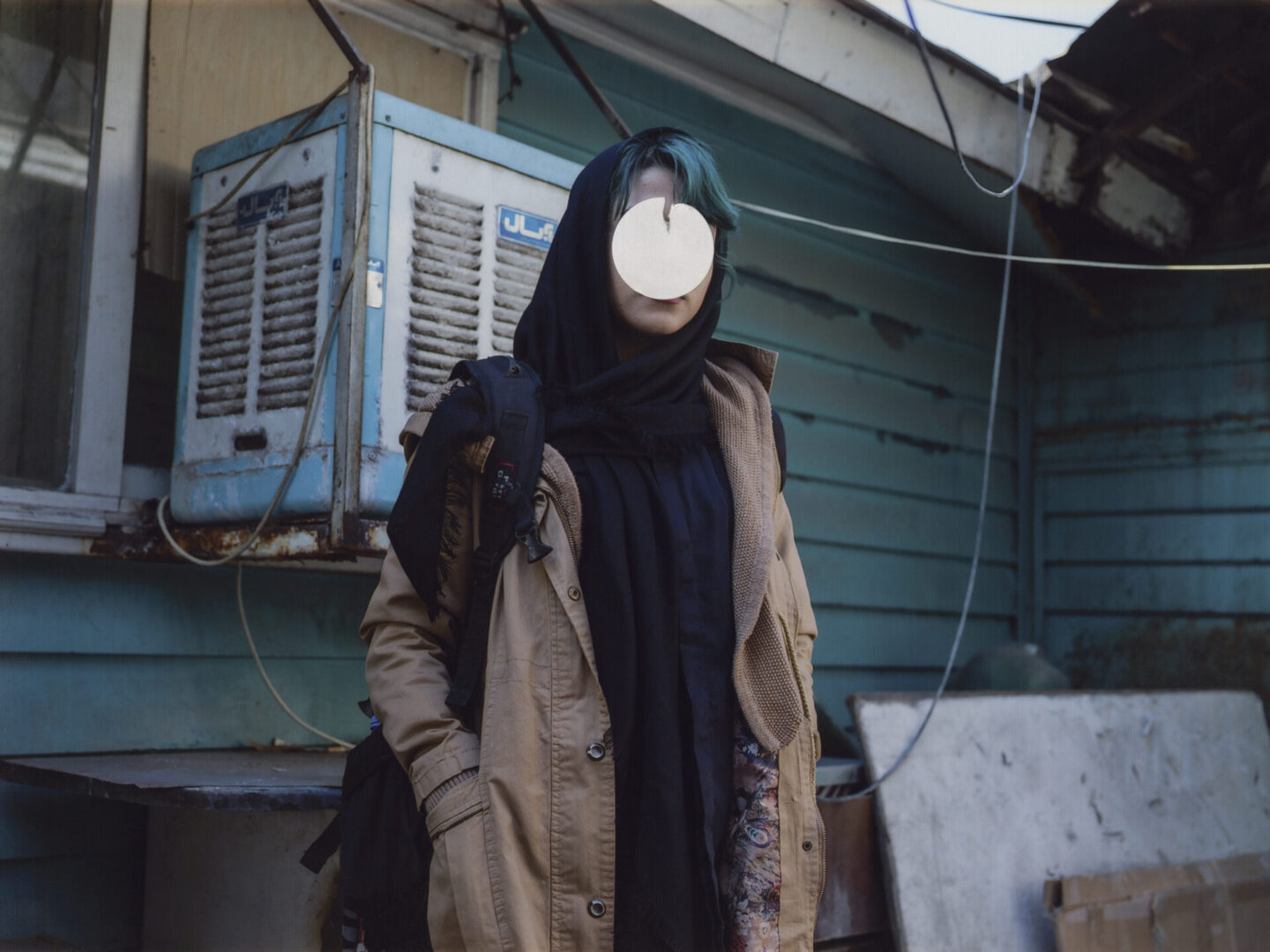
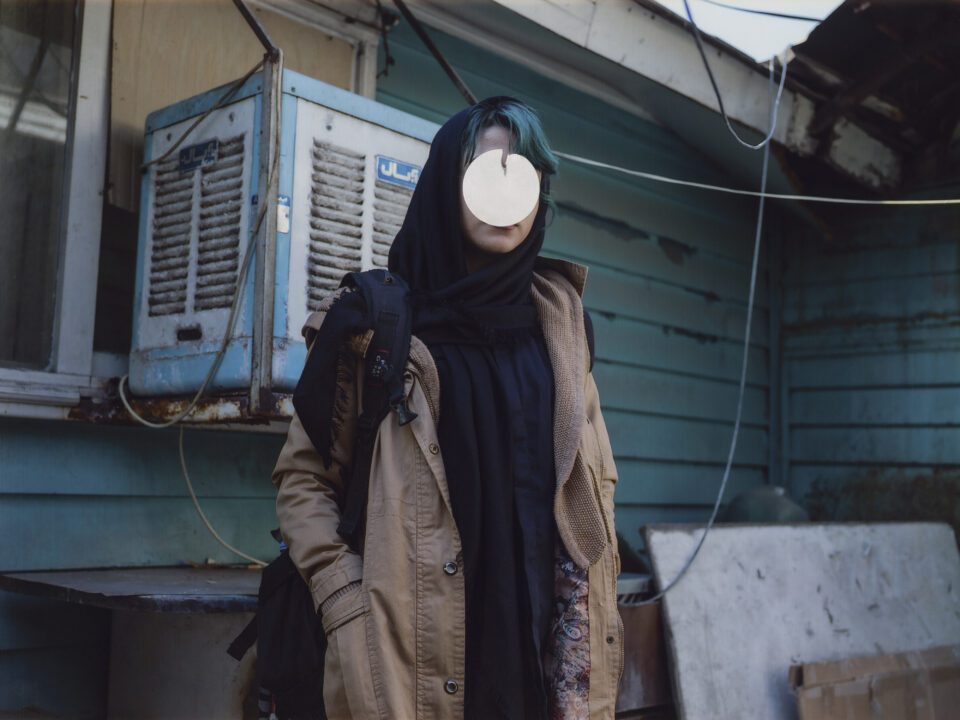
A different encounter with the archive takes place in Newsha Tavakolian’s off-site residency in Tehran. Revisiting photographs made between 1996 and 1999, the Iranian artist brings images originally intended for private use into conversation with photographs made by earlier generations of her family. Contact sheets, damaged prints, negatives and painted interventions create a layered visual language in which the physical condition of each image carries its own history. Faces and gestures emerge through this process of recovery, connecting personal recollection with the political atmosphere in which the photographs were produced. The resulting work draws attention to the instability of photographic memory, where images acquire new meanings as they continuously move between different generations.
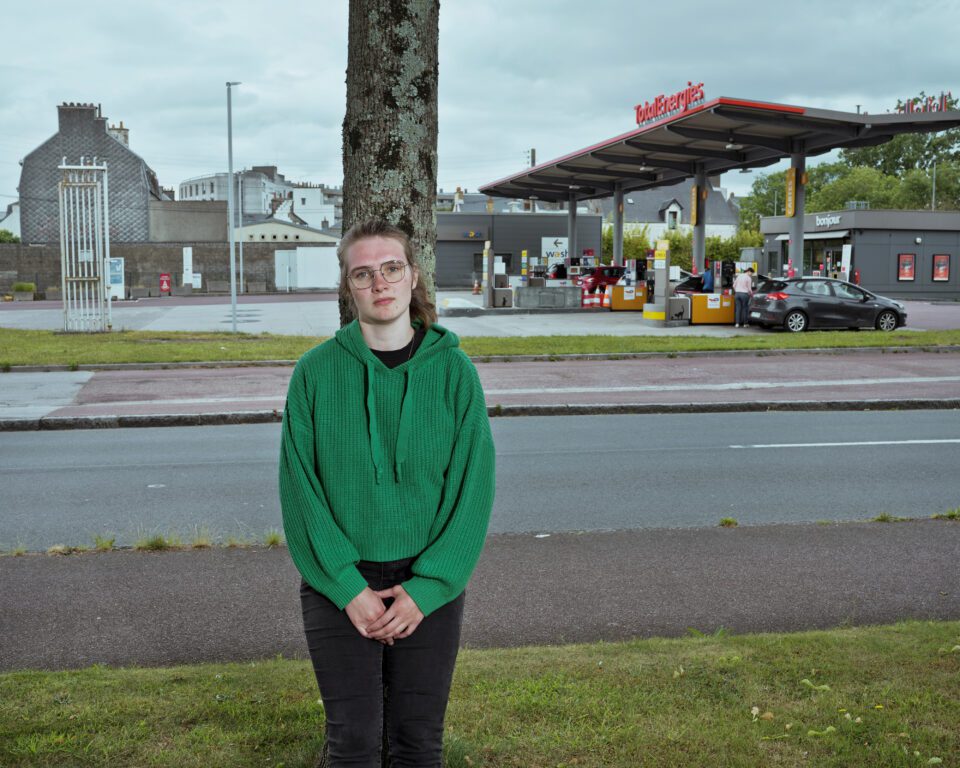
The question of what a generation inherits extends beyond the family to the communities and landscapes that shape its sense of identity. Bruce Gilden, known for his direct and uncompromising street photography, turns his attention to young farmers in Normandy, documenting a community facing economic and social transformation. Cristina de Middel’s Les Atomiques de Cherbourg approaches the region through a different lens, revisiting locations associated with Jacques Demy’s The Umbrellas of Cherbourg to photograph young people in the Cotentin area. Here, the nuclear industry adds a political dimension to questions of aspiration and belonging, placing individual lives within a landscape shaped by technological ambition. Presented in dialogue with Magnum Photos’ Generation X project, the works consider how representations of youth shift alongside the societies in which they are made.
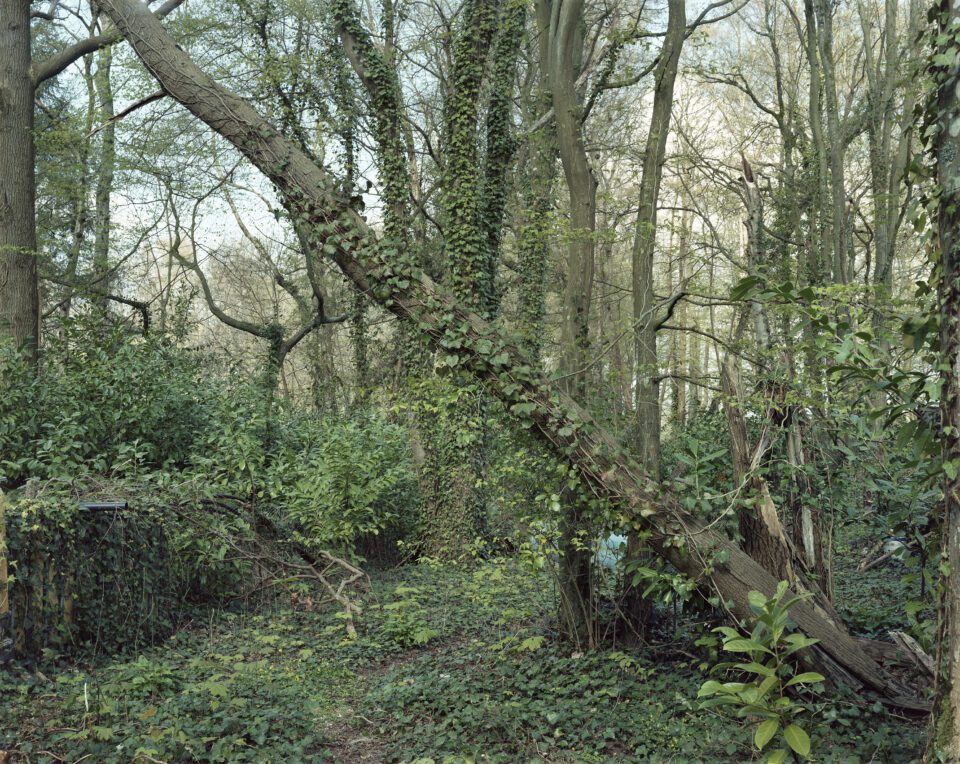
Adolescence is also the focus of Lise Sarfati’s Making Landscapes, a series of images of young women that examines the formation of identity and the ways individuals understand themselves in relation to their surroundings. The landscape is not simply a backdrop, but part of the visual language through which questions of self-perception and change are explored. Generational exchange takes a more explicitly familial form in the work of Alain and Léo Keler, whose projects bring a father and son’s photographic perspectives together. Alain revisits memories of Honfleur, while Léo returns to the cahiers de doléances – the books of grievances produced during France’s 2019 Great National Debate. He traces continuing concerns around public services, employment, mobility and political abandonment.
In Tom Wood’s Family Album, the ordinary gestures of everyday life become a means of recording relationships. Continuing the concerns of his earlier series Mothers, Daughters, Sisters, made between the 1970s and 1990s, Wood photographs families, couples and siblings across Normandy. Working in homes, streets, cafés and regional landscapes, he moves between spontaneous encounters and considered portraits, attentive to the small details through which intimacy and distance become visible. Familiar postures, shared spaces and fleeting expressions give the images their quiet force. The resulting portraits offer a study of social life in which family is understood as something shaped by time and experience.
Normandy’s landscape carries another kind of inheritance: the material consequences of war. Mathias Benguigui’s Panser nos guerres examines the traces of the Battle of Normandy, while Juliette Pavy’s Black Waters turns towards the submerged remains of the World War II. Through images of wrecks, pollution and the work of scientists and divers, Pavy connects historical violence with its continuing environmental effects. Beneath the water’s surface, the remnants of conflict form an archive of damage, registering the passage of time in physical terms. These projects move beyond commemoration to consider how societies live with the consequences of history, and what responsibilities accompany the act of documenting them.
Industrial and architectural remains provide further points of entry into the past. Claire Adelfang photographs the abandoned Levavasseur Spinning Mill, where the history of labour and production remains embedded in the building’s structure and decay. Sylvie Bonnot’s Concordance of Bonds takes a more materially experimental approach, using a peeling silver membrane to draw attention to the physical processes of image-making. In both practices, the photograph’s surface becomes significant: a site where time, deterioration and transformation can be read. Their approaches also bring the medium’s own history into focus, connecting the subjects it records with the methods through which those records are produced. This material awareness carries resonance in a year marking two centuries of photography.
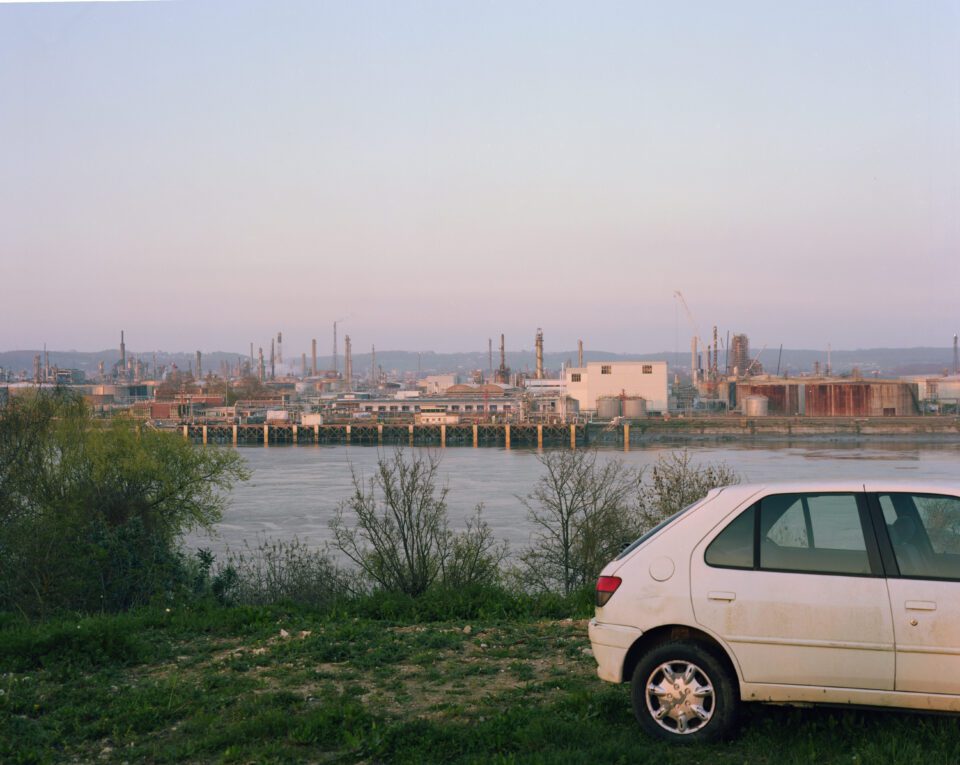
The social structures that shape individual lives are considered from another perspective in Flore Prébay’s Les Présents. Focusing on carers and the dreams they rarely express, the project turns attention towards people whose labour often goes unrecognised, revealing the distance between the responsibilities they carry and the lives they imagine. Displacement and belonging are explored by Oleñka Carrasco and musician La Chica in The Chaos That Gives Me Life. Atlas of an Imagined Country. Through a multi-media approach, the work uses memory to construct an imagined geography, placing personal recollection within a wider conversation about exile and identity. Although distinct in subject and form, both projects consider how a sense of self is shaped by forces beyond the individual. Care, movement and the search for belonging emerge as experiences through which personal histories meet collective realities.
A more universal measure of time appears in Hans-Peter Feldmann’s 100 Years, a sequence of 100 portraits representing people aged from infancy to a century old. Arranged across the span of a human lifetime, the images make ageing visible through the changing features of their subjects. However, the histories behind each face remain beyond the frame, leaving the viewer to consider the distance between outward appearance and lived experience. Feldmann’s work offers a striking counterpoint to the more intimate and historically specific projects elsewhere in the programme. Its simple structure places individual lives within a shared chronology, giving the festival’s theme a concise visual expression.
Bringing these different practices together is a curatorial framework shaped by co-artistic directors Lionel Charrier and Jonas Tebib. Documentary, personal and fictional approaches are placed in conversation, allowing connections to emerge across differences in subject, generation and visual language. Exhibitions at Les Franciscaines, Le Point de Vue, Deauville beach and public spaces extend this enquiry into the region itself, positioning Normandy as a lived environment as well as a landscape marked by historical and social change. The wider programme of talks, screenings, portfolio reviews and workshops creates opportunities for exchange, while the Young Photographic Creation Prize and photo4food Foundation Grant support emerging practitioners. Curation here provides a structure through which established artists, new voices and audiences can engage with the cultural and political questions carried by photography.
The bicentenary also offers an opportunity to consider the medium’s technical and material histories. Through its participation in the LUX Network’s national 200LUX project, Planches Contact includes a silver gelatin printing demonstration by master printer Diamantino Quintas. The process foregrounds the craft involved in producing a photographic print, from the darkroom to the finished surface. At a moment when images are increasingly encountered as digital files, this attention to material practice brings the physical dimensions of photography back into view. Negatives, prints and photographic techniques all influence how images are made, circulated and preserved. The demonstration connects contemporary photographic experimentation with the processes that have shaped the medium since its beginnings.
In Across Generations, the past is neither fixed nor complete. The participating artists approach it through family records, changing communities, political archives and landscapes marked by conflict, revealing histories that remain open to interpretation. Their photographs register the distance between the moment an image is made and the moment it is encountered again. Two hundred years after its invention, photography continues to offer a way of examining how individuals understand themselves in relation to those who came before them. At Planches Contact, the image becomes a point of departure, connecting personal memory with the histories each generation must learn to see anew.
Planches Contact Festival runs in Deauville, Normandy until 3 January: planchescontact.fr
Words: Shirley Stevenson
Image Credits:
1&5. Newsha Tavakolian, Iran, Three Cameras, One Country.
2. Lise Sarfati, Making Landscapes 2026.
3. Cristina De Middel, Les Atomiques de Cherbourg, Magnum Photos.
4. Léo Keler, Doléances avec le soutien du CNAP 2026.