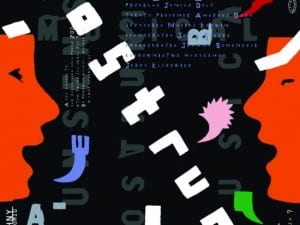
What happens when a gallery exhibits work that the established art world refuses to recognise as art? In 1938, Peggy Guggenheim found herself at the centre of precisely this debate. Her London gallery, Guggenheim Jeune, had opened on Cork Street with an ambitious programme dedicated to the latest developments in modern art, bringing Surrealism, abstraction and experimental sculpture before British audiences. Within 18 months, it had presented more than 20 exhibitions, introduced artists including Vasily Kandinsky, Jean Cocteau and Yves Tanguy through their first UK solo shows, and challenged prevailing assumptions about artistic value. Its controversial exhibition of contemporary sculpture proved particularly contentious, with the Director of the Tate reportedly refusing to recognise several works as art when they arrived at British Customs. Almost nine decades later, the Royal Academy of Arts returns to this remarkable moment, bringing together more than 80 works to explore how a short-lived London gallery helped shape Guggenheim’s approach to collecting and the wider history of modernism.
Guggenheim Jeune was not only an extension of the family name. Although Peggy belonged to one of America’s wealthiest industrial dynasties, her grasp of modern art developed through personal encounters with the European avant-garde instead of the established structures of museum patronage. Her uncle, Solomon R. Guggenheim, pursued an interest in non-objective painting under the guidance of artist and curator Hilla Rebay, eventually establishing a foundation dedicated to modern art. Peggy’s interests were broader, encompassing Dada, Surrealism and abstraction, with friendships and intellectual exchanges in 1920s Paris helping to shape her perspective. Marcel Duchamp became a particularly important adviser, introducing her to artistic movements and practitioners whose work challenged conventional approaches to representation. By the time she opened her London gallery in January 1938, she was already developing a collection and considering the possibility of establishing a permanent museum of modern art in Britain.
The exhibition, organised by the Peggy Guggenheim Collection in Venice in collaboration with the Royal Academy, reconstructs the gallery’s programme through paintings, sculpture, drawings, collage, prints and photography. Its curatorial team – Grażina Subelytė, Curator at the Peggy Guggenheim Collection; independent curator Simon Grant; and Sylvie Broussine, Associate Curator at the RA – places the works in the artistic debates that animated Guggenheim Jeune. Instead of treating the gallery as an isolated episode in its founder’s life, the presentation shows a meeting point between artists working across borders and disciplines. London was not yet the global centre of contemporary art it would become after the Second World War, and its cultural institutions remained cautious about many of the movements emerging elsewhere. Guggenheim’s programme brought these developments into contact with a British audience, creating a space in which unfamiliar approaches could be encountered, questioned and contested.
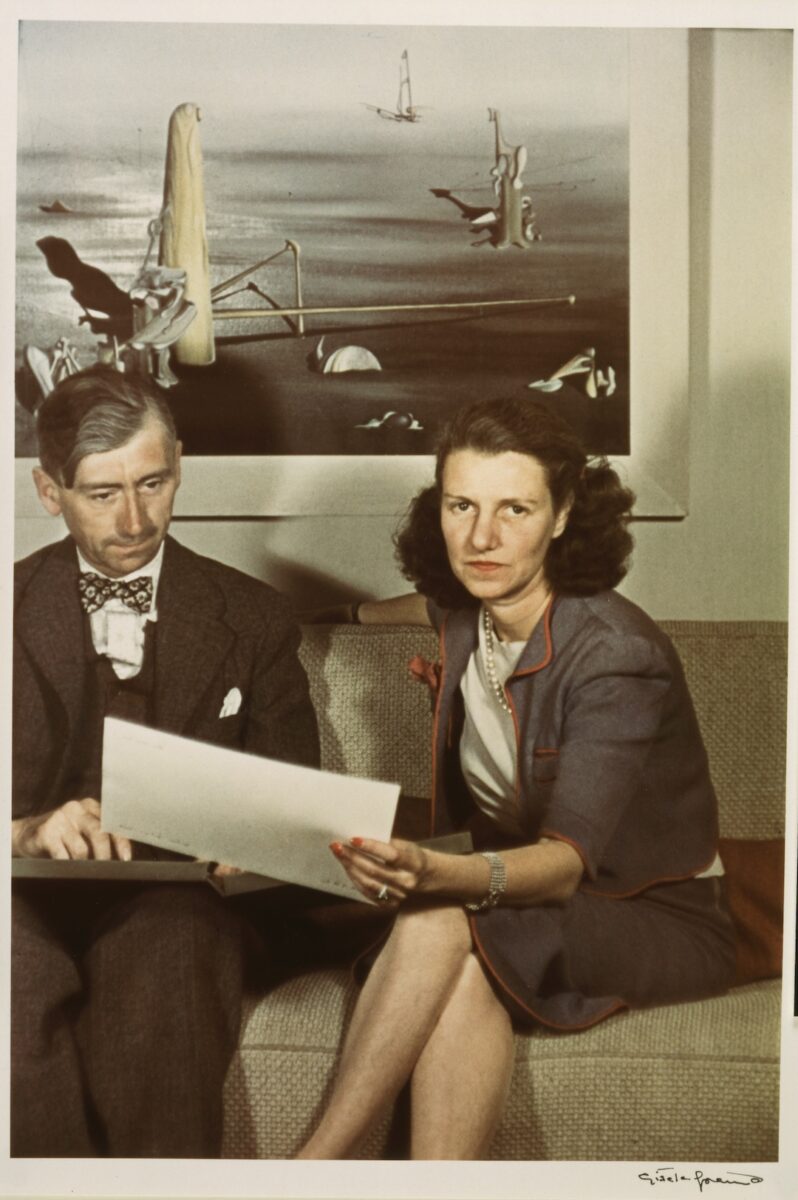
Portraiture offers an intimate point of entry into this history, but it also complicates the familiar image of the collector as a detached connoisseur. Cedric Morris’s portrait of Guggenheim and photographs by Gisèle Freund present her as a figure moving between artistic circles, while objects associated with her personal style reveal how collecting extended beyond the gallery walls. Among them are Yves Tanguy’s Earrings for Peggy Guggenheim (c. 1938), a reminder that the relationship between patron and artist could take forms that were personal as well as professional. Guggenheim’s interest in emerging talent also reached beyond established artistic networks. Her exhibition of children’s art included Old Man Running (1937–1938) by Lucian Freud, shown when the artist was still a teenager and marking his first exhibited work. Such inclusions suggest a collector interested not only in defining the avant-garde, but in recognising creative possibilities before their significance had been widely acknowledged.
That openness was particularly important at a time when abstraction was still met with suspicion. Works by Kandinsky and Charles Howard demonstrate the range of approaches to organic form and non-representational composition that Guggenheim brought to London. Their presence challenged the assumption that painting needed to describe the visible world in order to communicate meaning. For Kandinsky, colour, line and shape could operate through relationships closer to music than conventional depiction; other artists explored structures that seemed to emerge from natural processes, microscopic forms or the rhythms of the body. These experiments were not a single, unified movement, but a series of propositions about what painting might become once it moved beyond imitation. By placing different approaches in dialogue, the gallery made abstraction available as an active debate rather than a fixed style.
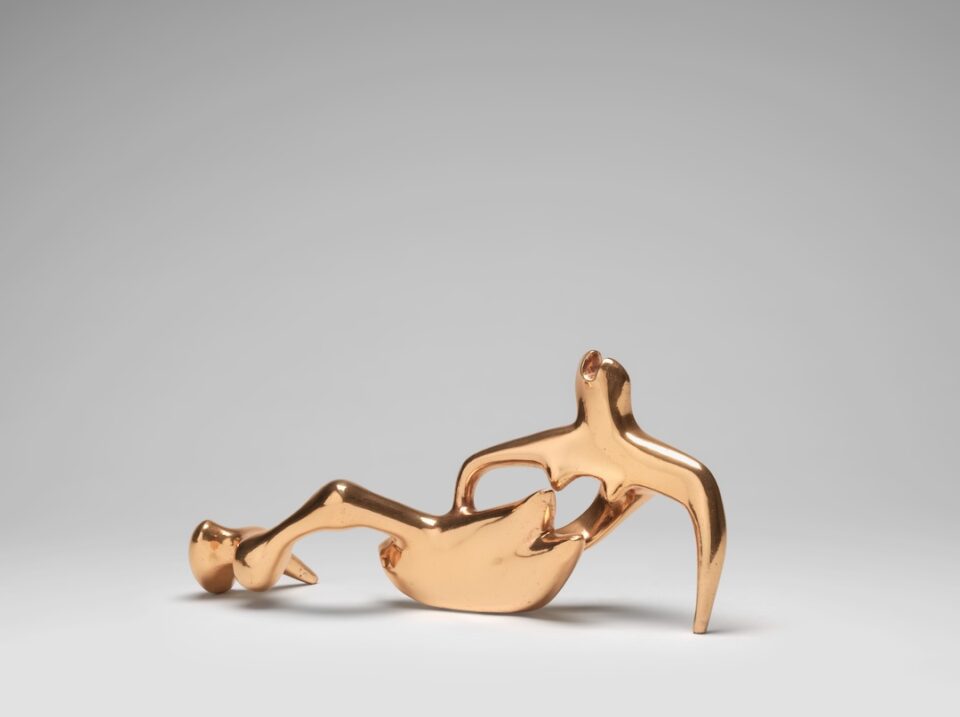
Sculpture brought the question of artistic legitimacy into focus. Guggenheim’s Exhibition of Contemporary Sculpture assembled works that resisted familiar expectations of monumentality, material and figurative form, prompting the controversy at British Customs. The reported reaction of the Tate’s director exposes the institutional boundaries that the gallery was testing: if an object did not resemble the sculpture that museums had traditionally collected, could it still be accepted as sculpture? Barbara Hepworth and Henry Moore were among the British artists engaging with new relationships between volume, void and organic structure, while European practitioners extended the possibilities of the medium through abstraction and unconventional materials. The exhibition’s historical importance lies not simply in the presence of individual works, but in the public argument they provoked. Guggenheim was making space for art that had not yet secured the approval of the institutions that would later determine its place in history.
Printmaking and collage widened the gallery’s definition of modern practice. The work of S.W. Hayter and artists associated with his Atelier 17 brought attention to the technical and expressive possibilities of print, a medium capable of experimentation beyond its traditional reproductive function. His studio in Paris had become a global meeting place, and its influence connected artists across geographical and stylistic divisions. Collage, meanwhile, disrupted the idea of the artwork as a unified, carefully composed image. By bringing together fragments of printed matter, photographs and other materials, artists could expose the instability of representation and the constructed nature of visual culture. Guggenheim’s group exhibition of collage was the first of its kind in Britain, presenting work by figures including Eileen Agar and Paule Vézelay. Their different approaches show how the medium could move between abstraction, surreal juxtaposition and a distinctly British engagement with modernist experimentation.
The exhibition also provides an environment to artists whose work unsettled the boundaries between fine art, design and performance. Sophie Taeuber-Arp’s geometric compositions, for example, are a demonstration on how abstraction could extend into applied and decorative forms without losing its conceptual force. Marie Vassilieff’s puppets introduce another register, connecting modernist experimentation with theatre, movement and the handmade object. Such works resist the idea that modernism developed through merely painting and sculpture alone. They also make visible the breadth of Guggenheim’s interests, which were not confined to a narrow hierarchy of media. Her approach observed that the avant-garde was as much a way of thinking and making as a collection of identifiable styles.
Surrealism brought a different kind of challenge, turning towards dreams, the unconscious and the irrational as sources of artistic possibility. Guggenheim Jeune presented work by artists including Rita Kernn-Larsen, Grace Pailthorpe and Reuben Mednikoff, whose practices explored the psychological dimensions of image-making. Kernn-Larsen’s paintings reveal the movement’s capacity to transform familiar forms into unsettling, ambiguous encounters, while Pailthorpe and Mednikoff pursued an approach informed by psychoanalysis and the study of the unconscious. The inclusion of Wolfgang Paalen further broadens this picture of Surrealism as an international network rather than a movement confined to a single centre. These artists were not simply illustrating theories of the mind; they were testing how far artistic practice could reach into experiences that resisted rational explanation. In the context of late-1930s Europe, this turn towards interior worlds also carried a particular urgency, as political instability and the advance of Fascism increasingly threatened the freedoms on which experimental culture depended.
That political context is vital to understanding the gallery’s programme. The Exhibition of Abstract and Concrete Artbrought together artists including Piet Mondrian and Taeuber-Arp, alongside British and European practitioners whose work reflected different strands of geometric abstraction. Among them was Otto Freundlich, whose career was shaped by the persecution of modern artists under the Nazi regime. For artists fleeing Fascism, exhibitions such as those at Guggenheim Jeune offered opportunities for visibility and exchange at a moment when cultural institutions across Europe were being censored, closed or appropriated. Modernism’s global character was therefore not merely a matter of aesthetic influence. It was also sustained through migration, solidarity and the movement of ideas across borders. The gallery’s programme offers a glimpse of this fragile network at a moment when its existence was under threat.
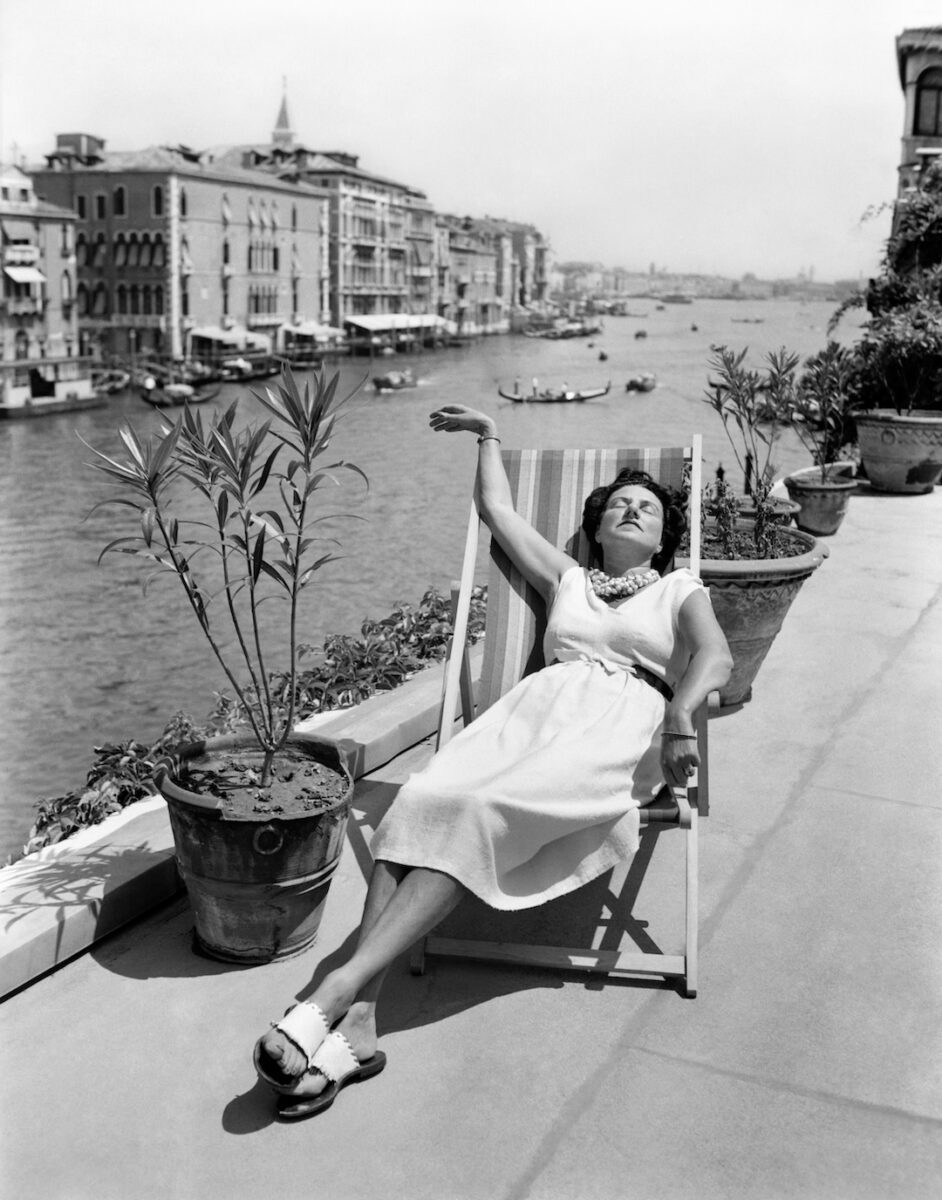
Guggenheim’s ambitions extended beyond the temporary life of the gallery. She hoped to establish an enduring museum in London, with Herbert Read as its director, but the outbreak of the WWII brought those plans to an end. After leaving Britain, she continued to support experimental art in New York, opening Art of This Century in 1942, where European Surrealists were shown with emerging American artists, including Jackson Pollock. Her collecting subsequently found a lasting home in Venice, where she acquired the Palazzo Venier dei Leoni in 1948 and opened her collection publicly. The unfinished eighteenth-century palace became inseparable from the works it housed, offering an alternative to the monumental museum architecture associated with her uncle’s legacy. Solomon R. Guggenheim’s foundation, established in 1937, had opened the Museum of Non-Objective Painting in New York in 1939 before commissioning Frank Lloyd Wright to design the building that would become the Guggenheim Museum, opened in 1959. The later Guggenheim Bilbao, designed by Frank Gehry and opened in 1997, extended the family’s architectural and institutional legacy, but Peggy’s efforts remain distinct: a collection shaped by relationships with artists and a willingness to support before its place in the canon was assured.
What emerges from the Royal Academy exhibition is a portrait of a cultural moment in which the terms of modern art were still being negotiated. Guggenheim Jeune’s brief existence makes its achievements all the more striking: in a short time, it brought together artists, ideas and practices that established institutions had often overlooked or resisted. The works gathered here recover the energy of those encounters, while asking how artistic reputations are formed and who has the authority to confer legitimacy. Guggenheim’s influence cannot be measured solely through the museums and collections that bear the family name. It is also present in the opportunities she created for artists whose work was not yet widely understood. The gallery may have closed in 1939, but its central proposition – collecting should involve risk, curiosity and a willingness to look beyond accepted boundaries – remains relevant to how art is seen today.
Peggy Guggenheim in London: The Making of a Collector, is at Royal Academy of Arts, London, from 21 November – 14 March.
Words: Shirley Stevenson
Image Credits:
1. Peggy Guggenheim on the roof-terrace of Palazzo Venier dei Leoni, Venice, early 1950s. Solomon R. Guggenheim Foundation. Photo: Archivio Cameraphoto Epoche, Gift, Cassa di Risparmio di Venezia, 2005.
2. Henry Moore, Reclining Figure, 1938 (cast 1946). Polished bronze, 13.4 × 31.5 × 10 cm Peggy Guggenheim Collection, Venice (Solomon R. Guggenheim Foundation, New York) Photo: David Heald © 2025 The Solomon R. Guggenheim Foundation, New York. © 2026 The Henry Moore Foundation. All Rights Reserved, DACS / www.henry-moore.org.
3. Gisèle Freund, Herbert Read and Peggy Guggenheim, 1939 (printed 1977). Colour photograph, 46 × 35 cm. Peggy Guggenheim Collection Archives, Venice. Purchase courtesy Ikona Gallery, Venice, 1988. © Photo Gisèle Freund / IMEC / Fonds MCC.