

Cristóbal Ascencio (b. 1988) describes his show at Camera Oscura in Madrid as a “sample library.” According to the artist, this is a collection of images – photographs, textures and materials – grouped together by technique, rather than a single theme. These are “stored files that derive their value not from standing alone, but from what can be done with them.” At the centre of this exhibition is an enquiry into what happens when the digital is treated as physical. Pictures are compressed down to the pixel and codes are purposely corrupted. Here, Ascencio reminds us that the process of creation is part of the meaning.
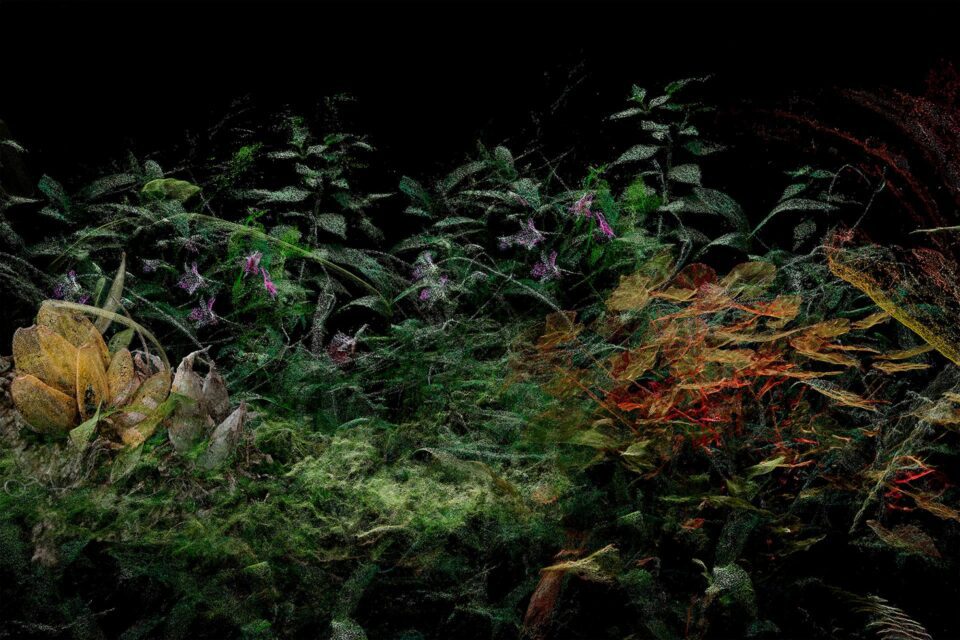
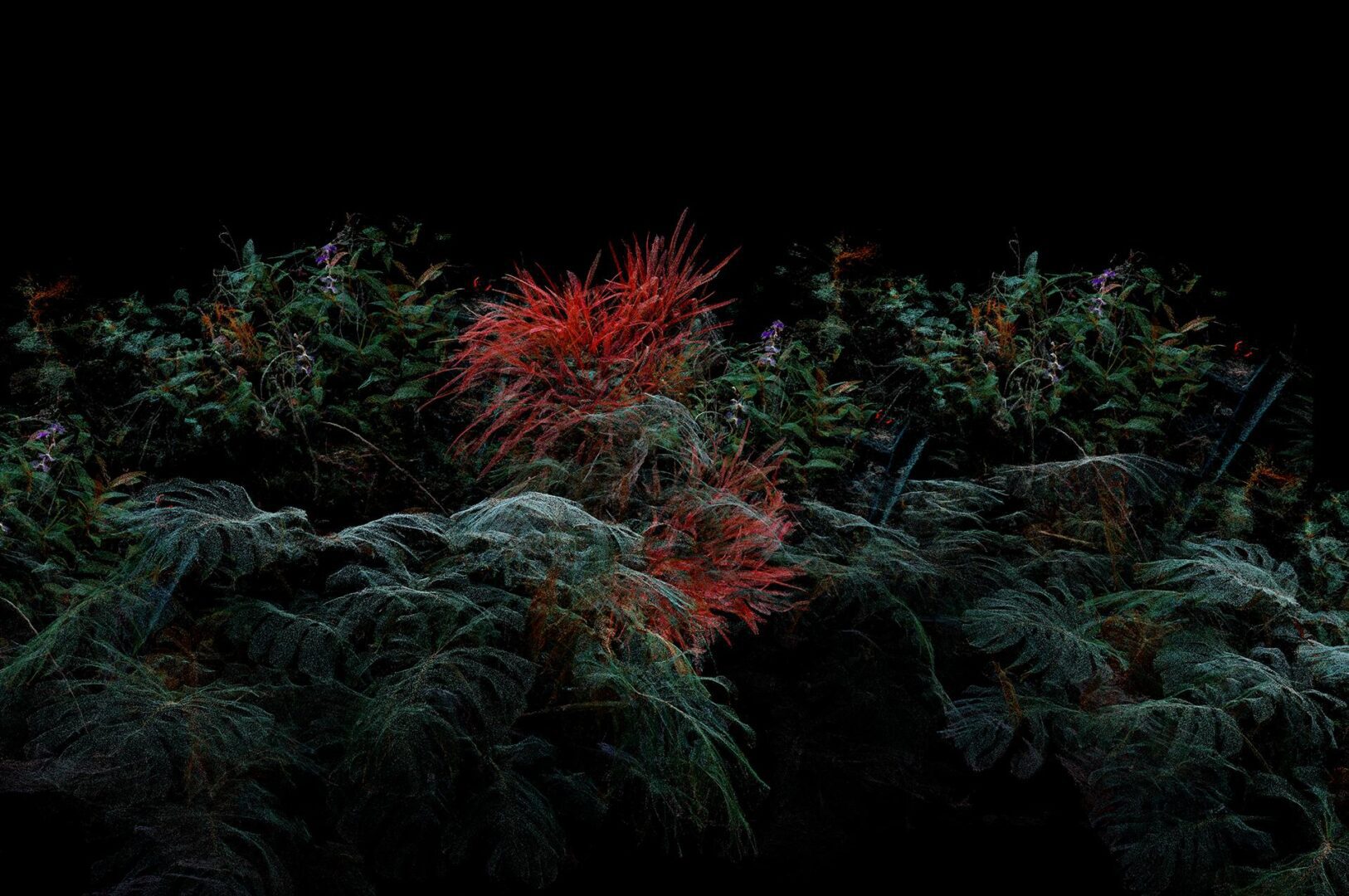
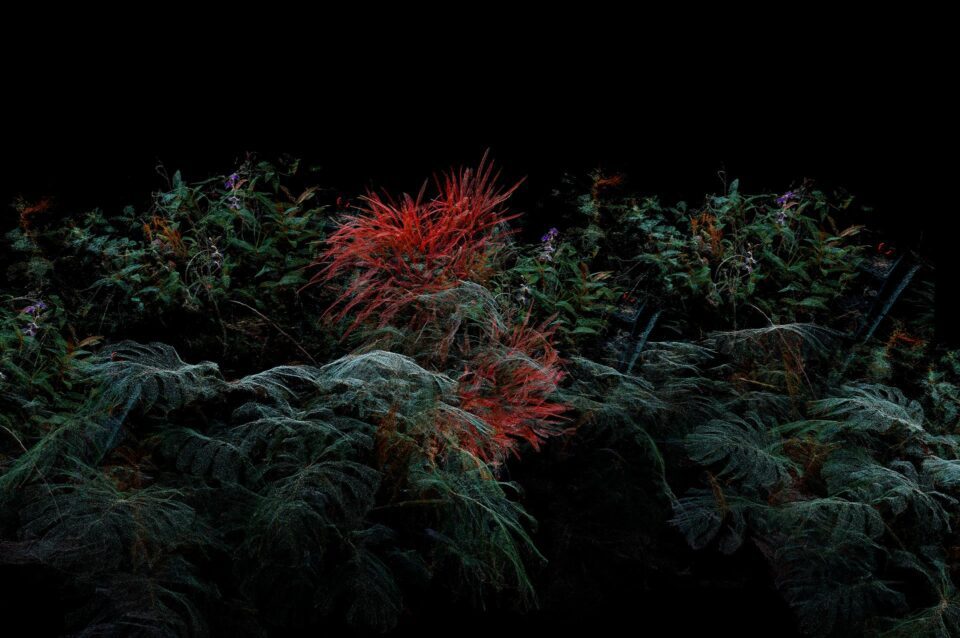
The Mexican photographer lives and work in Madrid, where his research-focused practice focuses on the role images play in how we remember those we have lost. It’s about the way pictures make us feel, and how this can change with time, distance, knowledge and insight. One series featured in the show is Las flores mueren dos veces, a project that is rooted in a deeply personal, complex experience of loss. “My father died when I was 15, but I was not told it was suicide until I turned 30.” Ascencio’s father was a gardener, and in his attempts to make sense of what happened, the artist returned to Mexico to look for plants he had grown. Rather than simply documenting the specimens, Ascencio used the photogrammetry process, which takes multiple images and stitches them together to create visual models of the tangible world. The result evokes a place just out of reach, showing pixelated leaves floating against a dark backdrop.
Meanwhile, Palimpsesto takes the Greek character of Penelope as its inspiration. The queen of Ithaca, faithful wife of Odysseus, was faced with his long absence and the pressure to remarry one of her many suitors. In a strategy to manipulate time, she makes and unmakes a shroud. It is this process that influenced Ascencio’s practice. The artist began by photographing Ithaca, before deliberately erasing the shots and attempting to restore then using data recovery software. These recovered, corrupted images are embedded with fragments of text from the Odyssey that mention Penelope directly in their source code. The acts of creation and destruction become a method of investigating memory.
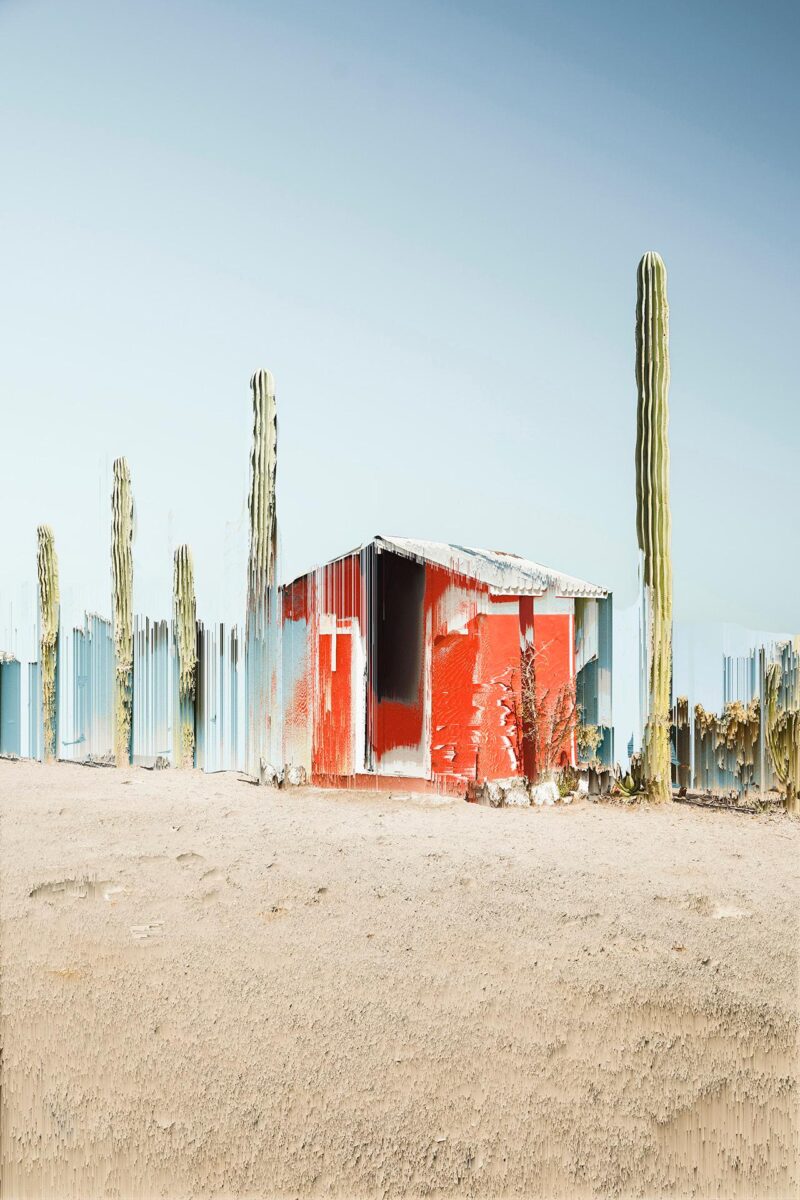
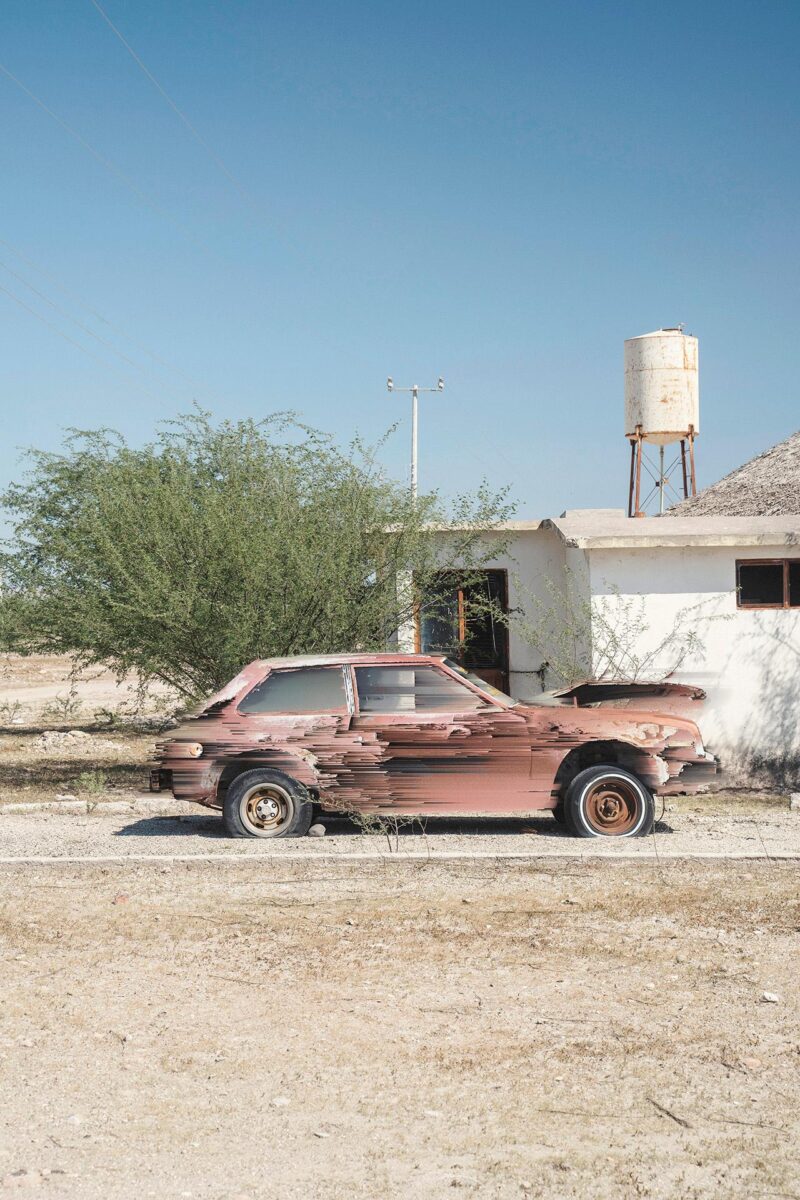
Instant Fossils considers the human traces within the landscape. The series uses different objects and constructions found in remote and desolate places in the desert of Baja California Sur, in northern Mexico. The series seeks to distance itself from the romantic idea of landscape, instead moving into new post-natural environment. Ascencio proposes a new relationship with our surroundings and prompts audiences to rethink the global impact human activities have on Earth’s different ecosystems. He explains that “recognising these new environments allows us to rethink other ways of understanding our relationship with processes, materials, temporality and our perception of landscape and ‘nature’.” The images show human-made structures, like cars, rusted barrels and tumbled-down buildings, are stretched and distorted. They act as visual disruptions in an otherwise untouched scene.
Ascencio is not interested in creating faithful windows onto reality – that is a mission he leaves for other practitioners. Instead, he sees images as fragile, manipulable containers where the very process of creation is part of the message. Each series stretches the medium in a different direction and together they function as a small atlas of the ways we currently produce, store, share and distort what we see.
Cristóbal Ascencio: Sample Library is at Camara Oscura, Madrid until 23 December: camaraoscura.net
Words: Emma Jacob
Image Credits:
1. Cristóbal Ascencio. Jardin III, ”Las flores mueren dos veces” series, 2021-24. Pigment print on Hahnemühle Photorag Metallic paper. 94×142 cm, 60×90 cm and 40×60 cm. Edition: 3 + 1 AP.
2. Cristóbal Ascencio. Jardin IV, ”Las flores mueren dos veces” series, 2021-24. Pigment print on Hahnemühle Photorag Metallic paper. 94×142 cm, 60×90 cm and 40×60 cm. Edition: 3 + 1 AP.
3. Cristóbal Ascencio. Mirador en Bahía Concepción, Baja California Sur, México, ”Fósiles Instantáneos” series, 2019.
Pigment print on Hahnemühle paper. 90×65 cm. Edition: 3 + 1 AP.
4. Cristóbal Ascencio. Cerca de lonchería el 100 en el sauce de Hilario Baja California Sur, México, ”Fósiles Instantáneos” series, 2019. Pigment print on Hahnemühle paper. 90×65 cm. Edition: 3 + 1 AP.
5. Cristóbal Ascencio. Jardin III, ”Las flores mueren dos veces” series, 2021-24. Pigment print on Hahnemühle Photorag Metallic paper. 94×142 cm, 60×90 cm and 40×60 cm. Edition: 3 + 1 AP.


