

Artist Cara Romero (b. 1977) is an enrolled citizen of the Chemehuevi Indian Tribe. She has spent much of her life between the contrasting settings of their rural reservation in the Mojave Desert, California, and the urban sprawl of Houston, Texas. Her practice is a result of this dichotomy, challenging preconceived notions about what it means to be a Native American. In a photographic practice that blends documentary and commercial aesthetics, Romero creates stories that draw from intertribal knowledge to explore the fissures and fusions of Indigenous and non-Indigenous cultural memory, collective history and futility. MOCA Jacksonville’s latest show explores her practice with 60 iconic works, spanning over a decade. The show’s title means “living light” in the Chemehuevi language. It’s a nod to the way subjects are illuminated in the artist’s images, as well as to the time-worn adage that photography is “painting with light.”
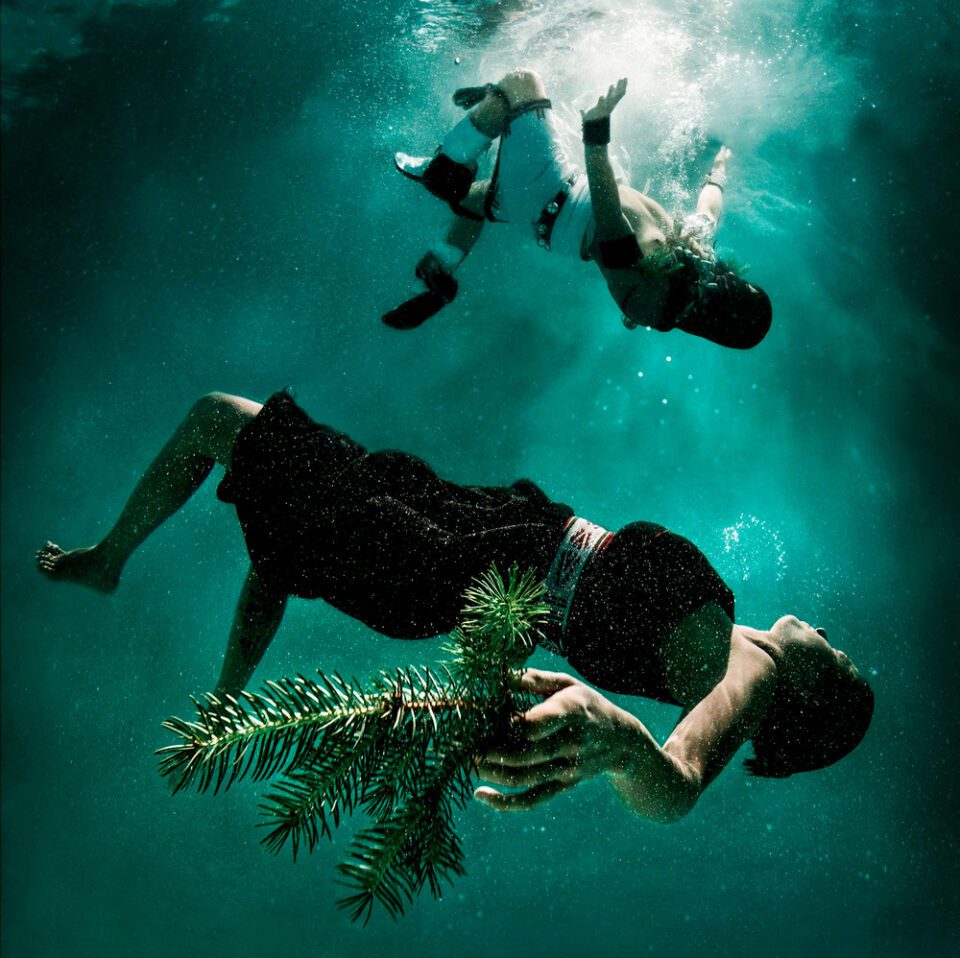
Each featured piece is part of Romero’s ongoing celebration of Indigenous multiplicity, beauty and resilience. In Water Memory, two figures float, suspended within a drowned landscape. The photograph references flooding that occurred in the aftermath of the 2011 Las Conchas wildfire in northern New Mexico. The artist explained how: “Water Memories [is a series of] dreamscapes dealing with Native American relationships to water, the forces of man and Mother Nature. They are individual explorations of space, memory and diverse Indigenous narratives that are both terrifying and peaceful.” There is something otherworldly about the scene, simultaneously frightening and tranquil. It is a reminder that we are, ultimately, vulnerable to the movements of the natural elements.
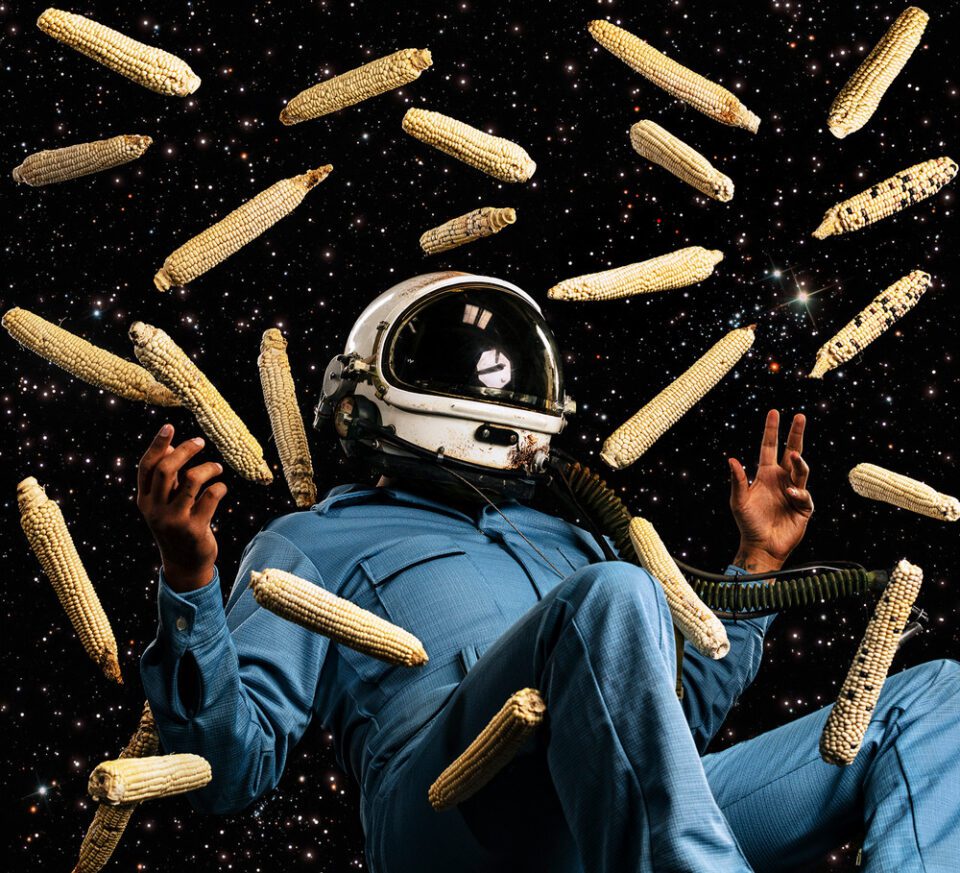
Romero worked with Muscogee Creek painter George Alexander to produce The Zenith. The playful image shows an astronaut floating in space, surrounded by corn cobs and stars. It’s a reference to the astronomical term for the point in the sky or celestial sphere directly above an observer, the zenith is “an imaginary space – a space of possibility.” Practically, Romero made this a family affair. Her cousin grow corn at Cotati – a city in California – so the artist borrowed a truckload of corn, attaching each individual one to a fishing line in the studio to create the effect of weightlessness. Meanwhile, she brings another member of her family to the fore in Hermosa. The series spotlights Romero’s daughter Crickett Tiger (Muscogee Creek and Cochiti) created during the pandemic while their family isolated in southern California. In one image, she stands in the ocean, unbothered by the surprise wave splashing around her, Crickett embodies the spirit of Hutsipamamow, or Great Ocean Woman – the creator of all life.
When discussing her practice, Romero says: “I unapologetically depict where we are now, in the present-day, making sure to always respect cultural protocols and ancestral ties.” Panûpünüwügai is a boundary-pushing show that continues this mission, traversing the breadth of Indigenous history. At MOCA Jacksonville, she invites audiences to see beyond mainstream narratives, gain a more nuanced understanding of Indigenous traditions and engage in intercultural conversations.
Cara Romero: Panûpünüwügai (Living Light) is at MOCA Jacksonville until 21 March
Words: Emma Jacob
Image Credits:
1&4. © Cara Romero Water Memory, 2015 Archival pigment print, Courtesy of the artist.
2. © Cara Romero The Zenith, 2022 Sublimated fabric print, Courtesy of the artist.
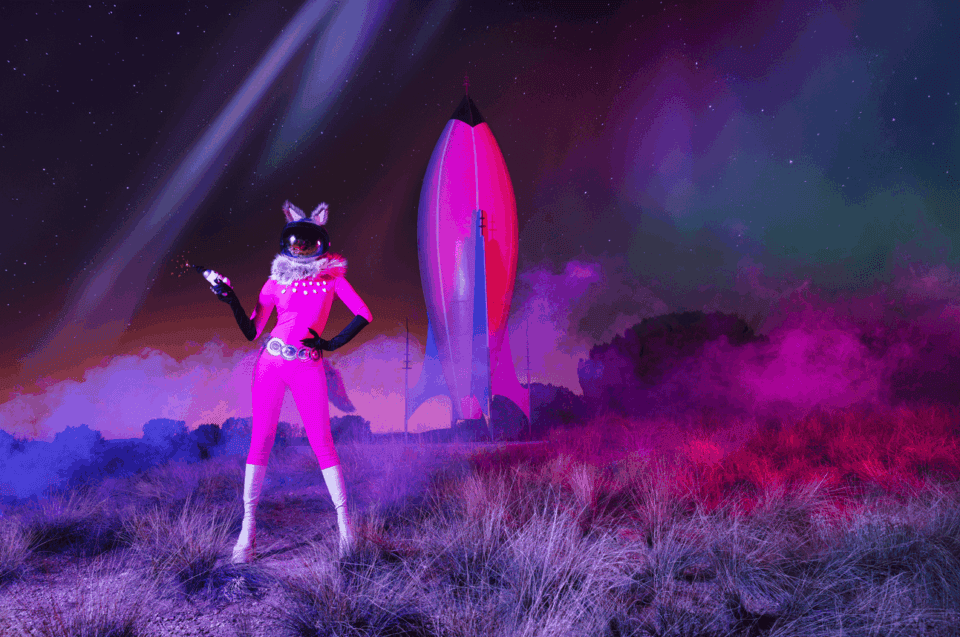
3. © Cara Romero Coyote Girl, 2024 Archival pigment print Courtesy of the artist.


