

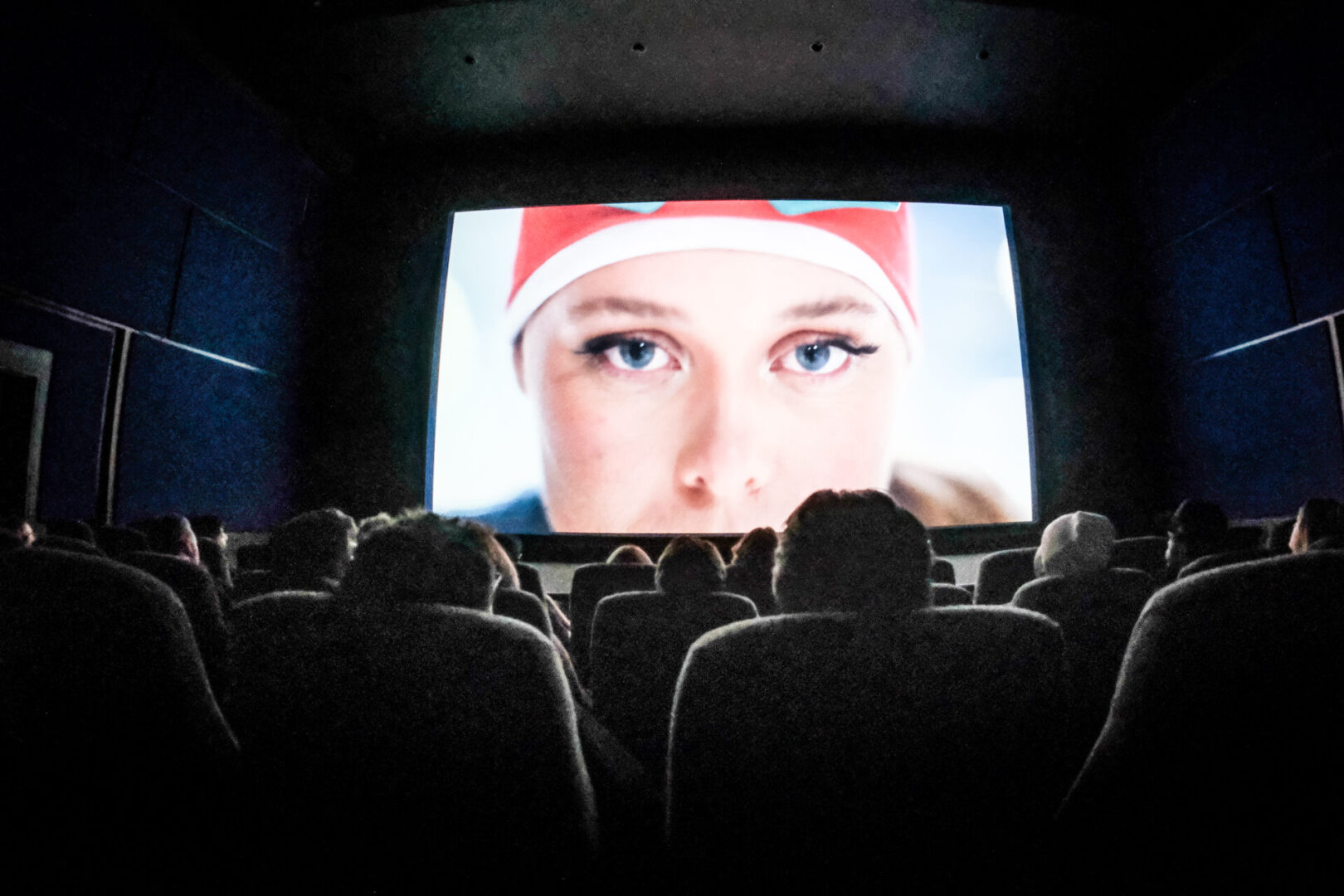
Sound shapes how we grasp identity, inherit history and meet the world beyond us. Through documentary film, oral testimony and experimental art, listening becomes more than a sensory act – it is a means of preserving knowledge, challenging assumptions and attending to voices that have too often remained unheard. This November, Aesthetica brings these ideas into focus as six documentaries developed through the Aesthetica x Audible Listening Pitch arrive on BFI Player, free to watch from 4 November. Coinciding with the opening of our BAFTA-Qualifying Aesthetica Film Festival in York, the release extends a programme rooted in local creative exchange towards a global audience. The films consider the potential of sound moving from the margins of the cinematic image to the centre of its storytelling.
Listening has long occupied an ambivalent position within visual culture. Cinema privileges what can be seen, yet its most affecting moments frequently depend on what remains beyond the frame: a voice remembered, a landscape heard but not shown, or a silence that makes absence tangible. Sound-led filmmaking unsettles this hierarchy, asking audiences to reconsider the relationship between perception and knowledge. Rather than functioning as an accompaniment to the image, sound can become a form of evidence, a vessel for cultural memory or a space in which identity is negotiated. The Listening Pitch embraces this potential, supporting filmmakers who approach documentary as an exploratory practice in which listening determines not only what a story tells, but how it can be experienced.
Curated around the possibilities of sound as a creative starting point, the initiative reflects Aesthetica’s wider commitment to supporting distinctive documentary voices and developing work beyond conventional production pathways. Its value lies partly in the relationship between experimentation and circulation: providing filmmakers with the conditions to develop ambitious ideas, then creating opportunities for those ideas to meet audiences beyond their original context. The six resulting films have screened at global events including SXSW and Sundance, showing the capacity of formally adventurous documentary to travel across geographical and cultural boundaries. Their arrival on BFI Player marks another stage in that journey, placing work developed through this initiative in a wider landscape of independent and global cinema. Access matters here, too, since making the films freely available creates another point of entry for viewers who may never meet them through a festival programme.
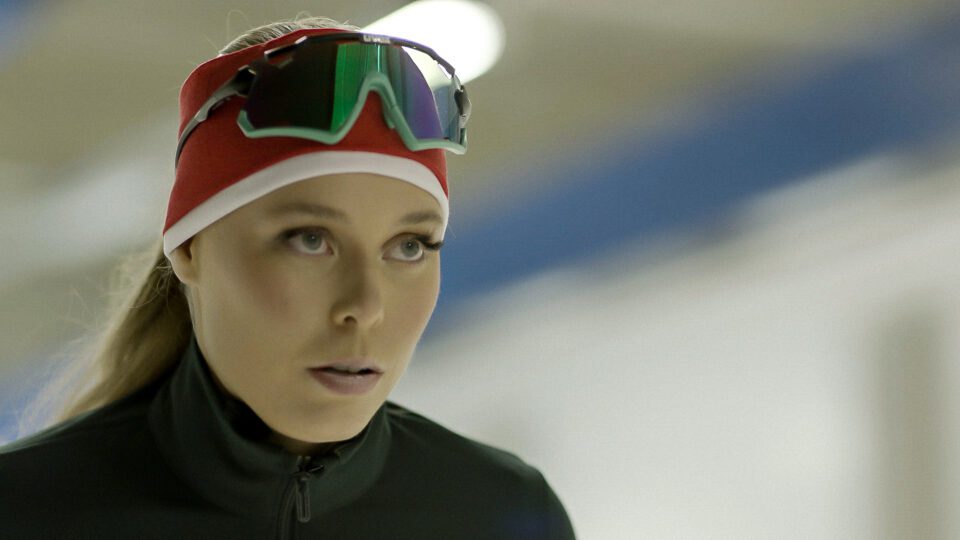
In Speed of Sound, director Jade Ang Jackman examines the relationship between listening, trust and physical movement through the experience of Paralympic champion Carina Edlinger, who competes with just two per cent of her vision. Guided on the slopes by her partner’s voice, Edlinger navigates a demanding space in which sound carries immediate, practical consequences. The film challenges usual assumptions about perception by showing how orientation can emerge through relationships between bodies, voices and space. Instead of presenting vision as the unquestioned measure of experience, it foregrounds listening as a sophisticated form of knowledge, shaped through attention and mutual dependence. This shift also raises questions about the assumptions embedded in visual culture, where access is too often treated as an accommodation not a chance to rethink how images and sounds organise our understanding.
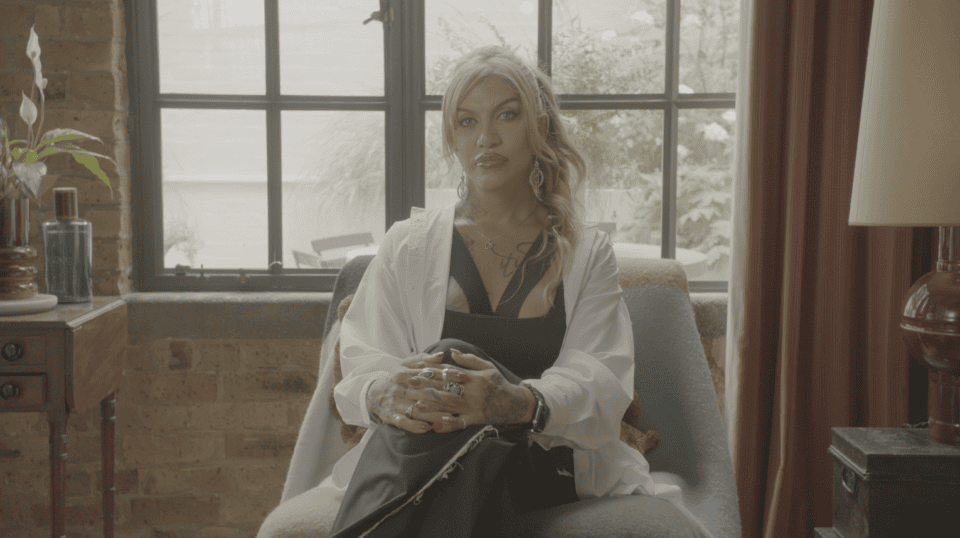
Questions of embodiment take a different form in Roberto Duque’s Voice Shift, which follows trans people working with a vocal coach. The voice occupies a complicated cultural position: intimate enough to feel inseparable from the self, yet immediately available to social interpretation and judgement. Pitch, resonance and cadence can become markers through which others assign gender, often reinforcing restrictive expectations about how identity should sound. By attending to the process of vocal exploration, Duque considers the distance that can emerge between the voice one inhabits and the voice through which one wishes to be recognised. The documentary invites a broader understanding of self-expression, one that acknowledges identity as lived and evolving rather than fixed by external conventions.
Memory, meanwhile, emerges as a collective duty in The Things We Don’t Say, directed by Ornella Mutoni. Working with therapist Emilienne, young Rwandans explore trauma inherited across generations, confronting experiences that families and communities may struggle to articulate. The film approaches silence not as an absence of information but as something shaped by history, grief and the difficulty of finding language for suffering. Its attention to intergenerational experience recalls wider debates around cultural memory, particularly the ways trauma persists through family structures, inherited behaviours and the untold stories. By creating space for these accounts, Mutoni considers listening as an ethical practice requiring patience without assuming that every experience can be neatly resolved. The film’s acquisition by Guardian Documentaries further shows how intimate, locally grounded narratives enter public discourse.
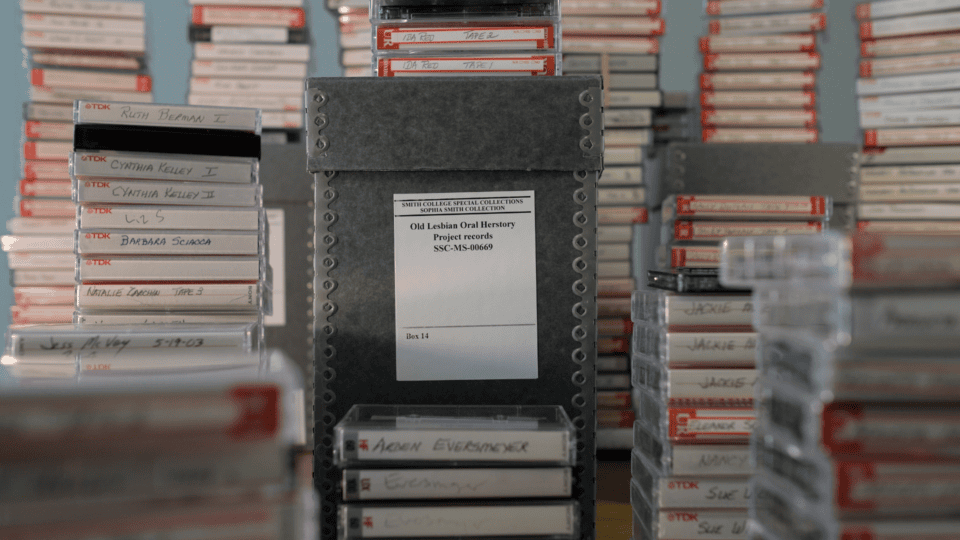
Preservation takes another form in Old Lesbians, Meghan McDonough’s portrait of retired teacher Arden Eversmeyer, who spent 25 years recording oral histories with older lesbians. These testimonies offer a record of lives and relationships that have not always received sustained attention within dominant historical narratives. Oral history challenges the assumption that archives must be institutional to possess cultural value, locating historical knowledge in lived experience, personal recollection and the act of passing stories between generations. Yet testimony also raises questions about who is heard, whose experiences are preserved and which histories are considered worthy of record. By foregrounding the voices of older lesbians, McDonough makes listening an act of recognition, allowing individual accounts to accumulate into a broader, more complex understanding of community and belonging.
The relationship between sound and the everyday becomes the subject of Associated with Matthew Herbert’s Listen Like a Banana, which invites audiences to reconsider one of the world’s most familiar fruits through its surrounding sounds and systems. The project makes an apparently ordinary object a point of entry into questions about material culture, production and the networks that structure daily life. Such an approach resonates with experimental sound art, where attention can transform overlooked phenomena into subjects of aesthetic and critical inquiry. Instead of treating listening as a passive reception of information, the film encourages a more active engagement with the spaces and processes that usually recede from awareness. Its premise suggests that the unfamiliar does not always require an extraordinary subject; sometimes, it begins with a willingness to attend differently to what is already there.
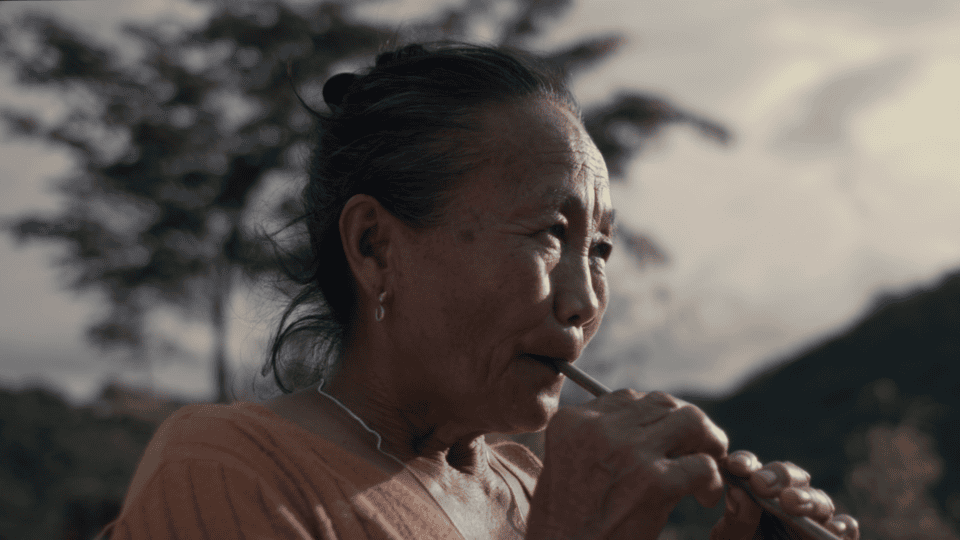
In Birdsong, a documentary directed by Sparsh Ahuja and Omi Gupta, sound becomes a means of cultural transmission through the Hmong whistled language of northern Laos. Resembling birdsong, the whistles demonstrate how communication can extend beyond the conventions of spoken language, connecting human expression with the acoustic properties of the natural world. The film draws attention to a tradition in which meaning depends upon an intimate relationship between sound, environment and community. It also raises questions about the vulnerability of cultural practices when their knowledge remains localised or is insufficiently recognised by dominant systems of documentation. By recording and sharing this particular form of communication, Ahuja and Gupta begin the exploration of the possibilities of documentary as both an act of preservation and an invitation to encounter unfamiliar ways of knowing.
These six films establish listening as a framework for thinking across disability, gender, historical memory, ecology and cultural inheritance. Their differences are crucial: sound does not perform the same function in every work, nor does attentive listening guarantee understanding. Instead, each documentary reveals the limits of habitual perception, asking audiences to remain open to forms of experience that cannot be reduced to a single image or narrative. This plurality informs Aesthetica Film Festival’s wider programme, which places listening in a dialogue between film, music and art. Under the banner of Radical Listening, the curatorial approach extends beyond distinct documentaries to consider how artistic practice can reshape relationships between audiences, environments and the stories communities tell about themselves.
Duncan Cowles’s Nibclout Neebors approaches this territory through a 1964 cassette recording of his great-grandfather reading a Scots poem. The archival voice becomes a meeting point between dialect, family history and the persistence of place, demonstrating how recording technologies can preserve traces of identity long after the original moment has passed. The grain of a voice carries more than words; it holds rhythms, accents and intimacies that written transcription cannot fully reproduce. A related attention to inherited culture informs Cissé-Ceesay, directed by Sofia Cissé Akel and produced by Tobi Kyeremateng, which follows a journey to southern Senegal through Griot storytelling, music and family heritage. Both works position cultural memory as something that is actively transmitted, sustained through encounters between different generations as opposed to secured solely within official archives.
Hermione Spriggs’s Worm Charming offers another perspective on the sound and the living world, investigating the practice of drawing worms to the surface through vibrations. The intersection of folk knowledge, scientific inquiry and animal behaviour complicates distinctions between human intention and non-human response. Sound becomes an instrument of discovery, revealing interactions that might otherwise escape notice. Beyond the screen, the festival’s public art trail extends this experimentation into York, with contributions from Steve Messam, Squidsoup and Being Now Here. Through interventions in public space, the trail encourages audiences to reconsider their surroundings as sites of sensory encounter, where the experience of art depends as much upon attention and movement as it does upon looking.
For Cherie Federico, Director of Aesthetica, the relationship between York and global creative exchange remains central to the organisation’s work. “We have always believed that extraordinary storytelling can come from anywhere,” she says, describing a model in which local roots support instead of limit global ambition. The Listening Pitch makes that principle tangible, connecting development, festival presentation and wider distribution in a continuing commitment to filmmakers. Its BFI Player launch also prompts a larger question about the infrastructures that allow independent work to survive beyond its initial exhibition. In a cultural landscape where visibility can be brief and opportunities unevenly distributed, sustained support and accessible platforms play a vital role in determining which stories reach the public.
The six documentaries arriving on 4 November therefore represent more than a new collection on a streaming service. They demonstrate how a curatorial commitment to sound can open up questions of identity, history and environment while challenging the assumption that documentary must begin with the visible. Their movement from a York-based initiative to global festivals and BFI Player also illustrates the importance of connecting artistic experimentation with meaningful opportunities for circulation.
As Aesthetica Film Festival brings filmmakers, artists and audiences together for five days of screenings, installations and discussion, Radical Listening offers a timely proposition: attention itself can be a creative and critical act. Made in York and shared with audiences worldwide, these films ask us not simply to hear more, but to listen with greater care to the voices, histories and worlds that shape our experiences.
Explore the programme at Aesthetica Film Festival.
Words: Anna Muller
Image Credits:
1. Image courtesy of Aesthetica Film Festival.
2. Still from Speed of Sound.
3. Still from Old Lesbians.
4. Still from Bird Song.
5. Still from Voiceshift.


