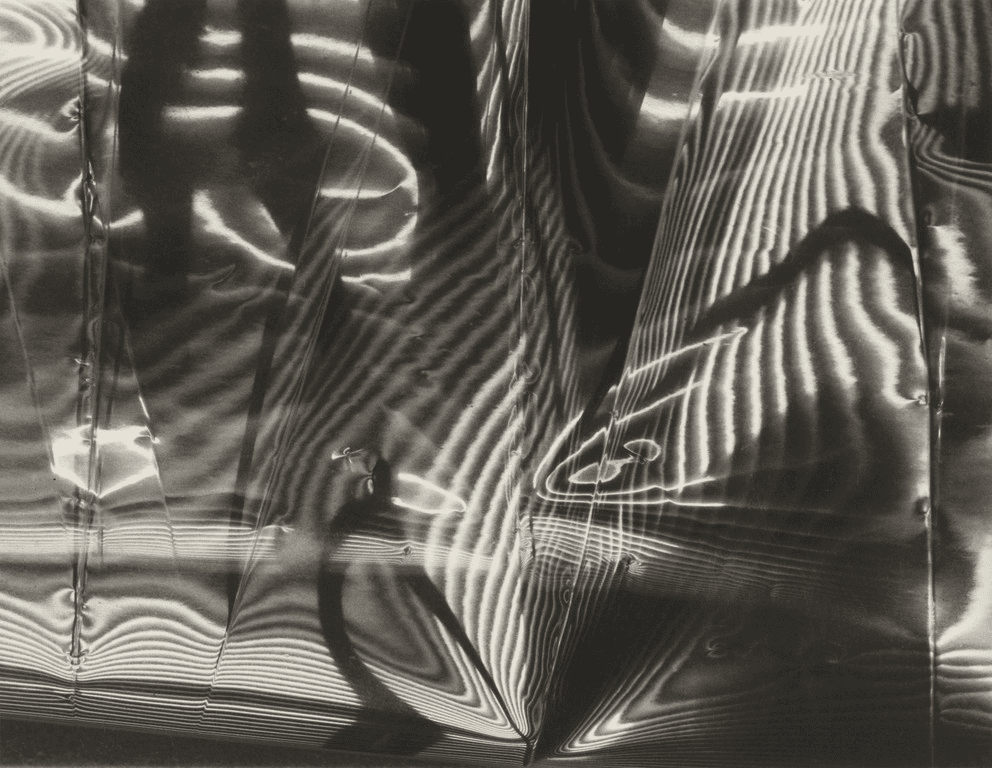
Alfred Stieglitz. László Moholy-Nagy. Man Ray. Paul Strand. The history of abstract photography is often told through these names, who are lauded for their experimental cameraless techniques and avant-garde approaches to framing. But this winter, the Smithsonian’s Hirshhorn Museum and Sculpture Garden, Washington D.C., is adding another entry to the canon: Carlotta Corpron (1901-1988), an artist and educator whose investigations into light and technology contributed to the 20th century effort to establish photography as a fine art form. Titled Light Is a Plastic Medium, Hirshhorn’s show foregrounds six landmark bodies of work made by Corpron in Texas between the late 1930s and the early 1950s.
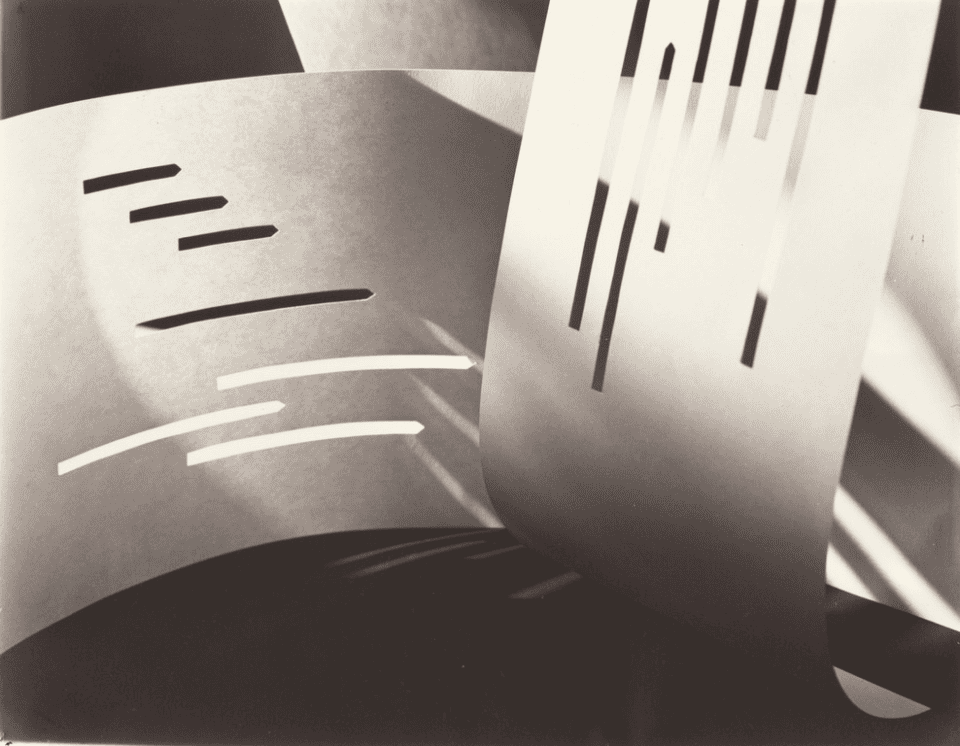
Corpron, who was born in Blue Earth, Minnesota, spent much of her life away from the urban centres of the art world – Paris, New York, Berlin, London – moving instead to Denton in 1935 to teach art history and design at Texas State College for Women (today Texas Women’s University). Yet she was deeply influenced by what was happening at the New Bauhaus in Chicago, a school founded in 1937 under the direction of Moholy-Nagy. Its curriculum emphasised photography’s relationship to light, a principle that remained central to Corpron’s practice – from her introduction to the medium in 1933 until she stopped working in the darkroom in 1955 for health reasons. Corpron was fascinated by how shadows could change our perception of an object, and how this phenomenon could be conveyed through a camera lens.
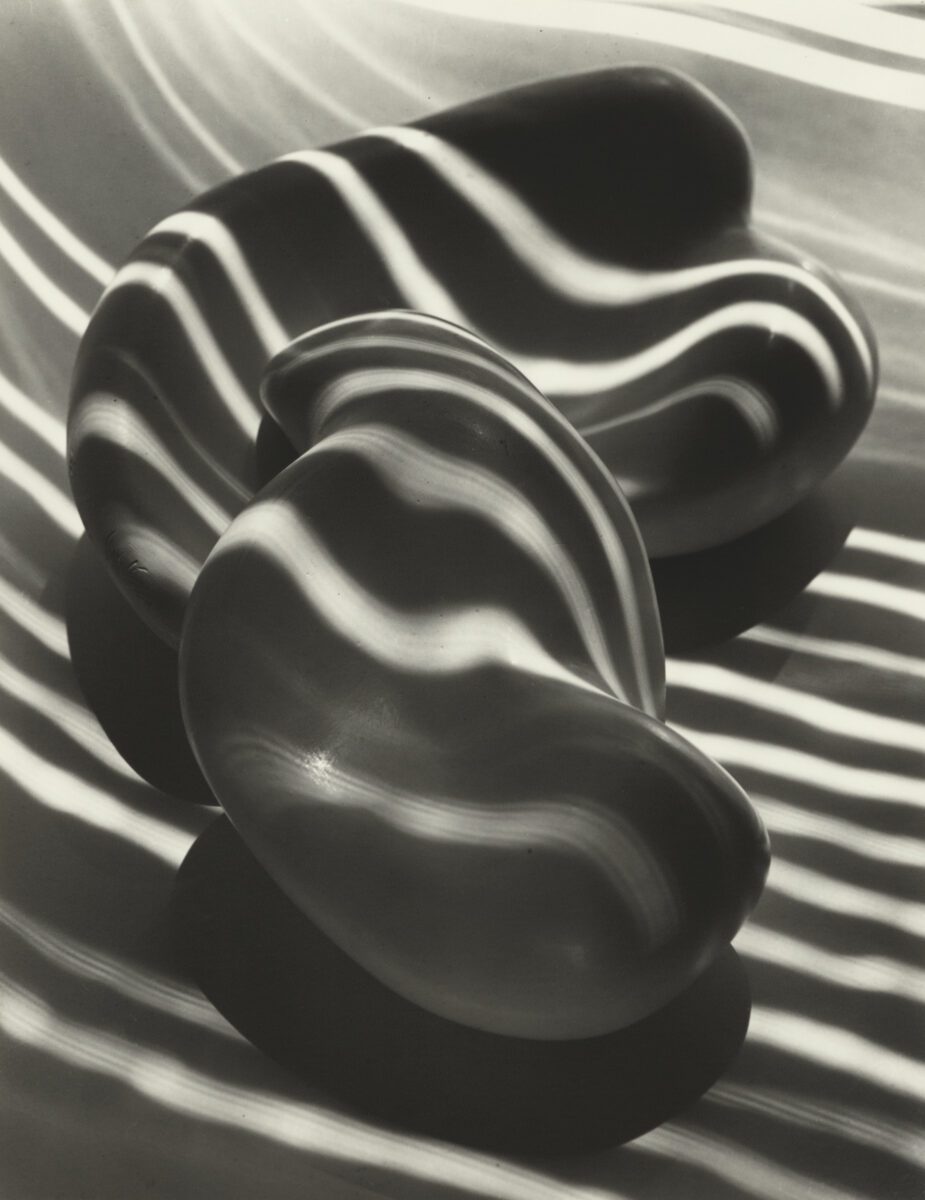
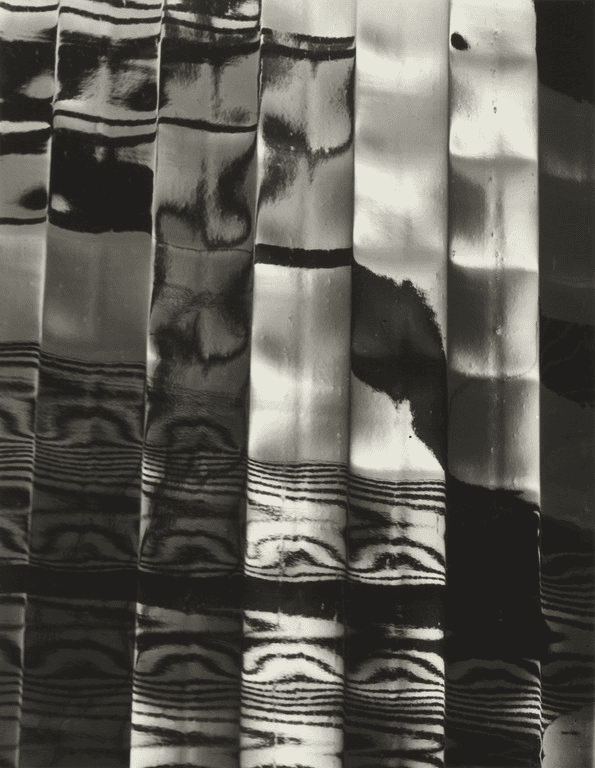
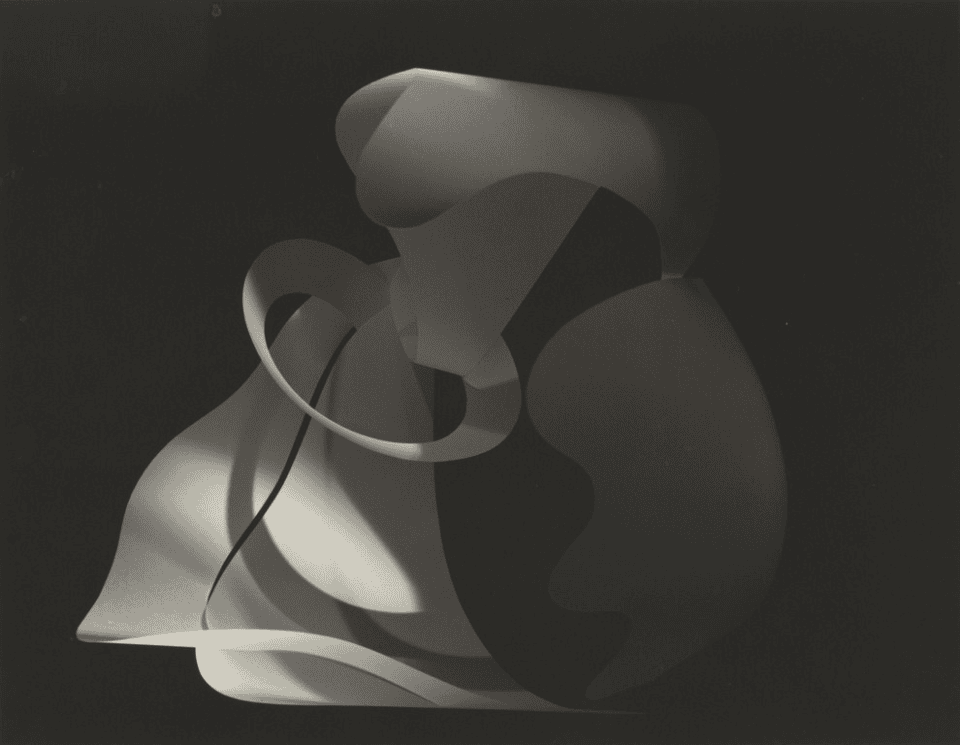
Hirshhorn traces the evolution of Corpron’s practice, from pictures of plants and flowers to gestural light drawings and complex distortions of space. The Nature Studies series captures floral arrangements as seen through the stripes of Venetian blinds, whilst Light Drawings experiments with the effects of a moving camera. Over time, working both at home and in the campus darkroom, Corpron began to introduce everyday items – such as mirrored trays and paperweights – into her compositions. The result was Light Patterns and Light Follows Form, where paper, glass and sculptural forms collide in striking abstractions. Her most experimental bodies of work were made between 1940 and 1950: Space Compositions plays with reflection and refraction, whilst Fluid Light Designs invites viewers to focus not on objects, but on light itself.
Hirshhorn Director Melissa Chiu describes Corpron as “a trailblazing American artist who has not yet received the recognition or scholarly inquiry she deserves.” Her story reflects a wider pattern in 20th-century art, in which women’s contributions were often overshadowed by those of their male counterparts. Now, exhibitions such as this are helping to bring overlooked names into view, where they belong. Corpron’s experiments continue to find echoes in today’s explorations of light and abstraction, from Barbara Kasten’s Constructs – in which geometric forms, mirrors and shapes collide – to Reuben Wu’s light paintings, which use drones to create glyphs in the night sky. Hers is a legacy worth knowing.
Carlotta Corpron: Light is a Plastic Medium is at Hirshhorn Museum and Sculpture Garden, Washington D.C., until 14 March.
Words: Eleanor Sutherland
Image Credits:
1. Carlotta Corpron, Fluid Light Design (variant 29), 1947. Courtesy of the Hirshhorn Museum and Sculpture Garden. Photo: Rick Coulby.
2. Carlotta Corpron, White Paper Shapes (Celestial Light) n.d. Courtesy of the Hirshhorn Museum and Sculpture Garden. Photo: Rick Coulby.
3. Carlotta Corpron, Light Follows Form, 1945–1946. Gelatin silver photograph. Gift of Herbert Lust, 2019. Courtesy of the Hirshhorn Museum and Sculpture Garden. Photo: Rick Coulby.
4. Carlotta Corpron, Tiger Stripes (variant 3), 1944 (makes use of fluted glass brick). Carlotta Corpron, Fluid Light Design (variant 29), 1947. Courtesy of the Hirshhorn Museum and Sculpture Garden. Photo: Rick Coulby.
5. Carlotta Corpron, White Paper Shapes (Circles and Curves) n.d. Courtesy of the Hirshhorn Museum and Sculpture Garden. Photo: Rick Coulby.