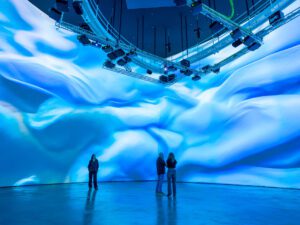
M+ Gallery in Hong Kong is home to one of the world’s largest media screens. The expansive, light-powered canvas is made up of thousands of LEDs. Each night, it showcases work from the museum’s collection, offering audiences something different depending on when they happen to glance up. It’s a powerful example of bringing art to the public, breaking down barriers to exhibitions and placing them on the streets. The museum collaborates with world-leading international artists throughout the year; commissioning works for the façade that champion new moving-image practices and deepen their connection with a global audience. Previous world-renowned practitioners featured on the significant platform include Greg Girard, Pipilotti Rist, Sarah Morris, Tsu Hyen and Zhao Tao.
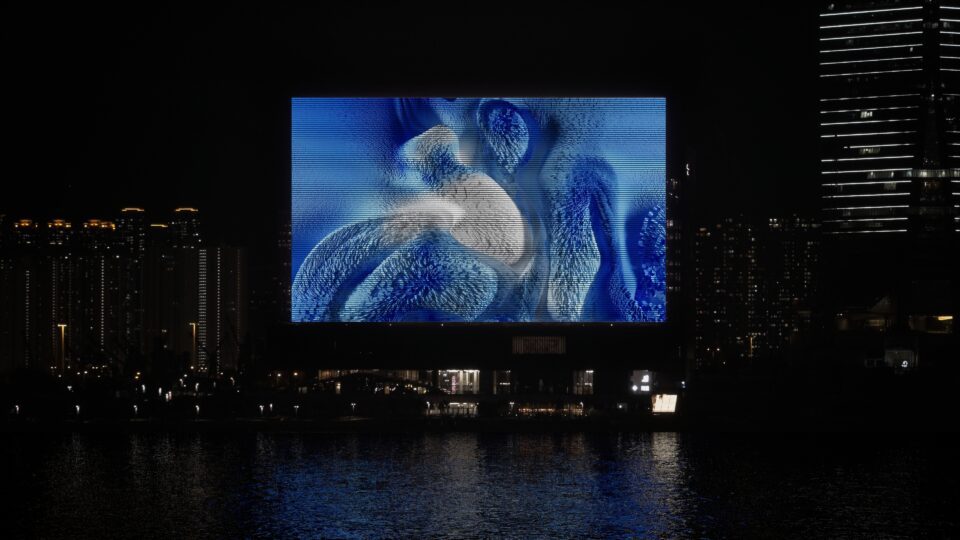
The most recent commission is Winds of Hong Kong (2026), by internationally acclaimed Turkish American artist Refik Anadol. Based in Los Angeles, Anadol leads Refik Anadol Studio (RAS), a practice at the forefront of algorithmic art and data-driven narratives. RAS’s work examines the challenges and possibilities of ubiquitous computing, exploring “what it means to be human in an era of machine intelligence.” This commission draws on wind and environmental data gathered from publicly available sources in Hong Kong to transform one of the world’s largest media screens into an evolving “data painting.” This mesmerising work traces the seasonal rhythms of weather and monsoon winds across Hong Kong. Through the resulting patterns, it reveals the evolving relationship between natural phenomena and the built environment, as well as the role technology plays in contemporary society.

The piece is the latest instalment of the Winds of… (2017 – ongoing) series, which approaches data as a dynamic artistic material beyond numbers and measurements. As the artist explains: “For many years, the Winds of…. Series has explored how we can utilise machine intelligence to perceive the invisible living systems that shape our world.” Previous iterations of the project have included Wind of Boston, which used data from Boston Logan Airport, and Winds of Yawanawá, made in collaboration with the Indigenous community of the Brazilian Amazon. Anadol continues: “Hong Kong provides a compelling context for this ongoing inquiry, with its distinctive climate and environmental characteristics. I hope the work invites viewers to pause, reflect and experience Hong Kong as an ecology of energy and transformation.”
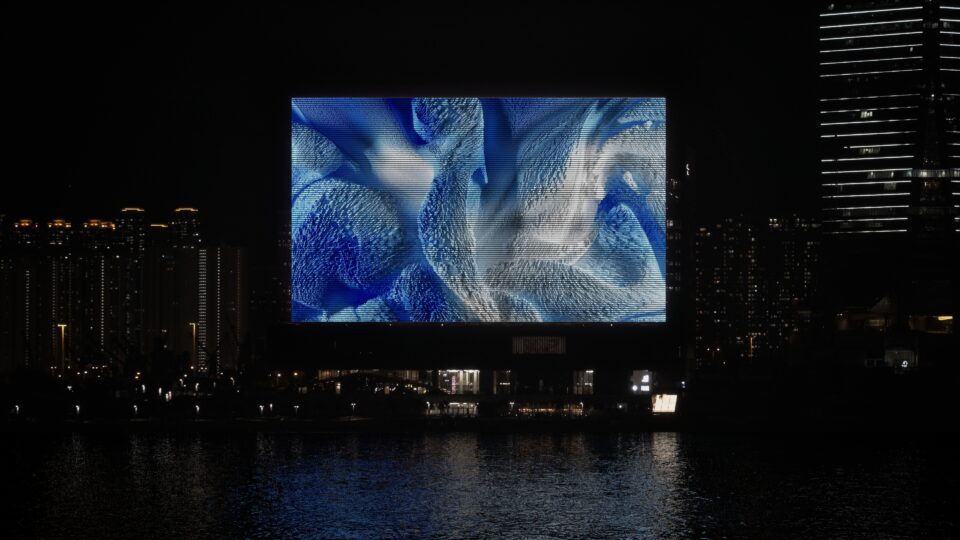
Winds of Hong Kong emerges at a pivotal moment in the debate around advanced technologies. In recent weeks, a worker from Anthropic claimed that the advancement of AI has a greater than 10% chance of “killing all humans.” Meanwhile, the “Pull the Plug” movement campaigns against the opening of data centres across the country. In 2024, global data centres used 415 terawatt-hours of electricity in 2024, a number expected to double by 2030. At a time when extreme temperatures and changing weather patterns increasingly affect everyday life, Anadol’s work offers a different way for us to engage with environmental data. It invites viewers to consider how machine intelligence, when guided by artistic intention, brings to light information that exceeds the capabilities of human vision.
Winds of Hong Kong is at M+, Hong Kong from 14 October – 7 January: mplus.org.hk
Words: Emma Jacob
Image Credits:
1. Refik Anadol, Winds of Hong Kong.
2. Installation view. Refik Anadol, Winds of Hong Kong.
3. Refik Anadol, Winds of Hong Kong.
4. installation view. Refik Anadol, Winds of Hong Kong.