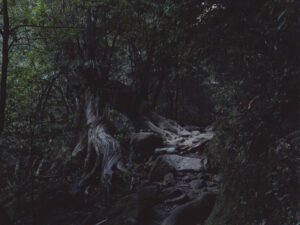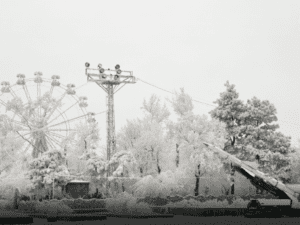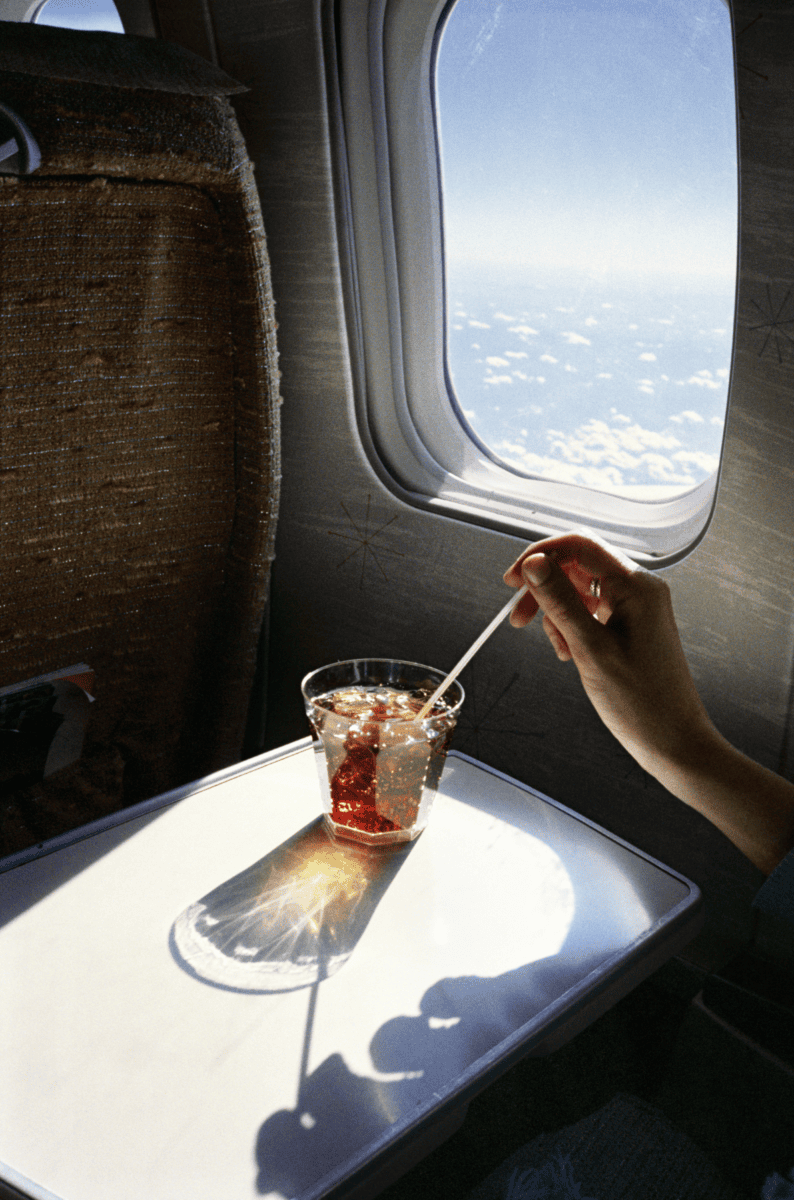
William Eggleston (b. 1939) famously declared: “I am at war with the obvious.” The American artist is renowned for combining everyday observations with an intuitive sense of colour and composition. His early works were influenced by Henry Cartier-Bresson’s “decisive moment,” before black-and-white photographs gave way to explorations of colour in the mid-1960s. At the time, colour remained largely unused in fine art photography, relegated to commercial advertising and hobbyists. Renowned practitioner Walker Evans went as far as to deem colour “vulgar.” Yet, Eggleston remained committed to his vision, producing an oeuvre that would transform how colour was viewed in the art world forever.
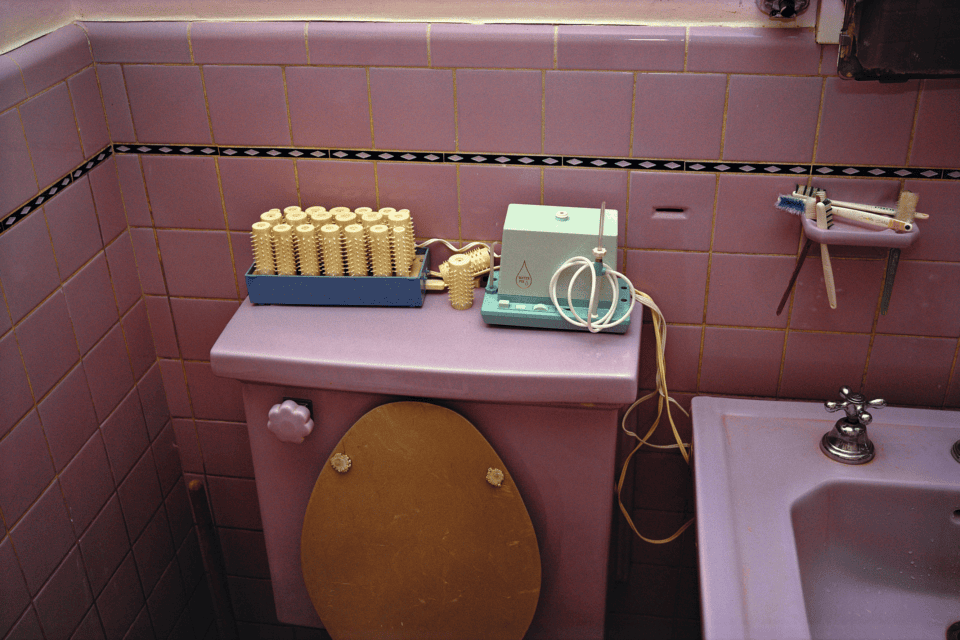
William Eggelston: All That Goes Unnoticed, at The Photographers’ Gallery, celebrates the 50thanniversary of the landmark exhibition and book William Eggleston’s Guide (1976), which was the first solo show of colour photographs ever presented at the Museum of Modern Art, New York. In an updated release of the book in 2002, the synopsis describes how: “the reception was divided and passionate. The book and show unabashedly forced the art world to deal with colour photography, a medium scarcely taken seriously at the time, and with the vernacular content of a body of photographs that could have been, but definitely weren’t, some average person’s Instamatic pictures from the family album.” TPG’s major display consider’s the artist’s legacy, influence and 60-year career. Visitors are given access to his celebrated colour photographs, as well as rarely seen vintage dye-transfer prints and lesser-known black-and-white and Brownie images from the early 1960s and 1970s. These early works show the emergence of his legendary way of seeing and attentiveness to ordinary life, before colour became central to his photography.
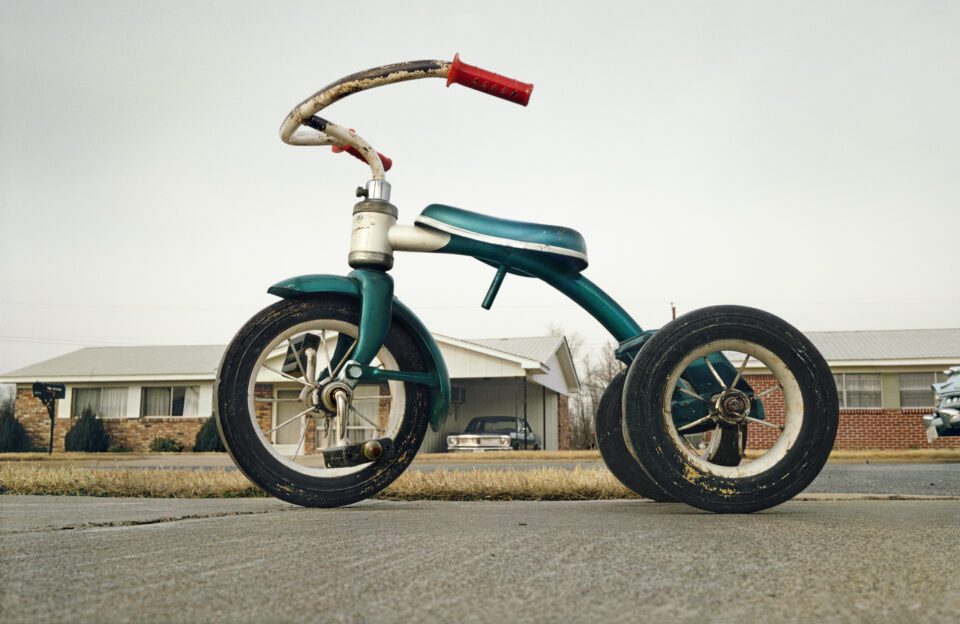
In his images of the day-to-day – from burger bars, supermarkets and petrol stations, to the American icons of Graceland, Coco-Cola and Cadillac – Eggleston gave everything equal weight. His iconic domestic scenes, including the abandoned child’s tricycle, red ceiling and green bathroom, are on show, alongside sweeping landscapes, highways and skies of the American South. For Eggleston, colour was never merely aesthetic; it was the very fabric of post-war American life, imbued with commercial desire and social significance. Nowhere is this more evident than in Los Alamos, a series that began in the artist’s hometown of Memphis and the Mississippi Delta and followed his wanderings through New Orleans, Las Vegas and south California, ending at Santa Monica Pier. The project eventually totalled over 2,200 images, tracing his early forays into colour. In fact, Los Alamos includes his first ever colour photograph, Untitled, Memphis, 1965, which shows a young clerk pushing a train of shopping carts at a supermarket in the Tennessee city.
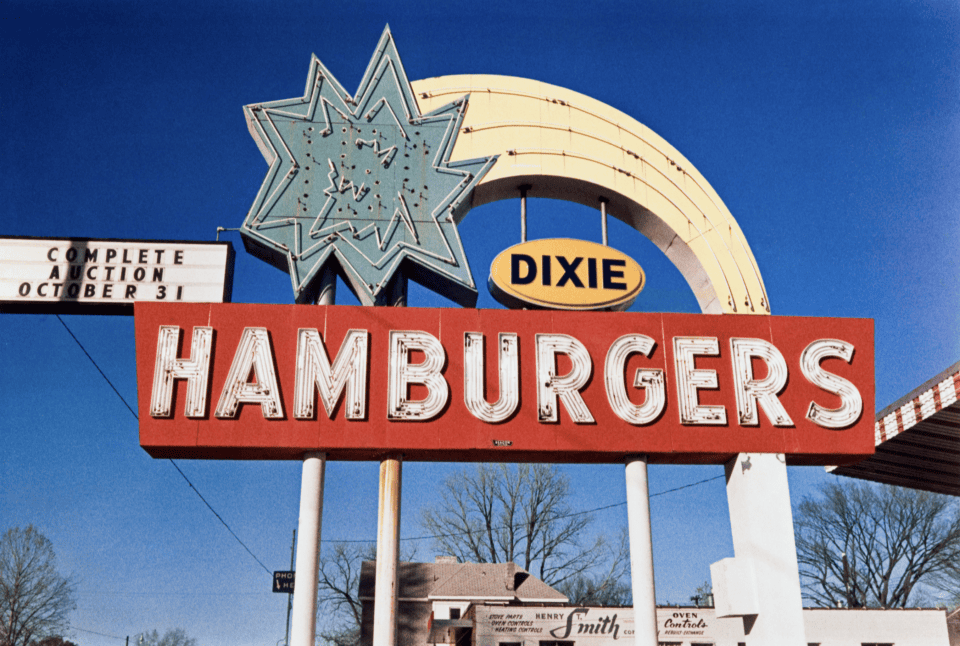
Yet, beneath the glossy surface, there’s a sense of isolation. The roadside diners, suburban streets and domestic spaces of his photographs reveal a loneliness that’s characteristic of many of his subjects. These classic shots expose the underlying cracks of the American Dream – alienation, distance, desire – simultaneously seductive and lurid, tense and revealing. It’s emblematic of the mood of the time, when the myth of hard work and dedication paying off gave way to disillusionment. Eggleston was making work when the Civil Rights and feminist movements were gaining traction and people began to push back against the promise of meritocracy. But Eggleston strikes a delicate balance, reminding the viewer that despite its obvious downfalls, the lure of American Dream remains.
Seen today, 50 years after their original publication, in a time when images are constantly produced and circulated, Eggleston’s photographs offer a slower, more attentive way of looking. Here, there’s way of making the ordinary extraordinary that continues to resonate with audiences, half a century later.
William Eggleston: All That Goes Unnoticed is at The Photographers’ Gallery, London 14 October – 21 February.
thephotographersgallery.org.uk
Words: Emma Jacob
Image Credits:
1. William Eggleston, Untitled, En route to New Orleans, from the series Los Alamos, c. 1971-74, from the Wilson Centre for Photography © Eggleston Artistic Trust, courtesy of the Eggleston Artistic Trust and David Zwirner.
2. William Eggleston, Untitled (Pink Bathroom), from the series Chromes, c. 1970-73, © Eggleston Artistic Trust, courtesy of the Eggleston Artistic Trust, Tate and David Zwirner.
3. William Eggleston, Untitled, Memphis, 1970, from the Wilson Centre for Photography © Eggleston Artistic Trust, courtesy of the Eggleston Artistic Trust and David Zwirner.
4. William Eggleston, Untitled, Memphis, from the series Los Alamos, c. 1971-74, from the Wilson Centre for Photography © Eggleston Artistic Trust, courtesy of the Eggleston Artistic Trust and David Zwirner.