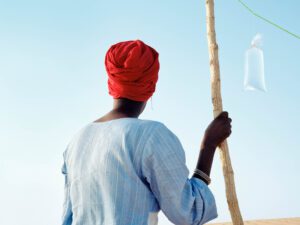
When French-Algerian artist Maya Inès Touam (b. 1988) was growing up in Paris during the 1990s and early 2000s, she remembers people speaking of European and North African cultures in dichotomies: black and white, good and evil, centre and periphery, the coloniser and the colonised. Now, in her artistic practice, she is resisting such polarities, interweaving stories and objects from different cultures into collages. In these striking tableaux, elements from various times, locations, art movements and religions come together. It’s an approach which has led to significant acclaim, including acquisitions from London’s V&A. This winter, Huis Marseille, Amsterdam, opens Belongings, Touam’s first solo show in the Netherlands.
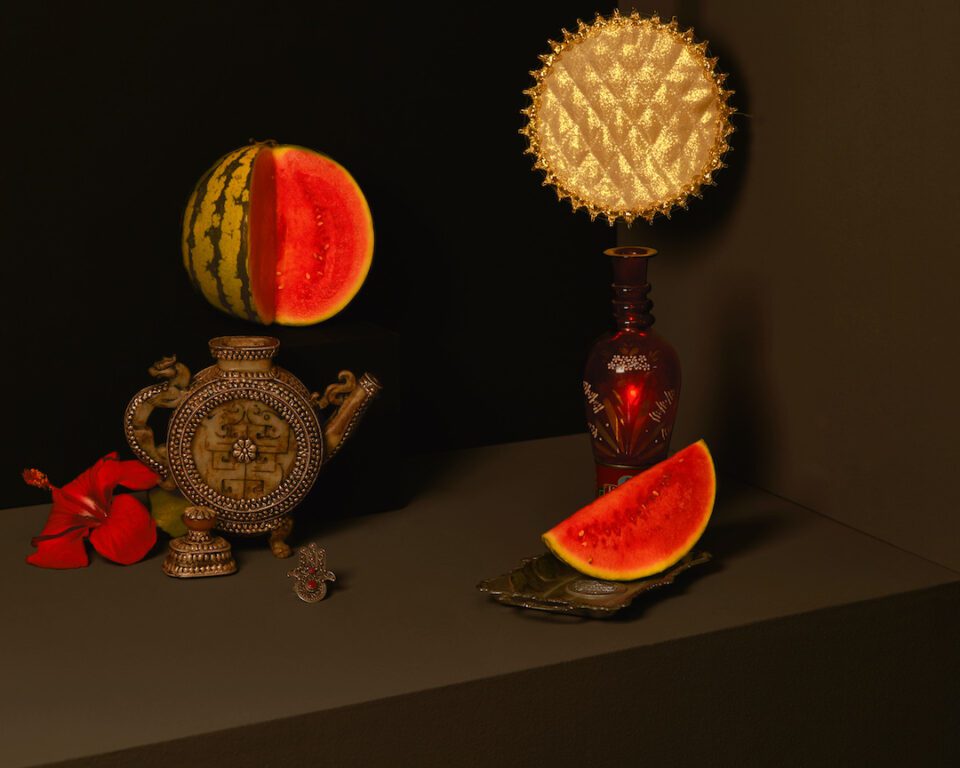
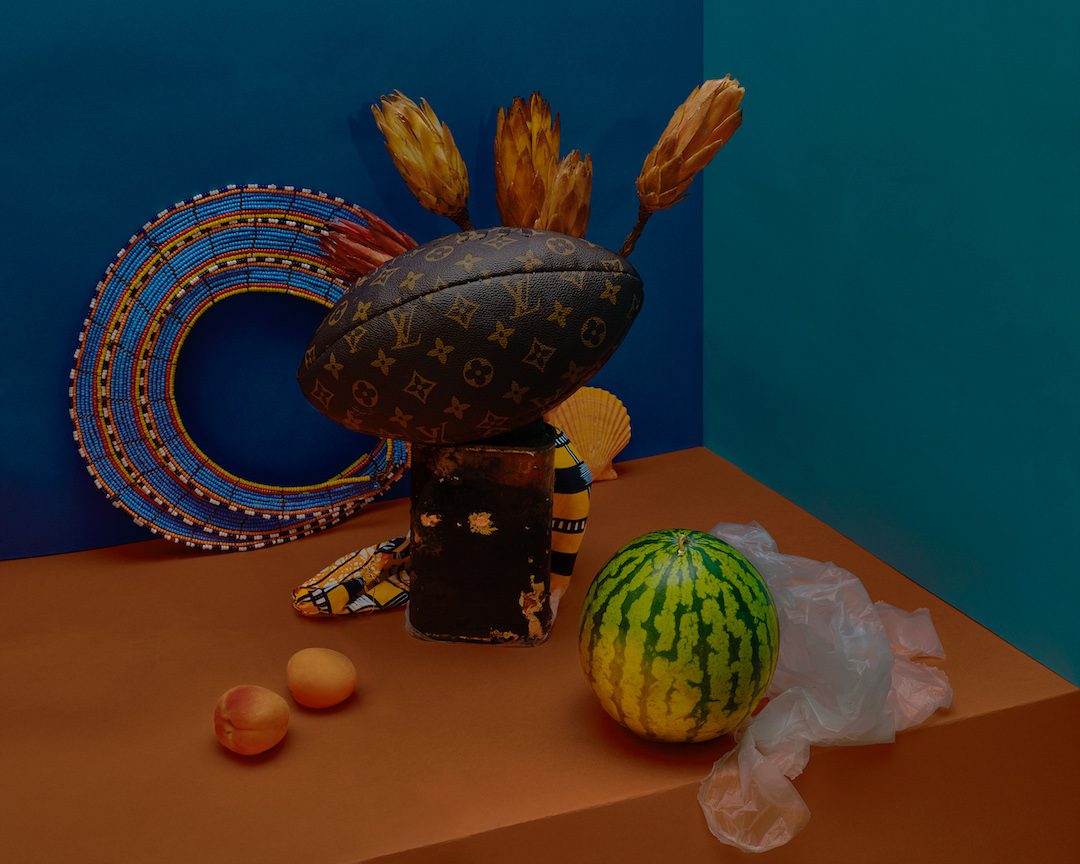
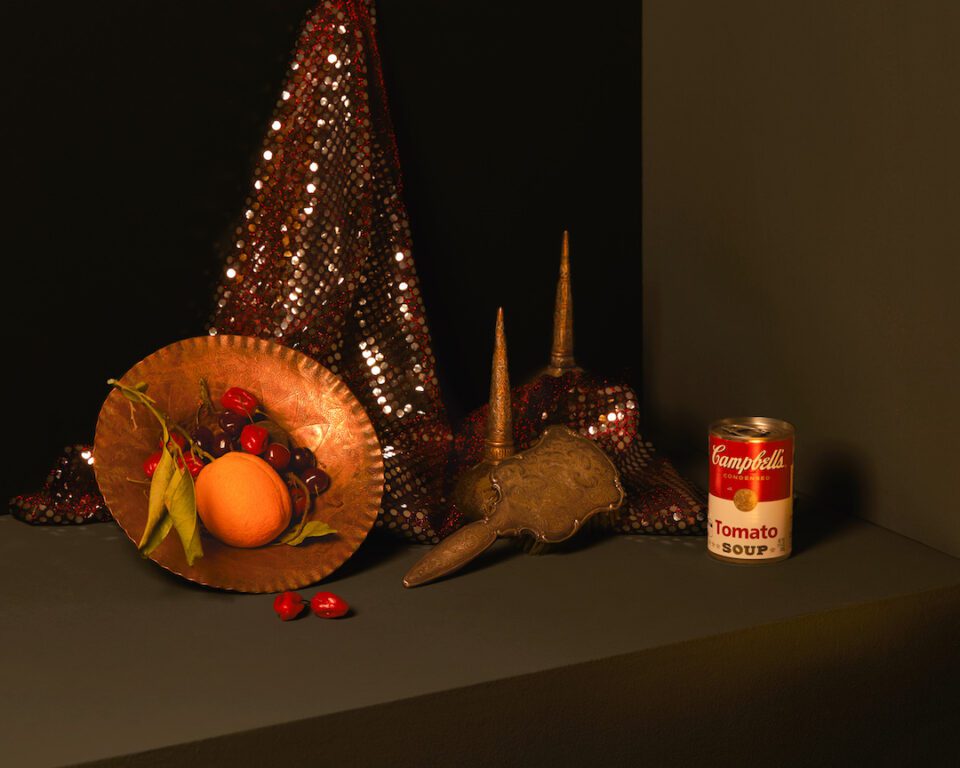
Touam grew up in Paris, but has remained strongly linked to Algeria, the homeland of her father’s family and the country her maternal grandmother left in 1953, on the eve of the Algerian War of Independence (1954–1962). Many of her works take the format of the vanitas still life, a genre of painting popular in Europe during the 16th and 17th centuries, designed to remind viewers of mortality. Yet, instead of the traditional skulls, candles and hourglasses found in such pictures, Touam makes other references, notably to everyday objects collected in Morocco. These include jewellery, sunglasses, sculptures, glittery fabrics and fake Louis Vuitton handbags – an eclectic mix of trinkets spanning from traditional to the contemporary. The inclusion of these items allows Touam to address themes close to her heart: migration, motherhood, displacement and the relationship between people and nature. She refers to myths, folk tales and other stories passed down by word of mouth, allowing them to find an echo in the present-day.
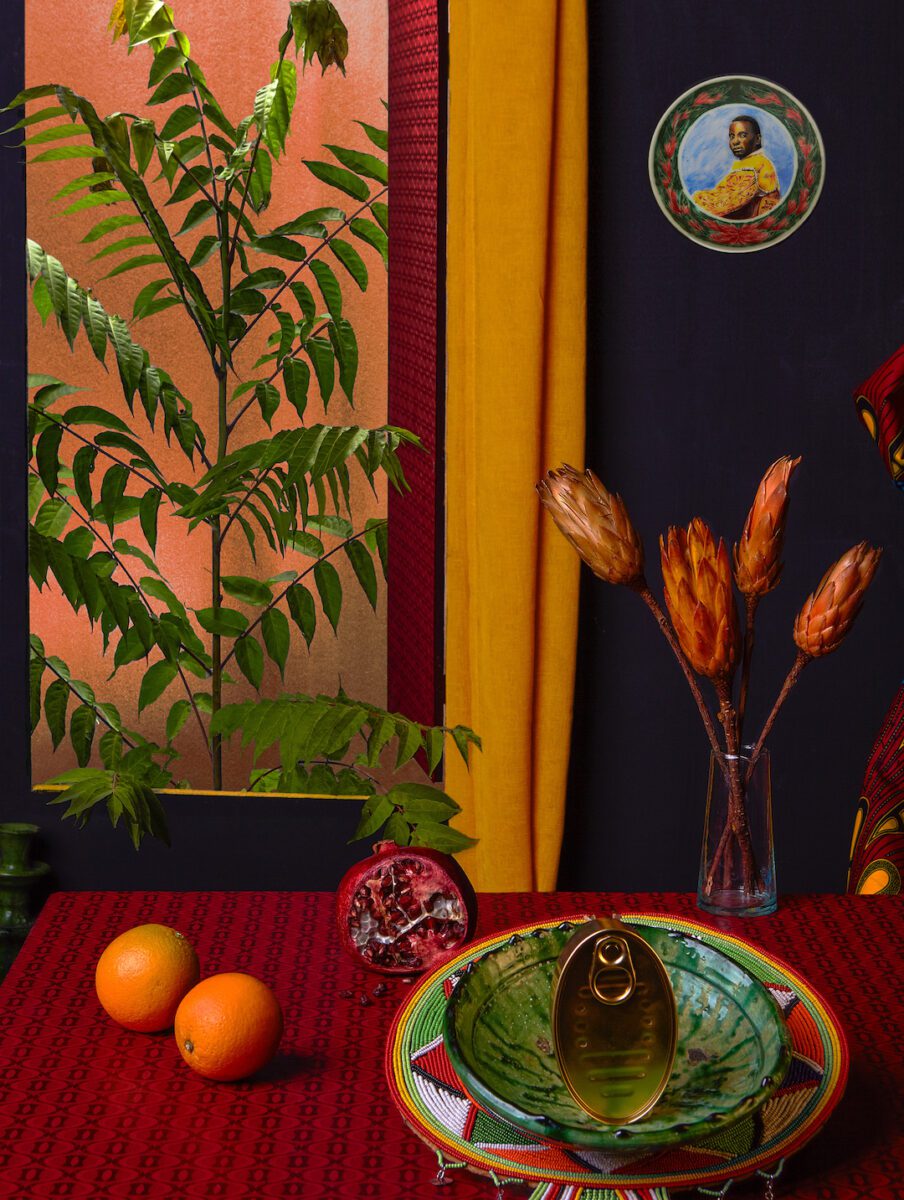
One picture includes a can of Campbell’s tomato soup, instantly reminiscent of Andy Warhol’s iconic 1962 canvases. Such references to Western art history are everywhere, with Touam recreating Henri Matisse’s 1944 painting Icarus and drawing on Fauvist colour experiments. Even the framing of Touam’s compositions is imbued with meaning. They take the format of Christian altarpiece panels, Gothic ogival forms, reinterpreted stained glass, Almoravid architecture, Asian folding screens and even serving trays. Touam’s process is one of meticulous attention to detail. She experiments with various arrangements, making minute adjustments and photographing every step. She then combines the individual shots into a single digital still life. Each is underpinned by hundreds, and in some cases even thousands, of images.
Well after Touam had developed her artistic language, she discovered the book Tout-Monde (1993) by the poet and philosopher Édouard Glissant, in which he articulates a vision of identity that is no longer rooted in homeland, origin and tradition, but in fragmentation, dispersal and chance. Glissant’s book lent words to what Touam had been exploring for years visually. In her work, references to the past become a means of imagining a present and future in which the world is no longer divided, and where cultural exchange is the norm. With this in mind, the experience of navigating Belongings becomes especially powerful. It imagines a kind of utopia – an altar to human creativity, where borders and time periods dissolve.
Maya Inès Touam: Belongings is at Huis Marseille, Amsterdam, from 24 October – 7 February.
Words: Eleanor Sutherland
Image Credits:
1. © Maya Inès Touam, LV et Protéa, 2020. From the series Replica.
2. © Maya Inès Touam, Esquisse, Sans titre 9, 2019. From the series Ready Made.
3. © Maya Inès Touam, Nature morte à la grenade, 2020. From the series Replica, collection Huis Marseille.
4. © Maya Inès Touam, Esquisse, Sans titre 6, 2019. From the series Ready Made.