Power lives inside the images that shape how we see the world. For almost four decades, Arthur Jafa has explored what occurs when photographs, film, music and digital fragments collide – when an picture of celebration meets one of violence, or popular culture reveals the histories embedded within it. At the New Museum, Arthur Jafa: I Am Tony brings this volatile visual language together in a survey spanning 1988 to the present-day. Across two floors of the newly expanded institution, the exhibition traces how images construct Blackness, carry desire and violence, and gather meaning through repetition and association.
Jafa’s interest in images has never been confined to their formal qualities. His work asks what happens when representation becomes entangled with the bodies, histories and systems it depicts. That question carries force in an era when social media has transformed it into a near-continuous stream of content, collapsing distinctions between documentary evidence, entertainment, advertising and personal expression. Jafa has worked inside this condition rather than standing outside it, building an archive from cinema, music, television, photography and the internet. The result is less a stable visual history than a charged field in which images appear to remember one another.
Montage provides the underlying grammar. Jafa brings disparate material together not to produce a seamless narrative, but to create what he calls “affective proximities” – a phrase borrowed from his friend and collaborator John Akomfrah. Akomfrah’s own films, including The Unfinished Conversation and Mimesis, use archival footage, music and layered voices to unsettle conventional accounts of history, making connections across time rather than following a linear chronology. His influence is particularly relevant here: both artists treat the archive as something alive, shaped by memory, absence and the associations that emerge between fragments. For Jafa, an image can alter another without being reduced to a straightforward symbol, allowing historical footage, popular entertainment, political violence and intimate gestures to acquire new resonance within the same visual field. Rather than treating the archive as a fixed store of evidence, he makes it unstable, responsive to the pressures of the present.
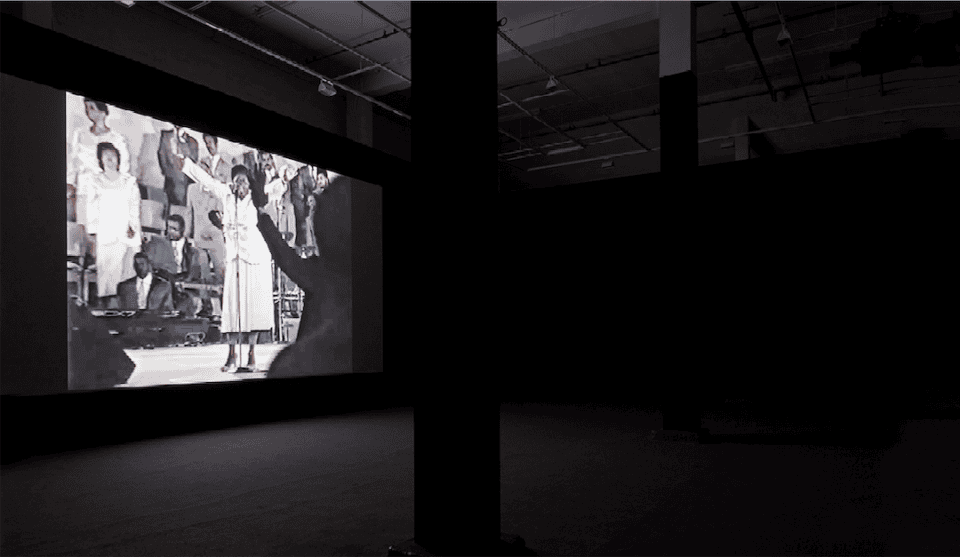
Few works demonstrate this more forcefully than Love is the Message, The Message is Death (2016). Its rapid succession of images moves between Black joy, athleticism, performance, spirituality and scenes of state and institutional violence, while music gives the montage its emotional architecture. Ecstasy and grief are not presented as opposites; they occupy the same cultural space, often within seconds of one another. Jafa refuses the detached mode of spectatorship associated with much historical documentation, making the viewer experience the archive at the speed of memory, association and shock.
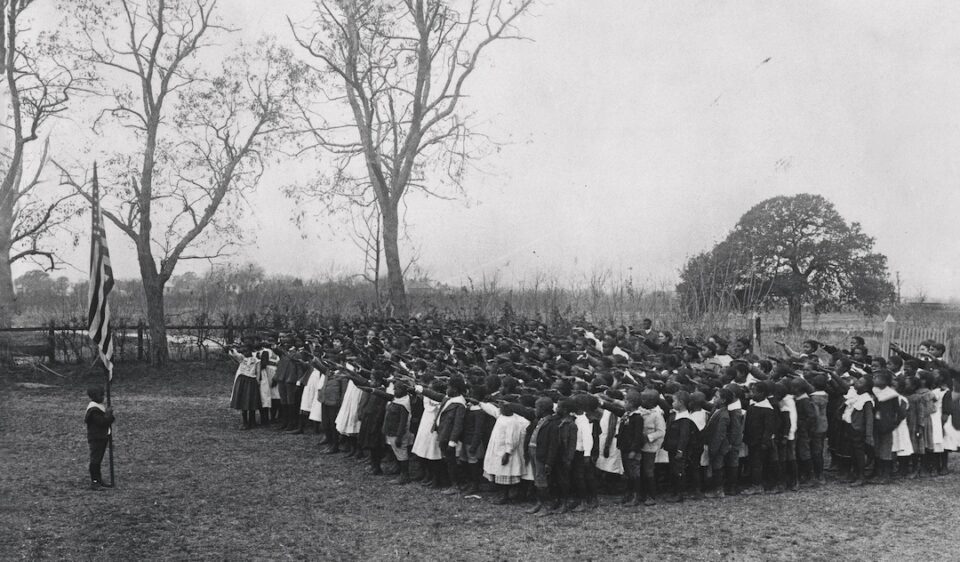
Beauty carries its own contradictions. American popular culture has elevated Black music, sport, fashion and entertainment into central components of the national imaginary, while the communities producing those forms have continued to encounter structural and physical violence. Jafa brings these histories into the same visual field, showing how cultural celebration exists alongside an ongoing struggle over who controls Black bodies and their representations. His work holds achievement, visibility and violence in tension, leaving that friction unresolved rather than attempting to reconcile it. The White Album (2019) shifts that pressure onto another part of the racial image economy. Awarded the Golden Lion at the Venice Biennale, the film turns towards whiteness and the structures through which racial identity is produced, observed and maintained. Its significance lies partly in the instability of the position it creates for the viewer: looking becomes inseparable from questions about who is looking and which histories remain embedded in apparently ordinary images. Jafa does not offer a neutral taxonomy of race. Instead, he exposes the mechanisms through which racial meaning accumulates around bodies, gestures and culture.
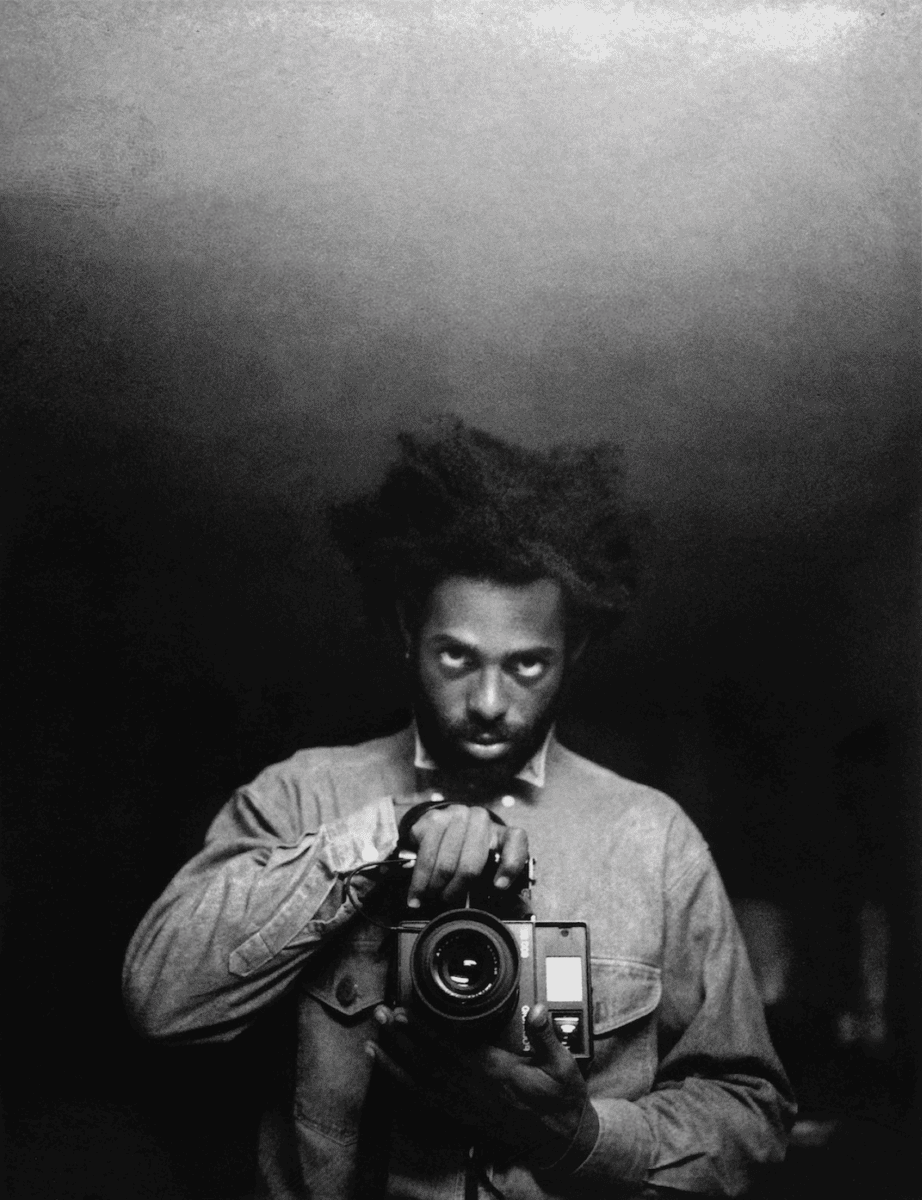
Monster (1988) brings the apparatus of looking into the frame itself. In this early self-portrait, Jafa photographs himself in a mirror while visibly holding the camera, placing subject, photographer and technological apparatus within the same image. Decades before smartphones and social platforms made self-imaging ubiquitous, he was already examining how pictures are shaped by those who produce, manipulate and circulate them. Here, the camera becomes part of the subject, exposing the mechanics of looking alongside the person being looked at. Cinema remains central to that thinking, although Jafa’s career has always resisted the boundaries of filmmaking. His early work as a cinematographer, including collaborations with Julie Dash, Stanley Kubrick and Spike Lee, gave him a sophisticated understanding of framing, movement and duration, but his subsequent practice expanded those cinematic principles into installations, photography, painting and sculpture. Recent works demonstrate that montage does not have to remain on screen. A static object can carry the pressure of juxtaposition, while an installation can make spectators navigate relationships between images rather than simply watch them unfold.
Curation consequently becomes part of the argument. Massimiliano Gioni, Edlis Neeson Artistic Director of the New Museum, and Gary Carrion-Murayari, Kraus Family Senior Curator, with Curatorial Assistant Calvin Wang, have organised I Am Tony across two floors, bringing early works into dialogue with later productions rather than treating chronology as the primary organising principle. This approach suits an artist whose practice depends upon recurrence, quotation and transformation. Works separated by decades can appear less like isolated moments than variations on a continuing investigation. The exhibition becomes a space of echoes, allowing Jafa’s visual language to reveal its repetitions as well as its departures.
Music gives Jafa something that conventional art history often struggles to describe: a language for rhythm, repetition and rupture that is simultaneously formal and lived. Naming the exhibition after the legendary jazz drummer Tony Williams establishes precisely this connection. Jafa’s editing operates in a comparable register, relying upon syncopation, acceleration, interruption and silence. Black popular music is not merely a soundtrack to his imagery; it provides a method for organising sensation and time. Jafa understands that what disappears between images can be as consequential as what remains visible.
That relationship places Jafa within a longer history of Black experimental practice. Akomfrah’s archival montages similarly challenge linear accounts of history, while Isaac Julien has explored the relationship between Black identity, cinematic language and spectatorship. Kerry James Marshall has confronted the politics of visibility through painting, addressing the historical absence and distortion of Black subjects within Western art. Jafa arrives at related questions through a different route, one grounded as much in popular and digital culture as in the museum. His archive is deliberately promiscuous, refusing a hierarchy between supposedly serious cultural forms and the images circulating through everyday life.
Contemporary spectatorship makes that promiscuity increasingly consequential. A single day can expose viewers to footage of war, a music video, a political speech, an advertisement and a private photograph without any meaningful pause between them. Images arrive already detached from their original contexts, ready to be copied, remixed and recirculated. Jafa does not simply reflect this condition; he makes its contradictions visible. By extracting images from the torrent and forcing them into new relationships, he asks whether circulation necessarily diminishes meaning. The question is inseparable from the material reality of the images themselves. Jafa has described them as “fugitive, virulent cultural agents”, a formulation that gives the work a particular urgency: pictures do not merely represent bodies but can act upon how bodies are understood, valued and remembered. Violence can be reproduced through an image, but so can pleasure, identification, solidarity and desire. This is why Jafa’s work resists the easy opposition between aesthetic beauty and political seriousness. Its formal seduction is part of its argument, drawing viewers towards images whose histories may be difficult to look at.
Such tensions also explain the movement between Jafa’s mediums. Painting slows the encounter; sculpture insists on physical presence; photography freezes a fragment; film subjects the viewer to duration and rhythm. None of these forms replaces the others. Instead, they reveal different conditions under which an image can be experienced, from the intimate scale of a photograph to the enveloping force of a large-scale installation. The movement between them makes the exhibition less a survey of separate techniques than an examination of how visual information changes when its physical conditions change. What emerges is a practice concerned not simply with who gets represented, but with what representation does once it enters circulation. Jafa’s images can be commodities, memories, evidence, entertainment and witnesses at the same time. Their meanings are neither fixed nor entirely controllable, particularly within a digital culture where images are constantly placed into new contexts. I Am Tony makes this instability visible without pretending that it can be resolved. Instead, the exhibition asks viewers to remain with the friction between image and reality, beauty and violence, cultural celebration and historical trauma.
Across nearly 40 years, Jafa has built a rich visual archive of Black life, culture and history. His practice offers a way of considering how identity becomes visible, and how that visibility is shaped by technology, commerce, memory and power. The exhibition’s new productions extend this enquiry, testing how a visual language formed through cinema, music and photography can respond to an image culture moving at extraordinary speed. At the New Museum, images collide, repeat and mutate across generations of work. What remains unresolved, and therefore most vital, is not what these images tell us about Black life, but how fiercely the conditions of seeing it continue to be contested.
Arthur Jafa: I Am Tony is at New Museum, New York from 25 September – 4 January: newmuseum.org
Words: Anna Müller
Image Credits:
1. Arthur Jafa, Monster, 1988, printed 2017. Gelatin silver print, 10 × 8 in (25.4 × 20.3 cm). © Arthur Jafa. Courtesy the artist and Gladstone.
2. Arthur Jafa, Love is the Message, The Message is Death, 2016. Video, color, sound; 7:25 min. © Arthur Jafa. Courtesy the artist and Gladstone.
3. Arthur Jafa, Pledge of Allegiance, 1899, 2017. Wallpaper, dimensions variable. © Arthur Jafa. Courtesy the artist and Gladstone.
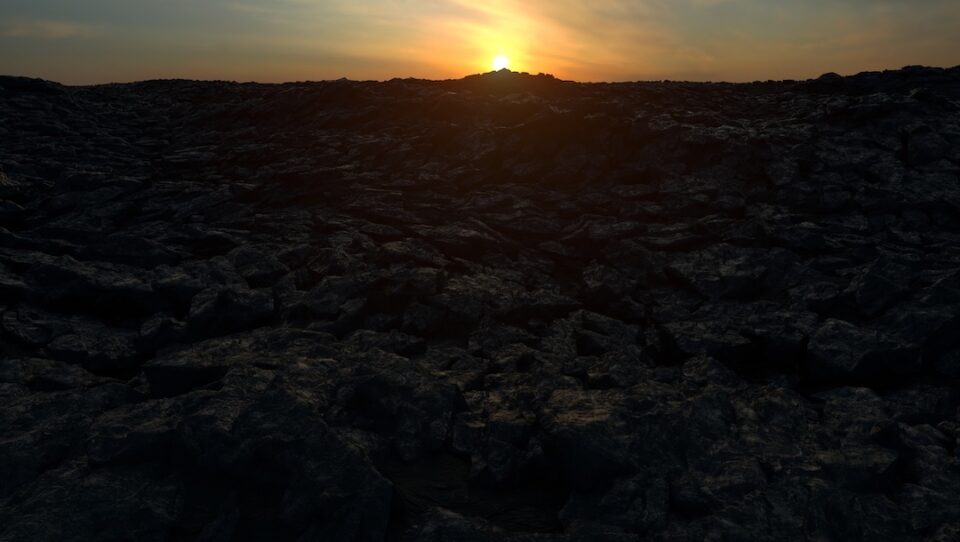
4. Arthur Jafa, AGHDRA, 2021. 4K digital video, color, sound; 1:14:50 hr. © Arthur Jafa. Courtesy the artist and Gladstone
5. Arthur Jafa, Love is the Message, The Message is Death, 2016. Video, color, sound; 7:25 min. Installation view: Gavin Brown’s Enterprise, New York, 2016. © Arthur Jafa. Courtesy the artist and Gladstone. Photo: Thomas Müller.
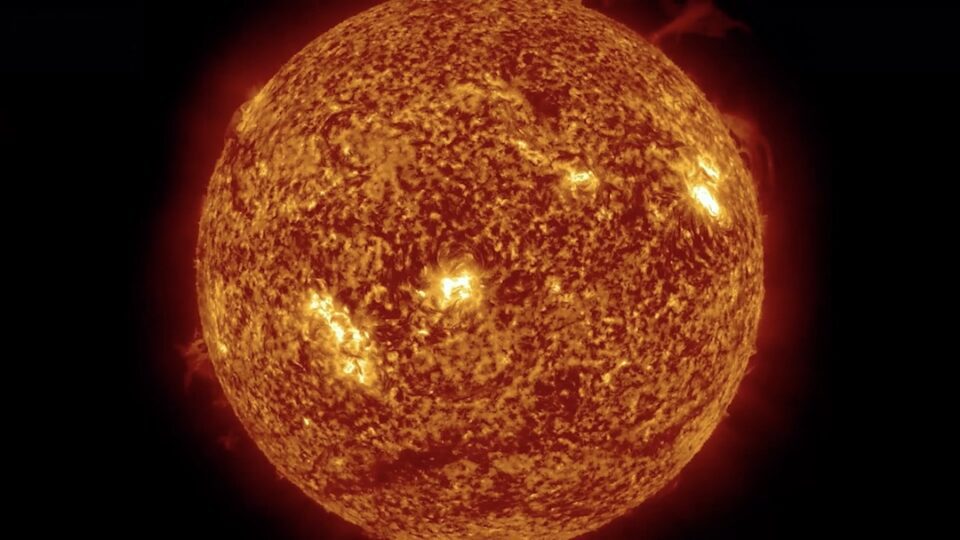
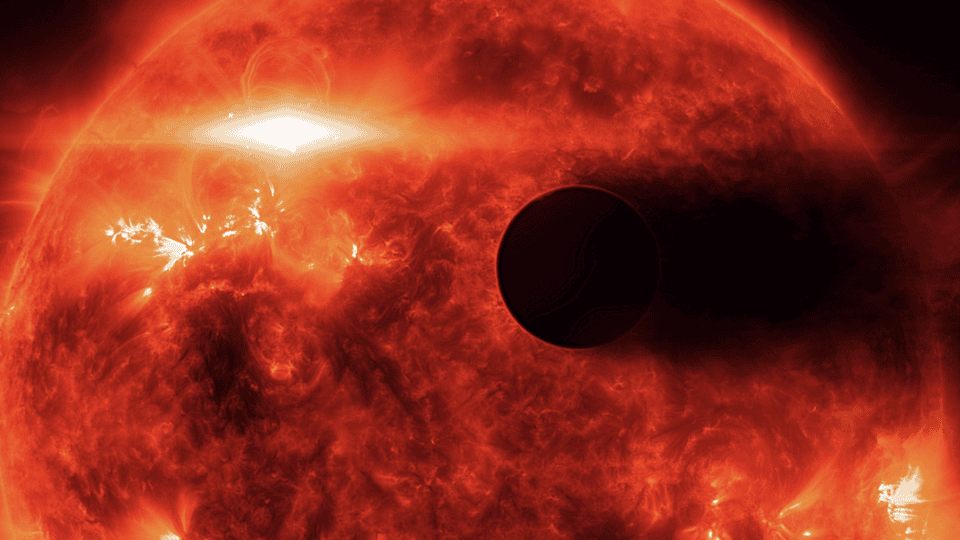
6. Arthur Jafa, APEX, 2013. Video, color, sound; 8:12 min. © Arthur Jafa. Courtesy the artist and Gladstone. Image: NASA, ESA, L. Calçada, Solar Dynamics Observatory.