The North Sea, located between Great Britain, Denmark, Norway, Germany, the Netherlands, Belgium and France, covers 570,000 square kilometres. Among its many coastal destinations is Föhr, a German island in the North Frisian archipelago, where the sea has long shaped its landscape and culture. It is also home to Museum Kunst der Westküste, a foundation that collects and exhibits art responding to themes of coastal life. The museum’s latest exhibition, New Perspectives, surveys recent works from its ever-expanding collection that engage with the shoreline in diverse ways. Some of the featured artists developed their works directly on Föhr as artists-in-residence, whilst others take a broader viewpoint, introducing global contexts and wider questions around cultural identity, colonial history and ecological change.
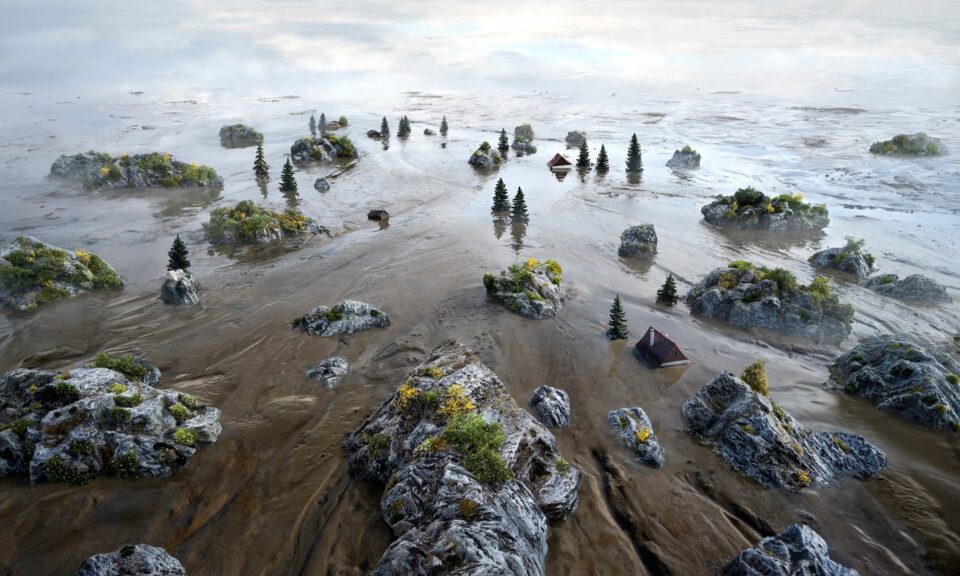
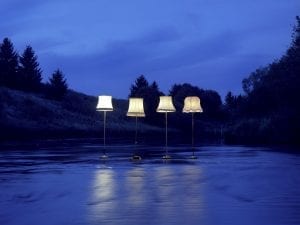
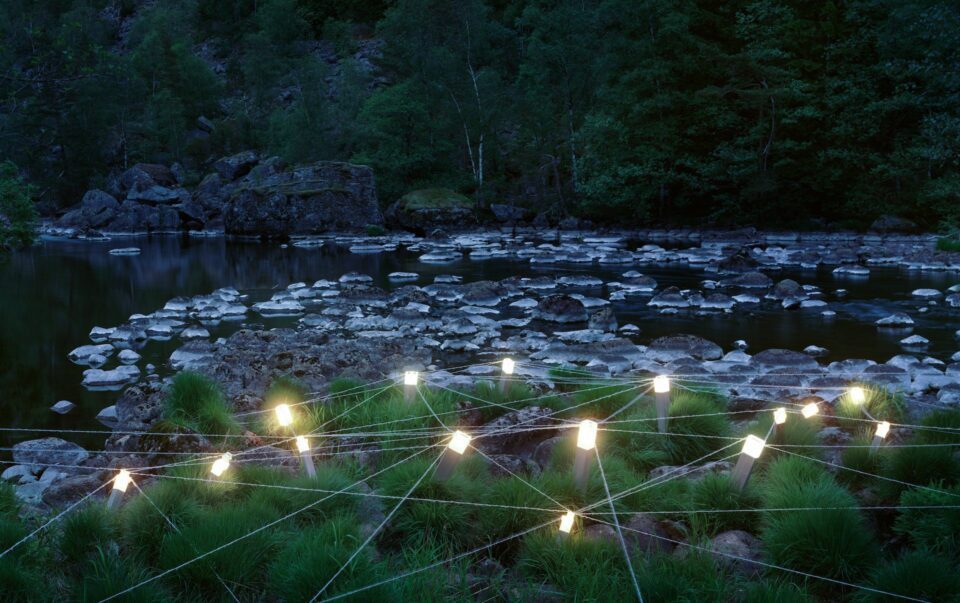
Thomas Wrede’s Mudslide (2020) is one such example. Wrede is known for inserting artificial details into real natural landscapes, creating scenes that tread the line between truth and fiction. This image depicts tiny houses and miniature pine trees – taken from a model train kit – submerged in silt, as if a landslide has just taken place. In today’s world, where extreme weather events are occurring with increasing frequency (there were over 150 in 2025), the scene is an immediate reminder of the climate crisis. Elsewhere in the show is Norwegian artist Rune Guneriussen, who also makes interventions in the organic world. He places objects – often glimmering lamps or piles of books – within lush forests or along sweeping hillsides. The resulting images are imbued with a sense of magic, like something from a fairytale, as glimmering lights emerge from woodlands or dance across beaches. Guneriussen personally stages, photographs and produces the work without a crew, entirely on-site. For him, the process is as important as the outcome.
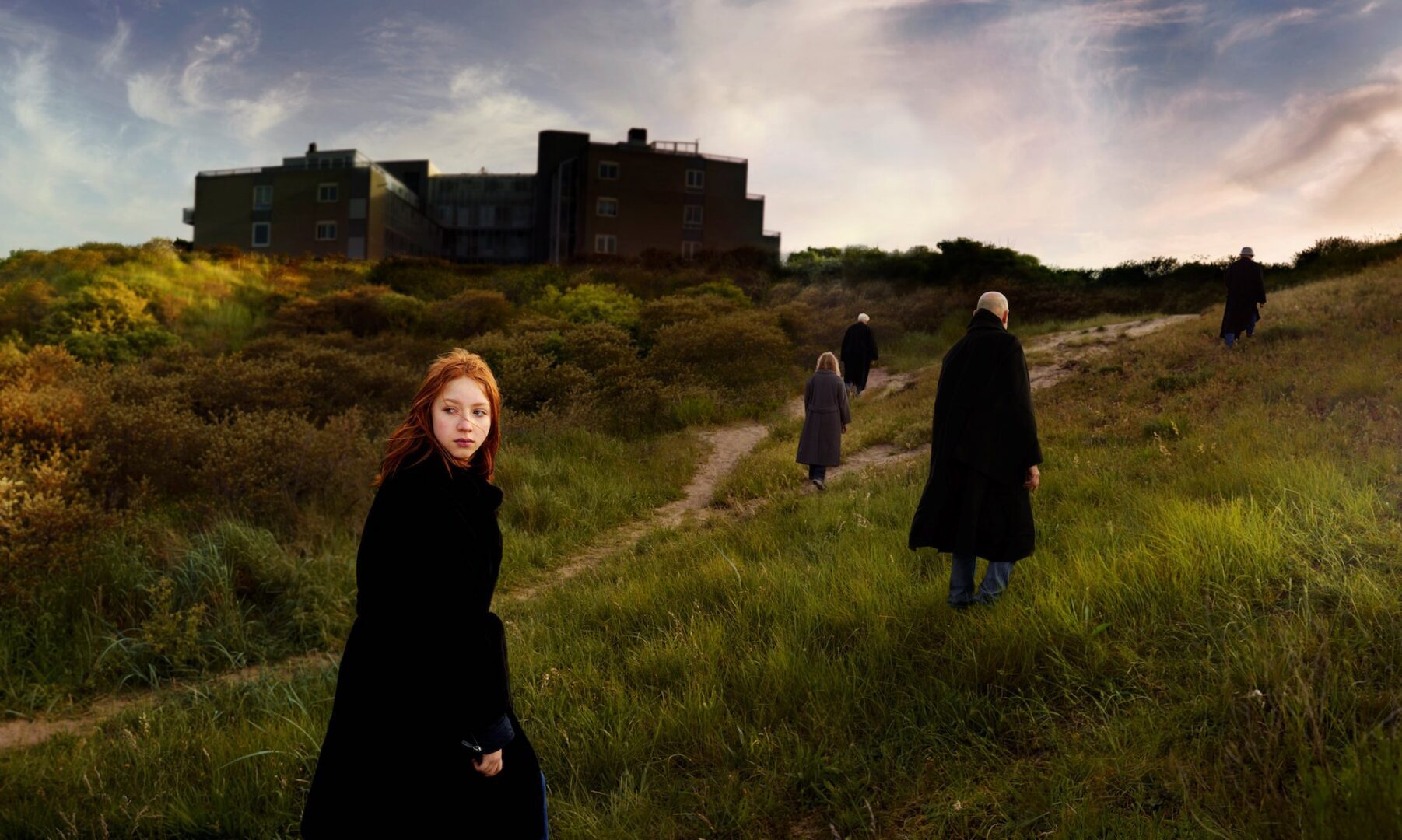
Föhr is surrounded on all sides by the Wadden Sea, the world’s largest unbroken system of intertidal sand and mud flats and a UNESCO World Heritage Site. It’s also the setting for Anja Jensen’s Man by the Sea, which depicts a figure gazing out towards its waters. The cinematic composition asks more questions than it answers: how long has he been there? What is he thinking about? As the sun sets, leaving behind a pale pink glow, audiences are left to fill in the blanks. Narrative is just as important to the work of Ellen Kooi, whose Wijk aan Zee – Casemate (2023) is on display as part of New Perspectives. Five windswept figures, all wearing long coats, ascend a grassy bank towards a building in the distance. One member of the group looks over her shoulder, her auburn hair glinting in the evening light. Again, we are left to decipher the story. The photograph is part of Kooi’s wider, theatrical body of work investigating the relationship between humanity and nature, inspired as much by choreography as by Flemish Old Master painters.
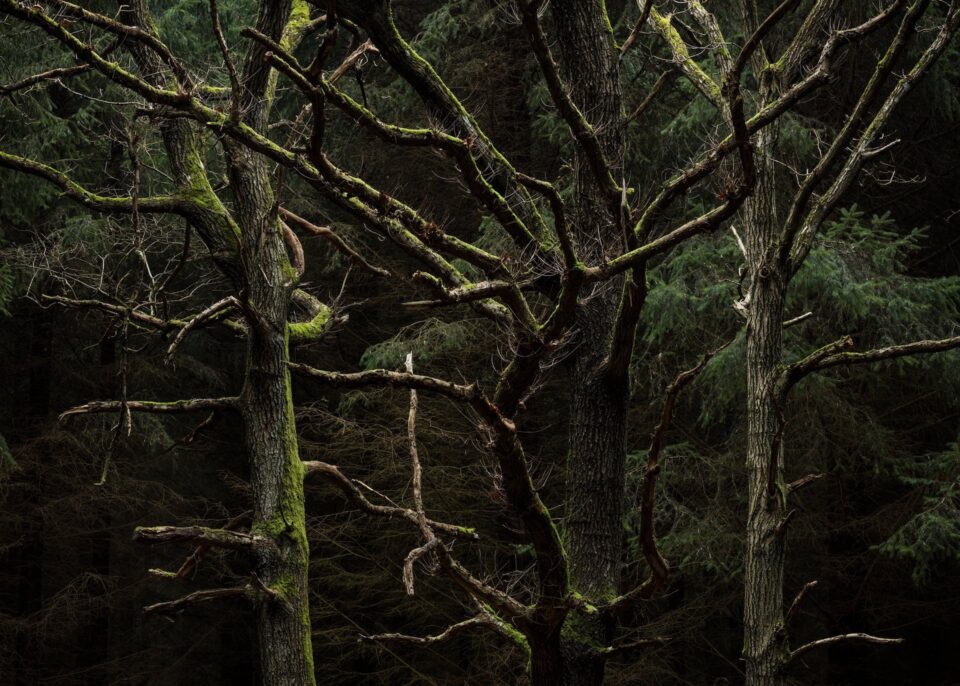
There are further contributions from Andreas Jorns, Joakim Eskildsen, Karoline Hjorth & Riitta Ikonen, Mila Teshaieva, Nicole Ahland, Per Bak Jensen, Peter Hamel, Trine Søndergaard and Yinka Shonibare. Each brings a distinct approach – from Bak Jensen’s enigmatic, moss-laden branches to Hjorth & Ikonen’s collaborative performances with senior citizens and Shonibare’s engagement with postcolonialism, globalisation and Western art history. Together, the works demonstrate the breadth of ways the coast can be understood: as a physical place, a site of worldbuilding and imagination, and a space through which wider questions about humanity and the natural world can be explored. This is certainly fertile ground.
New Perspectives – Contemporary Art from the West Coast Art Collection
Museum Kunst der Westküste, Alkersum, until 12 September 2027.
Words: Eleanor Sutherland
Image Credits:
1. Ellen Kooi, Wijk aan Zee – Casemate, (2023). © Courtesy of the artist / VG Bild-Kunst, Bonn 2026.
2. Rune Guneriussen, Reminiscence of us, (2021). © Museum Kunst der Westküste, Courtesy of the artist.
3. Per Bak Jensen, Memory, (2018). © Museum Kunst der Westküste / VG Bild-Kunst, Bonn 2026.
4. Thomas Wrede, mudslide, (2020). © Museum Kunst der Westküste, VG Bild-Kunst, Bonn 2026.