What happens to a community when its histories become difficult to see? The Jerwood/Photoworks Awards 5 brings together two photographic investigations of disappearance, memory and place at Street Level Photoworks in Glasgow. Roman Manfredi looks to Napoli for traces of queer and gender-expansive histories embedded in family, landscape and local culture, while Sayuri Ichida turns to rural Japan, where depopulation has left schools and the communities around them increasingly empty. Their approaches differ, but both artists treat place as an archive – one capable of holding identities, rituals and relationships long after the structures that sustained them have changed. Rather than recording what remains, their work asks what photography can reveal about what has been obscured, abandoned or lost.
Established in 2015, the Jerwood/Photoworks Awards support UK-based artists within the first ten years of their practice, providing funding, mentoring, production resources and curatorial support to develop ambitious new work. Previous recipients include Joanne Coates, Heather Agyepong, Silvia Rosi, Theo Simpson and Alejandra Carles-Tolra, alongside Sam Laughlin, Lúa Ribeira, Matthew Finn, Joanna Piotrowska and Tereza Zelenková. For the fifth edition, Manfredi and Ichida each received £15,000 – comprising a £10,000 artist fee and £5,000 production budget – alongside a wider programme of support from Photoworks and guest mentors. Awards of this kind matter because they provide something increasingly difficult to secure: time to develop an idea beyond the first compelling image. Their value lies as much in enabling experimentation as in identifying artists at a particular point in their careers.
A similar role can be seen in the Aesthetica Art Prize, which has supported artists whose practices question representation, memory and the conditions in which images are made and encountered. Baff Akoto, a former Main Prize winner, works across still and moving image to explore collective futures and cultural and ecological memory, while Rhea Storr’s films examine Black and mixed-race identities through carnival, culture and representation. Larry Achiampong has developed sustained enquiries into diaspora, belonging and national identity, producing work across film, installation, sound and archival forms. These practices demonstrate how prize structures can create space for artists to move between disciplines, encouraging forms in which photography, film, installation and archival research overlap.
Photography’s institutional infrastructure has expanded alongside this shift. London’s Centre for British Photography opened in January 2023 with exhibition spaces, an archive and library, and a programme spanning historical and contemporary British photography. The Photographers’ Gallery, founded in 1971 as the UK’s first public gallery dedicated to photography, continues to frame the medium through exhibitions, research and the Deutsche Börse Photography Foundation Prize. Dublin offers another indication of photography’s expanding reach: PhotoIreland launched the International Centre for the Image in 2025, bringing its research and exhibition activity into a permanent space intended to broaden engagement with photography and visual culture. Across these institutions, photography increasingly sits alongside questions of history, identity, technology and social change – a shift that mirrors the practices of artists working well beyond the traditional photographic print.
Within this context, the curation of Jerwood/Photoworks Awards 5 feels deliberately open-ended. Manfredi and Ichida are presented as two solo exhibitions within one touring project, allowing their individual concerns to remain distinct while creating a productive conversation between them. The awards’ selection panel included curator and cultural producer Cindy Sissokho, artist and researcher Ingrid Pollard, Photoworks director Louise Fedotov-Clements, photographer Lúa Ribeira, curator Omar Kholeif and broadcaster and author Lucy Ash. Both artists work with expanded photographic forms – still and moving image, sound, collage and installation – yet their shared interest in specific landscapes gives the exhibition a clear underlying tension. Manfredi searches for histories that persist within a place; Ichida considers what happens when the social structures that give a place meaning begin to disappear.
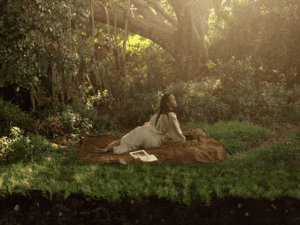
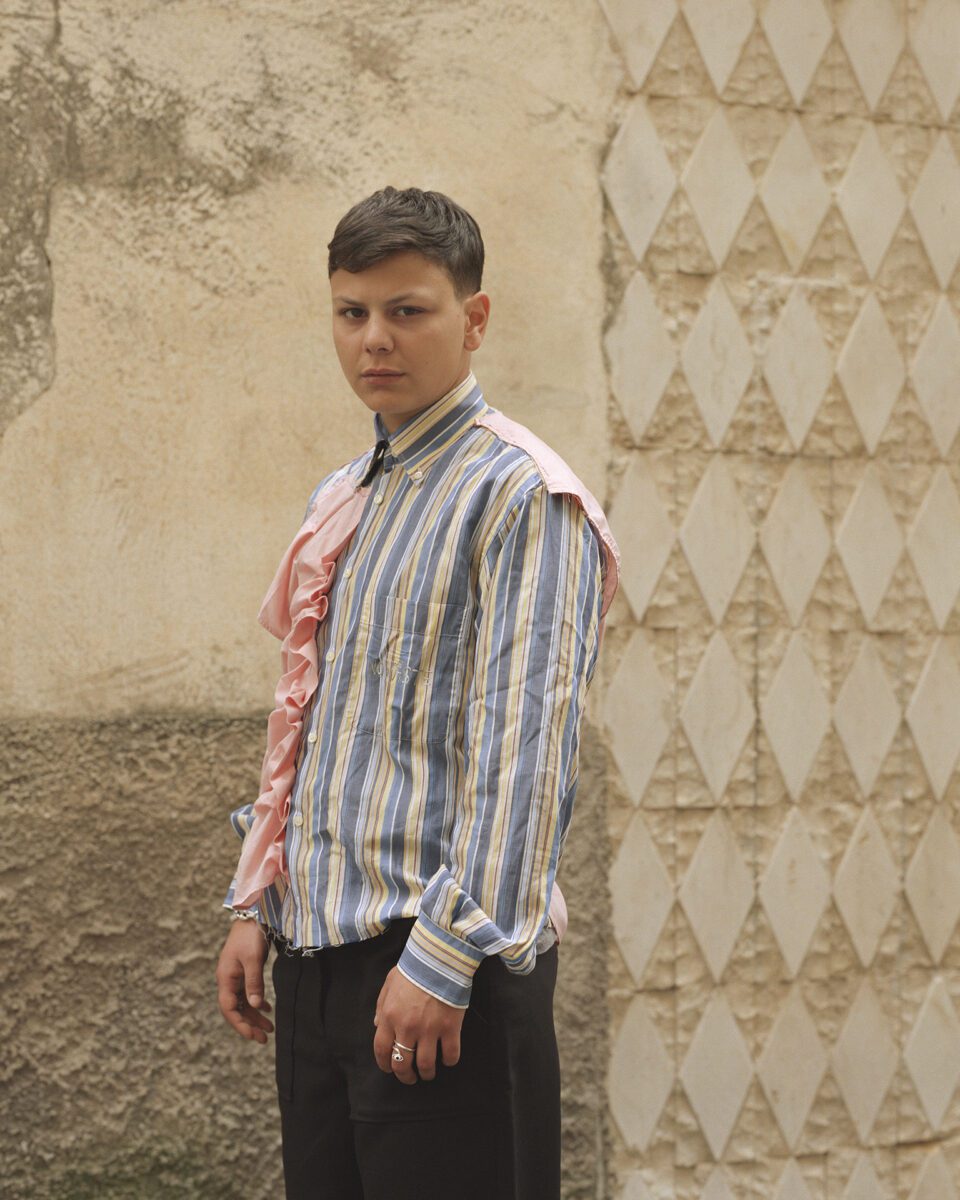
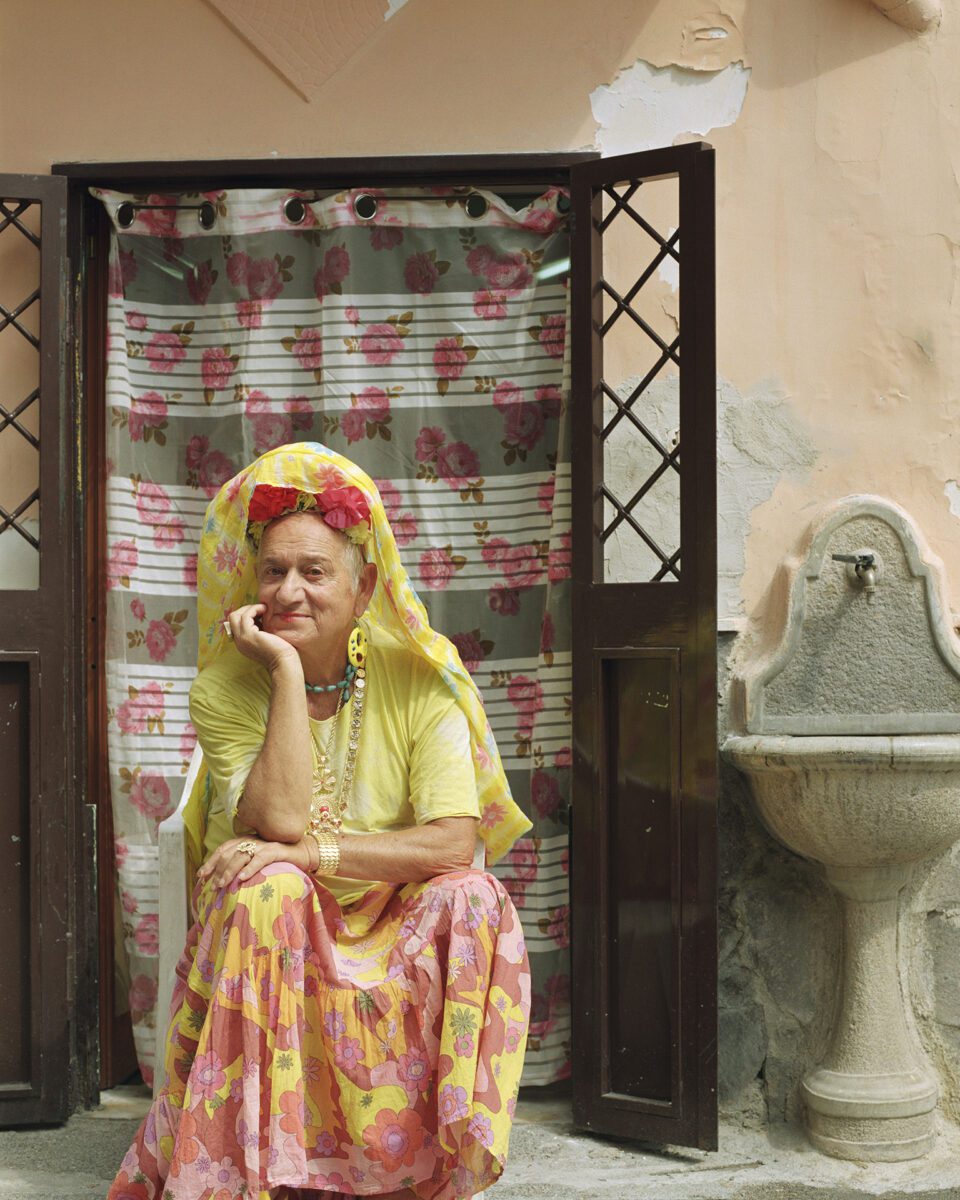
For TRA, the starting point is a family photograph whose ambiguity becomes more important than any definitive interpretation. An archival image of Manfredi’s nonna, which appears to depict the wedding of two women, prompted the artist to wonder whether there might be another queer history within the family, opening a route into wider research around gender and belonging in Napoli. The project draws on the culturally specific figure of the femminiello, a longstanding Neapolitan presence associated with gender variance and situated within the city’s complex intersections of local tradition, Catholicism and older ritual practices. Manfredi’s title, tra – meaning between, among or within – describes not a fixed identity but a space in which categories can overlap and dissolve. The photograph becomes less a piece of evidence than a prompt, allowing uncertainty to generate another way of reading family and cultural history.
Napoli provides the project with a landscape in which different periods seem to coexist. Manfredi combines analogue photography, moving image, portraits, sound and fragments, following connections between people and places rather than constructing a linear historical account. Queer histories are often encountered through incomplete archives – an image, a gesture, a family story or an anecdote whose significance may only become apparent much later. Photography has historically been implicated in systems of classification and visibility, but TRA uses its fragmentary qualities to resist that certainty. Rather than claiming to recover a complete past, Manfredi allows the image to remain open.
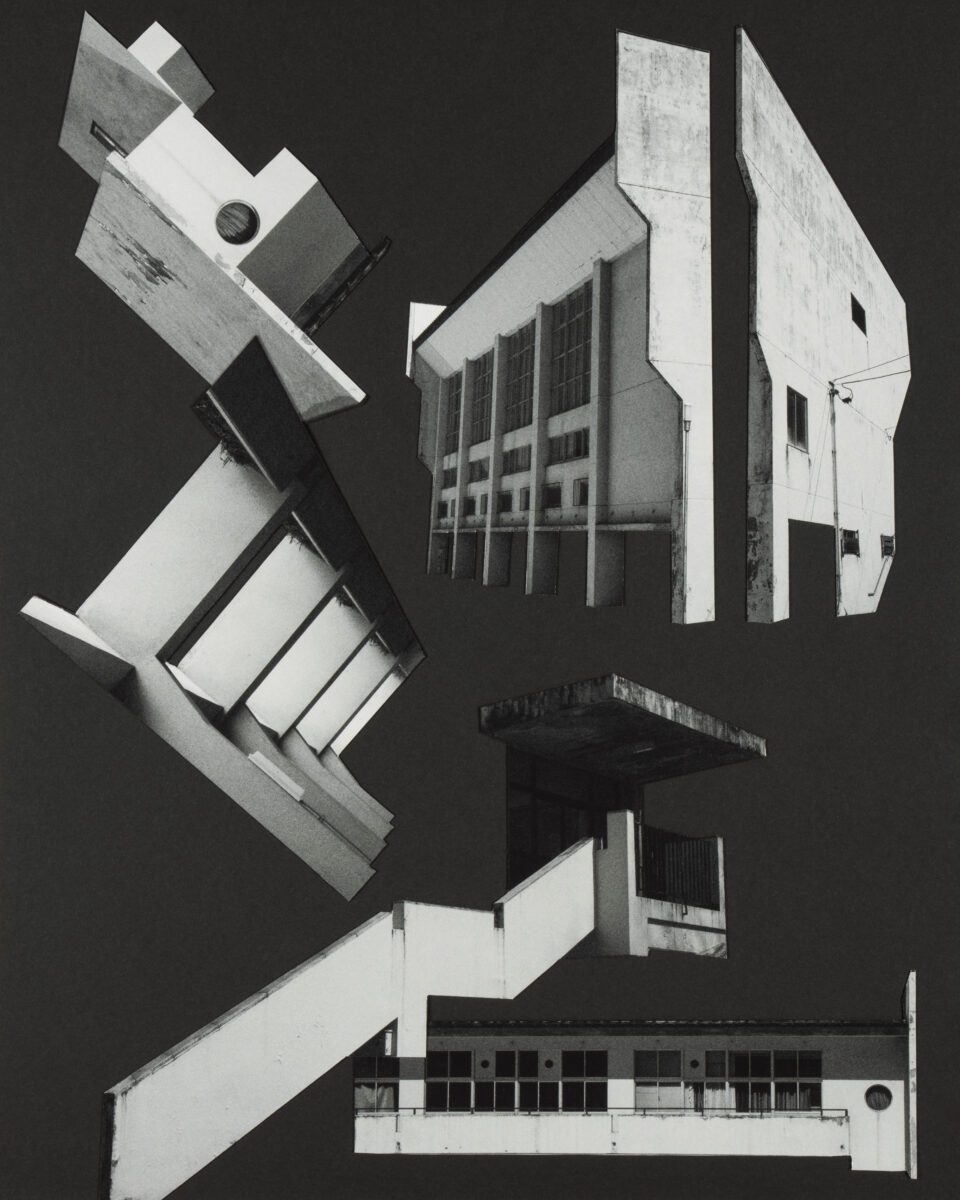
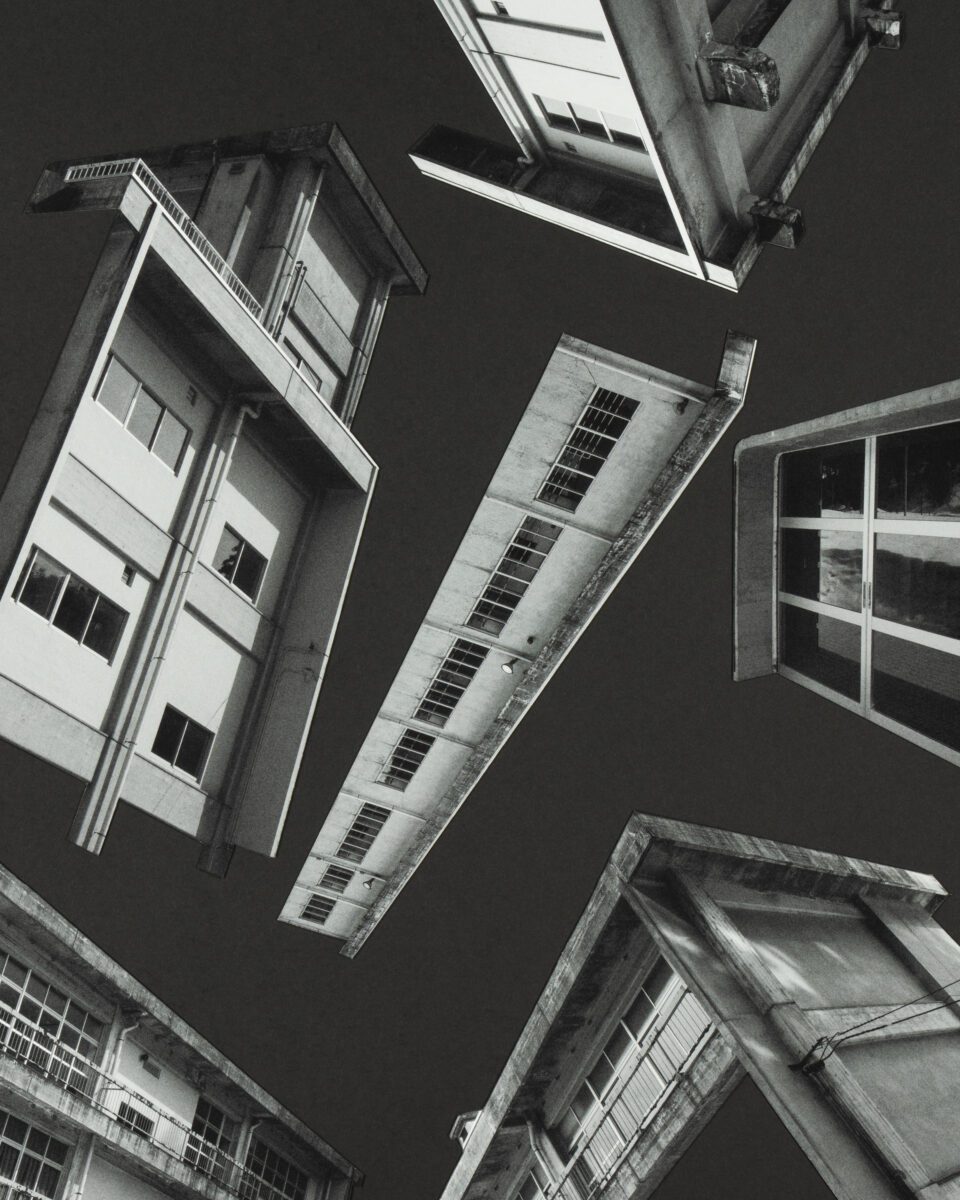
If Manfredi asks what a place might still contain, Ichida begins with what a place has lost. 空席 (Kūseki), meaning “empty seats”, focuses on Japan’s rapid population decline and its effects on rural communities, particularly through the closure of schools that once served as centres of everyday social life. Between 2002 and 2020, nearly 9,000 schools closed in Japan, with around 450 more reportedly shutting each year as birth rates fall and towns contract. Ichida grew up in Niigata Prefecture and documents vacant school buildings there, approaching them not simply as abandoned architecture but as evidence of relationships that once gathered around them. An empty classroom becomes a charged image of demographic change, carrying the traces of pupils, teachers, families and routines that are no longer present.
Photographs of the buildings are hand-cut, fragmented and rearranged before being screen printed onto chalkboards. A surface once used to transmit knowledge now carries images of an institution that has ceased to perform its original function, creating a subtle collision between education and absence. Sound adds another layer, bringing children’s voices and field recordings from a Japanese primary school into the installation alongside children’s drawings made in two UK schools. The combination prevents the work from settling into a straightforward elegy: voices and drawings introduce presence where the photographs register vacancy. Ichida instead builds a space in which memory, geography and imagination overlap, asking what survives when the building itself no longer anchors community life.
Rural depopulation also connects Kūseki to a wider strand of contemporary art concerned with infrastructure and the politics of landscape. The Centre for British Photography has, for example, presented landscape as a site of history, conflict and human intervention through exhibitions including Landscape Trauma, bringing together practices that examine the effects of farming, industry, tourism, war and other forms of human intervention. Such approaches challenge the idea that landscape is neutral scenery, instead treating it as a record of decisions, pressures and lived experience. Ichida’s abandoned schools operate in a similar way, though on an intimate scale: the buildings register demographic change without needing to illustrate it through statistics. Her photographs make visible the social consequences of a shift that might otherwise remain abstract.
Achiampong and Akoto offer useful points of connection here, not because their subjects are interchangeable with Manfredi’s or Ichida’s, but because each demonstrates how image-making can unsettle inherited narratives. Achiampong’s work has repeatedly considered diaspora, belonging and the construction of national histories, while Akoto explores collective futures and the transmission of cultural and ecological memory through still and moving images. Their practices demonstrate how artists can use image-making to question whose histories are preserved and how those histories are transmitted. TRA and Kūseki approach related questions through family memory and local infrastructure, bringing large social histories into focus through particular places.
The touring structure gives those questions another dimension. Following presentations at Drawing Room and Tannery Arts in London, Barnsley Civic and Ffotogallery in Cardiff, the exhibition reaches Street Level Photoworks in Glasgow as part of Scotland’s 2026 Season of Photography. Its movement between regions mirrors the way both projects connect a particular location to broader questions of belonging, change and memory. Neither artist presents Napoli or Niigata as an isolated case study; each place becomes a lens through which other landscapes can be considered. Photography’s strength here is not simply its capacity to preserve a view, but its ability to make relationships between people and places visible.
Manfredi and Ichida ultimately approach disappearance from opposite directions. One searches an uncertain family photograph and the streets of Napoli for histories that may have gone unrecorded; the other returns to abandoned schools to consider the social life that once surrounded them. Neither attempts to restore what has gone, or to suggest that an image can preserve a community intact. Instead, both artists use photography to stay with the gaps – between past and present, presence and absence, individual memory and collective history. In doing so, TRA and Kūseki make a case for photography not as a means of stopping time, but as a way of examining what remains when time has moved on.
Jerwood/Photoworks Awards 5 – Roman Manfredi and Sayuri Ichida is at Street Level Photoworks, Glasgow until 20 December
Words: Simon Cartwright
Image Credits:
1&5. 006 空席 (Kūseki) © Sayuri Ichida created for the JerwoodPhotoworks Awards.
2. Leila, Sarno, from the project TRA © Roman Manfredi, created for the JerwoodPhotoworks Awards.
3. 003 空席 (Kūseki) © Sayuri Ichida created for the JerwoodPhotoworks Awards.
4. CiroCiretta, Torre Annunziata, from the project TRA © Roman Manfredi, created for the JerwoodPhotoworks Awards.