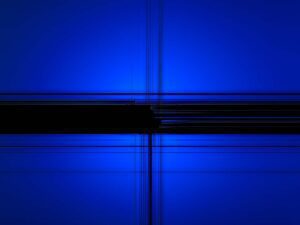
The word “glitch” is thought to come from glitsh, Yiddish for “slippery place”, and from glitshn, meaning “to slide, or glide.” In the 1940s, radio broadcasters were using the term to refer to on-air blunders. Ten years later, it became part of the language of TV engineering. Today, in the digital age, it’s commonly employed in reference to computer faults and video game errors. Here, we explore five contemporary artists, previously featured in print editions of Aesthetica Magazine, who embrace and manipulate the beauty of digital and physical error. Their work explores the limitations of equipment used to create media and tests the boundaries of how software can edit and warp natural landscapes.
Tommy Goguely
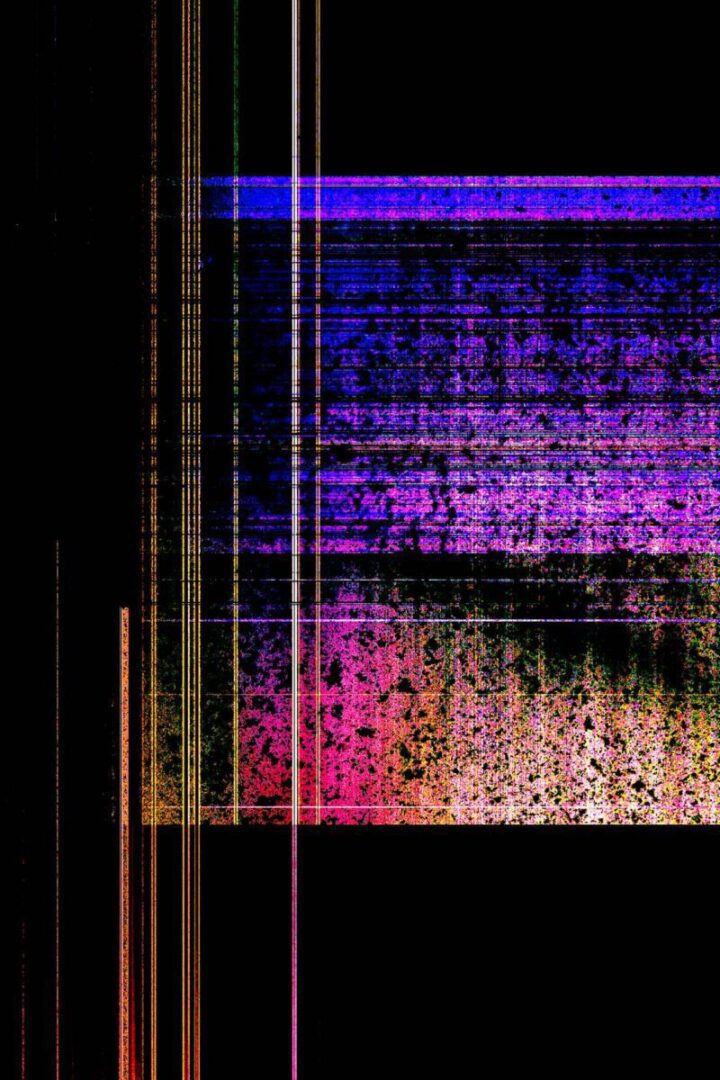
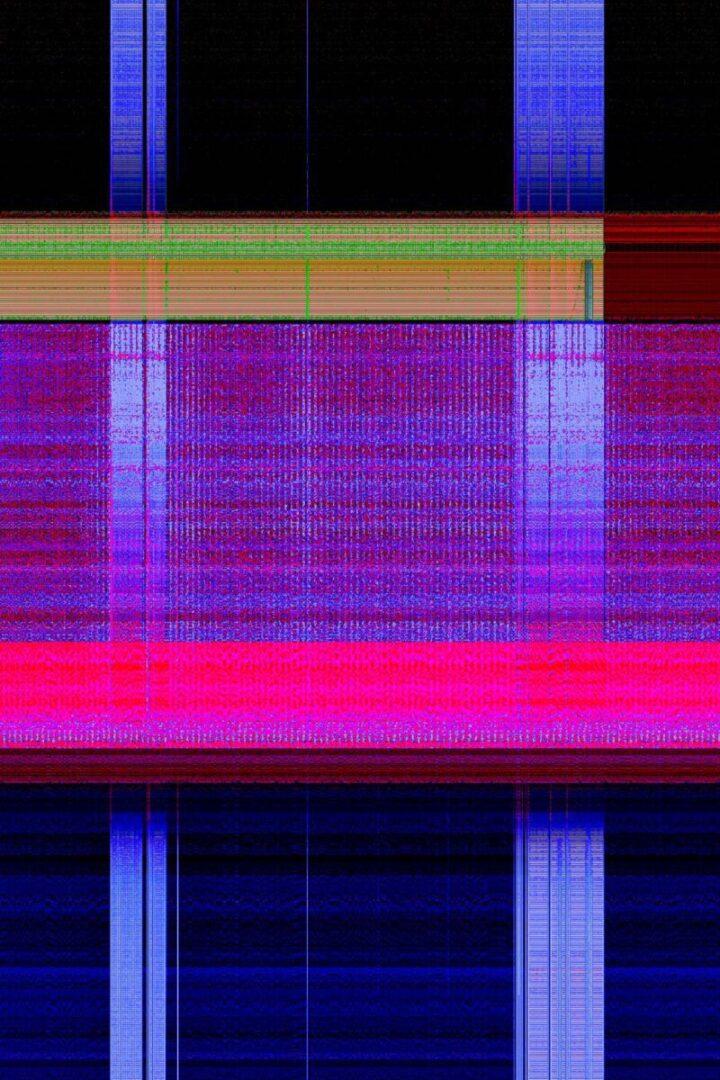
Interested in the cultural shift of how media becomes visible via malfunctions or disturbances, photographer Tommy Goguely (b. 1984) highlights the materiality of digital photography. The artist deliberately damages digital cameras by scratching, drilling and altering the photosensitive surface. The images taken with these cameras record their own degradation rather than the external world. Colours smear and glitch across the frame, or dissolve into speckles and “noise”.
tommygoguely.com | @tommygoguley
Naill Staines
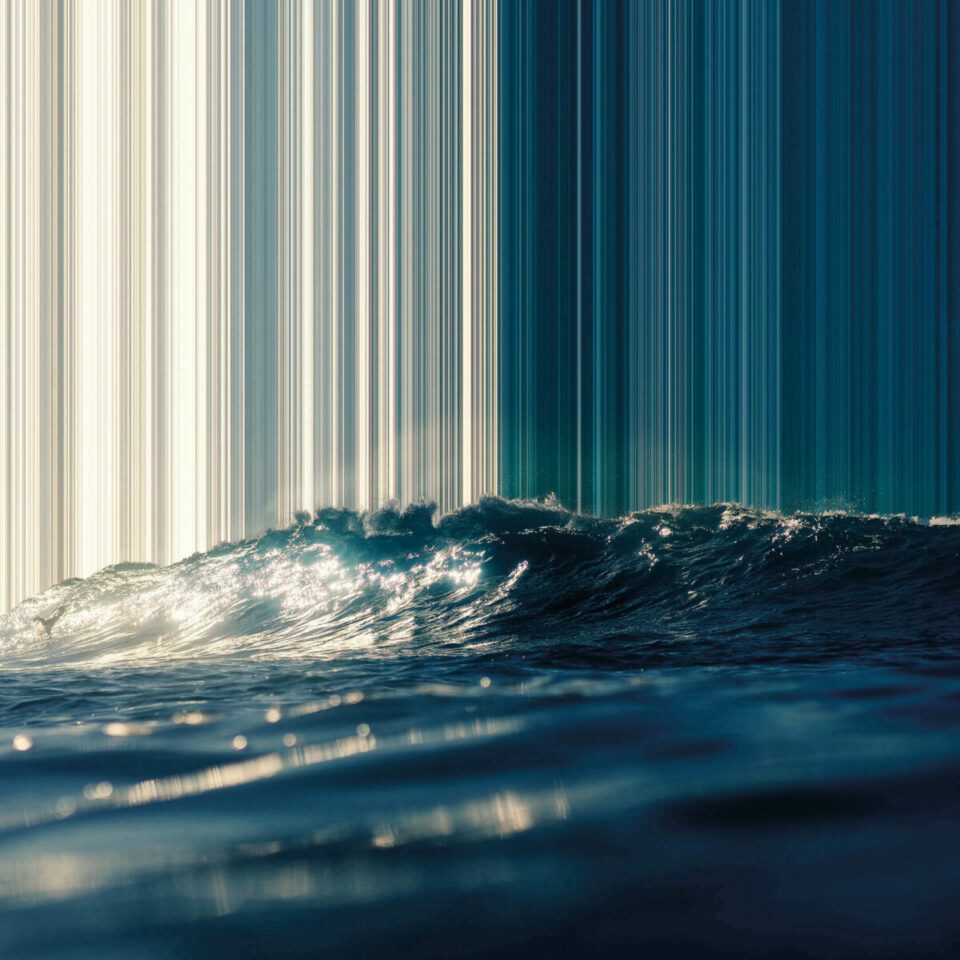
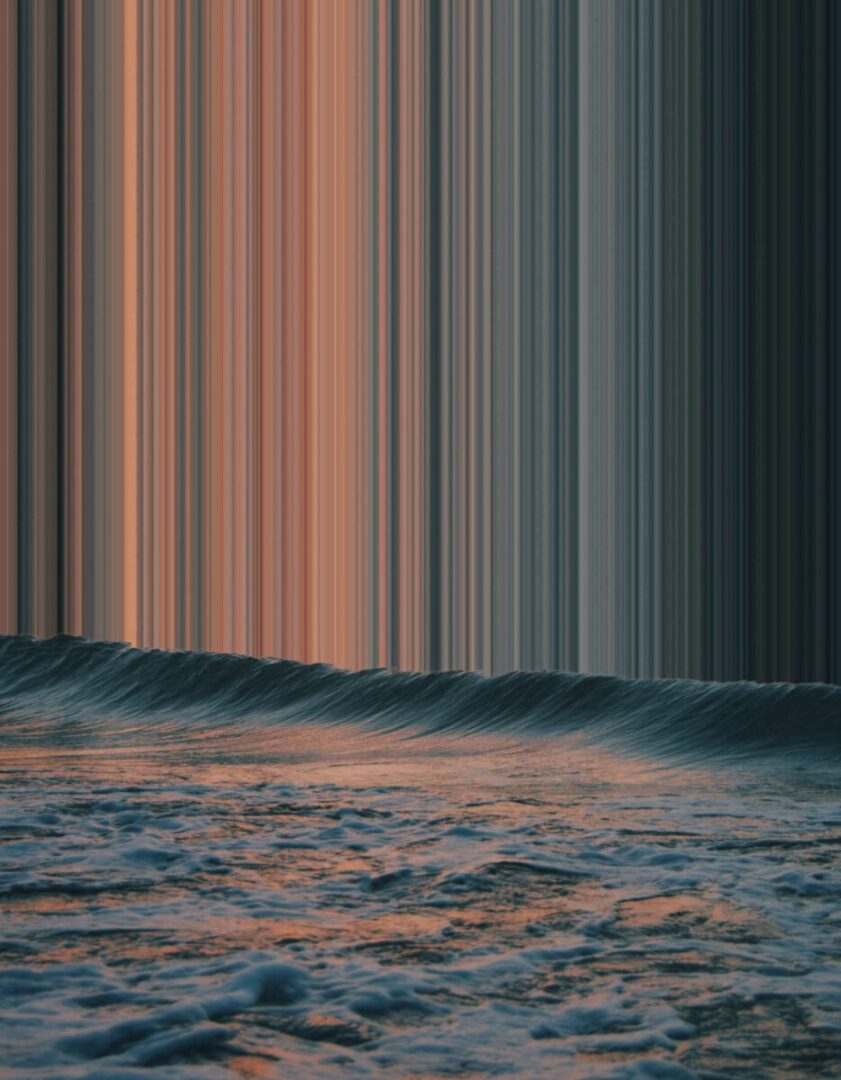
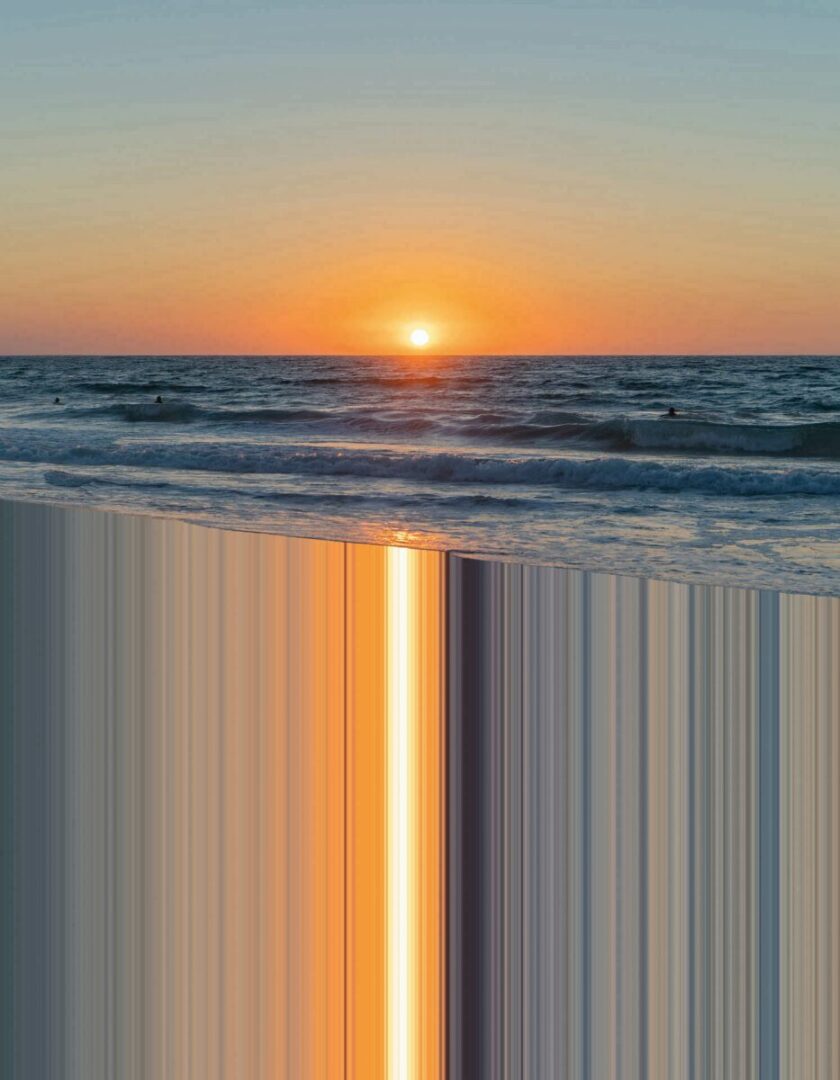
Ireland-based Niall Staines (b. 1985) is an art director and digital creative turning serene coastlines into glitch-like scenes. Colours are smeared upwards; vertical stripes are dragged and pulled from natural panoramas. Crashing waves make way for bold lines of white and blue. Valleys transform into skies of kaleidoscopic green, pink and purple. Trees stretch infinitely skyward. The works make order out of chaos, gathering key information from organic landscapes and flattening them down to two dimensions.
Michel Lamoller
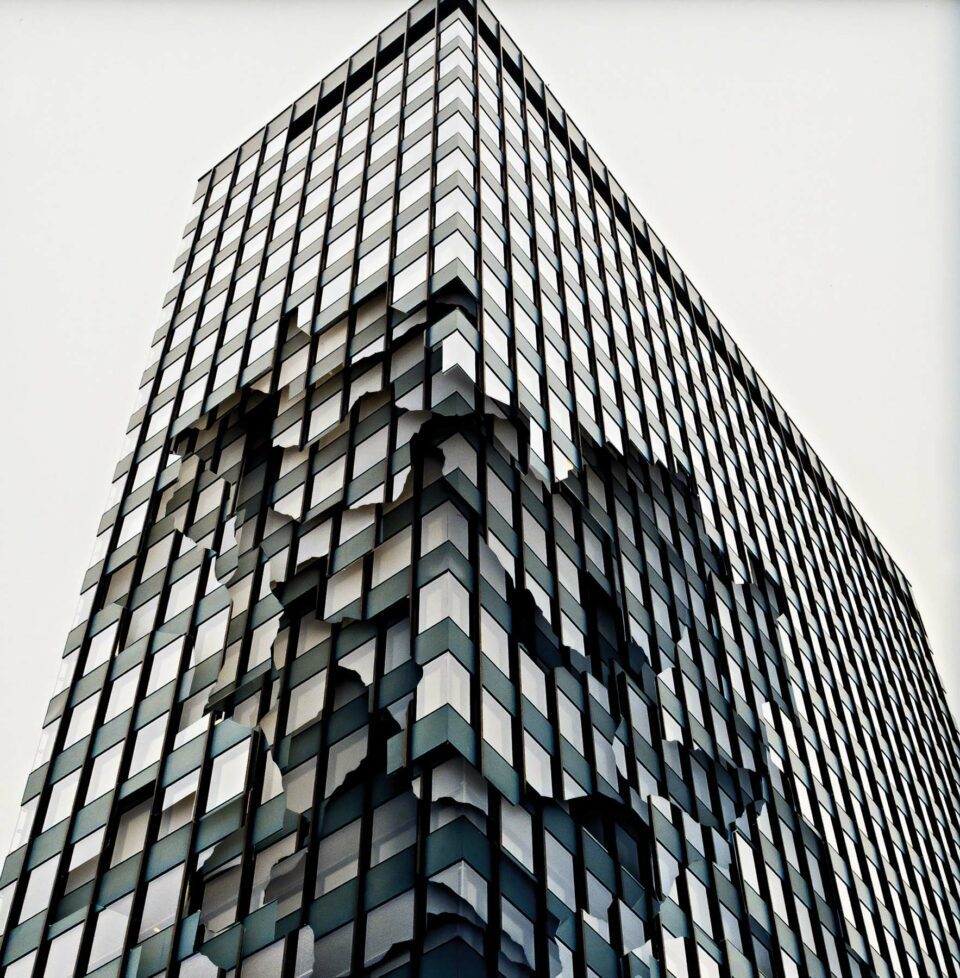
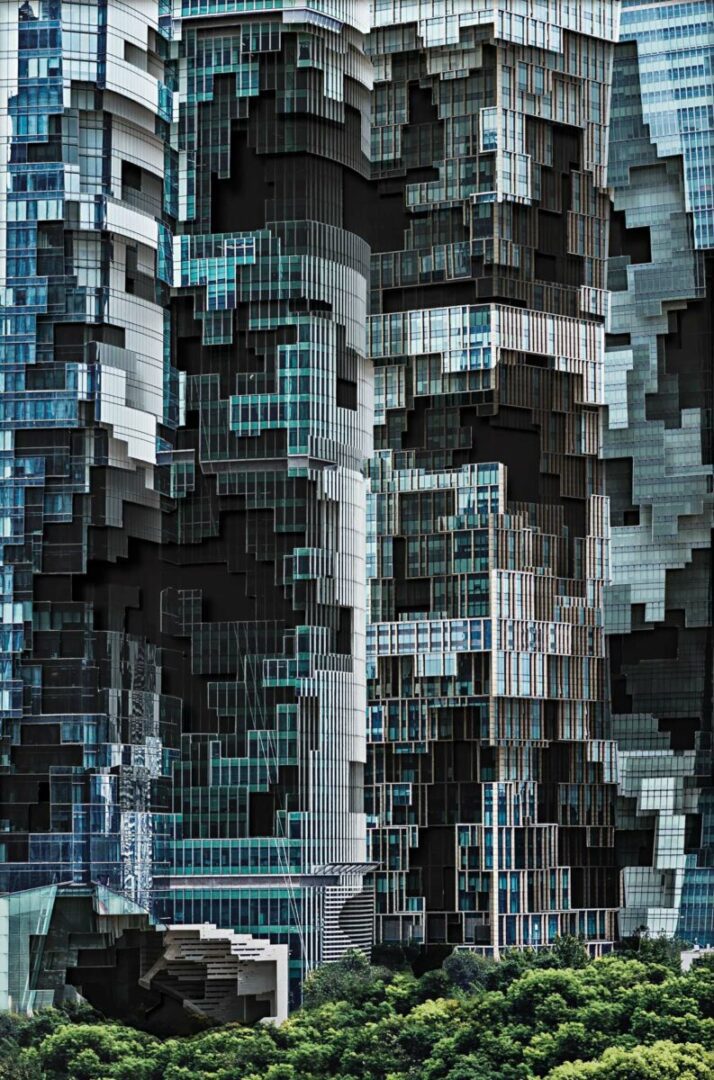
In Michel Lamoller’s (b. 1984) photographic reliefs, various prints are layered on top of one another in ways that mimic our increasingly stacked and urbanised behaviour – each composition representing a new, hyperreal existence in both form and structure. Through the acts of cutting and pasting – and further exaggerating the labyrinthine qualities of megacities – he explores what it means to exist in radically mechanised landscapes, whilst questioning the ultimate reality presented by images today.
theravestijngallery.com | @michel.lamoller
Ellen Jantzen
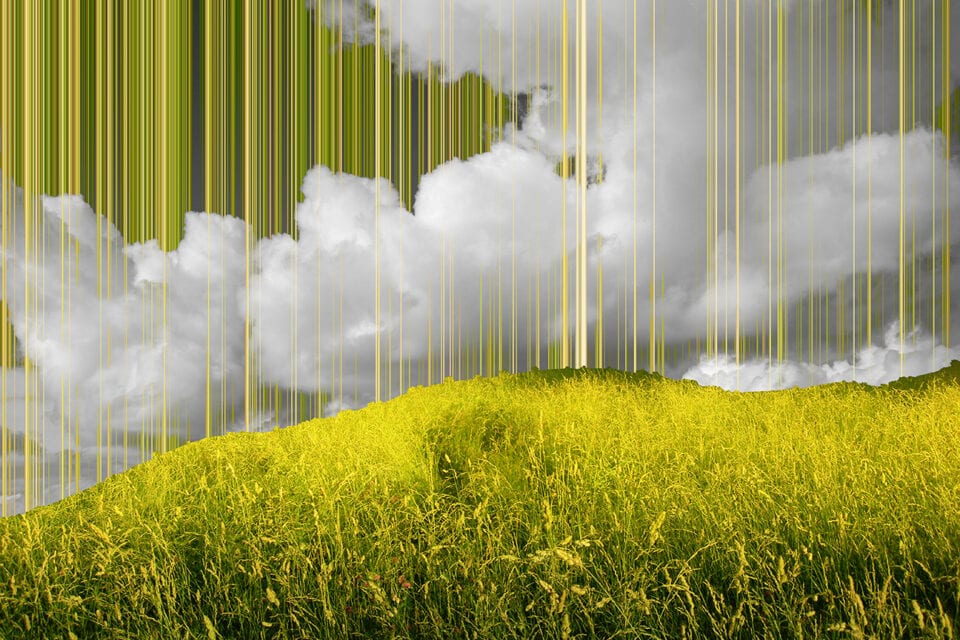
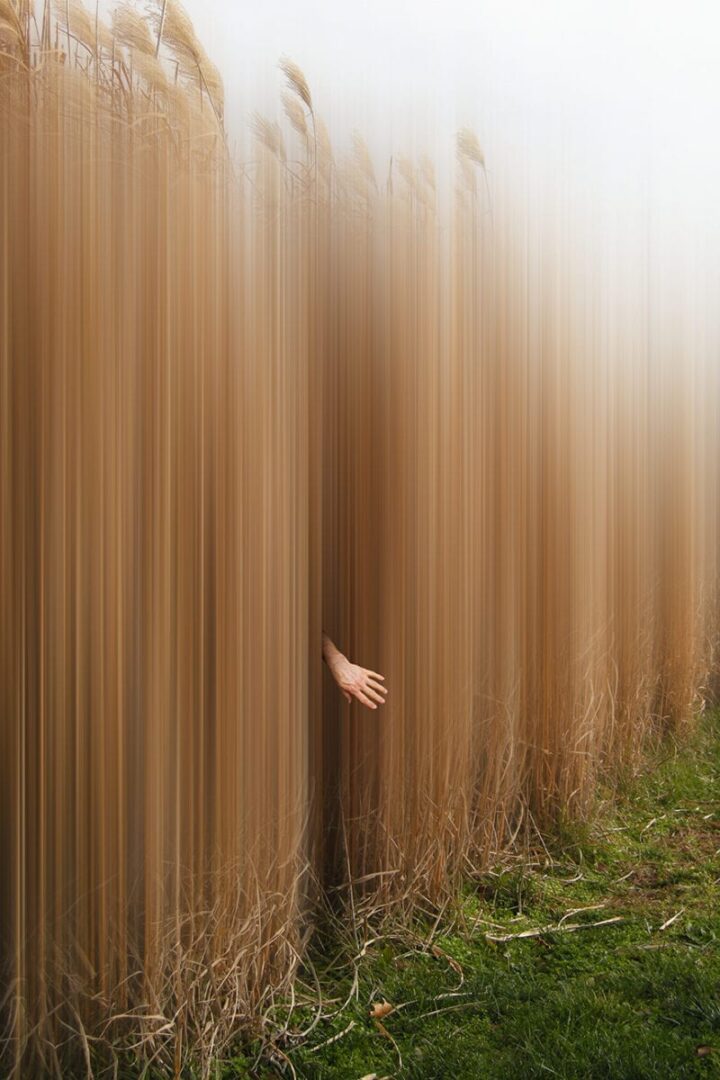
The rise of digital cameras has meant that we no longer store photographs as pockets of light and darkness, but as strings of numbers, able to be edited instantly. Ellen Jantzen (b. 1946) draws attention to the editing processes that define much of today’s media – stretching, cutting and pasting samples from the organic world. Jantzen is interested in states of reality, attempting to make visual the ephemeral nature of sacred, spiritual realms by transplanting replica trees into the natural world.
ellenjantzen.com | @ellenjantzen
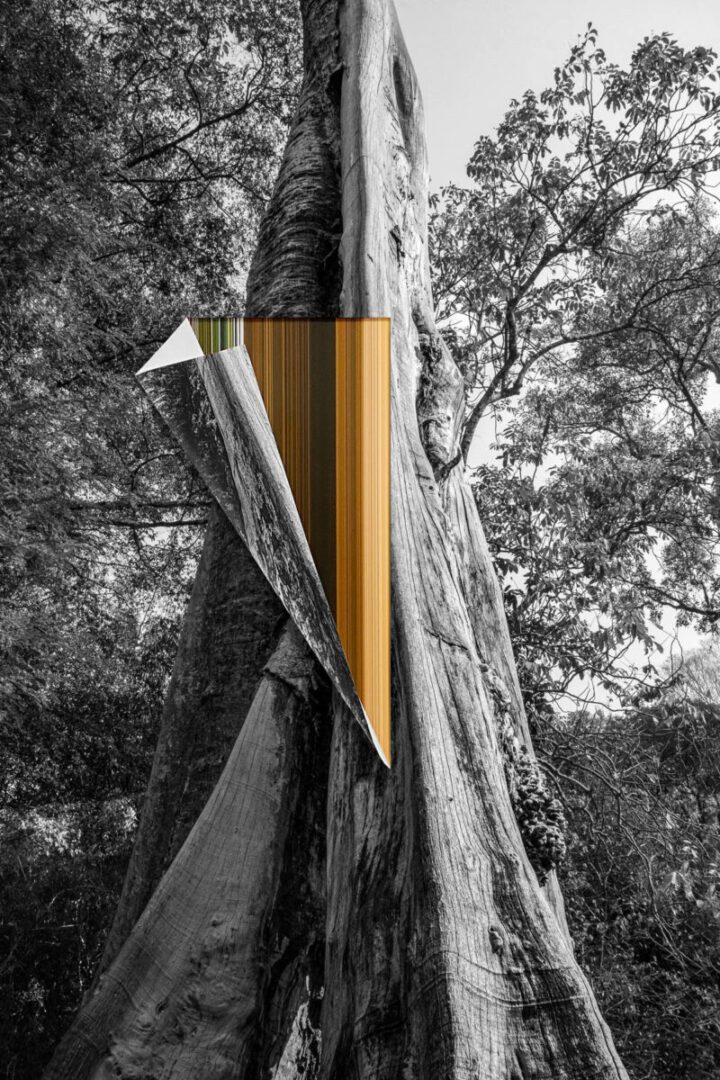
Andrea Alkalay
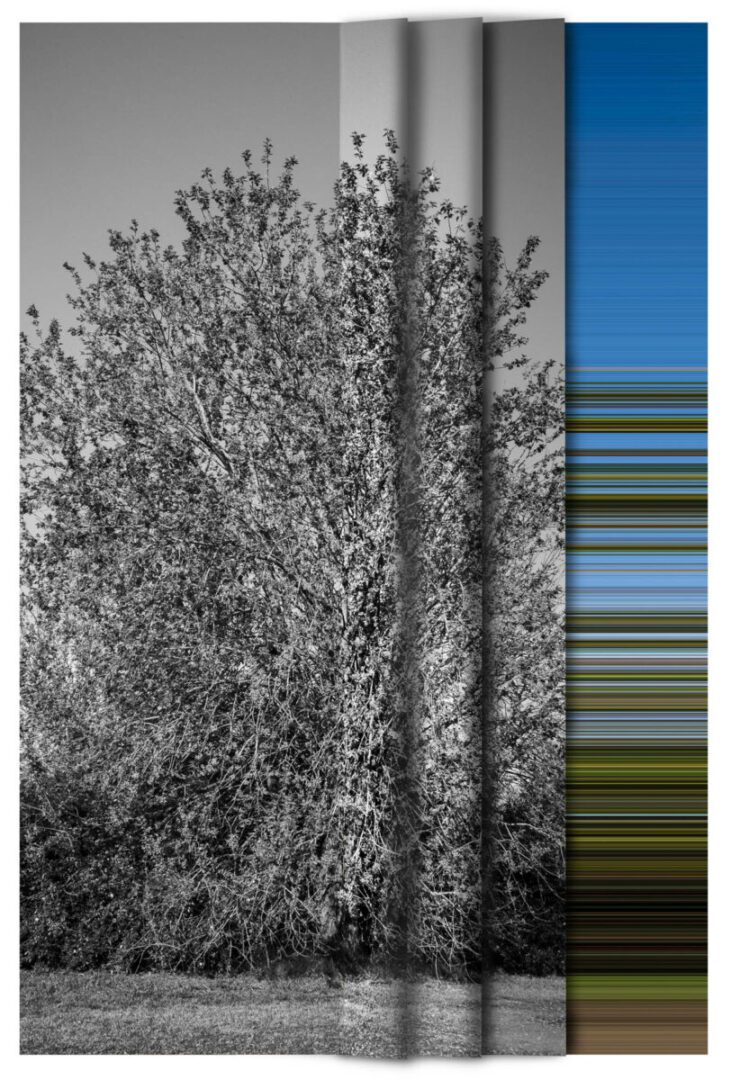
Andrea Alkalay’s Landscape on Landscape series (2020-2021) explores the “regimes of representation” – considering the visual information we are presented, and the manifold ways it is interpreted, as our relationship to the “real” world continues to become distorted. Beneath the folds of dramatic vistas, layers of digitised colour are stretched across the frame like barcodes. This intuitive process examines the poetic and political potential that arises from observation – as images become a complication of truth.
andrealkalay.com | @andrealkalay
Subscribe to Aesthetica & Save 50% in September | Click Here to Shop All Issues.
Words: Sophie Bullivant
Image Credits:
1. Niall Staines, Glisten. Image courtesy of the artist.
2. Tommy Goguely, from Digigrams (2023-Present). Image courtesy of the artist.
3. Tommy Goguely, from Digigrams (2023-Present). Image courtesy of the artist.
4. Niall Staines, Accordion. Image courtesy of the artist.
5. Niall Staines, Sunset. Image courtesy of the artist.
6. Michel Lamoller, Anthropogenic Mass 2 (2021). 7 layers of Archival Inkjet Print: 60cm x 40 cm x 10 cm. Courtesy of the artist.
7. Michel Lamoller, Layerscape (passive ingression) (2020). C-Prints: 20cm x 30cm x 8cm. Courtesy of the artist.
8. Image courtesy Ellen Jantzen.
9. Image courtesy Ellen Jantzen.
10. Andrea Alkalay, Landscape on Landscape. Courtesy of the artist.
11. Andrea Alkalay, Landscape on Landscape. Courtesy of the artist.