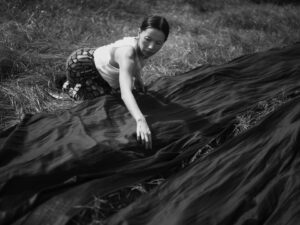
Melbourne-based South Sudanese artist Atong Atem uses her body as a canvas, adorned with textiles, paint and symbolic objects. Her work explores inherited traditions and ancestral memories, societal norms around gender and race, and both emotional physical scars. Her images are richly layered and vibrant, connecting beauty and design with lineage of African studio photography, feminist aesthetics and diasporic narratives. National Gallery of Victoria presents Atem’s first major solo exhibition in Australia, presenting new and existing works that reveal her to be a leading f of her generation. The display tells a story of a culture that persists amid displacement, war and colonialism. We caught up with the artist ahead of the show’s opening to discuss what it means to look back at her impressive career.
A: Take us back to the start. How did you begin working as an artist?
AA: I have always loved making art and responding to my world through creating artworks. As a kid I drew a lot and wrote tons of handwritten novels, all with illustrated covers and author photos. I initially wanted to be a writer like my father, but over time my interest in visual language took over. I went to art school after being an architecture school dropout and everything eventuated from there.
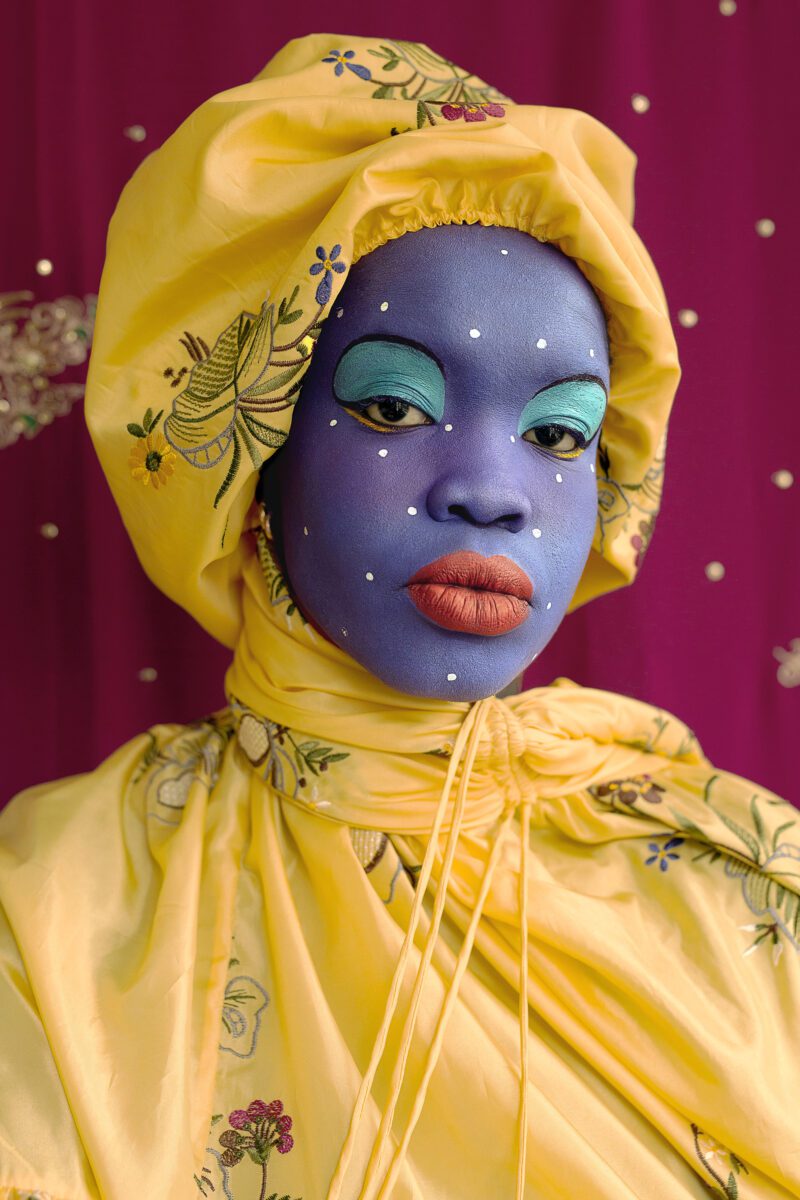
A: How do you see photography as a tool for celebration and reclamation?
AA: Photography has one of the most fascinating histories of any of the mediums I use. It’s not ancient but it feels like it is and it’s so pervasive that it’s hard to imagine a time without it. I became interested in the camera as a weapon in writing histories and creating hierarchies. In the past, power structures were cultivated and weaponised and photography was very powerful in normalising these fictions. The moments when the subjugated take control of their own stories and yield the weapons used to oppress them are always the most powerful. That was what drew me to photography and its complex past; looking at studio photography in the African context as a significant moment of subversion.
A: How has your own experience of migration shaped your practice?
AA: I’m still figuring it out. I think migration was an integral part of my early self identification and therefore my relationship to the world around me but I’m now sort of scattered in my identity. More than my experience as a displaced person who migrated, I’m now interested in what it means to make a home in a country like Australia, asking questions about whose permission granted me safety here and at whose expense. I’m also fascinated by what my identity means to my children, who have their own beautifully multi-faceted characters. I’m beginning to find a sense of truth in the fluidity of identities; I introduce myself in a different way depending on where I am and that’s something that I find really intriguing.
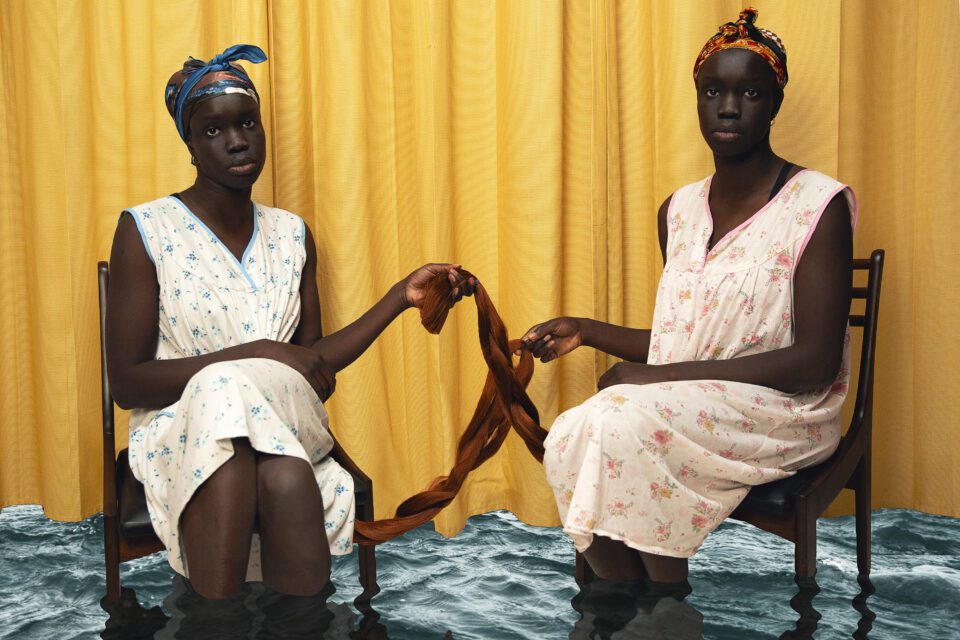
A: You use your own body as a vessel to explore themes of race, gender and colonialism. What does being both subject and storyteller allow you to explore?
AA: At this point in my career, I don’t think about these ideas overtly. It’s kind of an instinctive thing, but it also feels somewhat natural. I enjoy it and that’s the best part of being the subject of my own work.
A: Your work brings together personal memory, family history and cultural inheritance. How do you decide what to preserve and what to reimagine?
AA: I’m not sure if I do decide, or consciously at least. There’s so much intuitive thinking with the works. I give myself a lot of grace when it comes to the emotionality of my art making. It’s very personal sometimes, and I’m a very, very emotional person so art making can never really be routine for me. I think being a bit metaphysical about everything I do is a luxury and I find that it helps a lot.
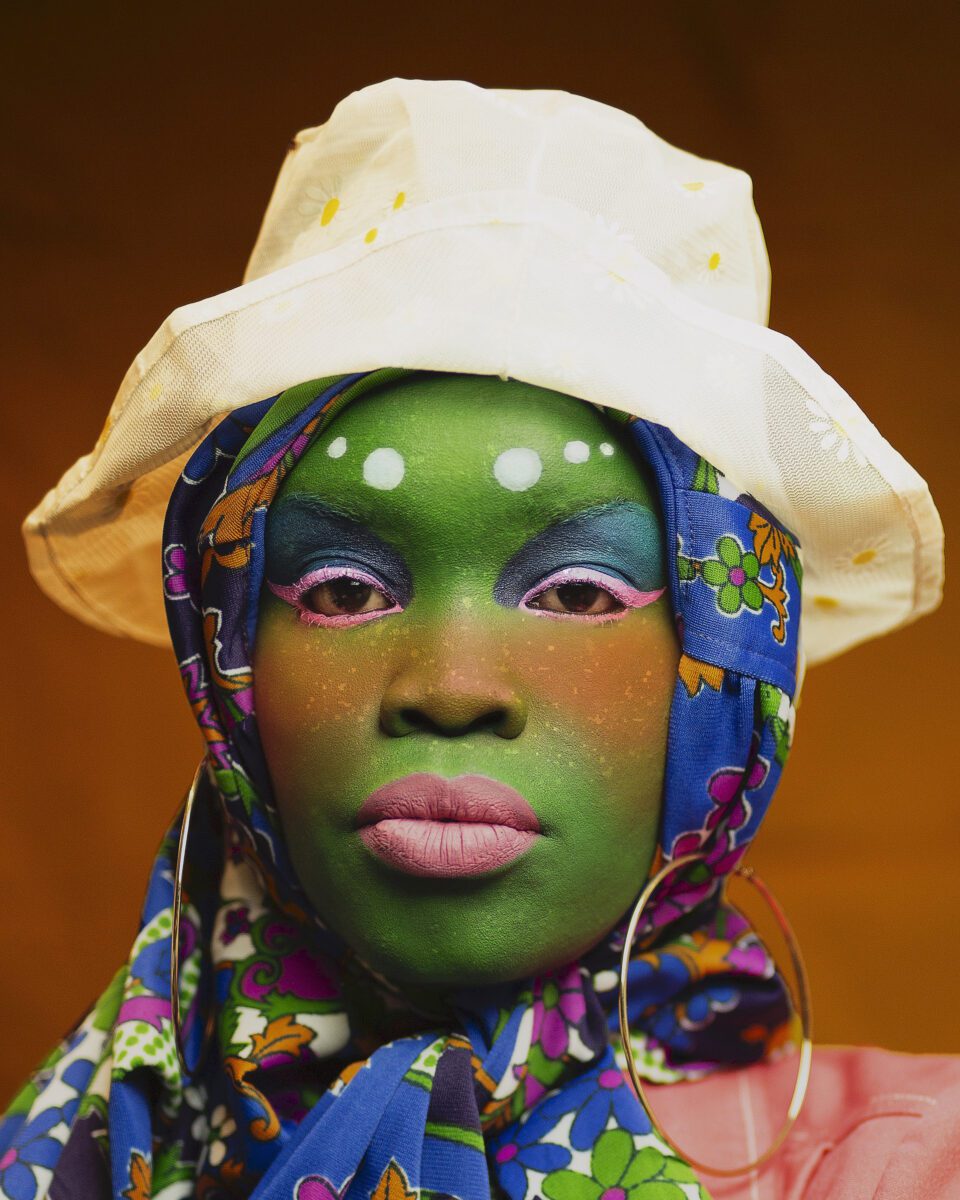
A: Passage is the largest survey of your work to date. How do you feel ahead of its opening?
AA: I’m nervous but very excited. I’ve been able to engage with people from the South Sudanese community and I’m most excited for people to see and celebrate our community.
A: What was it like to look back at the last decade of your career? Was there anything that stood out as a particular highlight or defining moment?
AA: It has to be deciding to have two young babies as my career started to stabilise. I must love drama.
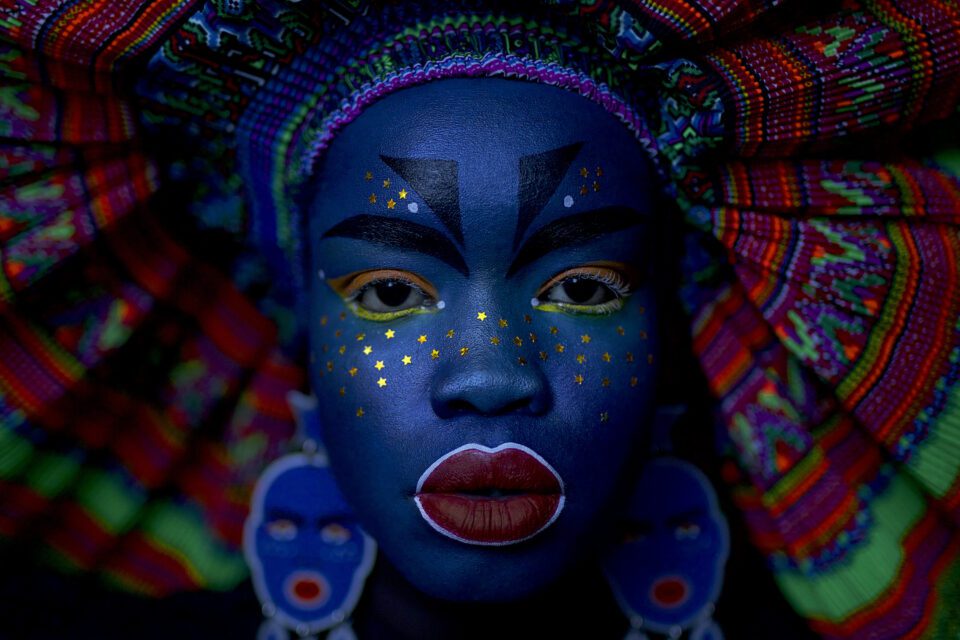
A: In Banksia, you prompt audiences to reconsider the foundations of Australian identity. What do you think Australian audiences still need to reckon with?
AA: There isn’t much that I can say that hasn’t been said before. At its core, I think this country I call home is still struggling to accept that it is presently colonised. Many places are not post-colonial but rather successful colonies – in that they were colonised so successfully that they cease to be broadly considered as such – or colonial apologists. I think Australia is one of those places.
A: What can you tell us about As Above, the new installation created for the exhibition at NGV?
AA: It is is a large scale photographic work that was commissioned specifically for the survey exhibition. Its genesis was somewhere between thinking about astronomy/ology in my Tarot series, and mythology as a constant theme in my practice. It was also inspired by the idea of film; still frames in a sequence to make a moving image. I wanted to make a work that was about movement and stillness simultaneously. The endless starfield of the Southern Hemisphere as a backdrop for a body, obscured by beads, in the process of dance or death or fear. In making the work, I captured myself wearing an approximation of traditional Dinka beading and dancing our customary dance called Loor. This work synthesises so many elements of my practice and I think it’s a bit of a pivot into the interests I’m looking to explore into the future.
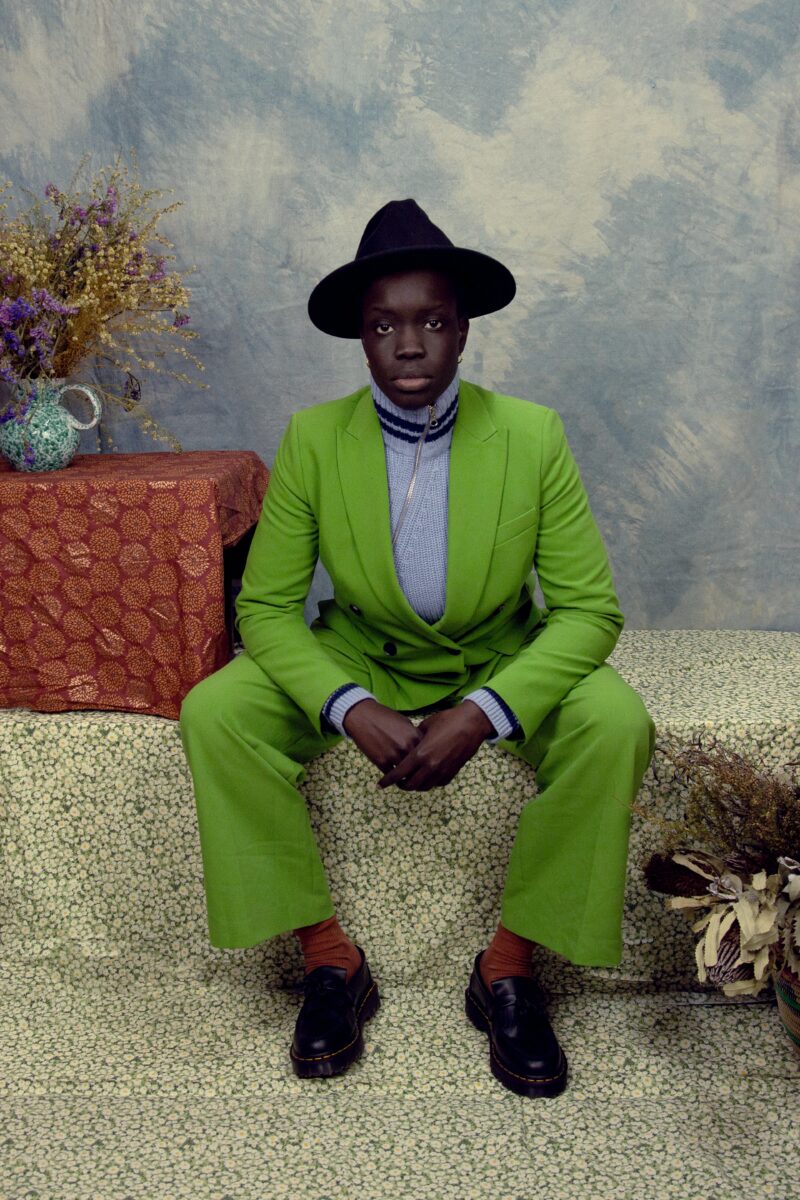
A: After 10 years of making, what about the themes of identity, belonging and home do you still feel like you want to explore?
AA: I still want to explore it all! I think my work heaves and breathes like an organism. There are minute and massive interests in flux. I can’t say exactly where I’m heading but as long as I am a person in a world with other people, I will always be interested in exploring the human condition through my own lens.
Passage: The Art of Atong Atem is at NGV, Melbourne from 30 October: ngv.vic.gov.au
Words: Emma Jacob & Atong Atem
Image Credits:
1&6. Atong Atem, Men in this town 052024, from the Men In This Town series 2024. Courtesy of the artist © Atong Atem.
2. Atong Atem, A yellow dress, a bouquet 32022, from the A Yellow Dress, A Bouquet series 2022. Art Gallery of New South Wales, La Prairie Art Award 2022 © Atong Atem.
3. Atong Atem, What we are given 2024. Commissioned by the National Maritime Museum, Amsterdam.
4. Atong Atem, Red dust sticks to you 2022. National Gallery of Victoria, Melbourne. Purchased, Victoria Foundation for Living Australian Artists, 2022© Atong Atem.
5. Atong Atem Ego 2 2019, from the Ego series 2019. Courtesy of the artist © Atong Atem.