

“Displacement” has become a defining word of our times. According to the UN Refugee Agency, at the end of 2025, at least 117.8 million people were forced from their homes. That’s 1 in every 70 people on Earth. These figures are difficult to comprehend, but they represent individual experiences of conflict, human rights violations, persecution and violence. It is against this backdrop that the 10th edition of Landskrona Foto Festival emerges. Displacement is its overarching theme, bringing together artists from different parts of the world to approach these issues from multiple perspectives. This September, several exhibitions will unfold across the Swedish town, occupying public spaces, institutions and historically significant sites such as Landskrona Citadel, a former fortress marked by histories of refuge and confinement.
One of the most direct explorations of this theme comes from Dialect by Felipe Romero Beltrán (b. 1992). The Colombian artist, based in Paris, produces long-term projects rooted in social issues. This exhibition is no exception, documenting the daily lives of a group of young Moroccan men who have made a perilous journey across the Strait of Gibraltar into Spain. Romero Beltrán followed their experiences in Seville for three years, whilst their legal situation was reviewed. In these images, they find themselves in a state of limbo and uncertainty, waiting to obtain citizenship whilst estranged from their home country. Their real-life stories form a dialogue with Agnès Geoffray and Vanessa Desclaux’s They Stray, They Persist, They Thunder, in which fictional female figures confront or escape oppressive structures and institutions.
Conflict is one of the main reasons why people flee their homes. On February 24, 2022, Russia launched its full-scale invasion of Ukraine. At the end of the year, Time named President Volodymyr Zelensky its “Person of the Year.” His portrait was taken by Alexander Chekmenev. Landskrona Foto Festival presents fourteen more images by Chekmenev, this time showing everyday people living and working in Ukraine: farmers, business owners, teachers, doctors. Each is accompanied by a comment: “We kept a diary. We wrote on the walls how many days we survived and how many people died.” Elsewhere, the video installation Repeat After Me (2022), by Yuriy Biley, Pavlo Kovach and Anton Varga, introduces refugees from the east of the country who, fleeing the threat of war, found shelter in a temporary camp in Lviv. They share their experience of the sounds of conflict, reproducing the noises made by various weapons. There is also a poignant contribution from Palestinian artist Taysir Batniji, who presents Just in Case #2 (2024): images of keys belonging to Gaza residents who have been displaced amid ongoing Israeli bombardments.
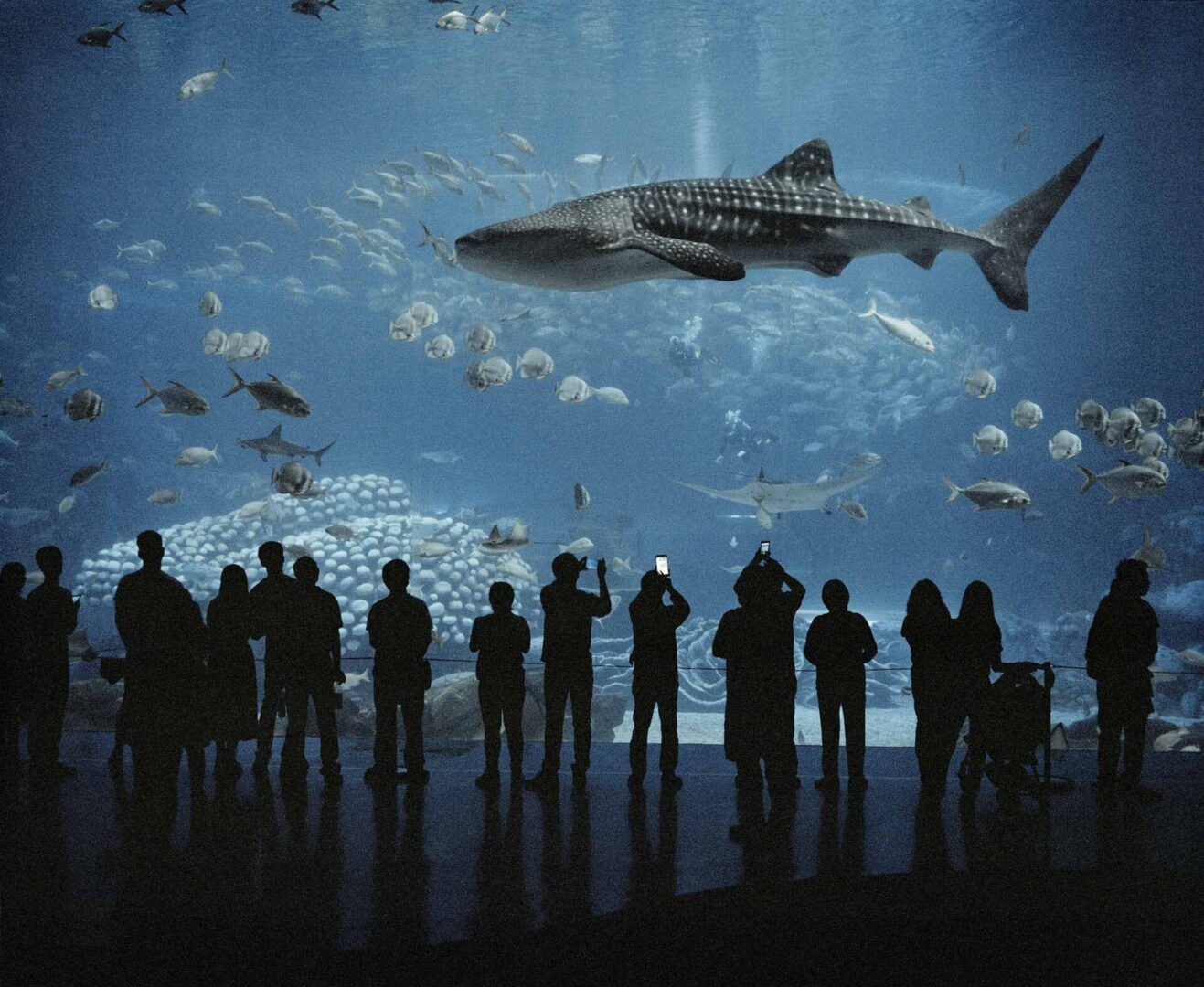
Ecological precarity is another primary driver of forced migration. The festival examines humanity’s fragile relationship with nature via several shows, including Zed Nelson’s celebrated The Anthropocene Illusion. This uncanny body of work examines how we immerse ourselves in increasingly choreographed and simulated environments – zoos, theme parks, safaris, alpine resorts and national parks – to mask our devastating impact on the land. Beauty and discomfort likewise collide in the work of Mandy Barker, an artist known for her mesmerisingly choreographed images of plastic waste. Still (FFS) takes that inquiry in a new, devastating direction. It transports viewers to Lord Howe Island, a remote location between Australia and New Zealand that is home to one of the largest colonies of Flesh-Footed Shearwater seabirds. They often mistake plastic for food and end up feeding waste to their fledgling chicks. Barker joined scientists on the Island in April 2019 to record the chicks’ migration to the Sea of Japan. Instead, the birds were found dying on the shoreline, unable to fly due to the weight of plastic in their stomachs. The photographs contrast the suffering birds with the stunning landscape, causing viewers to double take.
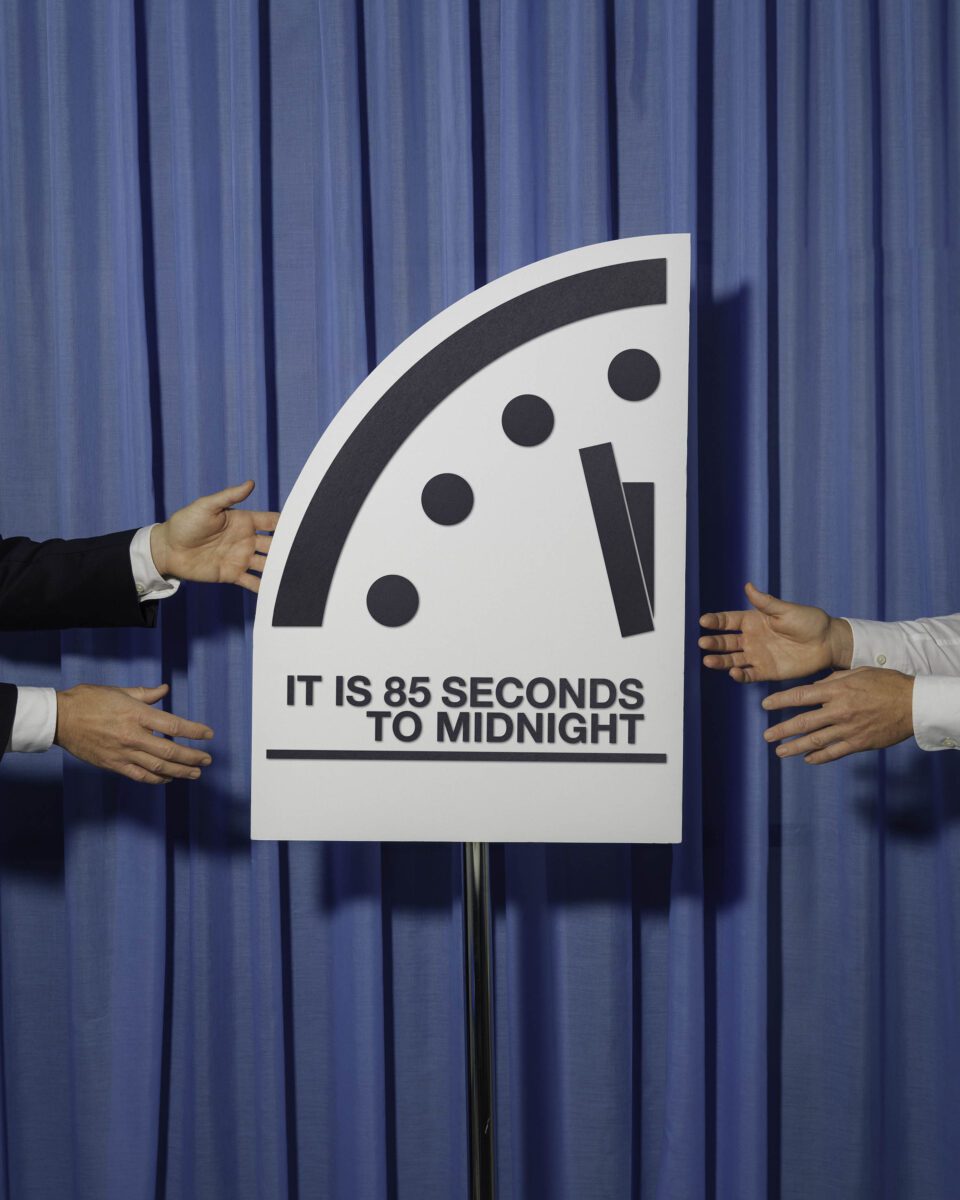
Crisis and instability are major throughlines of Landskrona Foto Festival, and this is communicated – with dark humour – in Alastair Philip Wiper’s (b. 1980) Cold Comfort. Here, the Hamburg-born photographer explores the “absurd theatre” of the atomic age: secret weapons labs, fallout shelters for politicians and comic books. One image reads: “it is 85 seconds to midnight”, in reference to The Doomsday Clock – which currently stands at the closest to global catastrophe it has ever been. “Set in 1947 by the Bulletin of Atomic Scientists, it has been updated every year since,” Wiper explains. “Back then it read seven minutes to midnight, when nuclear war was the main threat. In 1953, after the US and USSR tested hydrogen bombs, it moved to two minutes. In 1991, with the end of the Cold War, it stretched back to 17 minutes – the safest point ever. Since the 2000s, the clock has also counted climate change and, more recently, AI among the risks pushing the hands forward. Which brings us to now: closer to the end than at any time in history.”
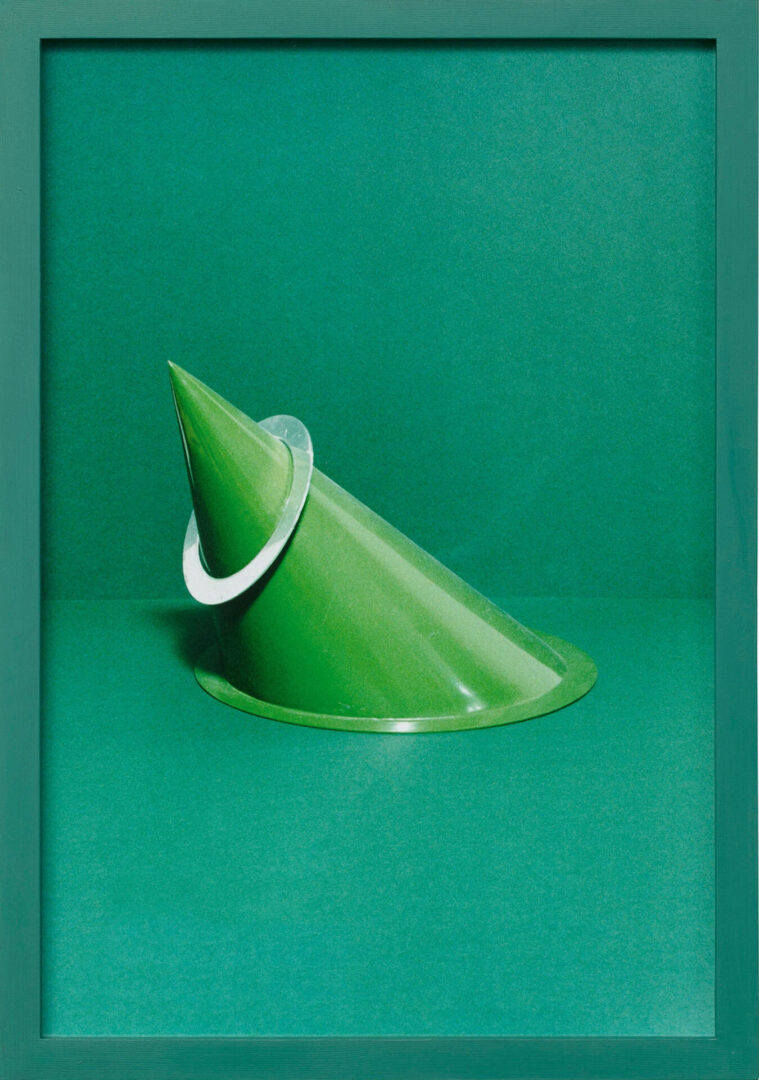
Across these projects, and the many more that form the programme (there are further contributions from Alan Gignoux & Chloe Juno; Ana Núñez Rodríguez; Bharat Sikka; Debi Cornwall; Emil Heilborn; Fernando Montiel Klint; Gábor Arion Kudász; Inka & Niclas; and Lena Amuat & Zoë Meyer), displacement emerges as a condition shaped by conflict, political uncertainty and environmental destruction. From young men waiting for their futures to be determined, to communities living through war and ecosystems transformed by human intervention, the festival asks viewers to consider what it means to lose a sense of security, belonging or place. In doing so, Landskrona Foto Festival turns an overwhelming global statistic into something more intimate: a collection of individual stories that make the scale of the present visible.
Landskrona Foto Festival runs 4-20 September.
Words: Eleanor Sutherland
Image Credits:
1. Zed Nelson, from The Anthropocene Illusion. © Zed Nelson
2. Lena Amuat & Zoë Meyer, Mathematical Models, (2009-2026). © Lena Amuat and Zoë Meyer
3. Alastair Philip Wiper, from the series Cold Comfort. © Alastair Philip Wiper


