“I don’t think that architecture is only about shelter, is only about a very simple enclosure. It should be able to excite you, to calm you, to make you think.” These are the words of Zaha Hadid (1950-2016), one of the most influential architects of the 20th century. Her statement speaks to the ways that buildings can shape our experience, our day-to-day movements and, fundamentally, how we see the world. In fact, there’s neuroscience to back up this way of thinking, with the BBC reporting that “cities can affect our mood and well-being, and that specialised cells in the hippocampal region of our brains are attuned the geometry and arrangement of the spaces we inhabit.” Artist Yuange Sheng (b. 1999) follows this design philosophy, exploring the shifting relationship between structure, material and life.
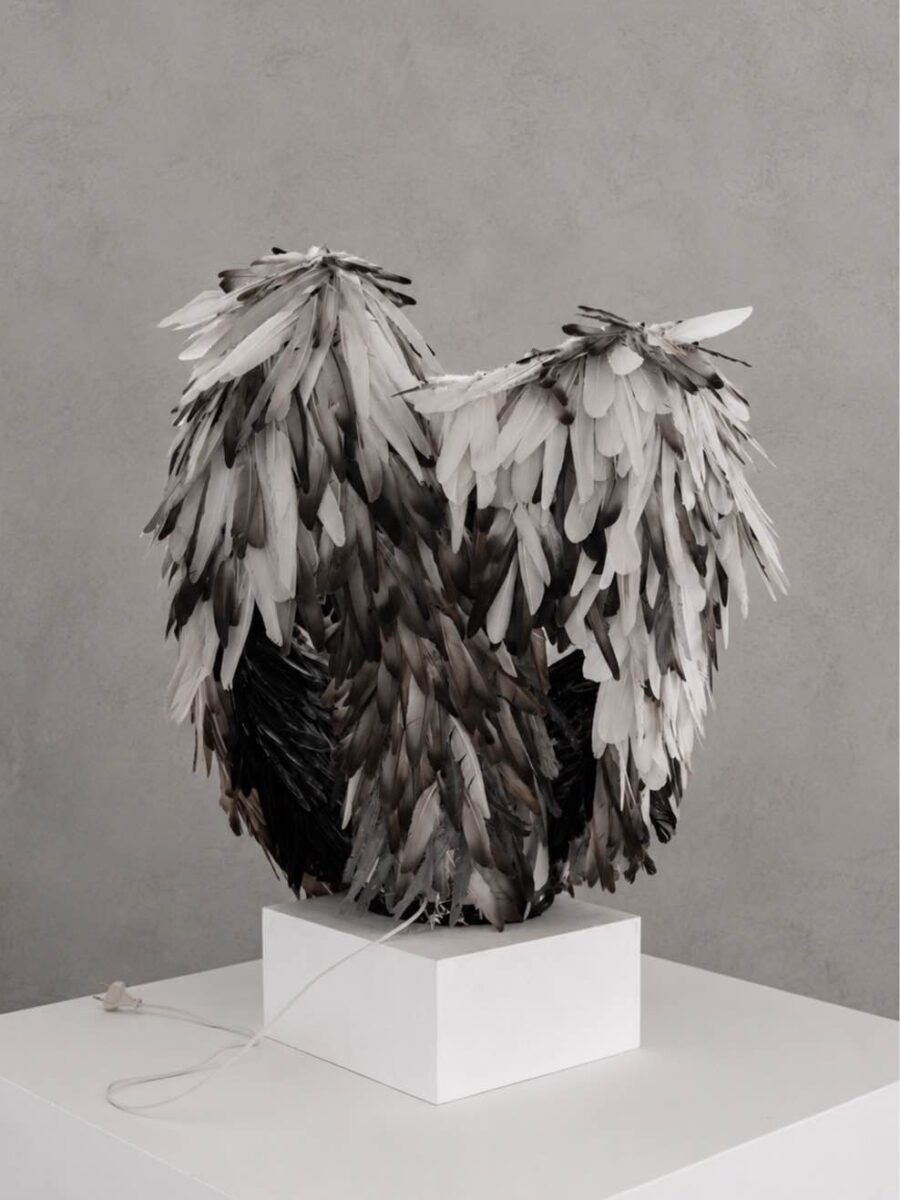
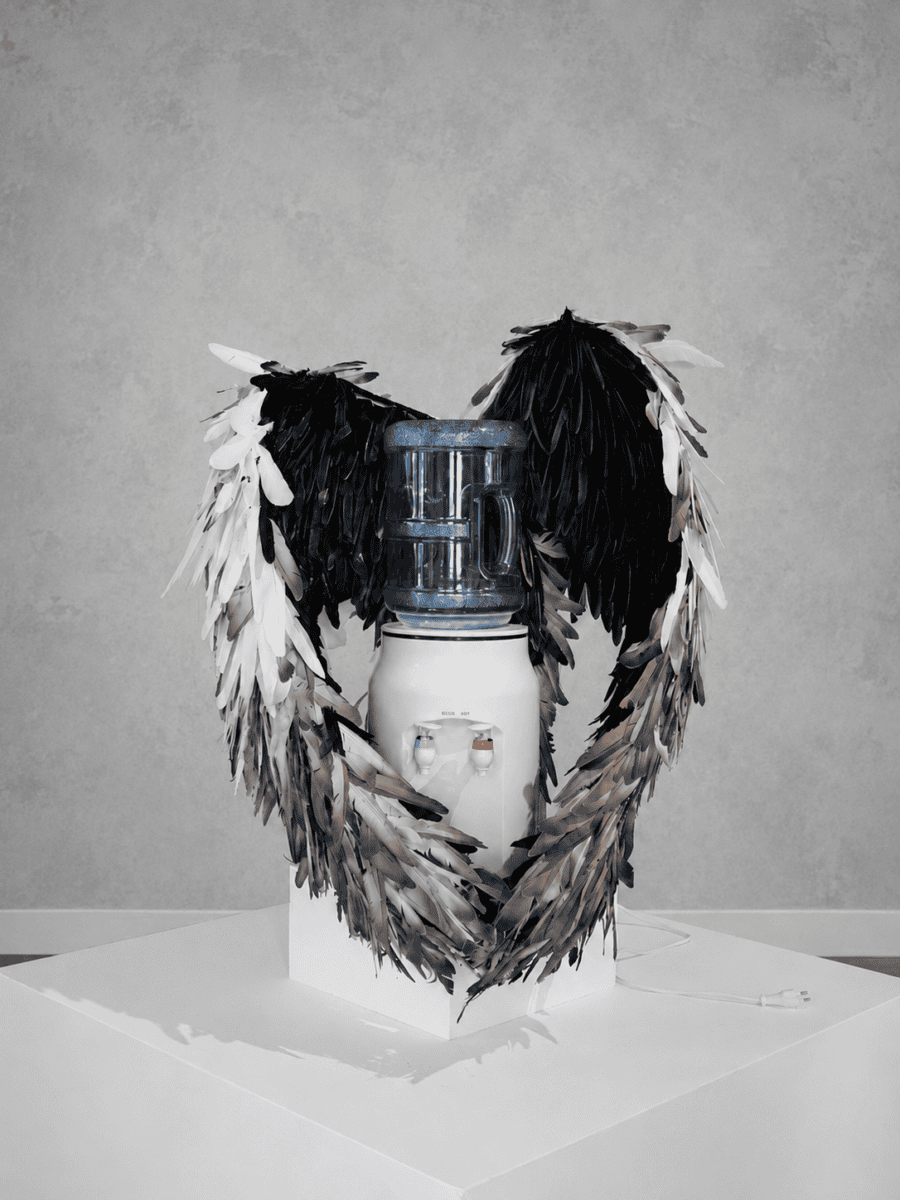
The artist begins with grids, modules and architectural fragments, transforming them through sculpture and image-making into unstable systems where structures collapse, deform and reorganise as ongoing processes of becoming. He draws on a combination of organic and artificial materials, with resulting pieces that echo the relationship between the natural world and human constructs. Works also engage with memory and accumulation, using fragmented materials to construct pieces that resemble fossils and remains, reminding audiences that the traces of what we build extend far beyond the current moment.
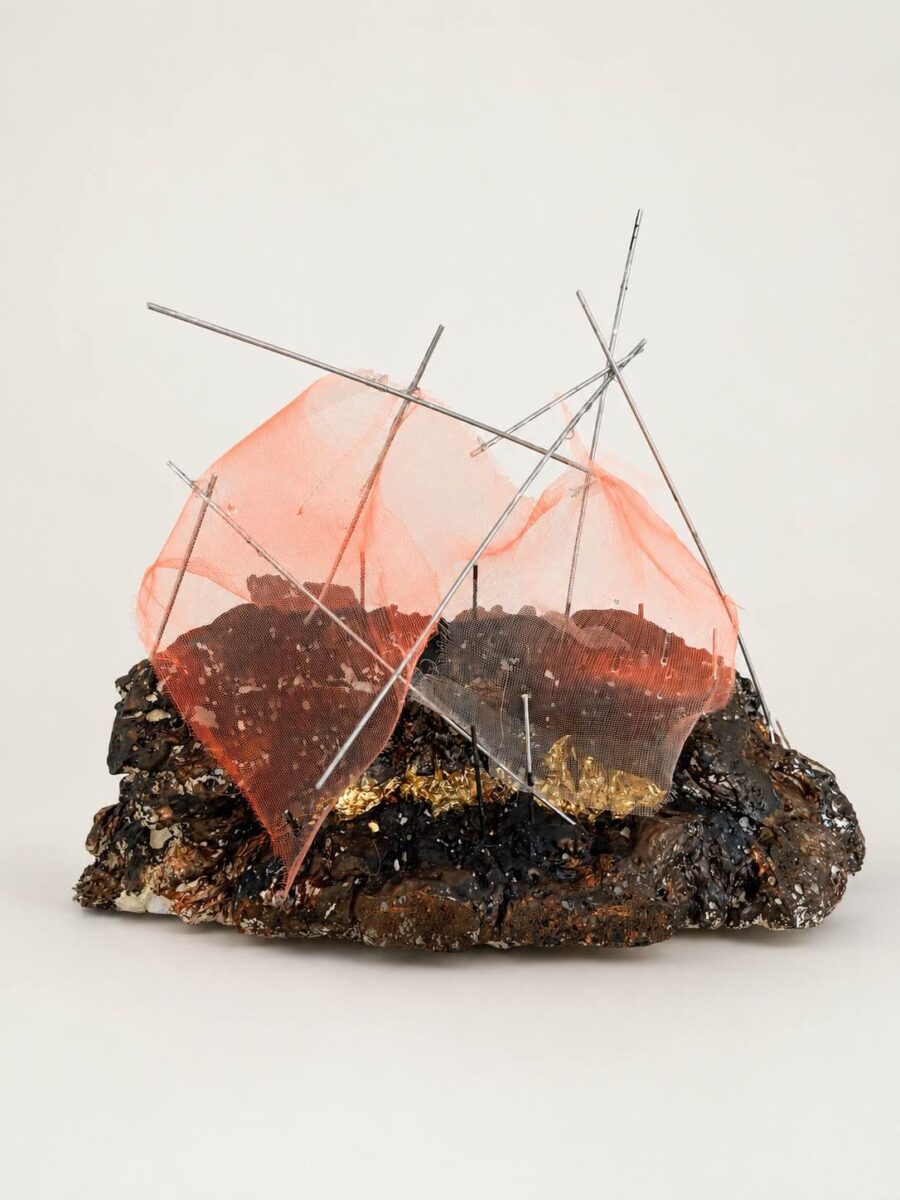
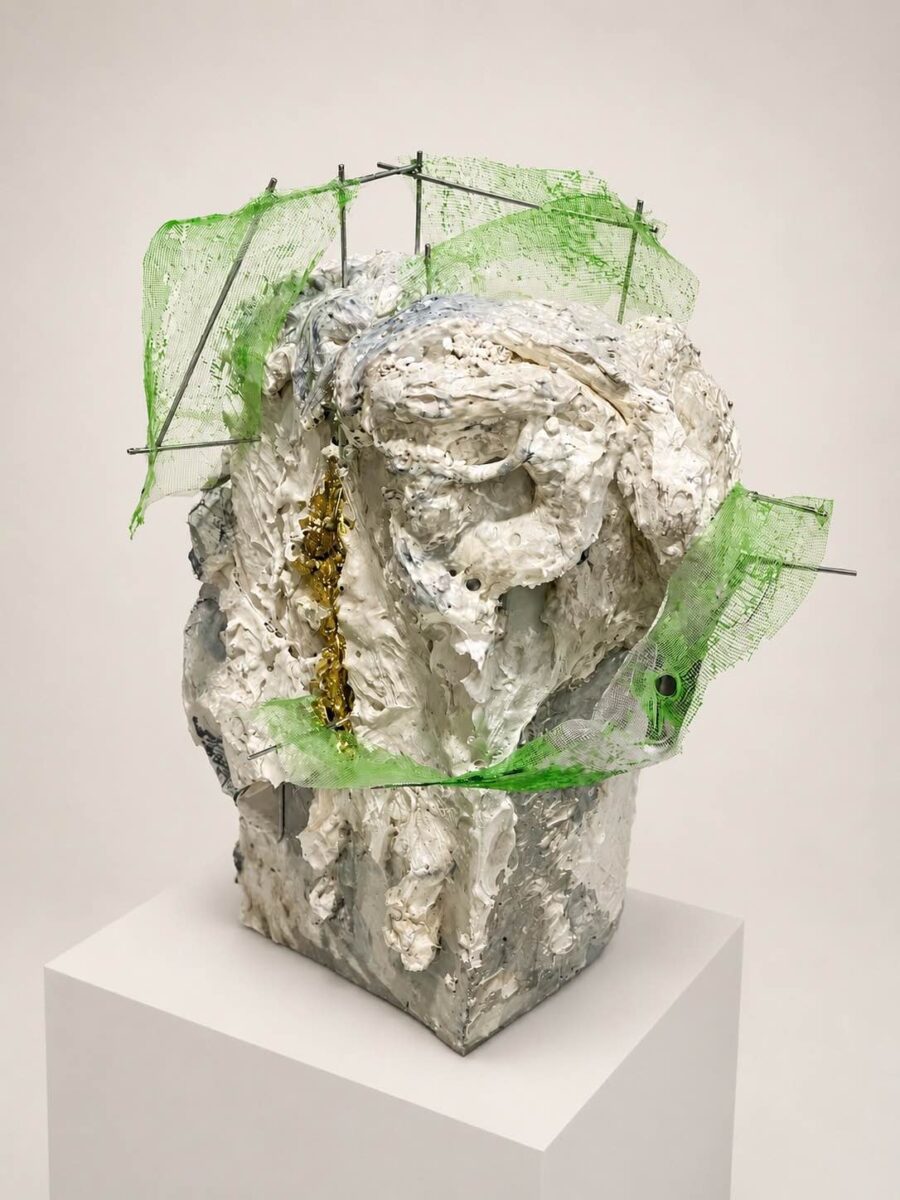
Scaffolding is a sculptural work that reimagines the architectural unit as a fractured, body-like form, suspended between collapse and reconstruction. The piece is cast in both concrete and plaster, creating a delicate balance between the artificial and organic – an aesthetic that is characteristic of the designer. Sheng plays with the idea of a scaffold, taking it from a traditional support system to a “mechanism of intervention – piercing, binding and stitching the form together.” The mesh textile runs along the edge of a fissure, acting almost like broken skin or a medical gauze. It gives the impression that these architectural repairs are almost surgical, revealing the human hands that often shape seemingly natural environments.
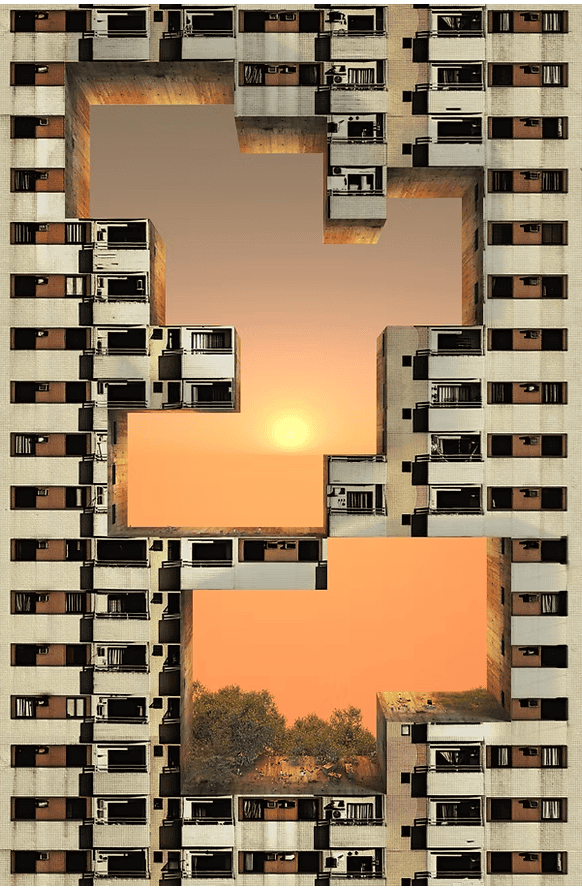
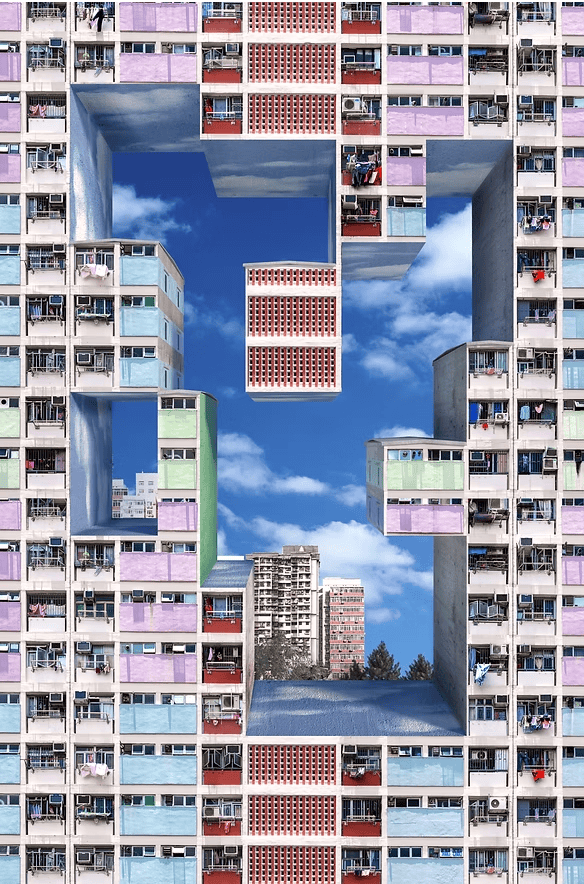
Meanwhile, Tetris Skyline reinterprets urban spaces by carving Tetris-like voids into building facades. The geometric openings reveal fragments of the sky – daylight, sunrise, nighttime – creating a contrast between dense structures and the expansive sky. The artist uses photography and digital compositing to suggest that “the sky we see is not entirely free, but shaped and defined by the built environment.” Residue Habitat continues to explore the urban environment, using lighting infrastructures to explore how organic life emerges within the remnants of existing systems. Here, lights nestle within nests of feathers, with a faint glow emerging from the narrow gaps. A particularly fun feature is his Stratified Tiramisu piece, which uses the layered dessert as a medium to translate personal memory into a form resembling geological stratification. Sheng explains: “as an edible object, the dessert can be cut, shared and consumed, transforming memory from something preserved into something gradually dissolved.”
Sheng’s work is a refreshing perspective on architecture. The artist has a diverse portfolio – from feathers to tiramisu – but manages to maintain a singular vision, asking how the buildings we construct influence not only humanity, but the natural world around us too. More than this, the artist’s practice has a profound understanding of where buildings sit on both contemporary art and modern life, something that aligns him with the major names who came before. There’s a universality to his work, reminding us that what we make has effects that ripple out far beyond the obvious realms and into our everyday existence.
Words: Emma Jacob
Image Credits:
All images courtesy of Yuange Shang.