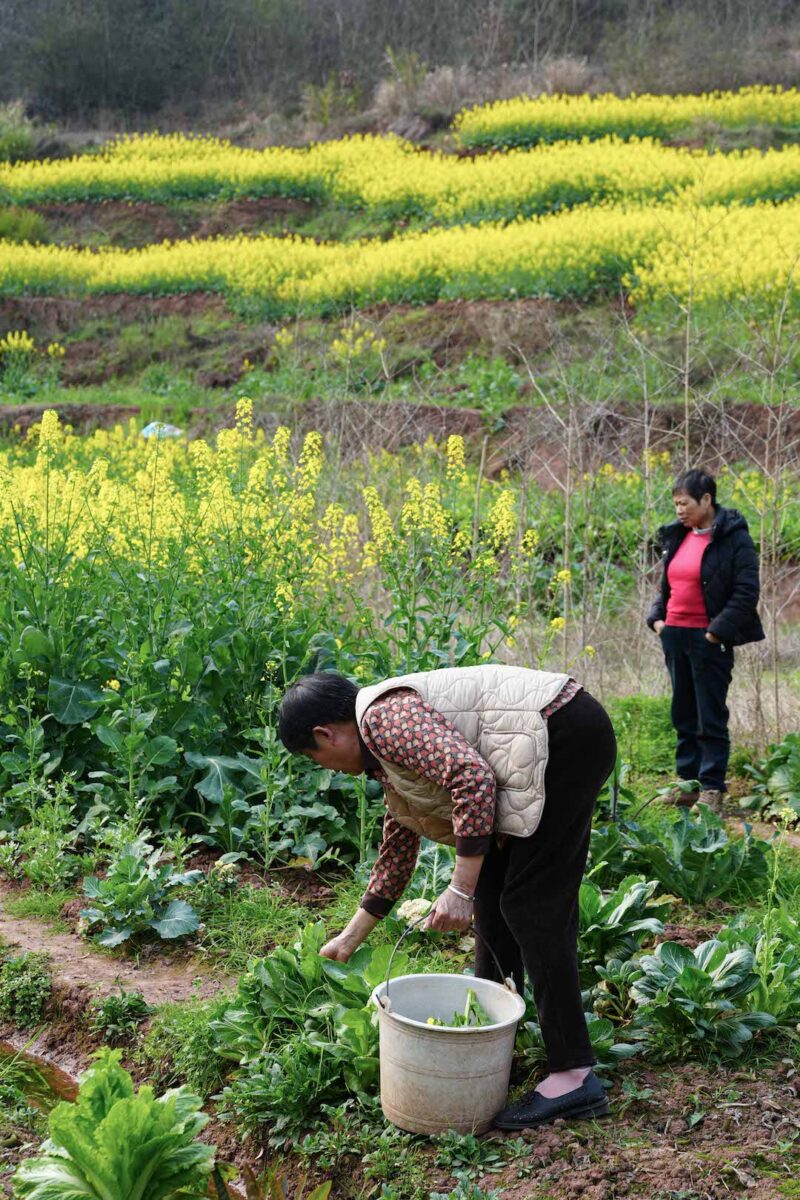
In China’s Hengnan County, Hunan Province, long-term migration to cities is reshaping family structures and village life. As younger generations leave for education and employment, many older residents continue to care for homes, cultivate land and maintain everyday routines. Those Who Remain, a photo series by London-based Chinese visual artist Huiling Chen, focuses on older people living in agricultural communities like Hengnan. Through portraits taken in domestic spaces as well as scenes of daily labour, the body of work observes how rural existence is being reshaped by an ageing population.
“Rather than portraying these communities through nostalgia or decline, the project considers how everyday life continues and adapts amid social change,” the artist explains. “Those photographed are not simply presented as people “left behind,” but as active participants sustaining families, relationships and a continuing connection to place.” This is indicative of Chen’s wider fine art practice, which incorporates documentary observation of individuals to make broader cultural and socio-political shifts visible. Her previous projects include A House in Three Tenses, following three generations of women sharing one home, and The Lane Becomes a Table, in which a private birthday celebration expands into village streets. Chen’s subjects include rural societies and families in China, as well as migrants living and working in the UK.
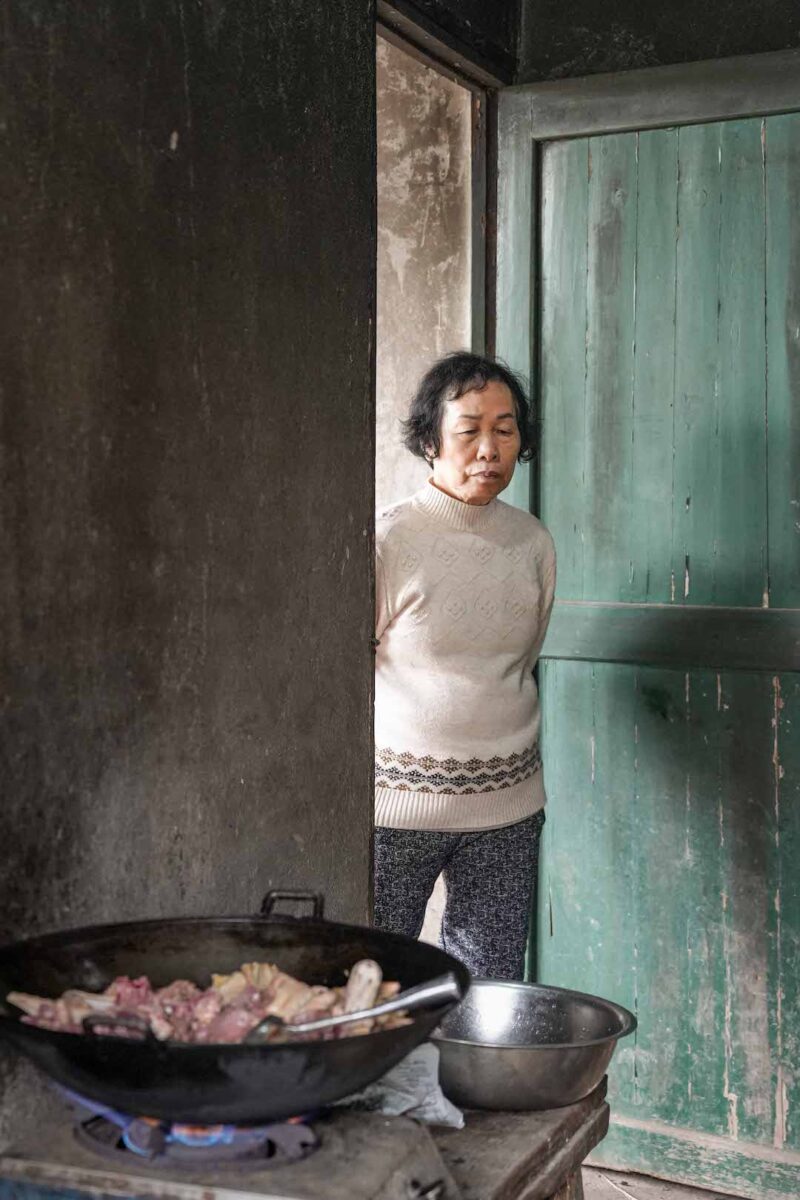
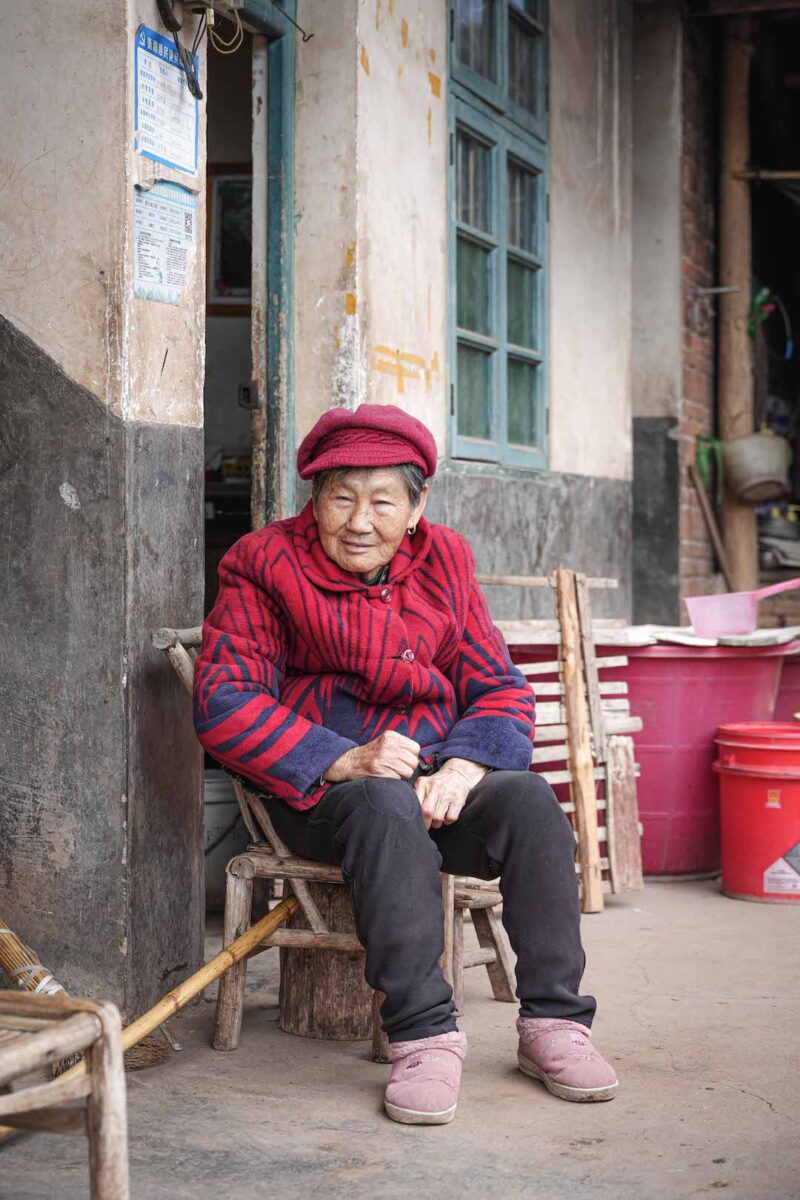
The documentary genre brings with it a particular set of responsibilities: How do you tell someone else’s story? Who owns the photograph? How much are the pictures influenced by the person behind the camera? Chen explicitly aims to “avoid sentimental or victimising representations,” collaborating with participants to construct their own image – “rather than treating them as symbols of rural ageing.” The result is that the camaraderie between subject and photographer is often palpable. In one shot, a woman looks up from her phone, meeting Chen’s gaze with familiarity. Elsewhere, a man grins, walking by holding a bamboo cane. Other compositions take a wider view: depicting figures in the fields, a shock of yellow flowers behind them, or tilling the soil, deep in concentration. These are people with agency. Chen’s perspective moves between intimate portraits like these – taken in the home, or whilst individuals are at work – and empty interior spaces devoid of human presence. The latter shots are occupied solely by tools of their owner’s trade – buckets, stools and nets – and are reminiscent of still life paintings. Each featured object, perhaps passed down through generations, resonates with silent histories of family and labour.
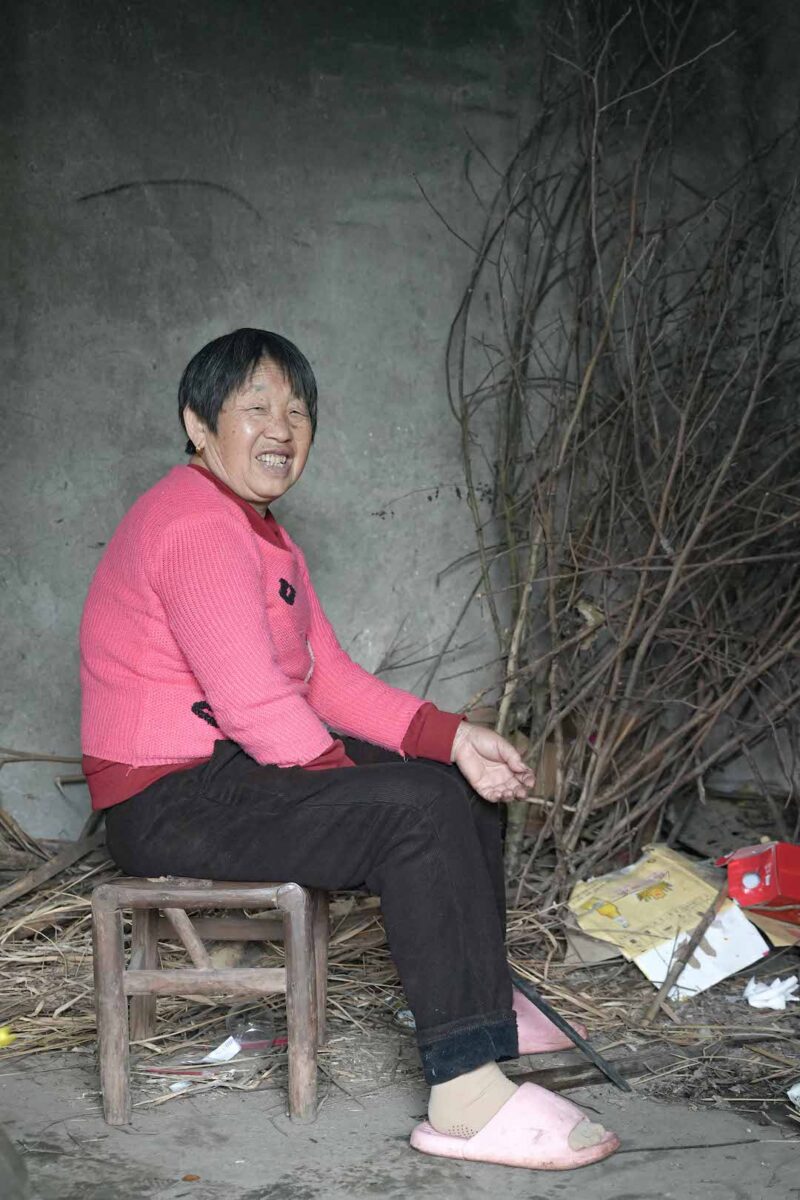
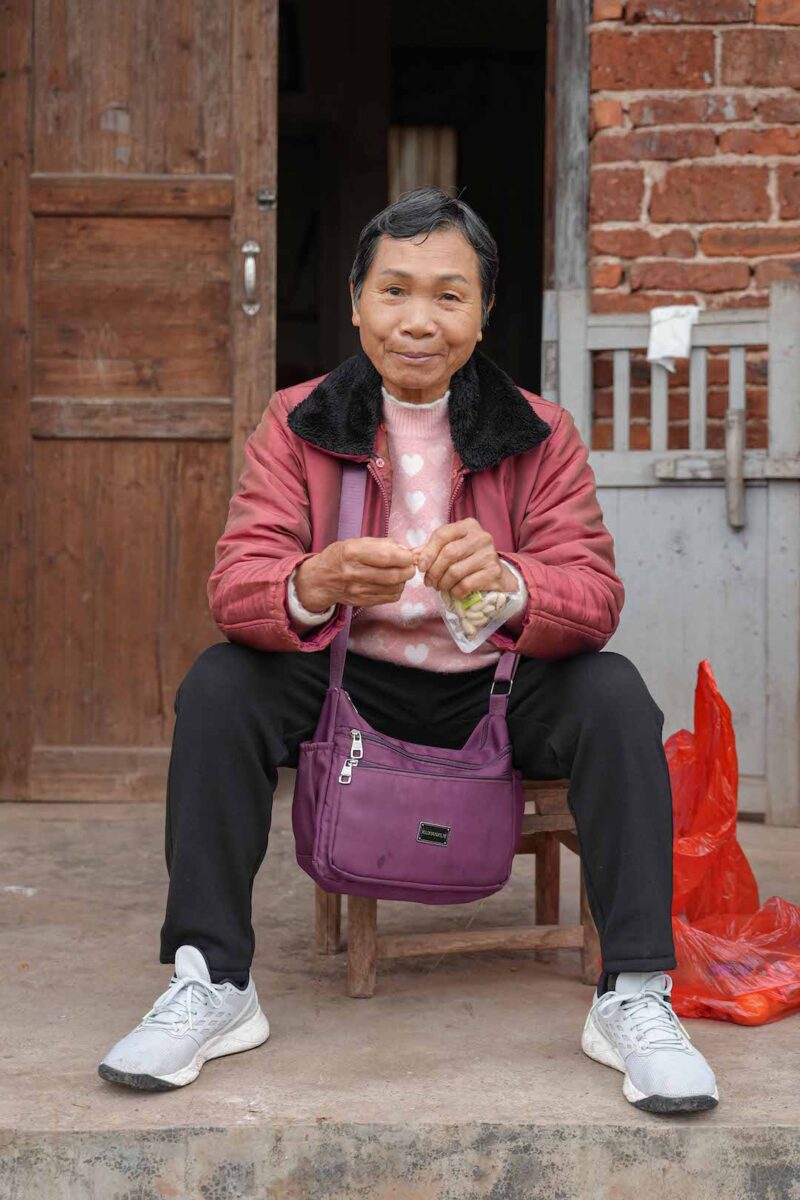
In Those Who Remain, Chen places herself within a longer tradition of portrait photography concerned with ageing. Examples include Imogen Cunningham’s posthumous After Ninety (1977), Richard Avedon’s Portraits of Aging (1951–2004) and Martine Franck’s Le Temps de Vieillir (A Time to Grow Old) (1980). Today, a closer contemporary parallel can be found in the work of Joanne Coates (b. 1990). Whilst Coates does not explicitly focus on what it means to be “getting old”, her explorations of rural life and class in North East England – including The Lie of the Land and Daughters of the Soil – centre on portraying and telling the stories of farmworkers. Like Chen, she uses photography to give visibility to lives and experiences that are often overlooked, narrating “a story of gender and class that has long been forgotten, or never told.”
This collection of pictures is shaped by the absence of those who have left. Younger family members who have migrated are rarely physically present in the photographs, yet their distance influences the homes, relationships and routines Chen records. However, Those Who Remain makes it clear that these villages are not static, untouched remnants of the past. They are ever-changing environments in which older generations continue to adapt, work and sustain everyday life. That is where the series holds its power. And it has not gone unnoticed: Those Who Remain was recently named an Official Selection in the 2026 International Photography Awards (IPA), a major international competition which champions “the world’s finest photographers.” It’s a selection that establishes Chen as one to watch, positioning her alongside other acclaimed contemporary image-makers working in the space between fine art and documentary.
Words: Eleanor Sutherland
Image Credits:
All images courtesy of Huiling Chen, from the series Those Who Remain.