

This year, the West Yorkshire city of Wakefield plays host to Indigenous North American art “on a scale never seen before in the UK.” The landmark exhibition at Hold to This Earth brings 65 works to Yorkshire Sculpture Park (YSP), representing over 35 Tribal Nations and multiple generations. The unifying theme is the land, and the 38 featured practitioners harness sculpture, film, photography, painting, ceramics and fibre art to communicate “deep, complex and enduring relationships” with the environment. YSP, with its 500 acres of historic parks, is an apt setting in which to hold these conversations. The title of the show is drawn from Defend Sacred Mountains, a series of text-based monoprints by Hock E Aye Vi Edgar Heap of Birds. At a time when North American Indigenous communities are facing multifarious challenges, including threats to sovereignty, this show is a call to action, and these artists are agents of change.
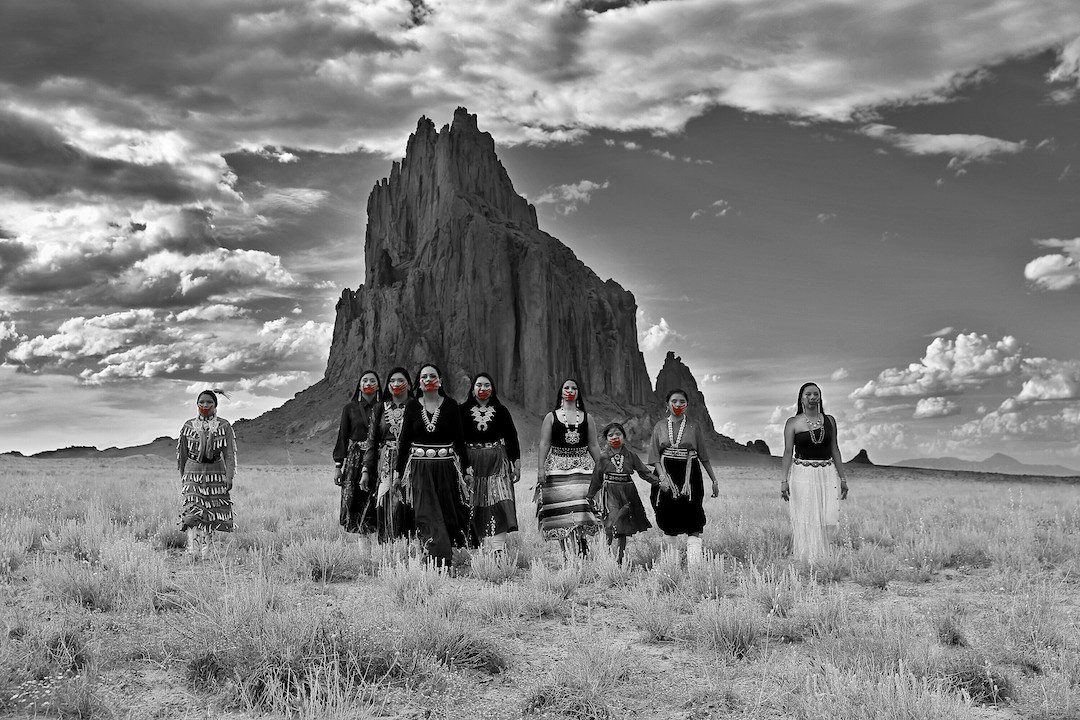
Activism is a current that runs throughout the show. A standout image is No More Stolen Sisters (2019) by Zoë Urness, a Pulitzer Prize-nominated Alaskan Tlingit and Cherokee photographer. She made the picture in response to the crisis of Missing and Murdered Indigenous Women and Girls that is often underreported in mainstream media. As Amnesty International notes: “The simple fact that you are an Indigenous woman or girl means that you are at least three times more likely to experience violence and at least six times more likely to be murdered than any other woman or girl in Canada. This violence is a national human rights crisis, and it must stop.” Nine female figures stand in front of a peak known as Shiprock or the Rock with Wings, which rises more than 1,500 feet above the high-desert plain of the Navajo Nation in New Mexico. The subjects are rendered in black-and-white save for a red handprint across their mouths.
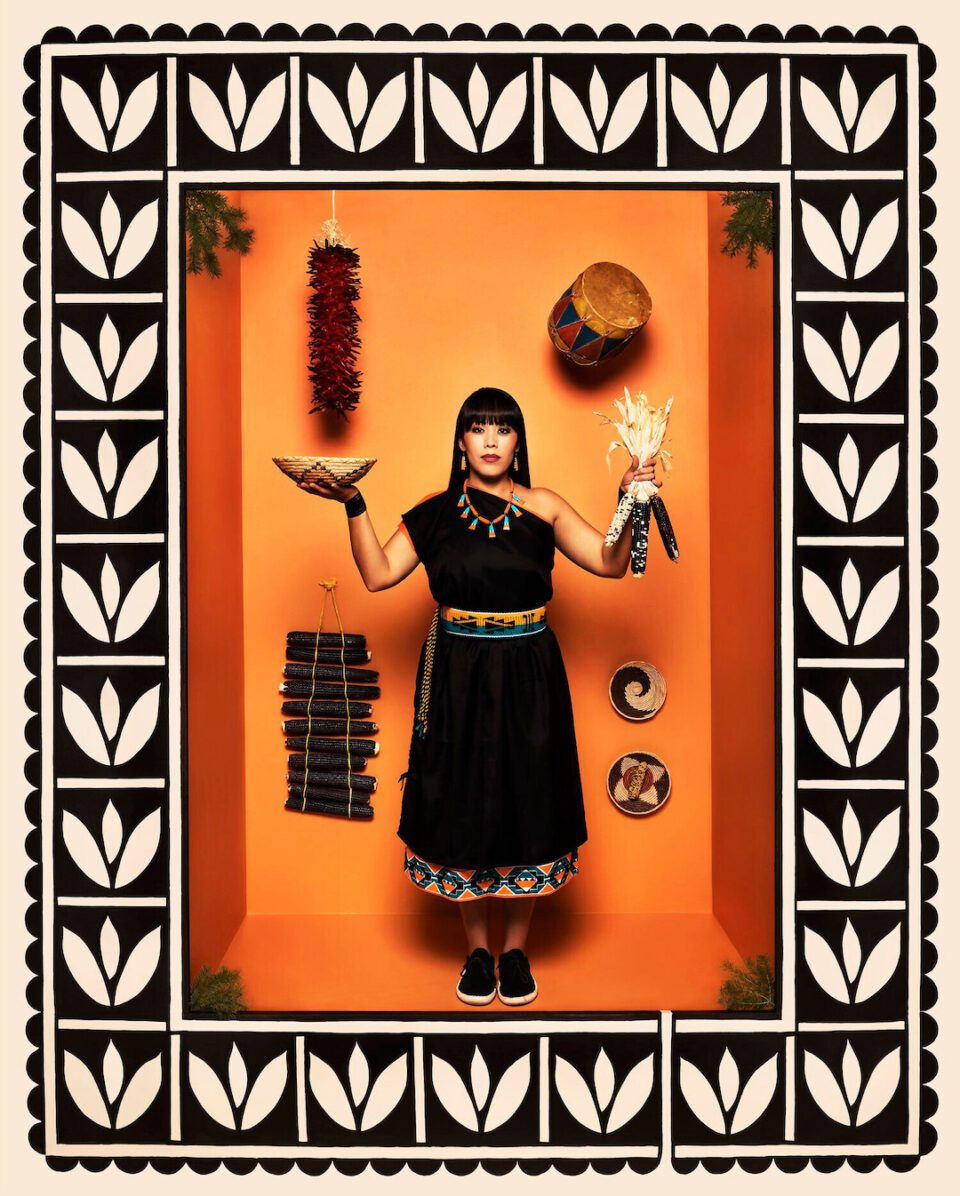
Equally powerful is Cara Romero’s First American Girl, a series of photographic portraits set up to look like doll boxes: the kind that might accompany a Barbie, replete with accessories secured by plastic tags. Romero’s images are designed to confront the misrepresentation of Native culture as a monolith, celebrating instead the diversity of Tribal Nations by showing individual women alongside their own distinct regalia. Moreover, every subject is named: Amber Morningstar, Julia, Joslynn, Naomi, Wakea and more. Other change-making lens-based works include Pulitzer Prize-winning artist Raven Chacon’s haunting film Three Songs (2021), which features three generations of women playing a snare drum and singing at sites of historic trauma, reoccupying space and asserting their voices.
Beyond being the largest show of Indigenous North American art ever held in the UK, Hold to This Earth also marks the first group exhibition to be staged in YSP’s prestigious Underground Gallery in its 20-year history. Audiences are welcomed to the space by Dakota Mace’s new site-specific commission, Kéyah Yinílniih (The Land Remembers), a vast abstract painting which occupies an entire wall. Elsewhere, there are landscapes by Teresa Baker, star maps from Nicholas Galanin, a wall hanging from Jeffrey Gibson and ceramics by Rose B. Simpson. Many of these works harness traditional crafts and materials – from unfired clay to buckskin, bark and wool. The Park remains best known for its open-air sculpture displays, and this exhibition sites six outdoor works in dialogue with the Yorkshire landscape. The Guardians (2024) by Raven Halfmoon, for example, draws inspiration from earthworks created by Indigenous ancestors in North America and the iconic stone moai from Rapa Nui (Easter Island). It draws on the concepts of Neesh and Soku (Sun and Moon), with one half of each figure having a dark patina and the other half light, whilst referencing the Caddo Nation of Oklahoma’s origin story of their people emerging from within the Earth.
Another new outdoor commission, Bear’s Tipi by Hock E Aye Vi Edgar Heap of Birds, honours eight Tribal Nations for whom the extraordinary titular monolith, located in northeastern Wyoming, is held sacred. Featuring their names – Cheyenne, Kiowa, Lakota, Arikara, Hidatsa, Mandan, Crow and Arapaho – the work takes the form of eight street signs arranged in a circle, asserting Indigenous Sovereignty within the landscape and calling for the protection of natural monuments that are being desecrated. Elsewhere, positioned in relationship to a majestic ash tree, Trade Canoe: King of the Mountain (2025) by Jaune Quick-to-See Smith honours the rare white bison known as Big Medicine that held great symbolic significance for Smith’s community. Tragically, the animal’s remains were confiscated for taxidermy and display by the US government. The Salish and Kootenai Tribes of the Flathead Valley fought for years for his return. Like many works in this show, the piece underscores enduring struggles over cultural stewardship.
Hold to This Earth is essential viewing for 2026-2027. This expansive presentation shows how ancestral knowledge and creative expression can come together as a powerful form of contemporary activism. From traditional techniques deployed in unexpected ways to art used as a form of protest against stolen land, these are works that speak, act and remember. Together, they demonstrate the power of Indigenous practices to reclaim histories, assert sovereignty and connect with the environment. As Hock E Aye Vi Edgar Heap of Birds says: “It is exciting to look ahead to this productive Indigenous expression in England and the bringing together of a unified awareness of the shared sky and stars which pass daily above us all.”
Hold to This Earth: Works by Contemporary Indigenous North American Artists from Tia Collection
Yorkshire Sculpture Park, Wakefield, Until 18 April.
Words: Eleanor Sutherland
Image Credits:
1. Zoë Urness, No More Stolen Sisters, 2019. © Zoë Urness. Tia Collection. Image courtesy of the artist.
2. Cara Romero, Naomi, 2017. © Cara Romero. Tia Collection. Image courtesy of Cara Romero Gallery, Santa Fe, NM.
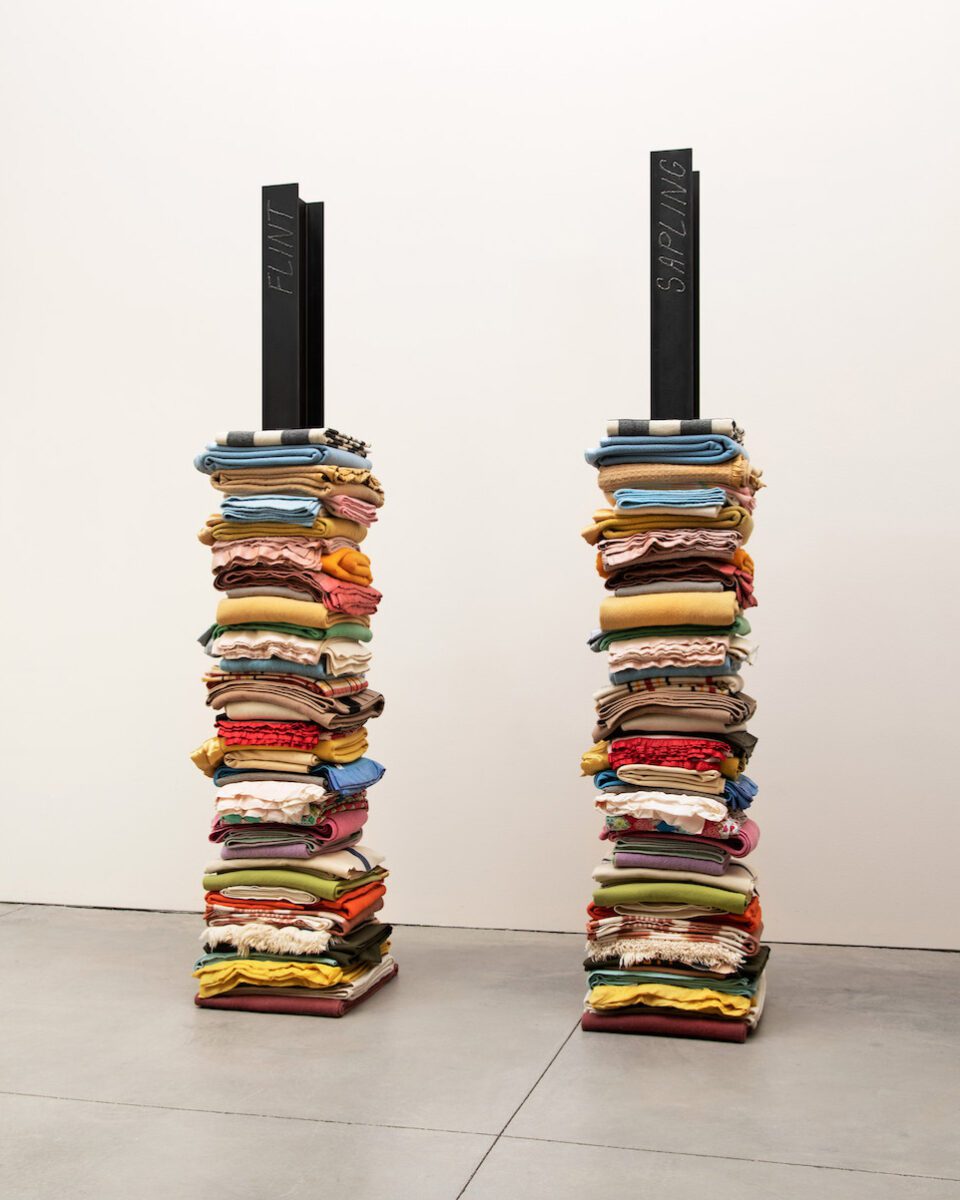
3. Marie Watt, Skywalker/Skyscraper (Twins) Flint & Sapling, 2020. © Marie Watt. Tia Collection. Image courtesy of Marie Watt Studio and MARC STRAUS, New York.


