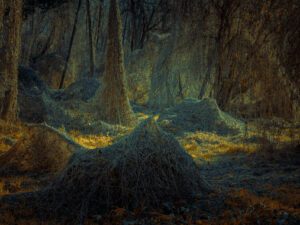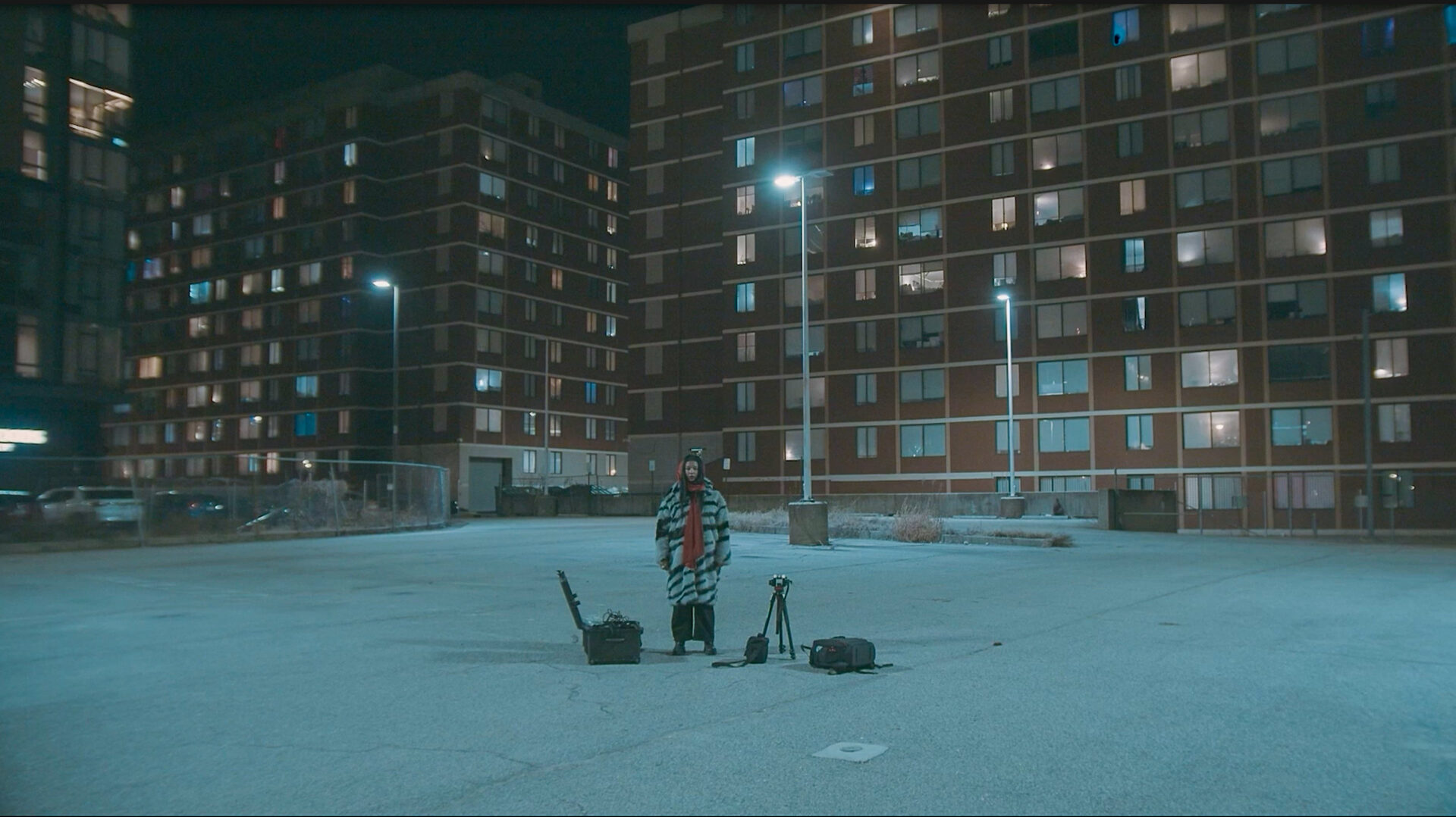
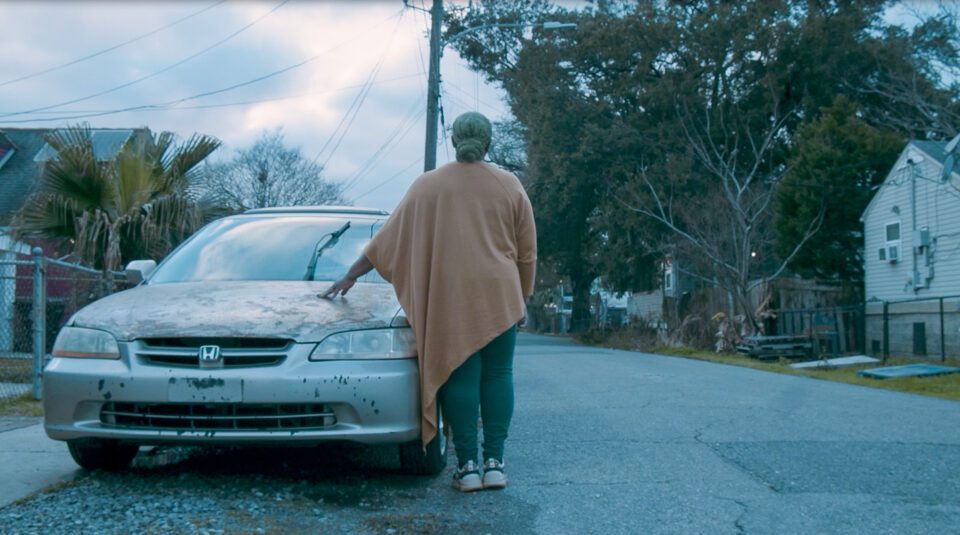
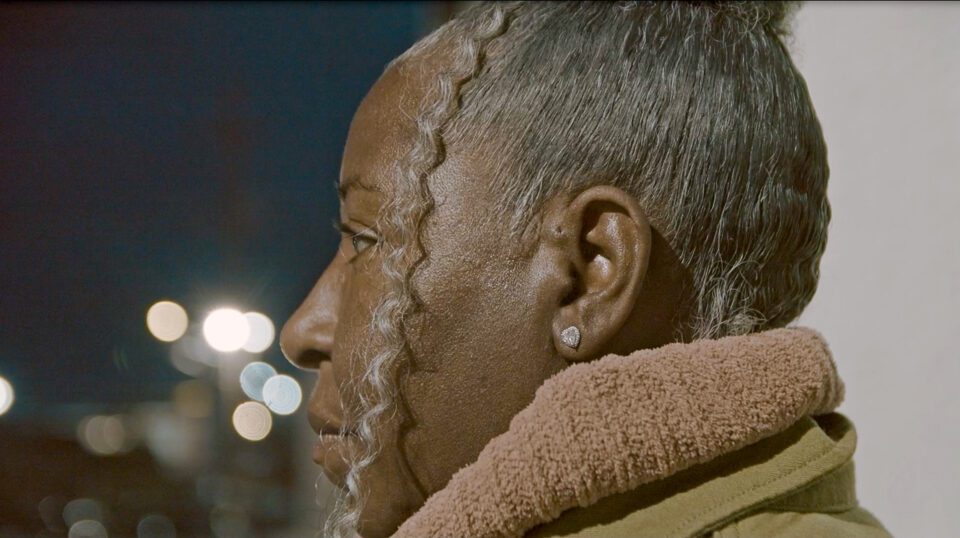
DIVA is a multidiscplinary French artist and cinematographer. Her work explores memory, diaspora, and the reconstruction of identity through film, immersive multi-channel video installations, photography, sculpture, and live performance, often reflecting on the Black French experience. Her piece Memoria 2020: When Memories Are No Longer Enough (2025) received the 2026 Aesthetica Emerging Art Prize. The 3-channel video reflects on the artist’s identity as a Black French woman in New Orleans through the lens of another diasporic experience: a Mardi Gras Indian Queen. The Mardi Gras Indian tradition is believed to originate from encounters between Native and Black communities in the late 19th century. The Queen’s voice introduces the traditions and history of this African American cultural practice, which is rooted in community resilience and resistance. The work explores how artistic archives, cultural memory, and testimony shape belonging across diasporic histories. We caught up with the artist to find out more about the work, how she tells authentic stories and what it means to win the prestigious award.
A: How did you begin working as an artist?
D: I’m a late bloomer. It’s only been a few years since I started working professionally as an artist. After a major loss in my family in 2018, I reevaluated my life. I realised I needed to stop lying to myself and finally become who I was meant to be, instead of hiding behind a desk. The funny thing is that, in many ways, I’d been an artist my whole life. I grew up studying Baroque theatre and performance up until high school, my father passed on his love of cameras, and later I studied Art History & Archeology while making experimental pieces. But despite all of that, I still doubted myself and was too afraid to show my work. At the end of 2019, I created my first immersive installation, The Black Man in the Cosmos, which led to opportunities with curators and programmers. A few years later, a Fulbright Scholarship allowed me to pursue an MFA at Howard University, leave my job in big tech and dedicate myself fully to my artistic practice. Today, I work across video installation, photography, filmmaking and as a director of photography.
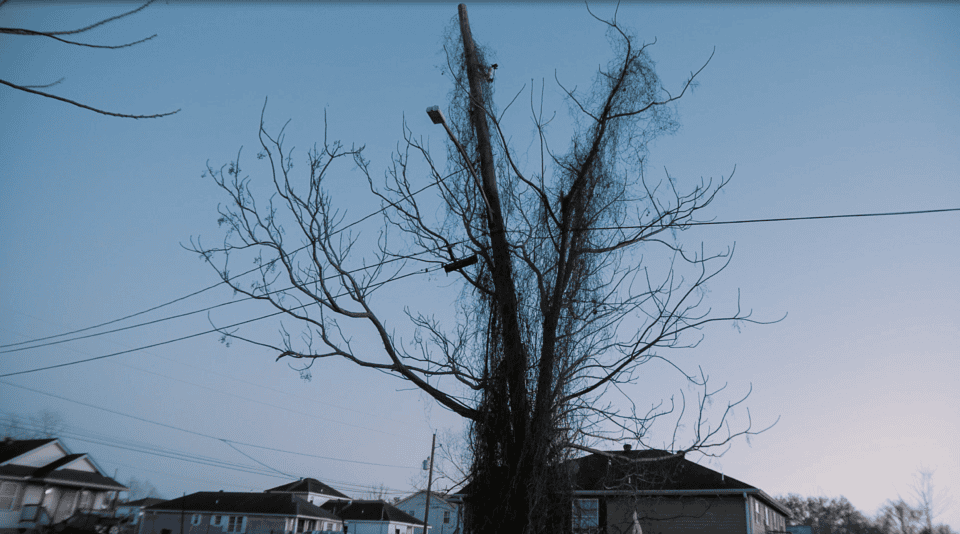
A: Tell us about Memoria 2020: When Memories Are No Longer Enough (2025). How did it first come about?
D: In many ways, this project is the most tangible proof of how my personal experiences shape my artistic practice. It began very simply: I was filming my journey through New Orleans, completely mesmerised by everything around me and instinctively archiving every moment. At that time, I was still searching for my artistic language. As my technical skills developed and my eye became more refined, the project evolved alongside me. The longer I spent in New Orleans, the more I felt that the city was helping me to answer questions I had carried for years about my identity as a Black French woman. When I returned to Paris, I found myself revisiting these fragments of time over and over again. Looking back at the footage, I began making connections between what I had witnessed there and my own life. Every time I returned to New Orleans, it felt as though I was being drawn back by something beyond my control. My phone was gradually replaced by professional cameras, and what had started as documenting trips became a long-term search to preserve memory and capture the passage of time. Three years ago, when I fully committed to becoming a filmmaker and installation artist, my ambitions for this project expanded. It was no longer simply a documentary project. I wanted it to blur the boundaries between documentary and fiction, reality and myth, creating visual tales that borrow from the language of surrealism. After every trip, I returned to the material, reshaping and rethinking it. Six years later, the work bears almost no resemblance to how it first began and I think that’s exactly what makes it so meaningful. It has evolved alongside me.
A: Why did you choose to centre the perspective on a Mardi Gras Indian Queen?
D: The idea was to bring together two perspectives: an audio testimony from an insider and a visual testimony from me as an outsider. Two women, two experiences, in dialogue with one another. The more I researched the Mardi Gras Indian tradition, the more I realised how often the contribution and impact of women were overlooked. I wanted the work, in its own way, to make their presence more visible. Meeting Shanu felt completely natural. She was incredibly generous, sharing her culture and patiently explaining everything while I was mesmerised by the suits, the rituals, the music and the dances. I never really questioned whose story I wanted to follow, I just knew it had to be hers alongside mine.
A: What is your process of deciding which materials are included and which are left out?
D: One thing I’ve learned is never to do anything without intention. Everything has to serve a purpose. Every image, every sound and every material has to help tell the story and communicate the message I’m trying to convey, rather than simply being there because I find it aesthetically pleasing. A lot of it is also intuition. I constantly ask myself whether what I’m including is respectful and truthful. I never want to exploit or diminish the people who have opened their doors and allowed me to document moments that have now become lasting memories. I feel a responsibility to honour the trust they placed in me.
A: What responsibilities come with working with a community’s cultural history?
D: The biggest responsibility is to avoid treating it as voyeurism, to not simply take images or stories without giving something back. It means respecting boundaries. As an outsider, I don’t want to speak for a community; I want to create space for their voices, while being honest about my own position in the work.
A: How did you approach drawing connections across different diasporic histories, whilst remaining attentive to their individuality?
D: For me, diasporic communities share a common history, a history marked by slavery, colonialism, displacement and loss. Whether we want it or not, I believe those experiences have created invisible ties that continue to connect us across time and geography, almost spiritually. What interests me is not erasing the individuality of each community, but understanding how each one has transformed that shared history into its own unique culture, rituals and ways of surviving. We all inherited the same wounds, but we responded to them differently. In the South of the US, for example, those histories are expressed through traditions such as soul food or the culture of the Mardi Gras Indians. In Europe, our histories took different forms, shaped by different political, social and cultural contexts. What fascinates me is seeing both the common thread that connects us and the distinct ways each community has reclaimed its identity.
A: You won the Aesthetica Emerging Prize. What does this mean for you and your practice?
D: It gives me confidence and, above all, encourages me to keep going. After five years of slowly building my practice, receiving this prize feels like a sign that the work is moving in the right direction and finding its audience. It means even more because I’ve followed the Aesthetica Art Prize for years, and several artists I admire have been part of it. I also learned a great deal from the panel and from the other shortlisted artists. That said, I don’t believe an artist’s work only has value once it’s recognised by an institution or a prize. Recognition should never be the reason we create. But it does matter because it gives artists access to opportunities, visibility and, hopefully, the financial stability that allows us to keep making ambitious work.
A: What do you hope viewers take away from the piece?
D: I hope they leave with something of the essence of New Orleans, the love, fraternity and joy I experienced there. I want them to feel the sense of wonder I felt encountering this community and leave the space feeling hopeful about being human and the richness we have to offer. I also hope the work leaves them with questions. How do places reshape the people who pass through them? New Orleans is one of those places for me. France is another. I’m interested in how history, memory and place shape the way we understand ourselves, and I hope viewers leave thinking about the places that have transformed them too.
A: What’s next for you? Anything we can look forward to?
D: I’ve been looking back at my work as an artist and filmmaker, and I think I’m finally beginning to understand my artistic language and, more importantly, the world and mythology I want to build through my practice. The second half of this year is dedicated to producing several new projects that I’ve been developing for some time. Photography will take on a much greater role, alongside sculpture and installation, as I continue exploring how images can inhabit and transform physical space. I feel ready for the next stage of my career. I’d love to find gallery representation with people who understand the artistic world I’m building. I’m excited to keep expanding that universe and see where it takes me.
Words: Emma Jacob
The Aesthetica Art Prize 2026: States of Becoming is at York Art Gallery until 15 November: yorkartgallery.org.uk
Image Credits:
All images: Memoria 2020: When Memories Are No Longer Enough (2025). Courtesy of the artist.