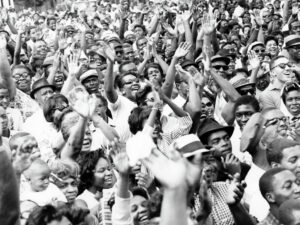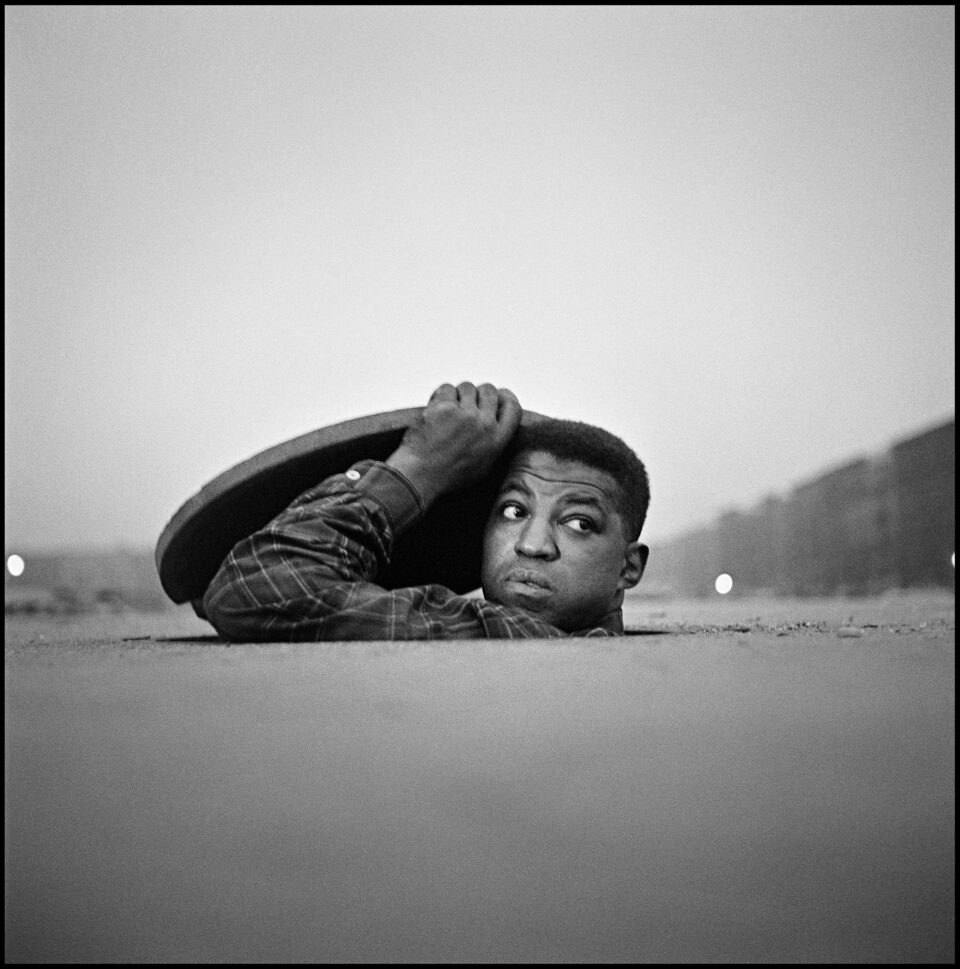
Malcolm X. Muhammad Ali. Martin Luther King Jr. Gordon Parks photographed countless historical figures, civil rights icons and artists. His images became emblematic of a generation – from being on the cover of Ralph Ellison’s Invisible Man to laying bare the realities of poverty and segregation in Life magazine. The artist once famously said “I chose my camera as my weapon against all the things I dislike about America – poverty, racism and discrimination.” Voices in the Mirror, at Jack Shainman Gallery, revisits Park’s work through the reflections of the people and families he photographed. For the first time, the relatives of Muhammad Ali and Malcolm X, among others, reflect on Parks’ photographs and their enduring power.
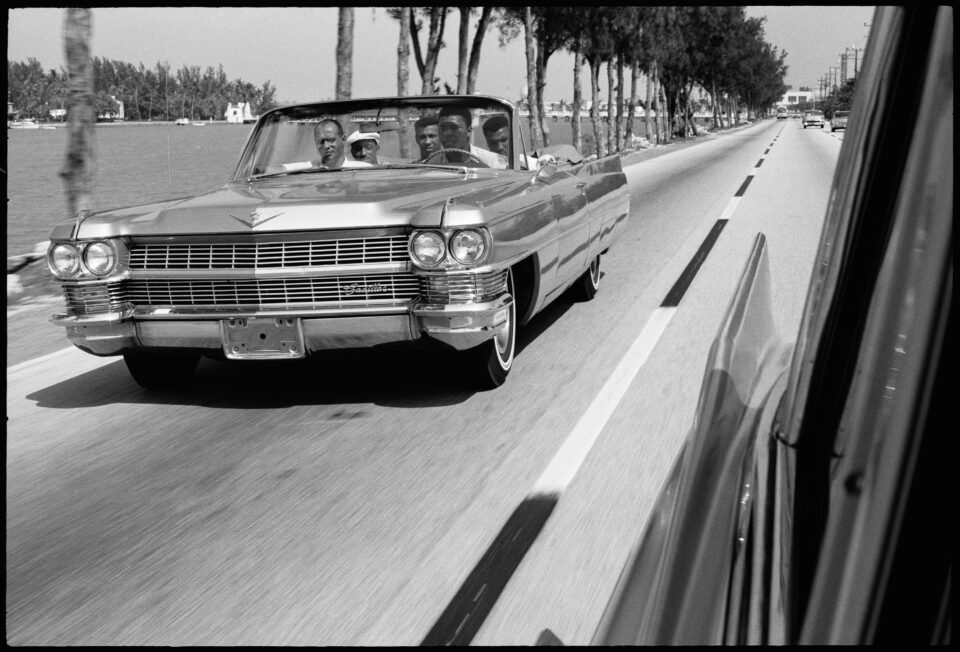
The exhibition, which opens in New York on 18 September, marks the 20th anniversary of The Gordon Parks Foundation. The organisation is dedicated to preserving the artist’s work, making it available to the public through exhibitions, publications and programmes that advance what Parks described as “the common search for a better life and a better world.” Voices in the Mirror, meanwhile, is a title taken from Parks’ final memoir, published in 1990. It looks deeply at the collaborative relationship between Parks, his subjects and their families as he documented the struggle for equality alongside the perseverance of Black excellence. Reaffirming the importance of Parks’ legacy in the 21st century, the show provides fresh insight into his work, as memory and anecdote animate photographs long-since analysed, studied and examined.
Voices in the Mirror centres around written reflections, giving it a unique perspective compared to many other photography exhibitions. Those featured include Lonnie Ali, widow of Muhammad Ali; Qubilah Shabazz, daughter of Malcolm X; Gloria Vanderbilt’s son, CNN Anchor Anderson Cooper and Ingrid Bergman’s daughter, actress Isabella Rossellini. One standout moment comes from Kate Clark Harris, whose parents Dr Kenneth Clark and Dr. Mamie Clark, who were photographed by Parks as they conducted their “dolls tests.” It was a groundbreaking experiment that revealed the psychological effects of segregation on African American children. The tests were conducted using several dolls, all identical except for skin colour, that were put before Black children, aged between three and seven, who were asked to identify which one they preferred. The majority preferred the white doll, leading Drs. Clark to conclude that “prejudice, discrimination and segregation” damaged their self-esteem and caused Black children to develop a sense of inferiority. In Doll Test, Harlem, New York (1947), Parks’ photograph shows a young boy in the midst of the test and pointing at a white doll held next to a Black one. Harris remembers these evaluations and their psychological toll, saying: “One of the things that Gordon was so good at is getting beyond the surface and getting the feeling beneath. And so the pictures convey that, you can’t ignore it.”
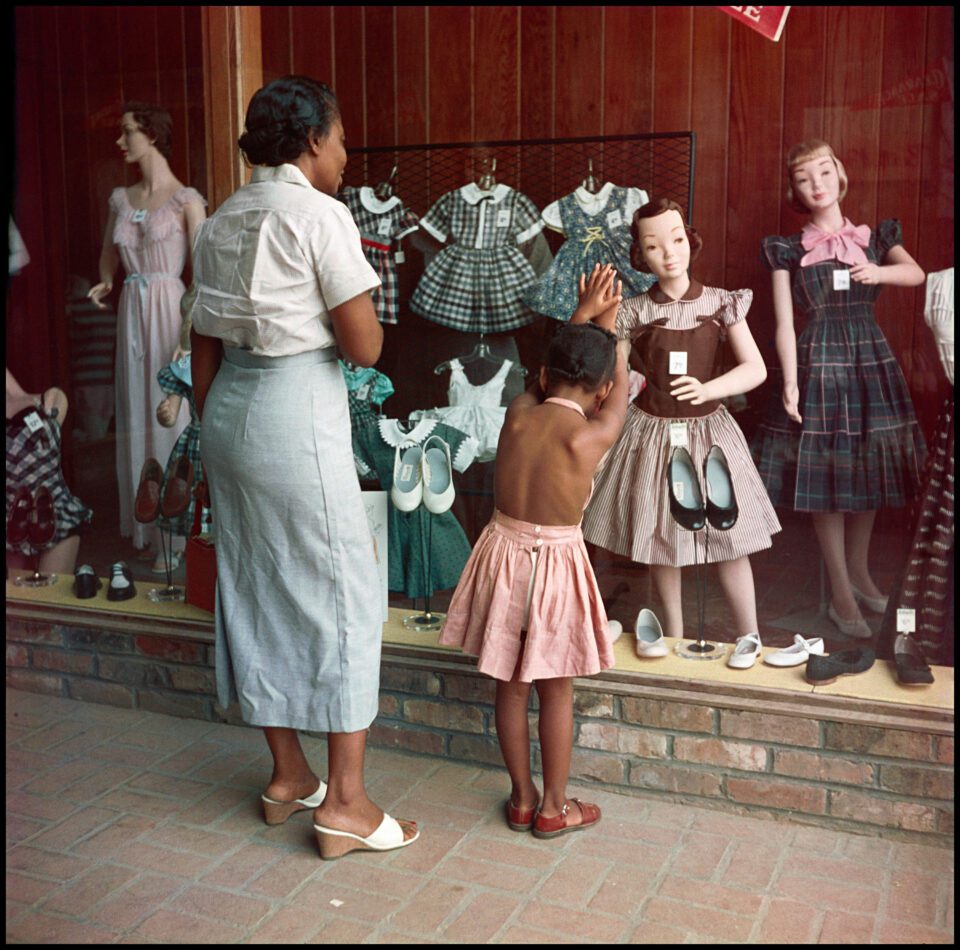
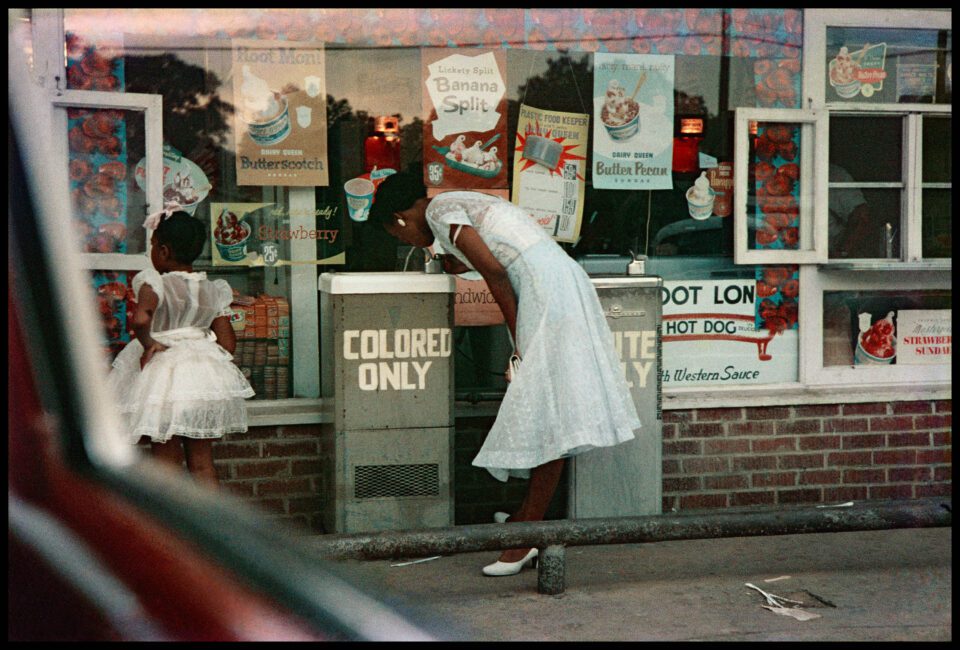
Another poignant moment comes from one of Parks’ projects for Life magazine. In 1956, the publication sent him to Alabama to document the daily realities of Black Americans living under Jim Crow laws in the rural South. Eschewing a journalistic approach that focused on the leaders and momentous events of the struggle for civil rights, Parks’ empathetic approach instead portrayed the common humanity of his fellow Americans going about daily life in unjust circumstances. In At Segregated Drinking Fountain, Mobile, Alabama (1956), Parks captured a young girl being helped up to drink for the “coloured only” water fountain in front of a general store, as two women look on. One of these women, Cora Taylor, recounts her experience as part of the show. “I wondered what was going on, because you didn’t know who to trust and who not to trust. I let my mother know about the photograph, in case anything went wrong. A few weeks later I saw the picture in Life magazine, and I just couldn’t believe it.”
Jack Shainman Gallery managed to do something unique with this show: bring a new perspective to one of the most revered photographers of the 20th century. Voices in the Mirror goes beyond reflecting on his impact on both 20th century art and social activism. The show brings him into the present day, placing him in direct dialogue with the people whose lives were directly affected by his work – reminding audiences why he remains such an enduring and beloved figure in contemporary lens-based practice.
Gordon Parks: Voices in the Mirror is at Jack Shainman Gallery, New York from 18 September – 7 November: jackshainman.com
Words: Emma Jacob
Image Credits:
1. Gordon Parks, The Invisible Man, Harlem, New York, 1952. Gelatin silver print42 x 42 inches (print) (GP52.010.L) © The Gordon Parks Foundation. Courtesy of The Gordon Parks Foundation and Jack Shainman Gallery, New York.
2. Gordon Parks, Drinking Fountains, Mobile, Alabama, 1956. Archival pigment print. 30 x 40 inches (print)24 1/2 x 36 1/4 x 1 1/4 inches (framed) (GP56.010.M) © The Gordon Parks Foundation. Courtesy of The Gordon Parks Foundation and Jack Shainman Gallery, New York.
3. Gordon Parks, Untitled, Miami, Florida, 1966. Gelatin silver print. 40 x 60 inches (print) (GP66.013) © The Gordon Parks Foundation. Courtesy of The Gordon Parks Foundation and Jack Shainman Gallery, New York.
4. Gordon Parks, Untitled, Mobile, Alabama, 1956. Archival pigment print. 64 x 64 inches (print) (GP56.026.XXL) © The Gordon Parks Foundation. Courtesy of The Gordon Parks Foundation and Jack Shainman Gallery, New York.
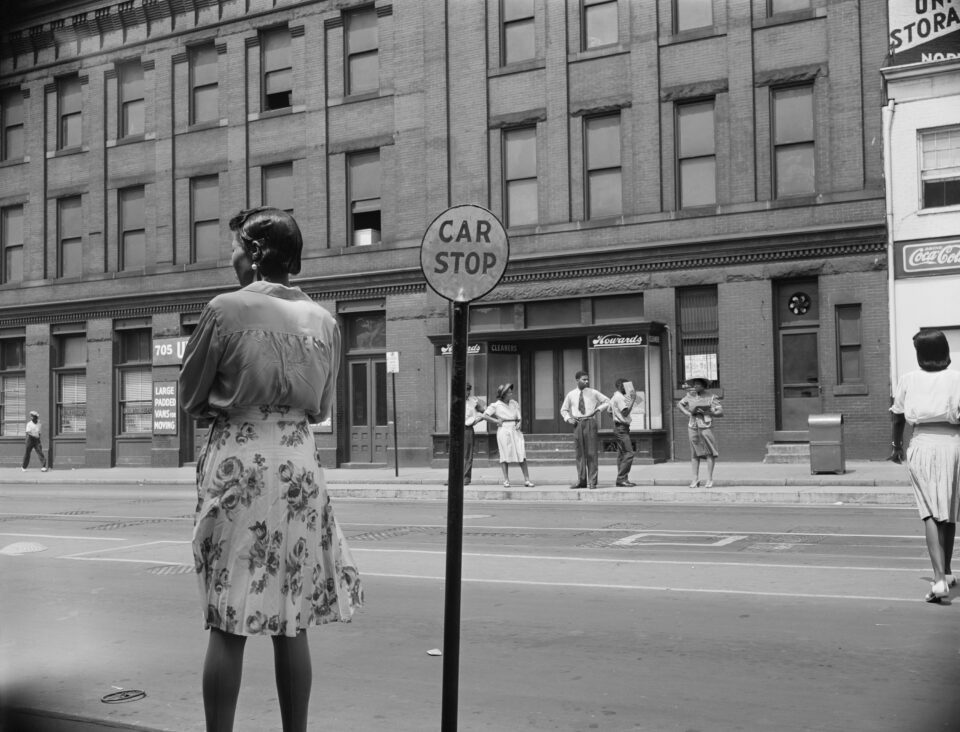
5. Gordon Parks, Untitled, Washington, D.C., 1942. Gelatin silver print 16 x 20 inches (GP42.025) © The Gordon Parks Foundation. Courtesy of The Gordon Parks Foundation and Jack Shainman Gallery, New York.