What happens when histories survive not only through monuments and official archives, but through landscapes, inherited images and the voices carried across generations? Saodat Ismailova’s practice begins from this question, examining the evolving ways in which communities remember amid political, environmental and social transformation. Her films do not attempt to restore a lost past or provide definitive accounts of Central Asian identity; instead, they reveal history as something continually shaped through ritual, oral traditions, family narratives and relationships to place. Saodat Ismailova: Melted into the Sun at the Smithsonian’s National Museum of Asian Art presents a significant body of recent moving-image and photographic works that position cinema as a space between documentation and imagination. At a moment when contemporary art is increasingly questioning who controls historical narratives and whose experiences are granted visibility, Ismailova’s poetic approach offers a powerful reflection on the complexity of memory and the limitations of reducing cultural histories into easily recognisable narratives.
The exhibition, Melted into the Sun, places Ismailova’s practice within a wider institutional reconsideration of how Asian histories are presented and understood. Rather than treating Central Asia as a historical subject preserved only through objects and archives, the exhibition seeks to frame it as an evolving cultural landscape shaped by memory, migration, environmental change and shifting relationships to place. The inclusion of two 19th century Uzbek ikat textiles from the museum’s permanent collection alongside contemporary film installations creates a conversation across time, material and artistic language. This relationship between textile and moving image is particularly revealing: both preserve patterns, gestures and narratives, carrying traces of the human experience across multiple generations. The is a curatorial approach that reflects a broader shift within museums towards exhibitions that do not simply display cultural histories, but examine how histories are formed, transmitted and interpreted.

Ismailova’s cinema occupies an unusual position between documentary and dream, resisting the expectation that images must provide straightforward evidence. Working between Paris and Tashkent, the artist draws from Central Asian oral traditions, archival materials and personal histories, yet her films often leave space for silence, uncertainty and ambiguity. This refusal of complete explanation is central to her practice, challenging an expectation within international art discourse that artists working from specific cultural contexts must translate complex histories into immediately recognisable narratives. The absence of explanation becomes a deliberate strategy, allowing viewers to encounter landscapes and stories as layered experiences rather than fixed accounts. Her films suggest that what is remembered through family, place and collective experience holds as much significance as what enters formal historical records.
The exhibition begins with 18,000 Worlds, a film that immediately establishes Ismailova’s interest in the relationship between past and present. Archival footage from 1920s Central Asia appears alongside images of contemporary landmarks, creating a visual dialogue between different historical moments rather than a conventional timeline. The work’s structure resists nostalgia, refusing to present the past as a complete or recoverable world. Instead, images appear as fragments – traces of lives, places and political transformations that continue to shape contemporary consciousness. This approach connects with wider debates in contemporary art around the archive, where artists increasingly question not only what historical images reveal, but also how archives are created, preserved and given authority.
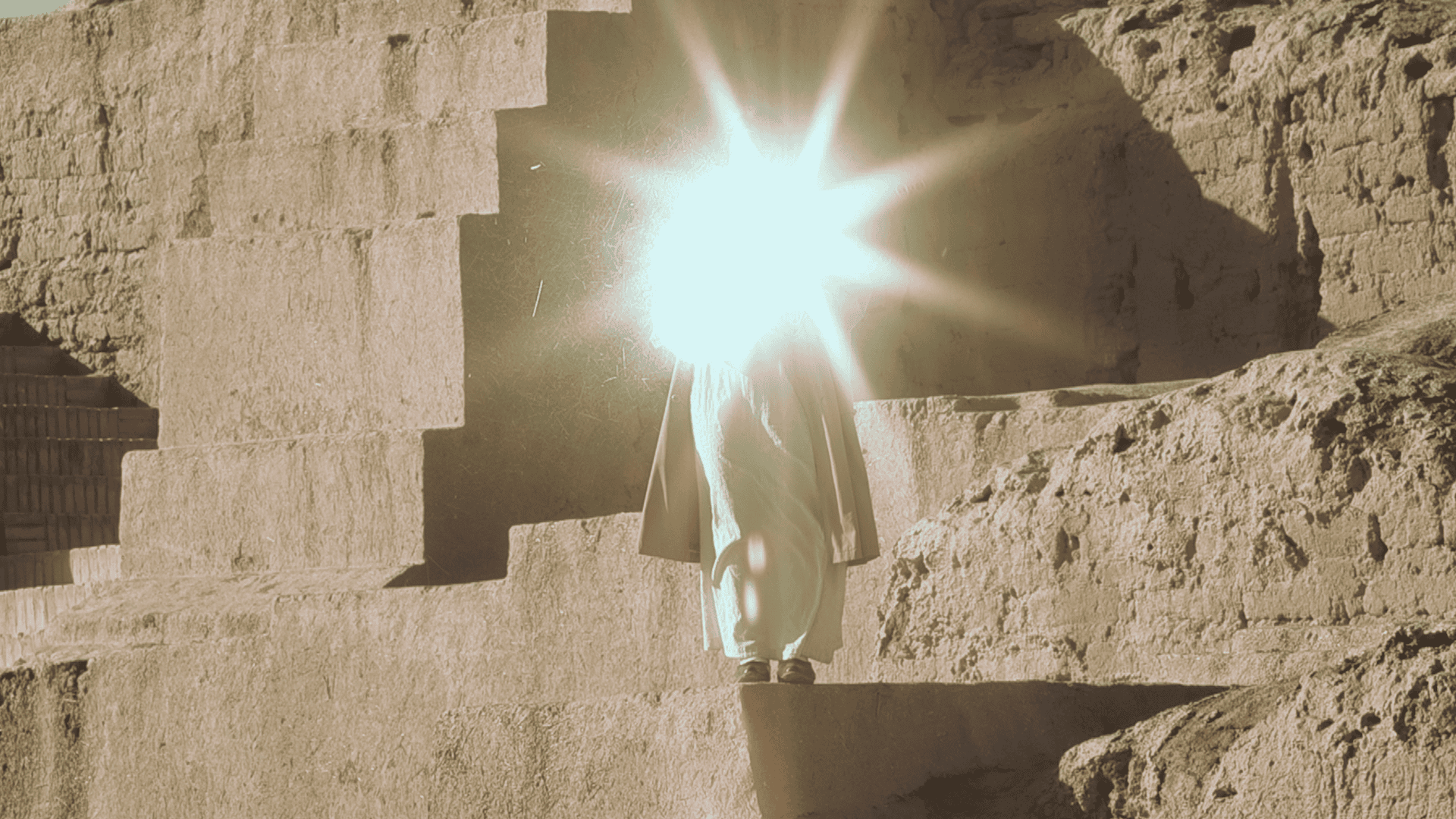
The material qualities of Ismailova’s installations often carry as much meaning as the images themselves. In Her Right, the projection surface is horsehair, a traditional material associated with Uzbek spiritual and domestic practices, including objects placed near saints’ tombs and woven into women’s veils. The moving image does not sit on a neutral screen; it emerges from a culturally significant surface that transforms the act of viewing into something physical and embodied. A montage of older Uzbek films dedicated to the sacrifices made by women for contemporary freedoms unfolds across this unusual material, creating a tension between cinematic representation and lived experience. The work asks difficult questions about how women’s histories are remembered, how agency is represented within national narratives, and whether images of sacrifice can ever fully capture the complexity of individual lives.
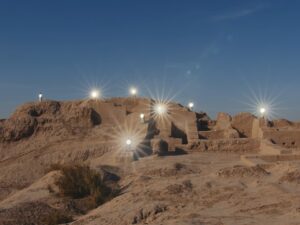
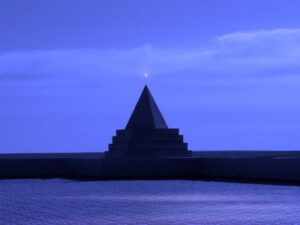
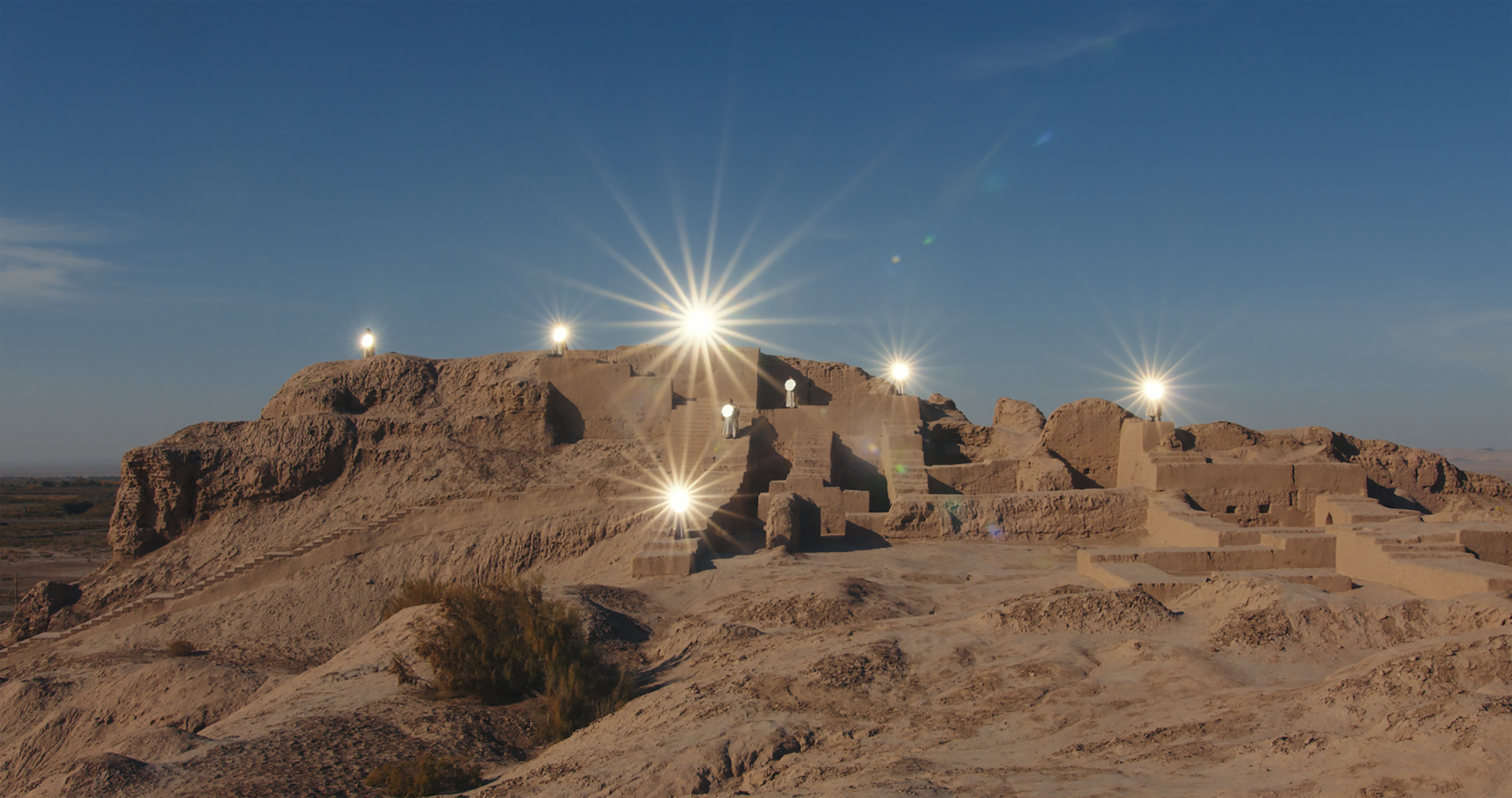
The title work, Melted into the Sun, moves further into the territory between history, legend and collective memory through the figure of al-Muqanna, the eighth-century figure known as “The Veiled One”. Rather than approaching this character as a historical subject to be reconstructed, Ismailova turns towards the symbolic possibilities of the story – the relationship between visibility and concealment, authority and belief. The figure’s refusal to be easily defined becomes central to the film’s atmosphere, where light, landscape and movement create a sense of transformation. The work reflects a wider contemporary interest in mythology as a form of knowledge that sits alongside historical record, revealing different understandings of power, belief and collective memory. In Ismailova’s hands, myth is not an escape from reality but another way of engaging with the histories, questions and values that shape societies over time.
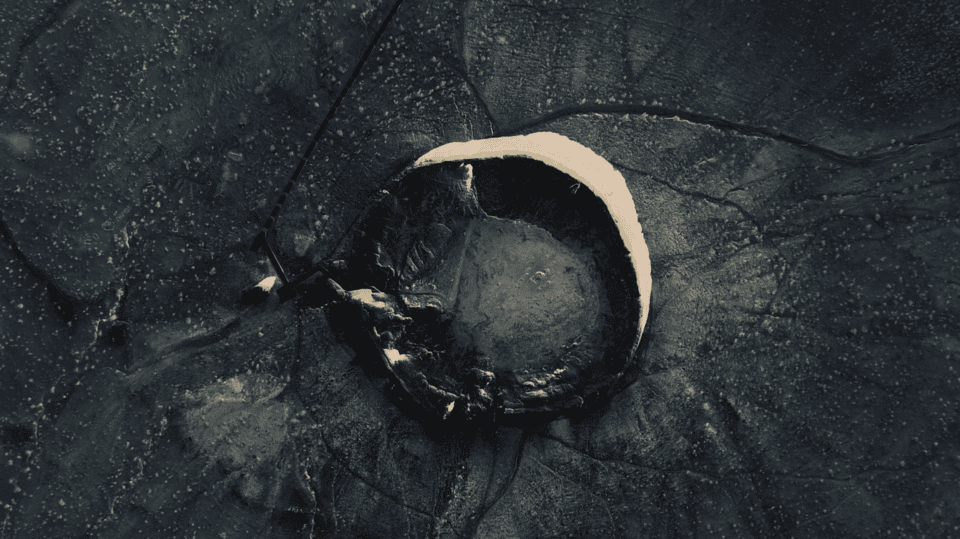
Personal memory becomes the focus of The Letters, a photographic series that brings the broader concerns of the exhibition into an intimate register. Portraits of Ismailova’s family members are layered with poetry, religious texts and handwritten reflections in multiple languages, creating images where identity appears as something assembled rather than inherited whole. The works resist the idea that belonging can be reduced to nationality, geography or a single cultural narrative. Instead, they present identity as a collection of voices, histories and emotional connections shaped by both private and collective experience. In doing so, Ismailova challenges the expectation that personal and regional histories must be explained through singular frameworks, allowing contradiction, complexity and multiplicity to remain visible.
Ismailova’s importance extends beyond her individual films, reflecting a broader expansion of international engagement with Central Asian contemporary ar. Her participation in international platforms including the Venice Biennale and documenta fifteen, alongside her establishment of Davra – a research collective supporting artistic development in Central Asia – demonstrates an ongoing commitment to expanding cultural networks and artistic dialogue. The global art system has often approached regions such as Central Asia through archaeological collections, ethnographic categories or geopolitical narratives, leaving contemporary artistic voices less visible within dominant international structures. Ismailova’s practice challenges this imbalance by presenting the region not as a subject to be interpreted from elsewhere, but as a site of complex artistic, intellectual and cinematic production. Her work contributes to a broader rethinking of how contemporary art histories are written and whose perspectives shape them.
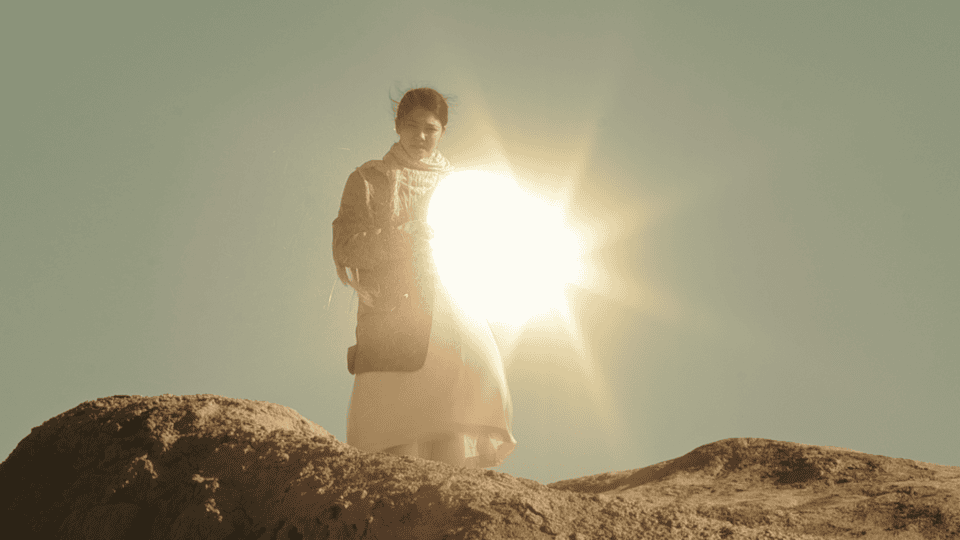
The timing of Melted into the Sun is opportunely significant within current museum and artistic discourse. As institutions reconsider questions of representation, ownership and historical authority, Ismailova’s work offers a model for engaging with cultural histories without the simplification of them for international audiences. Her films do not provide the easiest of answers about identity, memory or belonging; instead, they create spaces where uncertainty becomes productive. The landscapes she presents are not passive backdrops but active participants, holding traces of ecological change, political transformation and human experience. At a moment when global audiences often seek immediate access to unfamiliar histories, Ismailova’s refusal to over-explain becomes a powerful artistic position – a reminder that complexity, ambiguity and multiple interpretations are essential parts of cultural understanding.
Saodat Ismailova: Melted into the Sun in the Smithsonian’s National Museum of Asian Art shows that moving-image remains one of the most powerful mediums for reconsidering history and memory. Her cinema operates between the visible and invisible, bringing together archival fragments, personal testimony, contemporary realities and imagined worlds to reveal the richness of cultural experience. Ismailova’s films ask viewers to reconsider what counts as historical evidence, how narratives are constructed, preserved and shared. By refusing simplified definitions of Central Asian identity, she creates a more expansive vision – one shaped by silence as much as speech, by landscapes as much as people, and by the enduring human capacity to remember, reinterpret and transform the stories that connect generations.
Saodat Ismailova: Melted into the Sun is at National Museum of Asian Art, Washington D.C. until 29 November: asia.si.edu
Words: Simon Cartwright
Image Credits:
All images: Melted into the Sun, 2024, Courtesy @saodatismailova. Commissioned by Fondazione In Between Art Film and Batalha Centro de Cinema Porto.