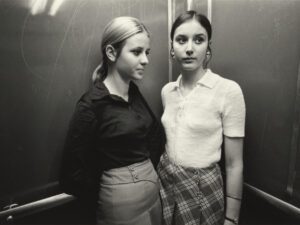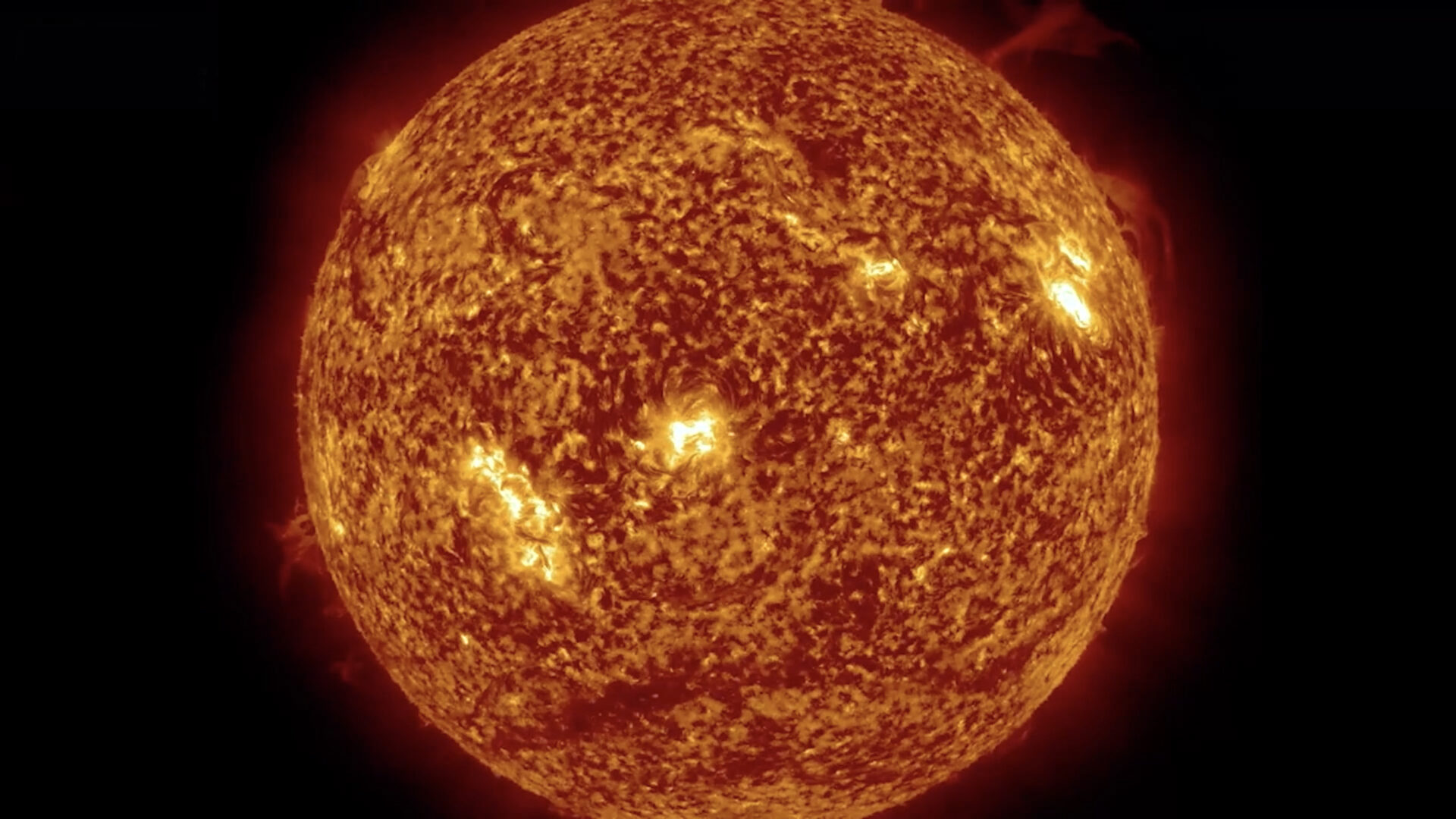
Every culture leaves behind an archive of its obsessions: faces it celebrates, histories it suppresses and images it repeatedly reproduces. Helter Skelter: Arthur Jafa and Richard Prince enters this unstable archive, examining the visual languages through which America has constructed, contested and reinvented itself. Across photography, film, sculpture and installation, the exhibition considers appropriation as both a creative process and a critical intervention. Curated by Nancy Spector for Fondazione Prada’s Venetian venue, Ca’ Corner della Regina, the project brings together two artists whose practices engage with a shared landscape of images whilst remaining shaped by distinct experiences of race, identity and cultural memory. Rather than presenting a dialogue based on similarity alone, the exhibition reveals how contrasting perspectives can illuminate the same cultural terrain.
Appropriation has occupied a complicated position within contemporary art because it disrupts established ideas of originality, ownership and artistic authority. Arthur Jafa and Richard Prince approach existing imagery not as passive material but as a charged archive of social meanings, political histories and emotional associations. Their methods extend a lineage that reaches back to Marcel Duchamp’s readymade, where the act of selection became a radical artistic gesture. By drawing from advertising, cinema, journalism, music and digital platforms, both artists question how images acquire power through circulation and who has the authority to shape cultural narratives. Familiar references become unstable objects, forcing viewers to reconsider what appears recognisable and what remains concealed beneath the surface. Yet their relationships to appropriation emerge from very different historical positions, with Jafa’s practice shaped by the specific legacies of racial exploitation, cultural ownership and representation.
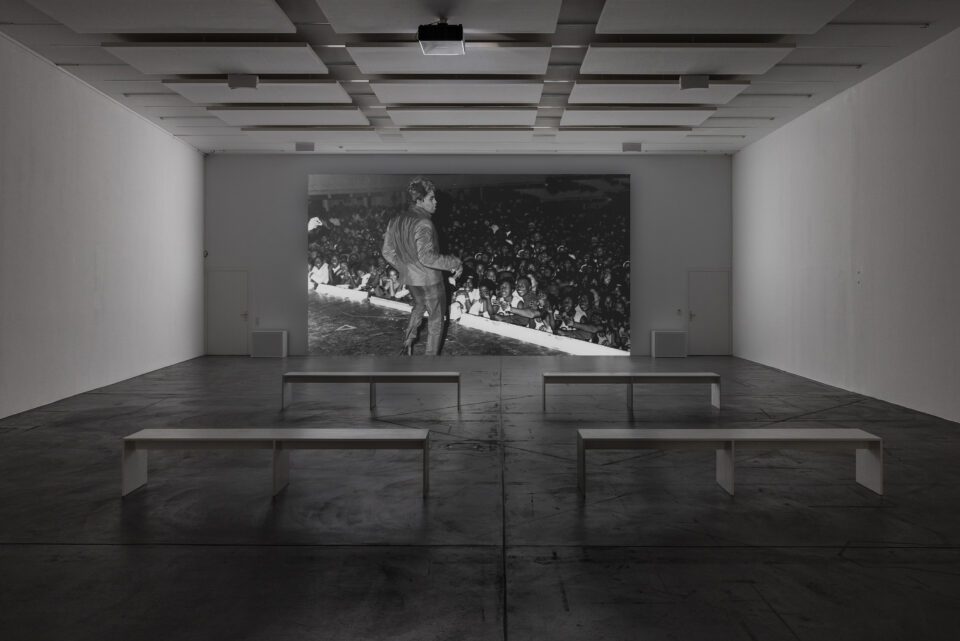
America provides both artists with an inexhaustible visual landscape, shaped by contradiction and excess. Popular culture becomes a space where freedom and exploitation, aspiration and violence, entertainment and trauma exist simultaneously. Spector’s curatorial framework allows these tensions to remain unresolved, creating encounters rather than imposing a singular interpretation. More than 50 works unfold throughout Ca’ Corner della Regina, bringing together photographs, videos, installations and sculptures that reveal unexpected relationships between the two practices. The exhibition functions as a complex exchange about how images construct national identity, social belonging and collective memory.
The phrase “Helter Skelter” itself operates as an unstable cultural fragment, carrying multiple histories within a single expression. Originally referring to a fairground attraction, the term moved through popular music, Charles Manson’s apocalyptic mythology and the controversial 1992 exhibition at the Museum of Contemporary Art, Los Angeles, which excluded Black artists from its account of contemporary culture. Such accumulated meanings make the title suited to a project concerned with appropriation, reinterpretation and cultural inheritance. Jafa and Prince embrace ambiguity, resisting singular readings and allowing cultural fragments to accumulate new meanings. The title becomes an example of the process explored throughout the exhibition – a found object transformed through context and association.
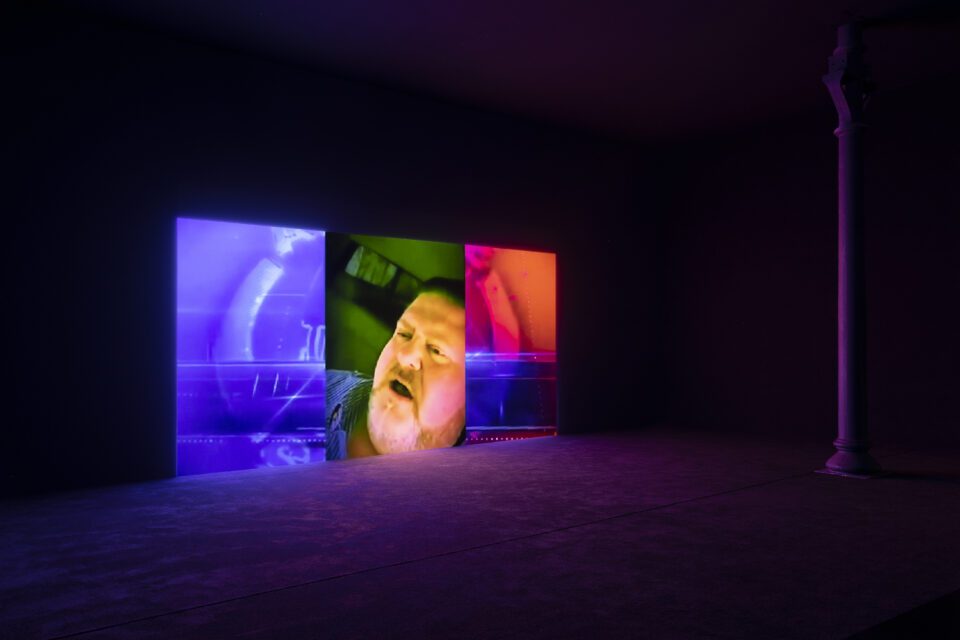
Richard Prince’s engagement with American mythology has established one of the most influential appropriative practices of recent decades. Since the late 1970s, his rephotographed advertisements and collected imagery have examined how consumer culture manufactures desire, aspiration and identity. Cowboys, celebrities, pulp fiction, pornography and subcultures appear throughout his work as symbols of freedom and unease, exposing fantasies that sit beneath mainstream representation. His practice does not reject popular culture; instead, it operates from within its seductive structures. Prince reveals the systems through which images gain authority, whilst questioning whether ownership can ever be absolute.
A dialogue between Prince’s Blasting Mats (2006) and Jafa’s Big Wheel II (2018) introduces these questions through objects associated with American movement, machinery and the mythology of the open road. Both works draw upon car culture and ideas of independence, speed and escape, yet their damaged surfaces suggest something closer to archaeological remains than celebrations of technological progress. Violence lingers within these forms, recalling the destructive forces that often accompany narratives of expansion. Through this encounter, Spector establishes the exhibition’s central argument: America’s dreams are inseparable from the histories that complicate them. Industrial materials become evidence of both invention and collapse, suggesting a civilisation examining the consequences of its own ambitions.
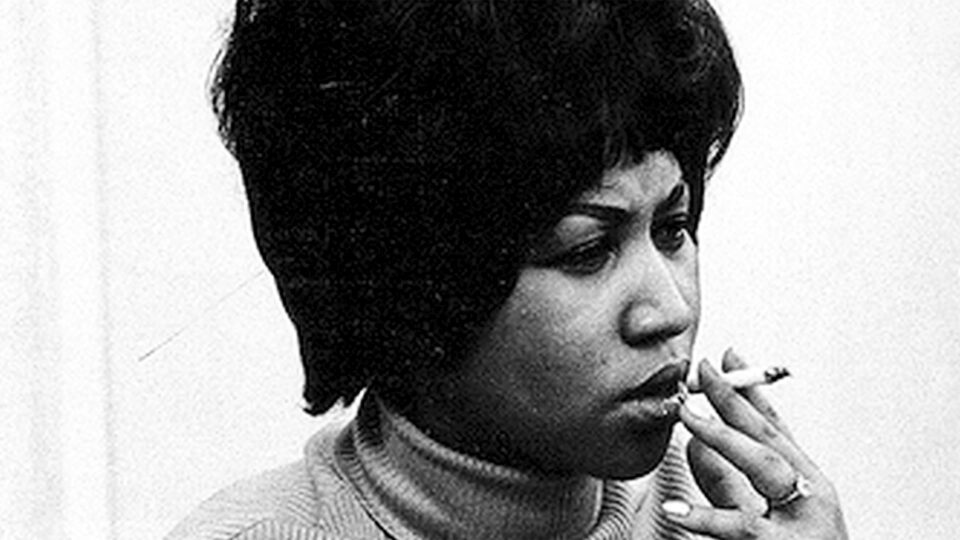
Jafa’s practice reconfigures cultural memory through the complexities of Black life and experience, using film and sound to explore how histories are felt, inherited and remembered. His celebrated video Love Is the Message, The Message Is Death (2016) combines footage of music, protest, celebrity and everyday life into a powerful meditation on the beauty, complexity and contradictions of Black identity in America. Rather than constructing a linear historical narrative, he creates a visual rhythm comparable to the structures of Black music, where repetition, improvisation and accumulation generate meaning. His work asks how cinema might communicate the emotional force, creativity and alienation embedded within Black cultural expression. The result is an approach to image-making that challenges conventional documentary forms while expanding possibilities for representing authentic lived experience.
Questions surrounding identity and visibility continue through works exploring celebrity culture. Prince’s The Entertainers (1982–1983) assembles publicity photographs of aspiring performers gathered from Times Square’s peep-show industry, transforming overlooked images into a study of ambition, exposure and desire. Alongside this, Jafa’s Viriconium (2026) creates a different form of archive through a gathering of musicians, intellectuals, artists, historical figures and controversial personalities. Both works suggest that identity is constructed through accumulation rather than certainty. Faces become fragments within cultural systems, reflecting how individuals are shaped by recognition and collective imagination.
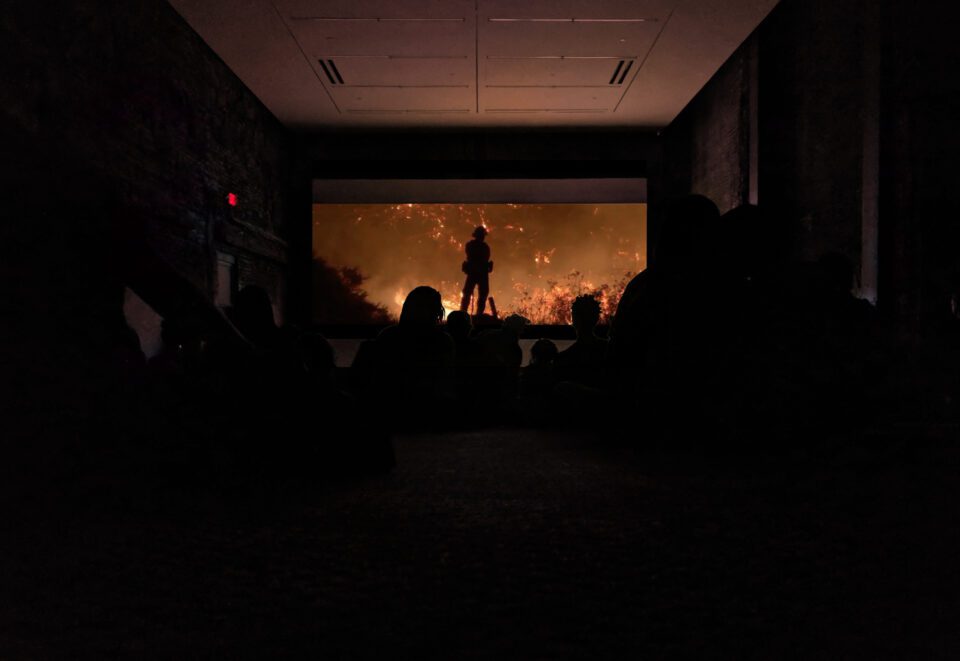
Race, whiteness and representation occupy some of the exhibition’s most challenging territory. Jafa’s The White Album (2018) examines whiteness as a cultural and social construct through a fragmented collection of images and references, questioning how dominant identities are produced and maintained. Prince’s White Paintings (1980–1992) similarly interrogate ideological structures hidden within American humour, transforming cartoon imagery into ambiguous compositions where comedy and hostility become difficult to separate. Their approaches differ, yet both reveal how visual culture can normalise assumptions through repetition. These works contribute to wider contemporary debates around representation, asking who is visible, who is excluded and how images participate in systems of power.
Violence, desire and ethical responsibility become central concerns in works that revisit suppressed narratives. Jafa’s BEN GAZARRA (2024) reimagines Martin Scorsese’s Taxi Driver (1976) through its original casting concept, exposing racial dynamics embedded within a film often discussed through different cultural frameworks. Prince’s Spiritual America (1983), one of his most contested works, examined the relationship between visibility, exploitation and the circulation of images while raising enduring ethical questions around representation and consent. Both artists understand appropriation as a means of uncovering what conventional narratives leave unresolved, although their methods operate within very different social and historical contexts. Their practices engage with broader debates in contemporary criticism surrounding the ethics of looking and the responsibilities attached to representation.
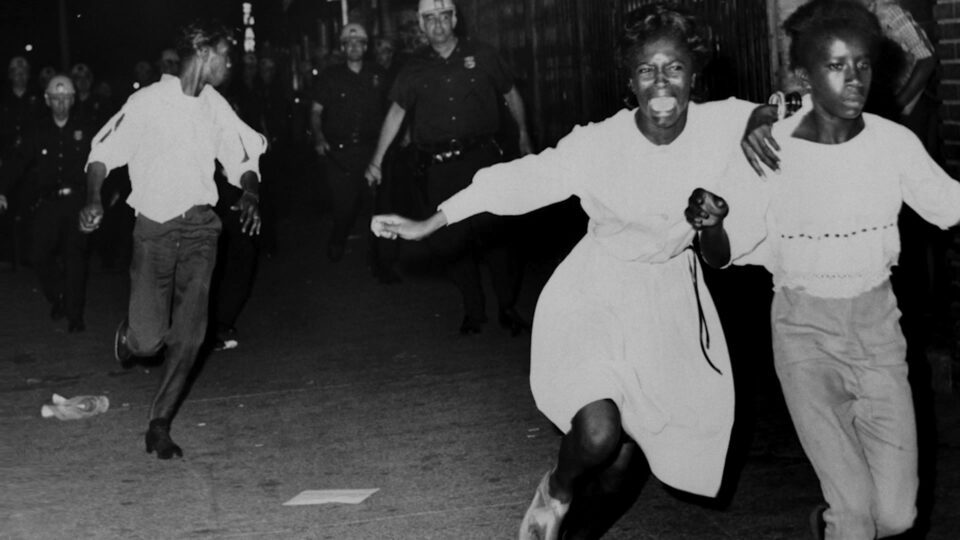
Faith and spirituality provide another point of connection, revealing how belief systems shape cultural identity. Jafa’s akingdoncomethas (2018) combines footage of Black religious traditions, gospel performance and environmental catastrophe, creating a meditation on suffering, hope and collective survival. The work reflects his interest in belief as an active force rather than a fixed institution, suggesting that faith exists through lived experience, communal expression and the possibility of transformation. Prince approaches spirituality through America’s myths, symbols and fantasies, examining the stories that sustain national identity. Together, these perspectives reveal a culture suspended between redemption and crisis, where spiritual longing exists alongside histories of oppression.
Helter Skelter: Arthur Jafa and Richard Prince ultimately examines what happens when images refuse to remain stable. In an era defined by constant circulation, digital reproduction and accelerated visual consumption, Jafa and Prince demonstrate how existing materials can become instruments of critique. Their practices reveal that appropriation is not simply about taking images but about questioning the systems that give those images meaning. Through Spector’s careful curation, the exhibition becomes a meditation on memory, ownership and cultural inheritance. Rather than offering a definitive portrait of America, it presents a fragmented landscape – one where images continue to shape, challenge and expose the narratives through which societies understand themselves.
Helter Skelter: Arthur Jafa and Richard Prince is at Fondazione Prada, Venice until 23 November: fondazioneprada.org
Words: Shirley Stevenson
Image Credits:
1. Arthur Jafa, Love Is The Message, The Message Is Death, 2016. Video (colore, bianco e nero, suono) Durata: 7’25’’The Museum of Contemporary Art, Los Angeles. Acquisito con i fondi del Consiglio direttivo e di Arthur Lewis e Hau Nguyen© Arthur Jafa.
2. Arthur Jafa, SloPEX, 2023. Video a singolo canale (colore, suono)105’© Arthur Jafa Immagine della mostra presso Luma Westbau, Zurigo, 2023. Foto: Nelly Rodriguez.
3. Arthur Jafa, The White Album, 2018. Video a singolo canale (colore, suono) 29’55’’© Arthur Jafa. Immagine della mostra “Arthur Jafa: Live Evil” presso LUMA Arles, Francia, 2022. Foto: Andrea Rossetti.
4. Arthur Jafa, SloPEX, 2023. Video a singolo canale (colore, suono). 105’Collezione Udo e Anette Brandhorst © Arthur Jafa.
5. Arthur Jafa, akingdoncomethas, 2018 Video (colore, suono)101’© Arthur Jafa. Immagine della mostra presso Gavin Brown’s Enterprise, New York, 2018. Courtesy di Arthur Jafa e Gladstone.
6. Arthur Jafa, SloPEX, 2023. Video a singolo canale (colore, suono). 105’Collezione Udo e Anette Brandhorst © Arthur Jafa.