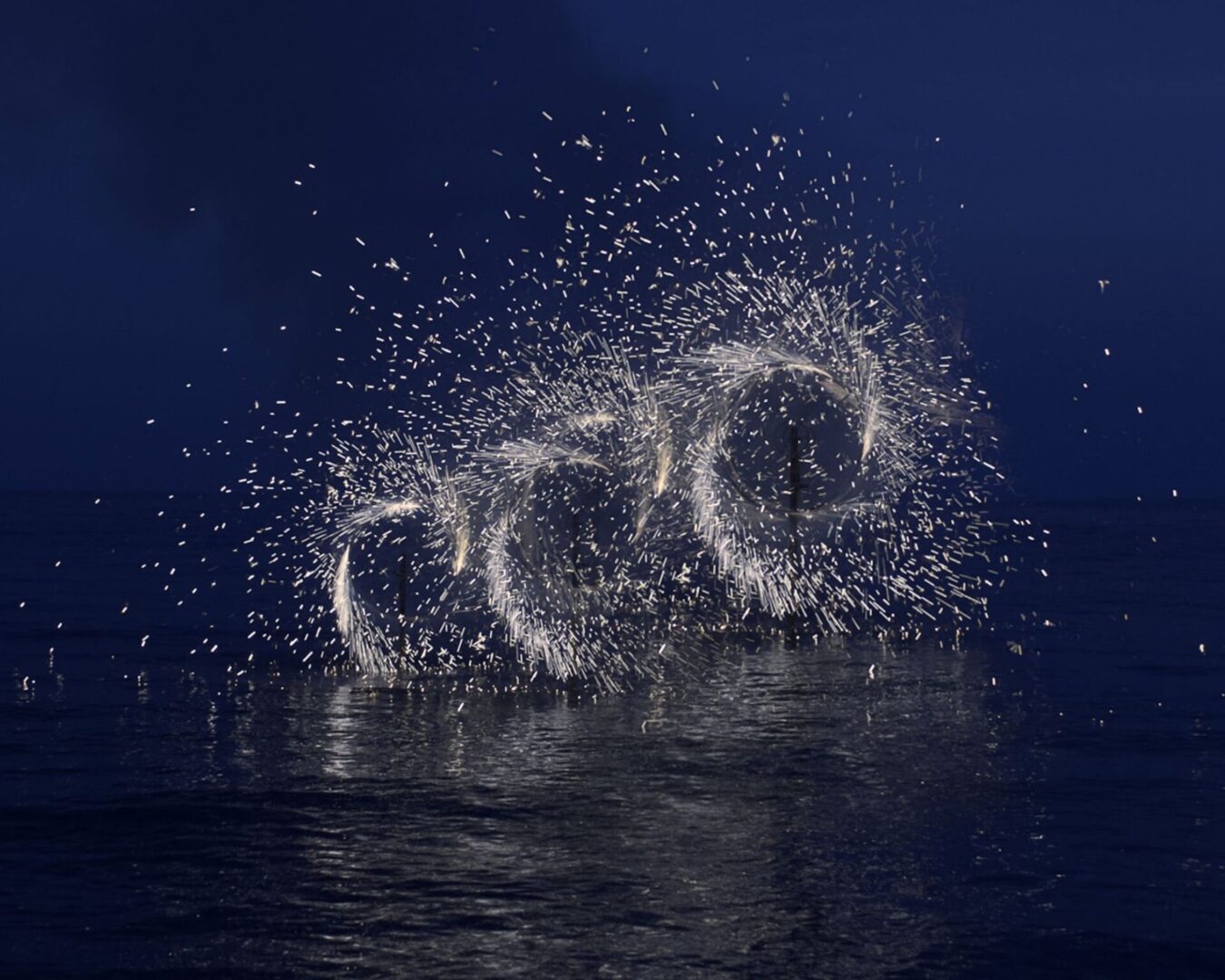
In 1831, an underwater volcano eruption gave rise to a new landform between Tunisia and Sicily. The area was around half a mile in diameter and 60 metres above the sea, but many people believed they were witnessing the birth of a new continent. Its emergence, which happened to be at the very centre of European shipping routes, sparked a violent sovereignty dispute among the continent’s powers. Five months later, it vanished beneath the ocean’s surface, leading some to name it “the island that isn’t there.” Elisa Giardina Papa’s latest moving-image piece takes this story as its subject. She Flickered in and Out of History explores the geological, mythological and political temporalities of the Mediterranean through the historical and speculative narrative of this island, which refused to be annexed.
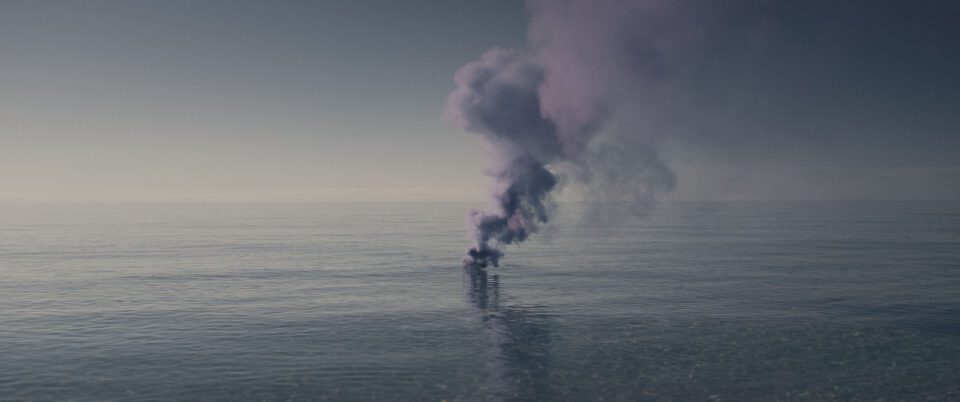
The video and mixed-media installation is on display at the Institute of Contemporary Arts, London, forming part of an impressive summer programme. The piece follows U Scantu: A Disorderly Tale (2022), which premiered at the 59th Venice Biennale and The Milk Dreams, making it the third in a trilogy of Giardina Papa’s work that explores forgotten Mediterranean histories. It’s a continuation the artist’s ongoing investigation into forms of knowledge and desire that have been lost or neglected. At a time when ideas of territorial conquest and control are resurging, She Flickers In and Out of History invites audiences to reflect on the authority of these ambitions and the conditions under which they are constructed.
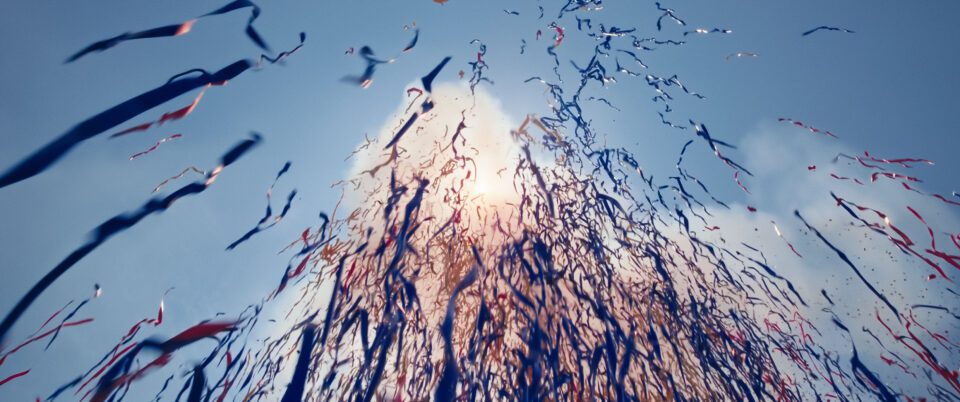
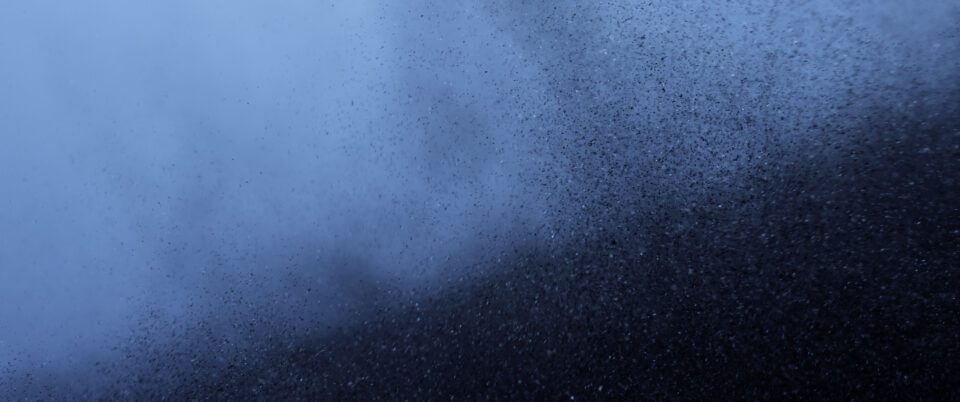
Giardina Papa filmed the work on Mount Etna, Stromboli and along the submerged slopes of Mediterranean volcanic islands. In the video, the visual environment is elemental: an ecosystem of unstable, submerged and resurfaced matter that flickers between abstraction and legibility. In her retelling, the island of the historical narrative – something singular to be taken and owned – is rendered elusive, visually and sonically depicted as formations of seawater ripples, pyroclastic material, volcanic ash and floating pumice rafts. The unruly agency of the natural landscape is the protagonist in the story; the historical actors and accounts are left outside of the frame. The artist says: “The island is a shapeshifter: materially ungovernable, staging a tension between emergence, accumulation, erosion and dispersion – always already new, always already gone. Incomputable and resistant to capture and measurement, it unsettles the imperial, ordering gaze, rendering project of conquest – past and present – absurd.”
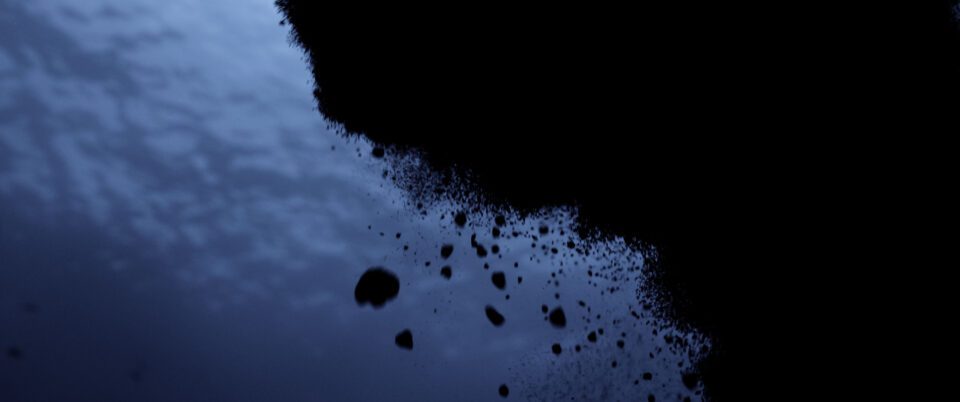
The video is presented on a large, free-standing LED screen, alongside a series of sculptures and photographs. A poem spoken in Sicilian and set to an original score by New York-based composer duendita threads through the visual narrative, weaving together historical records with reflections on decolonial and queer temporalities. Sculptures in glass and volcanic stone, together with cameraless photographs, materialise a key aspect of the narrative. In deep, saturated hues, they embody the last stanza of the poem, which draws on historical observations of the altered colour of the sun following the 1831 underwater eruption. Caused by the release of volcanic particles and sulphur aerosols into the atmosphere, observers from the Mediterranean to the Middle East and Caribbean reported seeing blue, green and purple suns.
Exhibition curator Andrea Nitsche-Krupp describes the artist’s work as “a moving new proposition for political agency.” It’s a fitting way to describe such a pioneering show, which takes an event, largely confined to the annals of history, and breathes new life into it. This inanimate object becomes a blueprint for an alternative way of living, encouraging audiences to see land not as something to be extracted, used and drained, but a living entity to be respected. In this, it’s a vital and timely exhibition.
She Flickered In and Out of History is at ICA, London from 17 July – 6 September: ica.art
Words: Emma Jacob
Image Credits:
Elisa Giardina Papa, She Flickered In and Out of History, 2026. Video installation, 18 minutes, variable dimensions. Still from the video. Courtesy of the artist. The projectis supported by the Italian Council program (2024) promoted by the Directorate-General for Contemporary Creativity of the Italian Ministry of Culture.