Few artists working today possess the ability to transform moving image into a sustained field of ethical attention quite like Amar Kanwar. His practice resists the contemporary economy of instant legibility, instead constructing durational environments in which history, testimony and perception remain deliberately unresolved. At Serpentine, the forthcoming exhibition at Serpentine North unfolds less as a retrospective than as an epistemological proposition: what might it mean to look slowly in a culture that privileges speed, extraction and resolution? Bringing together major existing works alongside the premiere of The Charcoal Man, the exhibition situates violence, displacement and reconciliation not as thematic content but as ongoing conditions of experience. It is precisely this refusal of closure that gives Kanwar’s work its force, proposing slowness not as aesthetic strategy but as ethical stance.
Kanwar’s significance becomes clearer when placed within a broader shift in contemporary image culture, where moving image practices increasingly operate at the intersection of cinema, installation and philosophical enquiry. Based in New Delhi, he has developed over more than two decades a body of work that moves between documentary, essay film, archival assemblage and literary form, without settling into any single category. His work emerges from the historical and political specificity of the Indian subcontinent, particularly the enduring afterlives of Partition, yet it consistently resists being contained by regional framing. Instead, it opens outward into questions of how histories of violence are perceived, narrated and internalised. Like the expanded essayistic structures of John Akomfrah, Kanwar builds layered temporalities where archival fragments and present-tense experience coexist without hierarchy.
This emphasis on duration and ethical spectatorship situates Kanwar alongside a broader constellation of artists who have redefined cinematic form over the past two decades. The durational strategies of Steve McQueen, for instance, similarly interrogate the politics of looking, though McQueen often anchors his installations in the framing of historical testimony and institutional archive. Shirin Neshat, by contrast, explores the intersection of image, text and voice to articulate fractured identities shaped by exile and nationhood, while Apichatpong Weerasethakul dissolves narrative into dreamlike registers where memory, myth and political history become indistinguishable. Kanwar shares with these practices an expanded sense of cinema, yet his work is marked by a distinctive refusal to aestheticise resolution; instead, he constructs forms in which uncertainty remains structurally embedded.
The institutional framing of this exhibition also matters. Serpentine occupies a particular position within London’s cultural ecology, distinct from but in dialogue with the programming of the Tate and the Hayward Gallery. While Tate has historically shaped the canon of modern and contemporary art through collection-based narratives, and the Hayward has foregrounded experimental exhibition formats, Serpentine has increasingly defined itself through process-driven commissions, cross-disciplinary collaboration and temporally expansive installations. Within this context, Kanwar’s work does not appear as an outlier but as a logical extension of an institutional commitment to practices that resist fixed interpretation. The gallery becomes less a container for artworks than a temporal framework in which perception itself is staged.
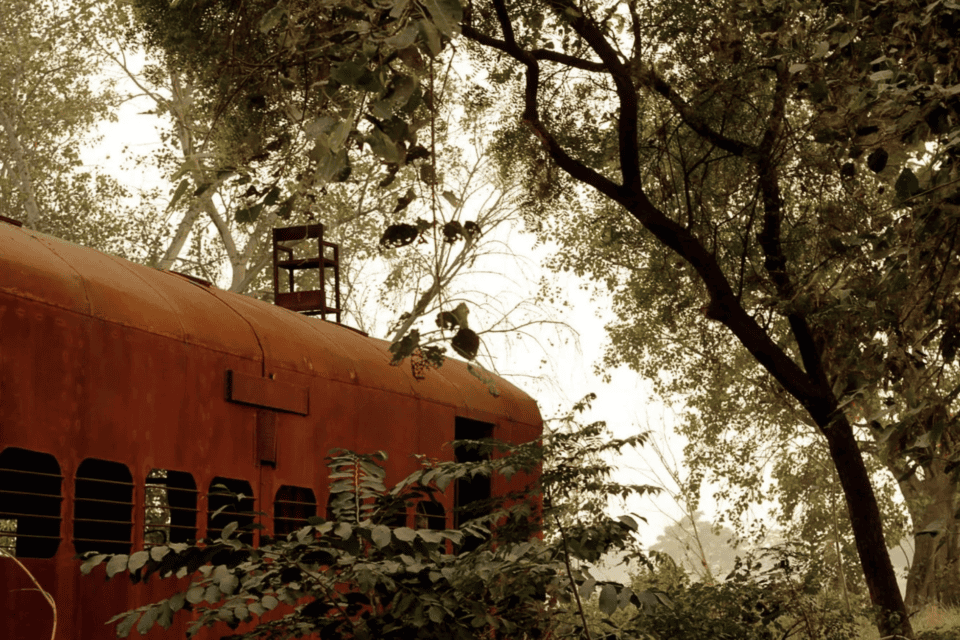
Within the exhibition, three major bodies of work establish a shifting field of attention rather than a linear progression. The Peacock’s Graveyard (2023), Such a Morning (2017) and the new installation The Charcoal Man (2026) operate less as discrete works than as interrelated propositions concerning memory, rupture and transformation. Across these installations, Kanwar consistently refuses the stabilising logic of narrative resolution, instead distributing meaning across screens, texts and spatial arrangements. This fragmentation is not simply formal but conceptual: it mirrors the ways in which historical experience itself resists coherence. The exhibition therefore functions as a constellation, in which relations between works are provisional, contingent and continually reconfigured by the viewer’s movement.
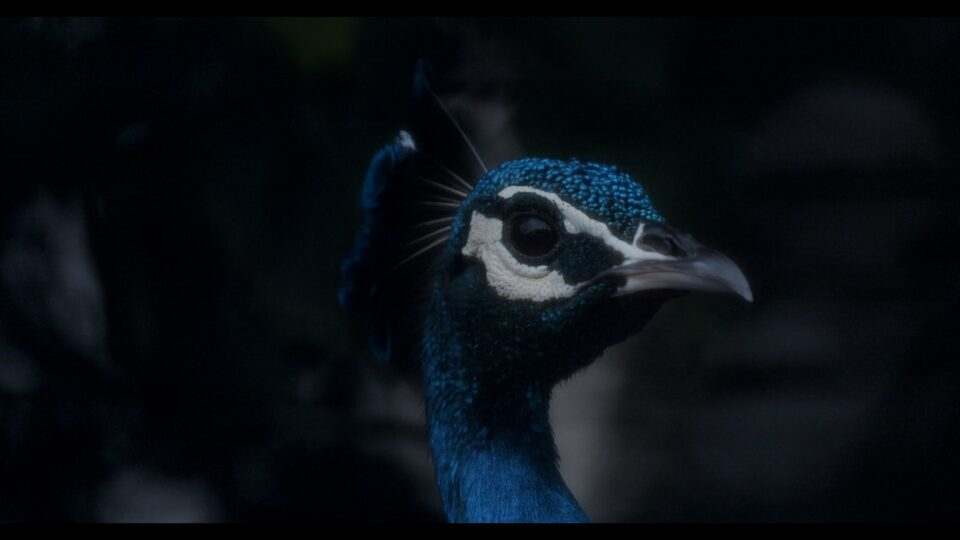
The Peacock’s Graveyard exemplifies this polyphonic structure through its seven-screen configuration, in which moving images and narrative fragments circulate without central hierarchy. Drawing on oral histories, mythic structures and contemporary testimony, the work constructs what might be described as an ecology of stories rather than a singular narrative line. Kanwar has described the work “not as a lament or mourning, but perhaps a kind of gift, a collection of stories, something to keep by one’s side every day,” a formulation that shifts emphasis from representation to accompaniment. In this sense, the work does not ask to be interpreted so much as inhabited, its meaning emerging through duration and return. The influence of artists such as William Kentridge is discernible in this layering of allegory and historical residue, yet Kanwar’s approach remains distinct in its refusal to resolve fragmentation into synthesis.
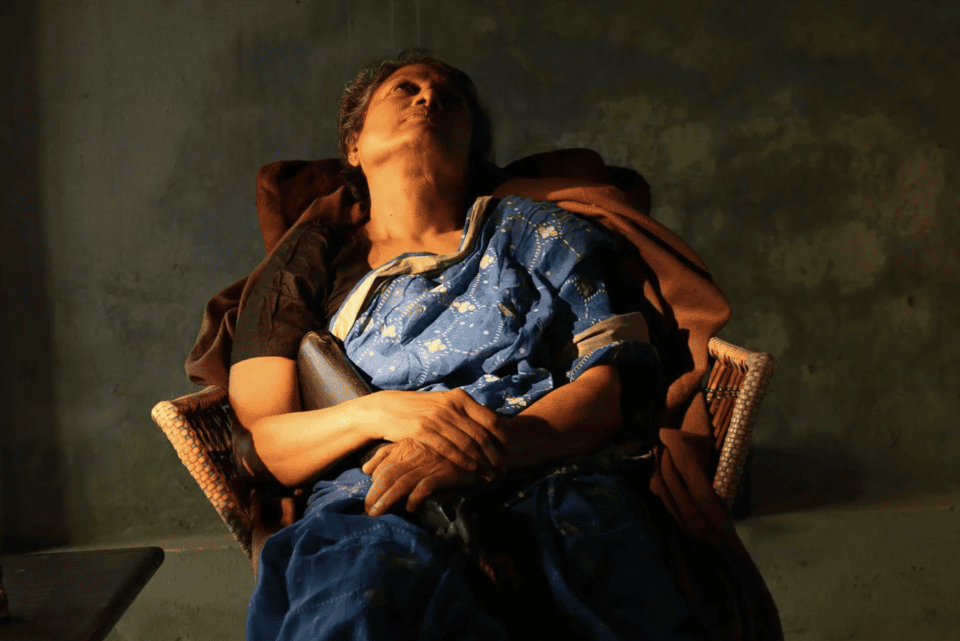
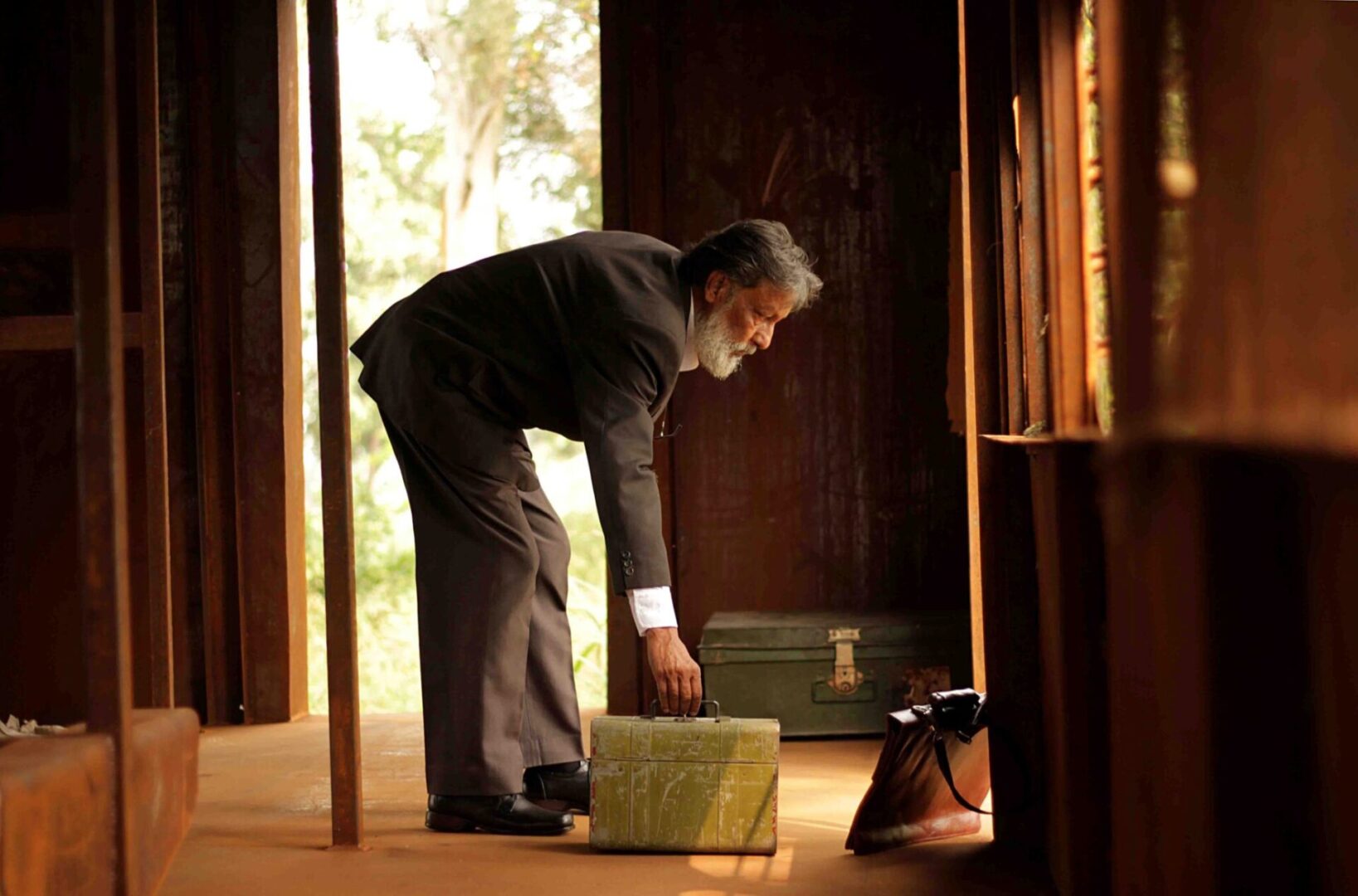
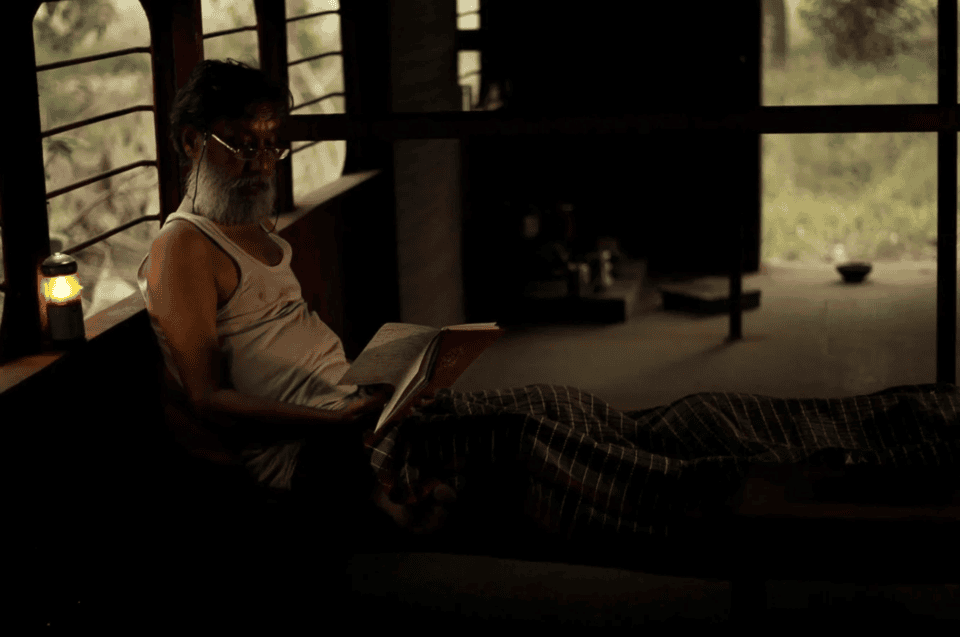
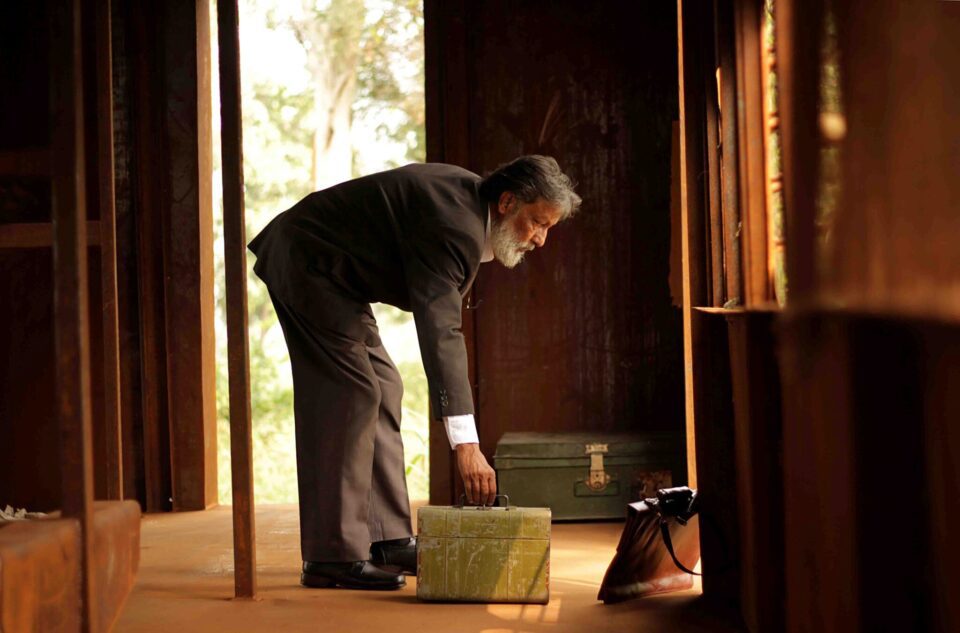
If The Peacock’s Graveyard disperses attention across multiplicity, Such a Morning concentrates it within conditions of withdrawal and perceptual reduction. The film’s premise—a mathematician retreating into an abandoned railway carriage—functions less as narrative than as a device for thinking through darkness as epistemological space. As vision diminishes, the film constructs an “Almanac of the Dark,” cataloguing states of perception that unsettle the hierarchy between seeing and knowing. The work recalls certain traditions of structural and philosophical cinema, yet its concern is not formal reduction but the transformation of perception under conditions of uncertainty. Darkness here becomes not absence but method, a way of suspending certainty long enough for other forms of understanding to emerge.
The culmination of the exhibition in The Charcoal Man extends these concerns into a renewed engagement with historical aftermath. Developed over several years, the work returns to the Partition of India and Pakistan not as a closed historical event but as an ongoing structure of feeling that continues to shape contemporary political and social realities. Kanwar has described the installation as seeking “coherence from disintegration, insight from fusion, and stories from within stories,” a formulation that captures its recursive and non-linear logic. Rather than offering historical explanation, the work stages history as fragmentation, where meaning emerges only through partial, unstable reconstruction. In this sense, the installation operates as both archive and counter-archive, resisting the consolidation of a narrative frame.
Serpentine’s presentation of these works underscores an institutional willingness to accommodate forms that resist conventional exhibition logic. Reflecting on Kanwar’s practice, Bettina Korek and Hans Ulrich Obrist describe him as “one of the singular voices of our time,” noting his expansion of what film can be within exhibition contexts and his commitment to a “different rhythm” of attention, borrowing from Édouard Glissant. This notion of rhythm is crucial: it reframes the exhibition as a temporal structure in which viewers must adjust their own perceptual tempo. In this sense, Serpentine’s role is not simply to present Kanwar’s work but to construct conditions under which its ethical demands can be encountered.
What ultimately distinguishes Kanwar’s practice is its insistence that looking is never passive. Across his films and installations, perception is repeatedly staged as a site of ethical negotiation, where history is neither resolved nor distanced but persistently present. This places his work in dialogue not only with contemporary peers but with longer traditions of essayistic and experimental cinema, from Chris Marker to the expanded cinematic practices of the present. However, Kanwar’s contribution lies in the way he holds open the tension between witnessing and understanding, refusing to collapse one into the other. In doing so, the exhibition asks how we might continue to see within worlds shaped by rupture.
In this sense, Amar Kanwar at Serpentine becomes less an exhibition than a proposition about the ethics of perception itself. At a moment when images circulate with increasing velocity yet diminishing depth, Kanwar’s work insists on duration as a form of resistance. It asks viewers not simply to look, but to remain with what resists being fully known. That insistence on remaining – with uncertainty, with fragmentation, with unresolved histories – defines the exhibition’s quiet force. And in doing so, it reframes cinema not as a vehicle for resolution, but as a space in which thinking, like seeing, must remain continually in motion.
Amar Kanwar is at Serpentine North, London from 23 September 2026 – 31 January 2027: serpentinegalleries.org
Words: Shirley Stevenson
Image Credits:
1&6. Amar Kanwar, Such a Morning, 2017 (film still). Digital video, 4K, colour, sound, 85 min. Courtesy of the artist and Marian Goodman Gallery.
2. Amar Kanwar, The Peacock’s Graveyard, 2023 (film still). Digital video installation, 7 screens, dimensions variable, 28 min., 16 sec. Courtesy of the artist and Marian Goodman Gallery.
3. Amar Kanwar, Such a Morning, 2017 (film still). Digital video, 4K, colour, sound, 85 min. Courtesy of the artist and Marian Goodman Gallery.
4. Amar Kanwar, Such a Morning, 2017 (film still). Digital video, 4K, colour, sound, 85 min. Courtesy of the artist and Marian Goodman Gallery.
5. Amar Kanwar, Such a Morning, 2017 (film still). Digital video, 4K, colour, sound, 85 min. Courtesy of the artist and Marian Goodman Gallery.