Thomas Heatherwick occupies a distinctive position in contemporary architecture, not simply as a designer of buildings but as a figure who has helped reframe how public space is conceived, experienced and debated in the 21st century. Through Heatherwick Studio, his work has consistently challenged the dominance of architecture as image, instead foregrounding movement, encounter and civic feeling. Over the past two decades, his projects have sat between design, infrastructure and cultural policy, prompting wider conversations about how cities might better serve everyday life. This influence extends beyond individual commissions, shaping how institutions and developers think about permeability, access and the social life of buildings. It is within this broader context of urban recalibration that the transformation of Olympia can be understood as a pivotal moment in London’s evolving cultural geography.
West London has long been defined by contrasts, where grand institutional structures, industrial legacies and residential neighbourhoods exist in close proximity yet remain unevenly connected. Within this landscape, Olympia has historically functioned as both landmark and anomaly, centrally located yet physically withdrawn from the rhythms of surrounding streets. For much of its 140-year history, its vast perimeter operated as a sealed edge condition, generating moments of intense cultural activity while remaining largely inaccessible in daily urban life. The building hosts exhibitions, performances and fairs without fully integrating into the city that contained it. Recent shifts in urban thinking, however, have placed renewed emphasis on dismantling such separations in favour of more porous civic environments.
This broader rethinking of cultural infrastructure is evident across multiple geographies, where institutions are increasingly acting as catalysts for urban transformation. In London, V&A East demonstrates how major collections can be repositioned within post-industrial districts to generate new public routes and patterns of movement. Likewise, London College of Fashion integrates education, industry and public engagement within a vertically stacked campus that actively blurs institutional boundaries. Outside the UK, the High Line in New York has redefined obsolete infrastructure as a linear civic landscape, transforming disused rail into one of the world’s most influential urban parks. Meanwhile, Zeitz MOCAA in Cape Town has converted a monumental grain silo into a cultural anchor for contemporary African art, reframing industrial heritage as a space for global cultural exchange. Together, these projects illustrate how architecture can operate as an engine of urban and cultural reorientation.
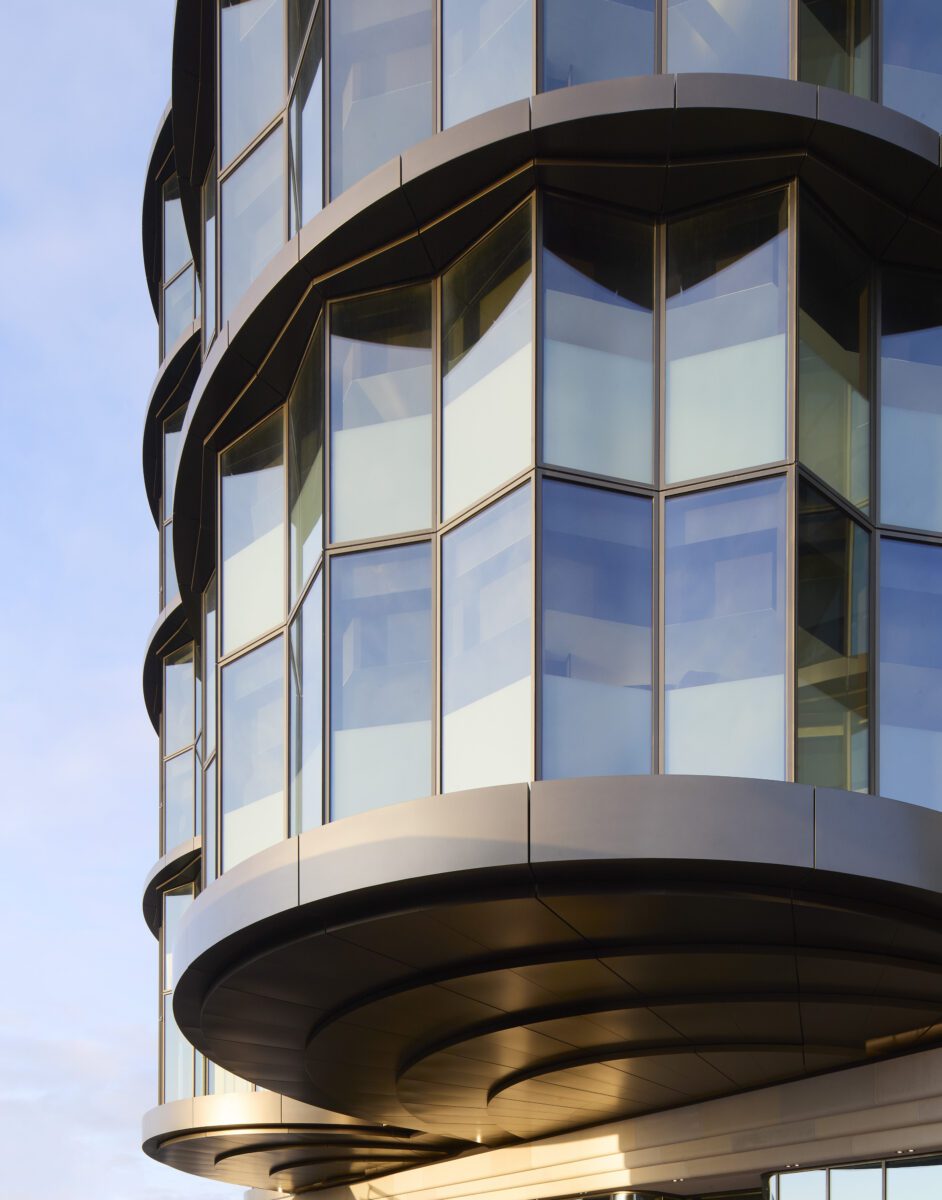
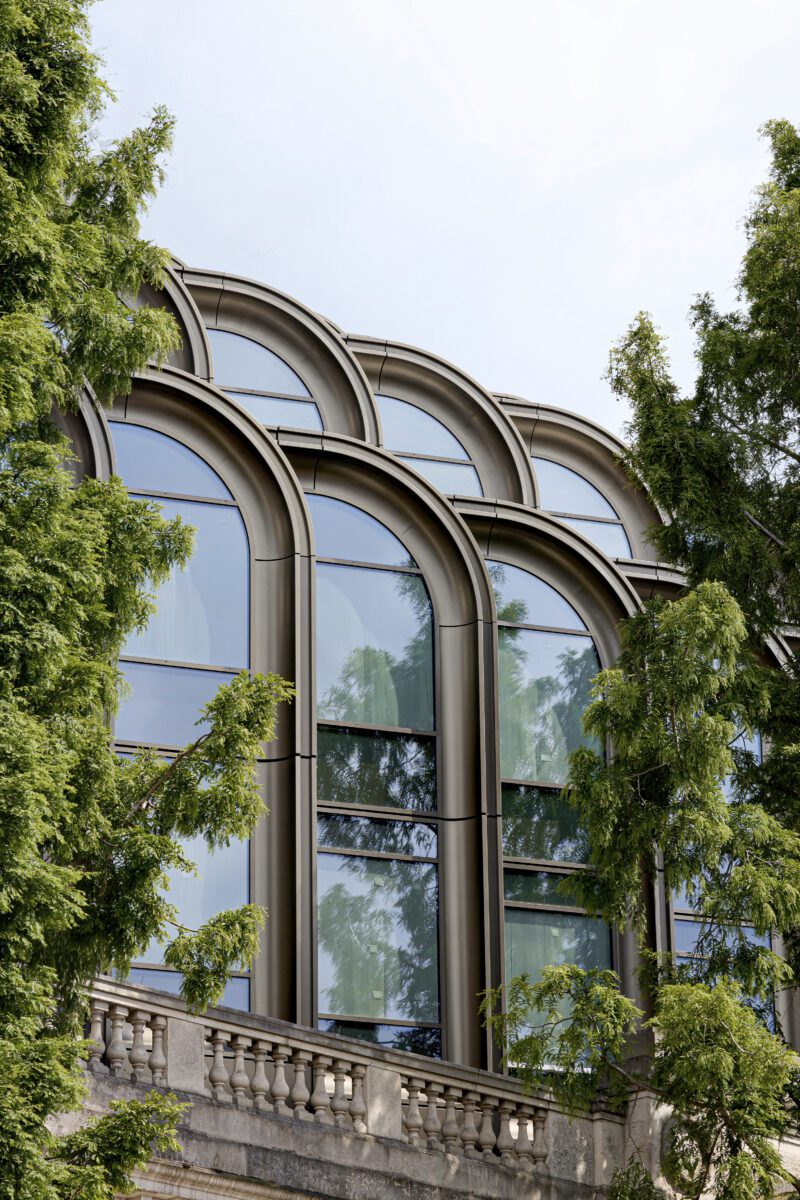
Within this international context, the £1.3bn masterplan for Olympia, co-designed by SPPARC and Heatherwick Studio, proposes a fundamental reconfiguration of the site as a cultural neighbourhood rather than a contained venue. As the press material states, it “reconnects a previously closed 14-acre landmark through new public routes, gardens, cultural venues and year-round hospitality spaces”. This approach involves the removal of long-standing physical and logistical barriers, with servicing relocated underground to free the surface for public life. In doing so, the scheme introduces a network of streets, squares and elevated routes that restore permeability to a site long defined by enclosure. The ambition is not only architectural renewal but the reintegration of Olympia into the everyday fabric of London.
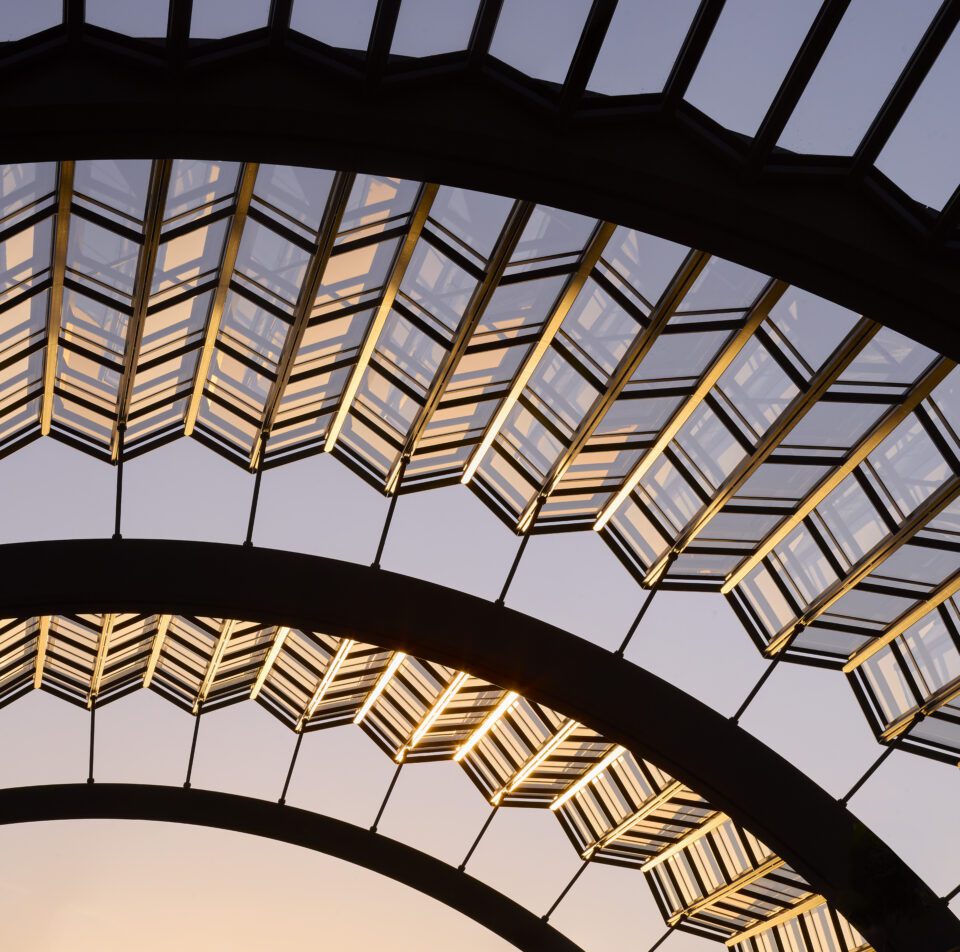
At the centre of this first phase is a new canopy that establishes both a spatial threshold and a symbolic gesture of openness. Described in the press release as “a public gateway above Olympia’s historic rooftops into the heart of the site”, it redefines arrival as an elevated civic experience rather than a simple point of entry. Formed of five curved steel arches and 520 pleated glass panels, the structure sits above the exhibition halls at second-storey level, creating nearly 1,000 square metres of new public space. From this vantage point, visitors gain unprecedented views across the barrel-vaulted iron and glass roofs that have shaped Olympia’s identity for over a century. The canopy therefore operates as both infrastructure and perspective, revealing the historic fabric while actively reshaping how it is encountered.
Thomas Heatherwick describes Olympia as having long “held a strange place in the hearts of Londoners,” a site of major cultural events that nonetheless remained disconnected from everyday civic use. This contradiction between cultural intensity and physical separation lies at the heart of the project’s rationale. The ambition, he explains, has been to “reimagine it as part of London’s everyday life again”, shifting its role from episodic destination to continuous public environment. The intervention positions it as something that can be reactivated through careful adaptation. In this sense, Olympia becomes a test case for how historic infrastructure can be absorbed back into the life of a contemporary metropolis.
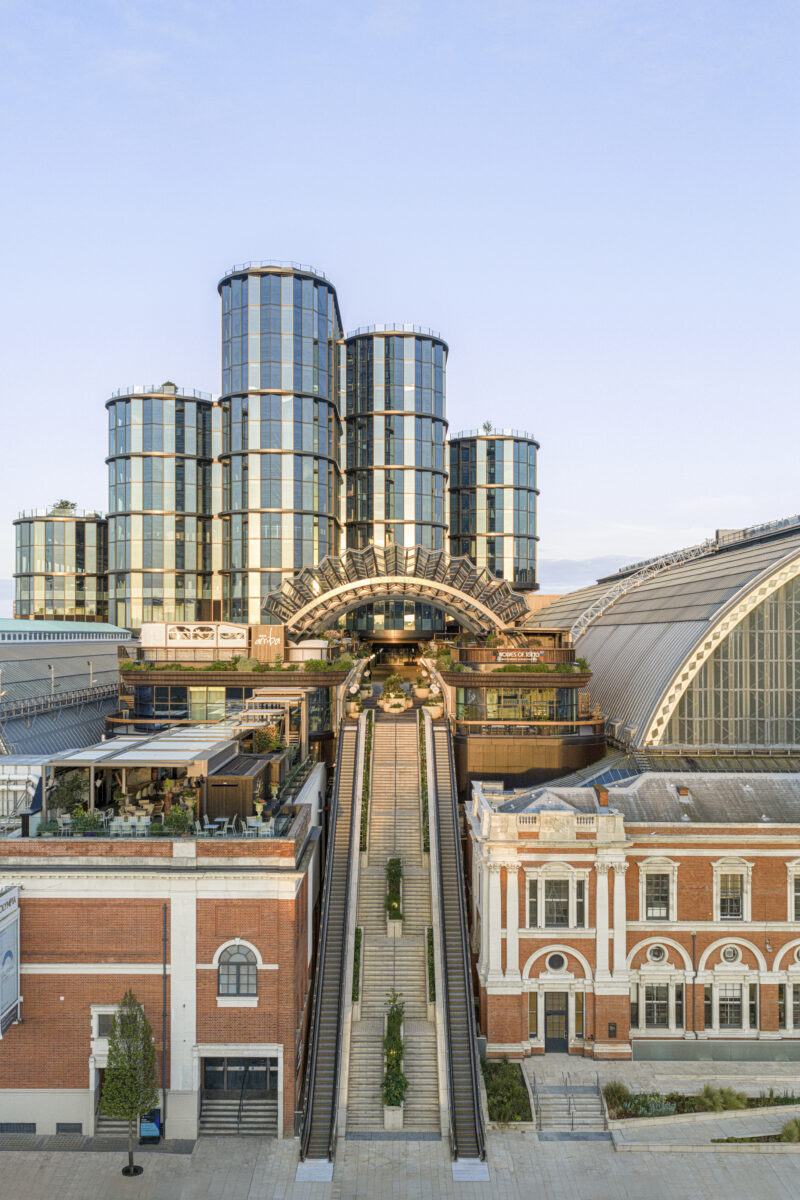
From a design perspective, Eliot Postma of Eliot Postma emphasises a methodology rooted in observation rather than imposition. The project, he notes, works with Olympia’s Victorian logic of rhythm, span and structural generosity rather than overriding it. The challenge lies in introducing new layers of movement and public access without eroding the qualities that give the site its identity. The canopy is conceived as a finely tuned intervention, balancing engineering complexity with spatial clarity and restraint. In doing so, it enables a more fluid relationship between historic fabric and contemporary use.
The transformation of Olympia reflects a wider shift in how cultural and civic spaces are being redefined within cities. Rather than existing as isolated landmarks, such sites are increasingly understood as part of broader ecological systems of movement, access and exchange. The introduction of streets, gardens and elevated routes reframes the site as something continuous with its surroundings rather than separate from them. As Postma suggests, the goal is to create “something much more connected and human”. Olympia thus emerges as a proposition about how cities might better integrate history, culture and urban life.
Find out more about the project: heatherwick.com
Words: Anna Müller
Image Credits:
1. Olympia Canopy, Heatherwick Studio. Olympia London Hufton+Crow.
2. Olympia Office, Heatherwick Studio. Olympia London Hufton+Crow.
3. CitizenM Hotel. Olympia. Heatherwick Studio. Photo: Raquel Diniz.
4. Olympia. Heatherwick Studio. Photo: Raquel Diniz.