“I am an architect that makes art. For an architect, context is everything: I will not act in the world before understanding the world.” These are the words of Alfredo Jaar, an artist considered one of our era’s most culturally, politically and socially committed voices. The Chilean photographer often integrates his images into installation pieces that cover socio-political issues and war, examining the way we engage with and represent humanitarian crises. In 1994, he travelled to Rwanda to witness the genocide firsthand – an experience that radically changed his life and creative practice. The result was a six-year series, titled The Rwanda Project, that laid bare the atrocities that occurred in the country. He has also made numerous public intervention works, like The Skoghall Konsthall one-day paper museum in Sweden, electronic billboard A Logo For America, and The Cloud, a performance project on both sides of the Mexico-USA border.
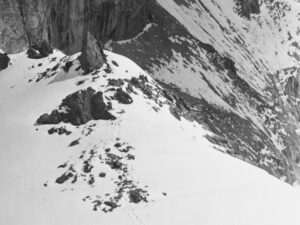
Now, he turns his attention to the work of others artists who focus their lens on social injustice. Inferno & Paradiso, on display at Photo Elysee, is an immersive slide-projection, curated by Jaar. For the show, the renowned artist selected 20 contemporary reportage photographers and asked each of them to choose two images from their archives – the most painful one they had taken and the most hopeful one. In placing the two side-by-side, the exhibition confronts audiences with our own responses to – or lack of response to – modern society’s constant barrage of images depicting human suffering. The show spans shots taken in Argentina, Congo, Gaza, New York, the Philippines and Ukraine. The photographers document many of the crises afflicting our current moment, but they also capture the joy and happiness inherent in the world. It is that dichotomy – a world “caught between heaven and hell” – that underpins this project. Exhibition visitors enter a darkened room where the pieces are projected in 20-minute cycles: all the images relating to heaven are projected simultaneously, and then the works relating to hell are shown.
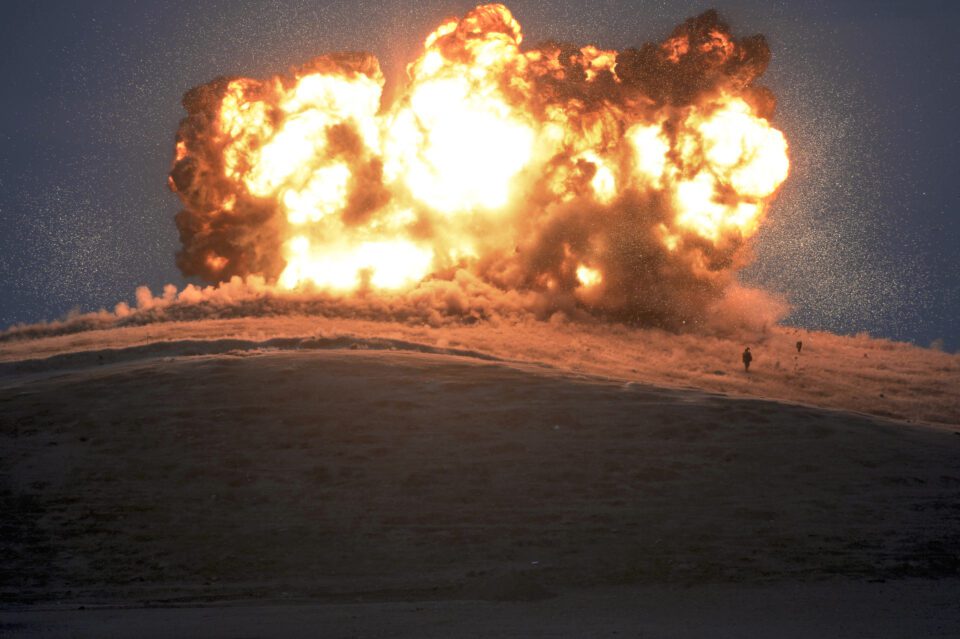
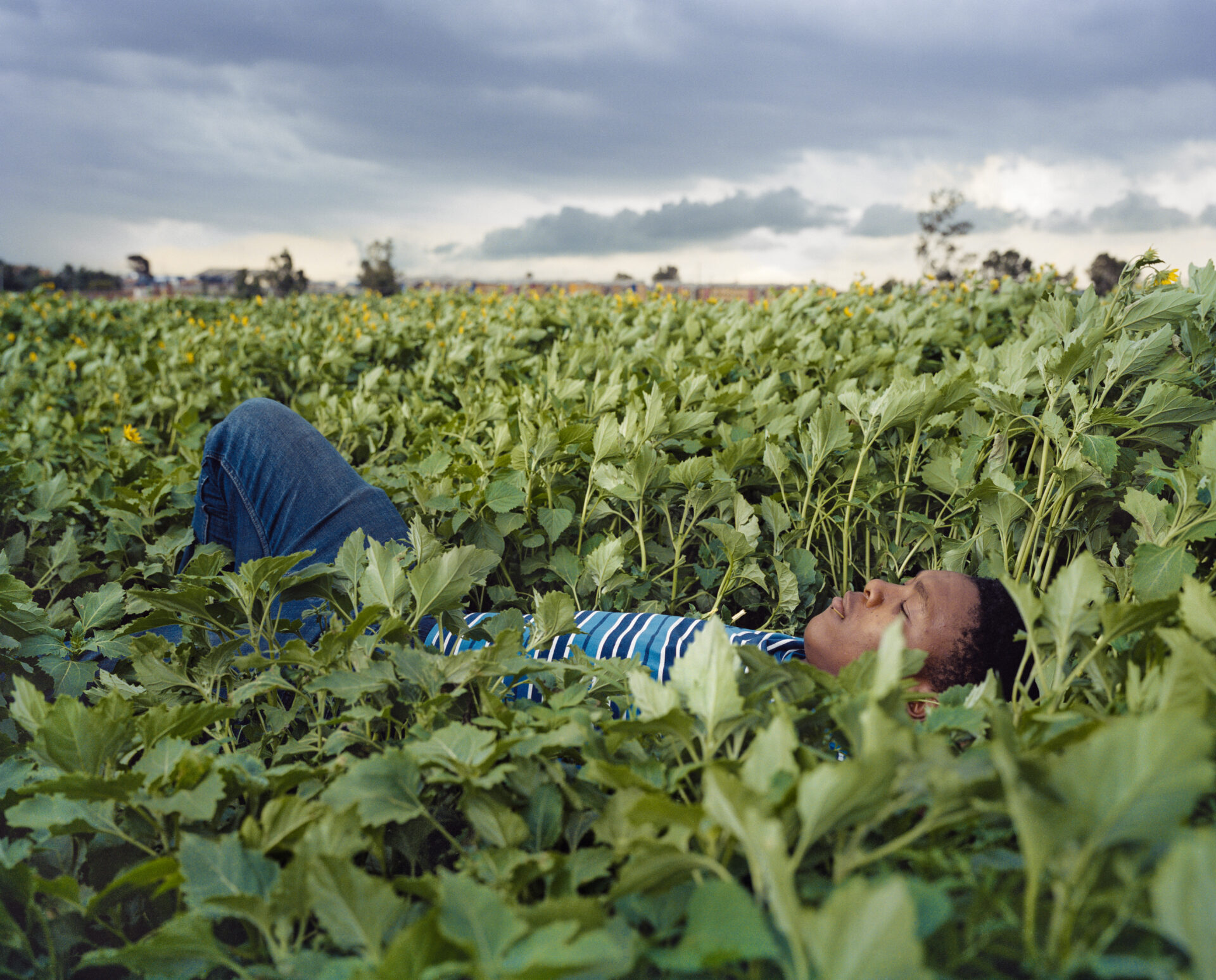
There is so much to take in, in such a compact show. Tragedy is laid bare, with the realities of international conflict coming to the fore. Turkish photographer Bülent Kılıç documents the moment US air forces hit the position of Islamic State (IS) members on the Turkish-Syrian border. He explains: “We positioned ourselves right across from this strategic hill that had been taken, and I remember saying to my cameraman friend, “Just think about what if the coalition air force hit the hill right now.” Yes, a few seconds after I said that, a fighter jet from the American air force hit the very hill.” Meanwhile, Lindokuhle Sobekwa selected an image from his Lockdown series, which documents how his community in Thokoza, South Africa, navigated the effects of the pandemic, an experience vastly exacerbated by inequality. The shot shows a man reclining on a fallen lamppost after a protest over continuous power cuts in Phola Park.
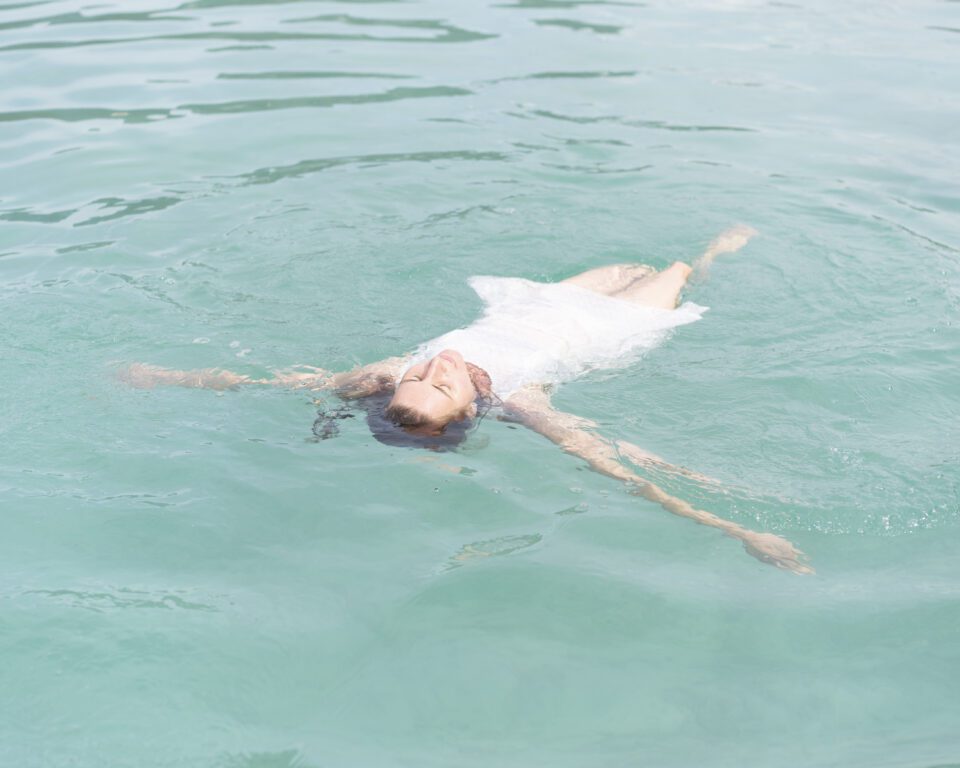
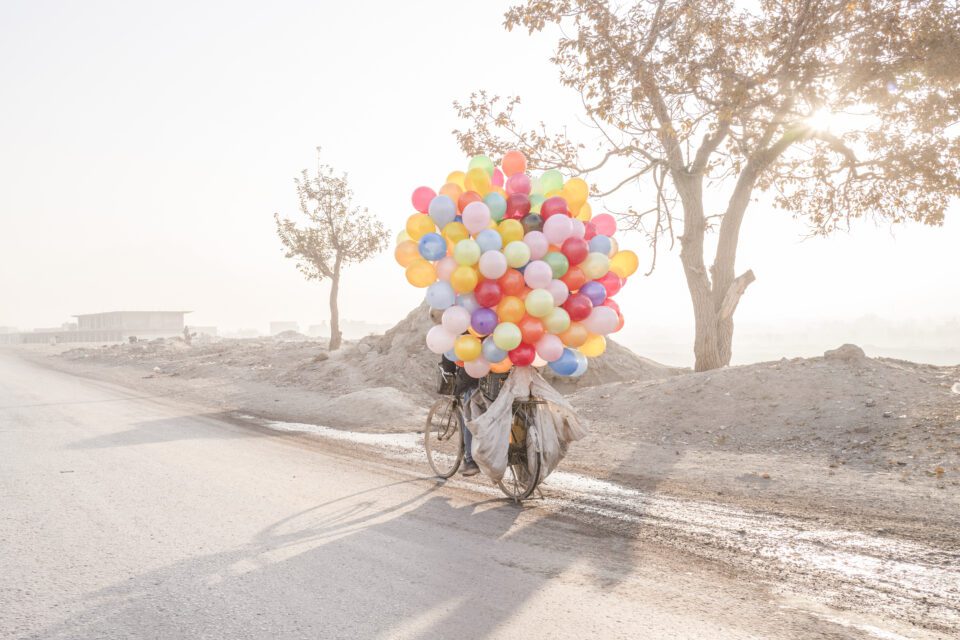
On the flip side, Heaven distils beautiful moments of hope and unity. Johanna-Maria Fritz captures a young woman, floating on her back in crystal blue water. It’s from the series Keep Her Pure, which explores societal perceptions of female sexuality across Afganistan, Albania, Italy, Nepal, Syria and Austria. Veronique de Viguerie’s choice is particularly poignant, as it represents a moment of brief reprieve on an otherwise gruelling photojournalist assignment. It was taken whilst the artist was documenting women’s stories under Taliban rule, and at the time, she was en route to meet with undocumented Afghans who were being sent back across the border from Pakistan. In an interview with the Observer, she explained: “It was very early in the morning and I was in my fixer’s car when I saw this guy with his balloons in the early morning light. The day was gearing up to be a tough one. The Kabul-Jalalabad road is known as one of the most dangerous in the world, rife with traffic accidents. All the other pictures I took that day were a struggle to make, but this was one of those gifts that asks nothing of you.” The image perfectly encapsulates what Jaar is seeking to do with this exhibition: highlight that amongst the pain, there are true glimmers of humanity.
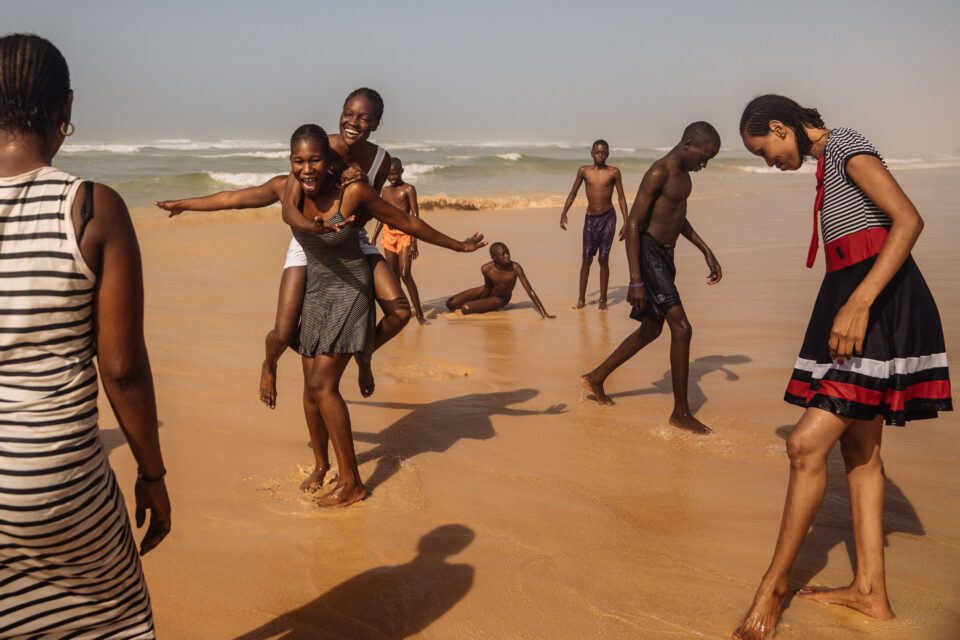
Inferno & Paradiso is an immersive experience that confronts visitors with the emotions elicited by images of joy and pain. It embodies Jaar’s contention that photography has not lost its impact in today’s image-saturated society. The exhibition attests to the breadth of the artist’s creative practice and his penchant for interrogating the power dynamics and social and political schisms brought about by capitalism and globalisation. It delivers an exacting and piercing look at the role of photography and the media in contemporary society – and at the responsibility held by those pulling the levers.
Alfredo Jaar: Inferno & Paradiso is at Photo Elysee, Lausanne from 26 June – 1 November: elysee.ch
Words: Emma Jacob
Image Credits:
1. From the exhibition Inferno & Paradiso © Lindokuhle Sobekwa.
2. From the exhibition Inferno & Paradiso © Véronique De Viguerie.
3. From the exhibition Inferno & Paradiso © Bülent Kılıç.
4. From the exhibition Inferno & Paradiso © Johanna-Maria Fritz.
5. From the exhibition Inferno & Paradiso © Hannah Reyes Morales.