The history of photography has long been shaped by what is seen and, crucially, by what is omitted. New Woman, New Vision. Women Photographers of the Bauhaus enters this contested terrain with force, assembling an expansive body of work that feels at once familiar and newly charged. Bringing together approximately 300 photographs, the exhibition reframes the Bauhaus not as a closed chapter of modernism, but as an evolving site of authorship, experimentation and erasure. It is less a recovery project than a recalibration, asking viewers to look again at images they may think they know. In doing so, it exposes the fragility of the canon itself. What emerges is a complex picture of photographic modernity.
From the outset, the exhibition resists the temptation to present women’s contributions as supplementary. Instead, it positions them as integral to the medium’s development, tracing a lineage that extends back to photography’s earliest decades. Within the Bauhaus, women practitioners adopted the camera with a fluency that mirrored – and often anticipated – the movement’s most recognisable visual strategies. Their works move between portraiture, architecture and abstraction with a restless curiosity, refusing to settle into a single mode. There is a palpable sense of looking anew: staircases tilt into dynamic diagonals, faces are fragmented through mirrors, objects dissolve into studies of light and surface. These are not marginal experiments but central propositions. The exhibition makes that argument with clarity.
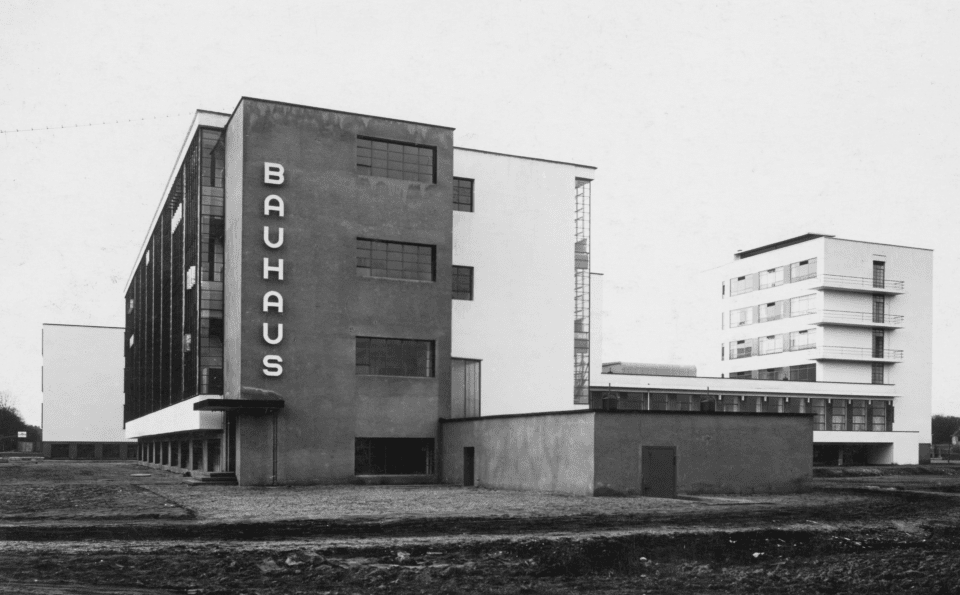
Its scale is instrumental to its impact. Drawing from the Bauhaus-Archiv / Museum für Gestaltung and extending into the legacy of the Institute of Design in Chicago, the presentation unfolds across geographies and generations. This breadth underscores the Bauhaus as a dispersed and adaptive network, shaped by exile, migration and reinvention. The inclusion of works from the so-called New Bauhaus complicates any singular narrative, introducing a transatlantic continuity that feels particularly resonant today. It suggests that modernism was never static, but always in motion – carried by those who were often forced to move. In this context, the exhibition becomes as much about circulation as it is about origin.
Authorship remains one of the exhibition’s most incisive threads. Names such as Lucia Moholy and Florence Henri surface with renewed emphasis, yet the curatorial approach resists creating a new hierarchy in place of an old one. Instead, it draws attention to the uneven distribution of recognition itself. Many of the images on display have long circulated as icons of the Bauhaus, detached from the identities of their makers. Reuniting image and author becomes a quietly radical act. It restores not only credit but context, allowing these works to be read through the conditions of their production. The exhibition does more than expand the canon; it questions how that canon was constructed in the first place.
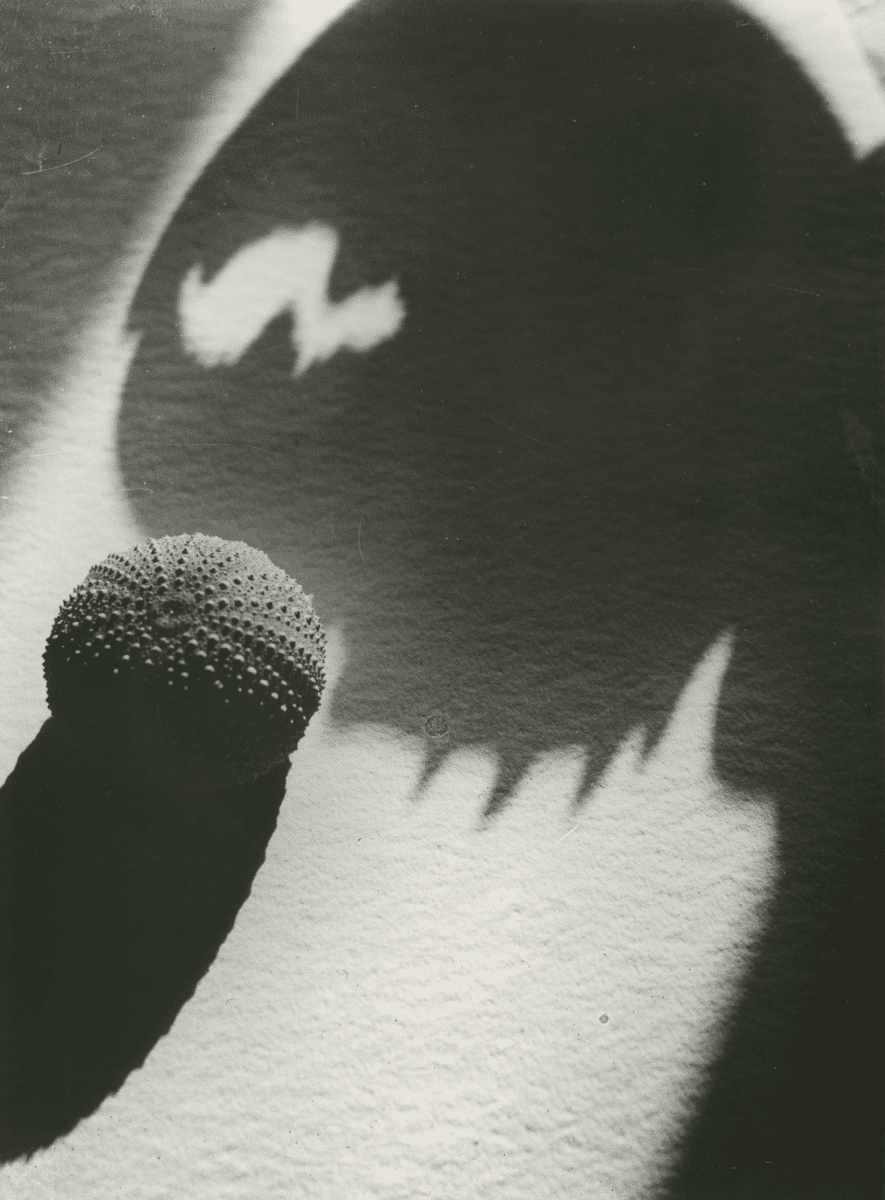
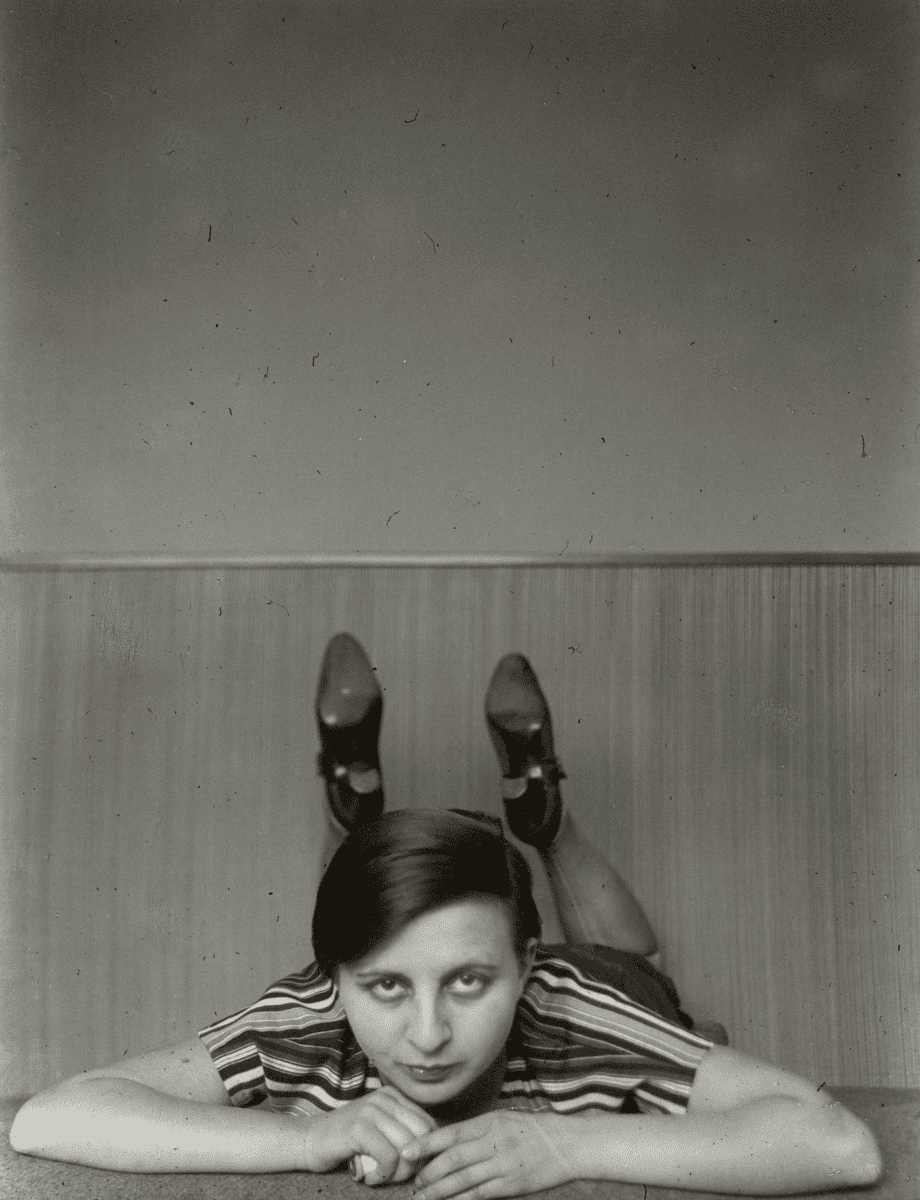
Portraiture, as explored through sections such as “Viewing the Self” and “Woman’s Images,” offers some of the show’s most arresting moments. Here, the figure of the “New Woman” is not simply illustrated but actively negotiated. Women appear self-possessed yet elusive, staged yet searching, their gazes often deflecting or doubling back on the viewer. Mirrors, shadows and oblique angles fracture the stability of identity, suggesting something more fluid and contingent. These images carry a quiet tension, as if testing the limits of how a woman might be seen – and how she might choose to see herself. What results is a portraiture that feels psychologically and formally unresolved in compelling ways.
The pedagogical framework of the Bauhaus, particularly through Walter Peterhans’ teaching, is evident but not prescriptive. Precision, tonal control and compositional rigour underpin many of the works, yet there is a consistent sense of slippage at the edges of these rules. Light is pushed to extremes, textures are heightened to the point of abstraction, and everyday objects are rendered strange. This interplay between discipline and deviation gives the images their vitality. It suggests a learning environment that, while structured, allowed for moments of disruption. The photographers absorb the language they are taught, only to bend it. In those deviations, something distinctly their own begins to emerge.
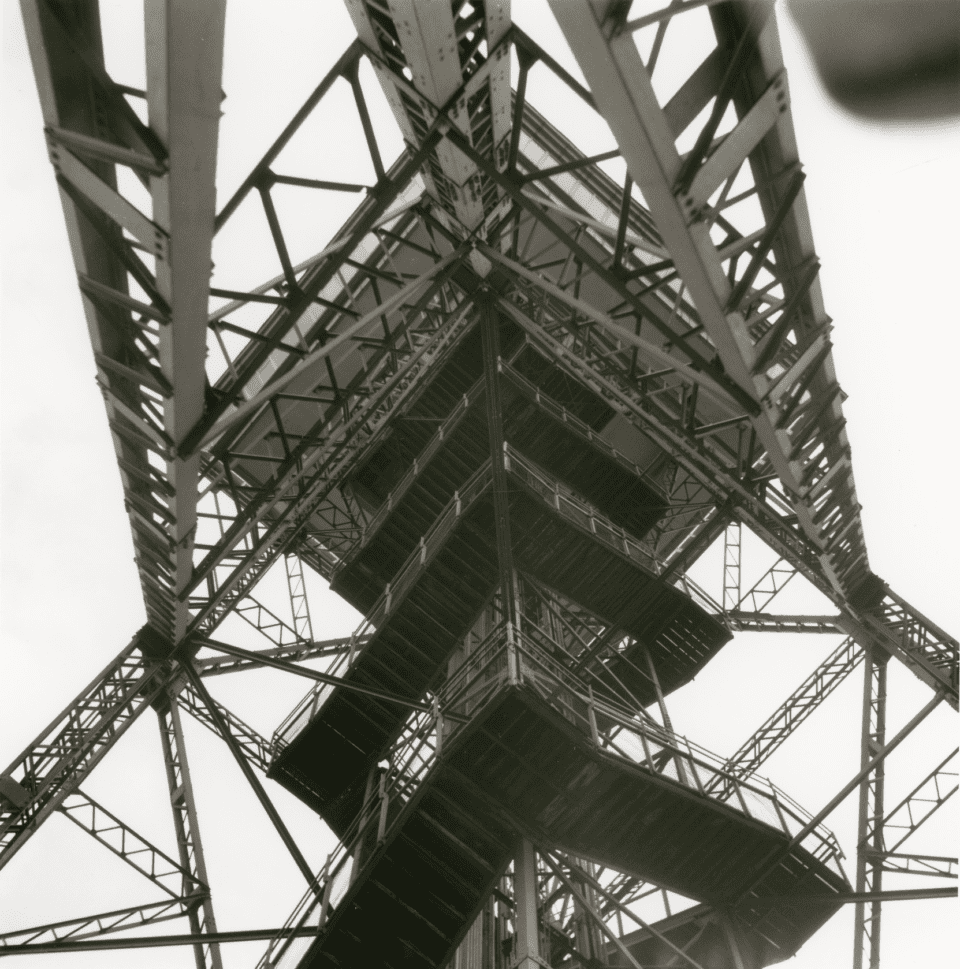
Nowhere is this more apparent than in the exhibition’s focus on experimental practices. Photograms and collages puncture the expectation of photographic realism, foregrounding process over representation. Objects leave ghostly impressions on light-sensitive paper; fragments are spliced into new, disorienting configurations. These works feel tactile, almost volatile, as if the image is still in the process of becoming. They align the photographers with the broader avant-garde, yet their presence here recalibrates that history. The exhibition makes clear that innovation was not the preserve of a select few.
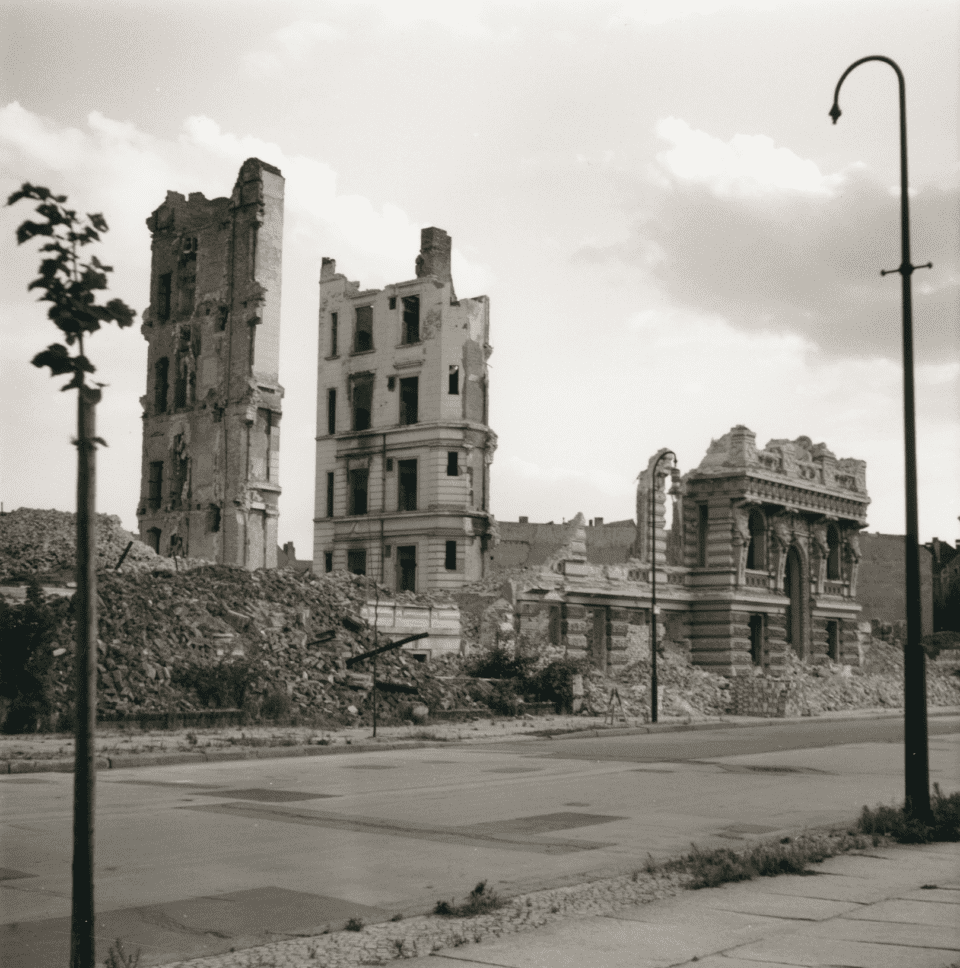
The socio-political dimensions of the work emerge with particular force in the documentary sections. Scenes of urban life, labour and displacement are captured with a directness that resists spectacle. There is an attentiveness to the ordinary that feels deliberate, even ethical. At the same time, the shadow of political upheaval is never far from view. Several of the photographers experienced exile, and their images carry the weight of that dislocation. They document not only external realities but shifting conditions of belonging. Photography here becomes a form of witness, holding onto what is at risk of being lost.
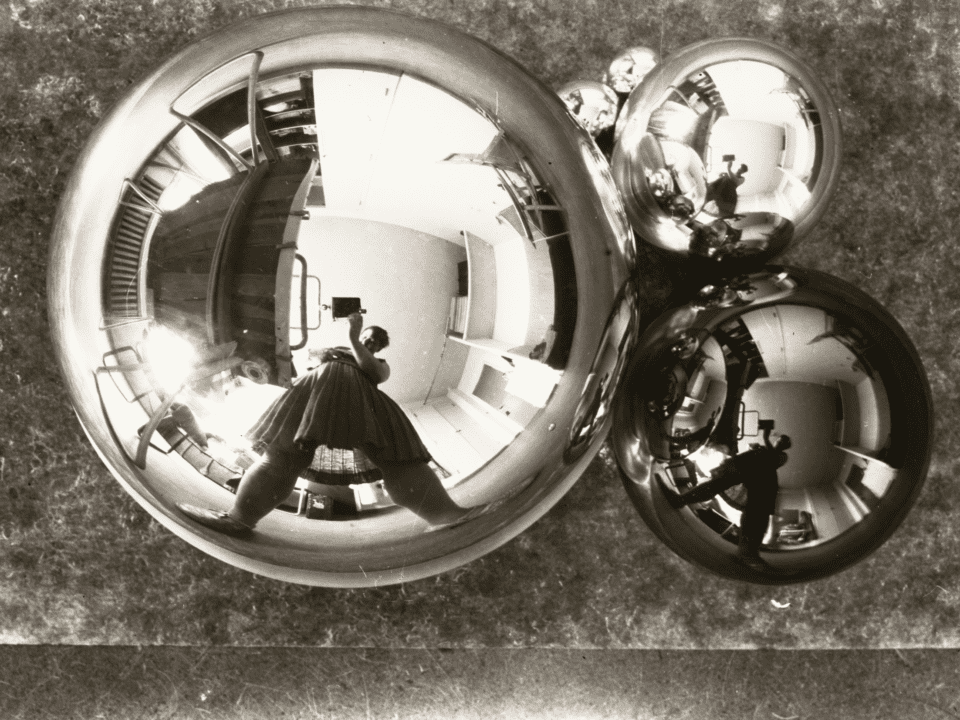
Architectural photography, too, is reimagined through a distinctly exploratory lens. Buildings are no longer static subjects but dynamic structures, fractured through sharp angles and unexpected framings. Staircases spiral into abstraction, façades dissolve into grids of light and shadow. These images echo the Bauhaus commitment to form and function, yet they also unsettle it. There is a sense that architecture is being tested, pulled apart and reassembled through the act of looking. The photographers assert their presence not by documenting space, but by reshaping it visually.
The inclusion of contemporary artists Kalinka Gieseler, Caroline Kynast and Sinta Werner extends the exhibition’s temporal frame, introducing a dialogue that is neither nostalgic nor deferential. Their works engage with the Bauhaus legacy through strategies of repetition, distortion and spatial intervention. Surfaces fold, perspectives collapse, and architectural forms are reconfigured into something more ambiguous. Rather than echoing the past, these artists probe its unresolved questions. What does it mean to inherit a visual language shaped by both innovation and exclusion? Their responses are measured but incisive. They ensure that the exhibition remains anchored in the present.
Running throughout is a careful consideration of gender – not as a fixed category, but as a shifting condition shaped by historical context. The exhibition avoids presenting “women photographers” as a unified group, instead allowing for divergence and contradiction. What connects these practitioners is not a singular aesthetic, but a shared navigation of structural limitations. Their strategies differ, as do their outcomes. This refusal to homogenise is one of the exhibition’s strengths. It opens space for a more nuanced reading of how gender operates within artistic production.
The question of whether such exhibitions risk reinforcing the very distinctions they seek to dismantle lingers in the background. Here, it is addressed not through resolution but through necessity. Visibility remains uneven; recognition is still partial. In this context, the exhibition reads less as a categorisation than as a corrective gesture. It does not isolate these artists but repositions them within a broader field. The aim is not to create a separate narrative, but to integrate what has been overlooked.
New Woman, New Vision achieves something more than a historical survey. It sharpens our understanding of the Bauhaus by revealing the complexity that has always existed within it. The exhibition moves with a measured confidence, balancing depth with clarity, and critique with attentiveness. It invites viewers to reconsider not only what they are seeing, but how they have been taught to see it. In an art world still grappling with questions of equity and representation, its intervention feels both precise and necessary. What lingers is not just the images themselves, but the shift in perspective they demand.
New Woman, New Vision. The Female Bauhaus-Photographers is at Museum für Fotografie, Berlin until 4 October: smb.museum
Words: Anna Müller
Image Credits:
1&4. Elsa Thiemann, Funkturm, Berlin, 1930er-Jahre, Bauhaus-Archiv Berlin © Margot Schmidt.
2. Lucia Moholy, Bauhaus-Gebäude Dessau (1925-1926) von Walter Gropius, 1927, Bauhaus-Archiv Berlin © VG Bild-Kunst, Bonn 2026.
3. Lotte Collein, Seeigel und Schatten einer Krebsschere, 1928, Bauhaus-Archiv Berlin © Ursula Kirsten-Collein.
5. Marianne Brandt, Selbstporträt mit Kamera im Atelier in der Kugel gespiegelt, Bauhaus Dessau, um 1928 – 1929, Bauhaus-Archiv Berlin © VG Bild-Kunst, Bonn 2026.
6. Elsa Thiemann, Berlin, Ruinen, um 1945, Bauhaus-Archiv Berlin © Margot Schmidt.
7. Gertrud Arndt, Selbstporträt im Atelier, Bauhaus Dessau, 1926, Bauhaus-Archiv Berlin © VG Bild-Kunst, Bonn 2026.