Joy Like Time brings together Marina Abramović, Gillian Wearing and Kalliopi Lemos in a shared investigation into how meaning is shaped through duration, repetition and lived encounter. Set within the Sainsbury Centre’s season What is the Meaning of Life?, the exhibition resists any singular answer, instead proposing that significance is something continuously made rather than discovered once. Across performance, photography, and installation, time is treated not as backdrop but as material – something elastic, embodied and inseparable from attention itself. The works suggest that every moment contains the instant of making, the act of viewing, and the cultural residue that accumulates in between. What emerges is a slow choreography of looking, where meaning is generated through return, slowness and persistence. In this framing, joy is not immediate gratification but something closer to sustained awareness over time.
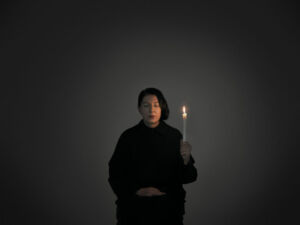
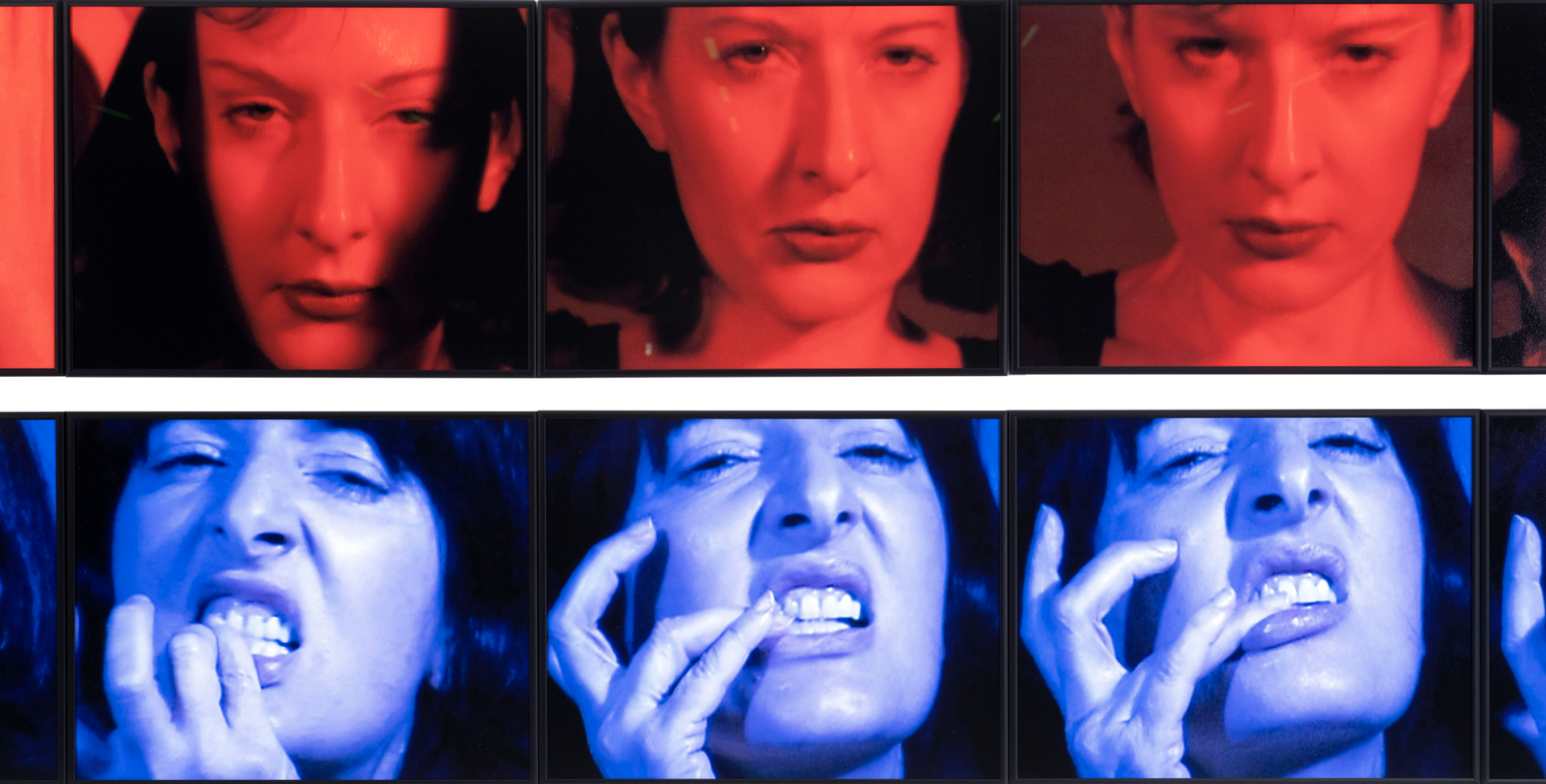
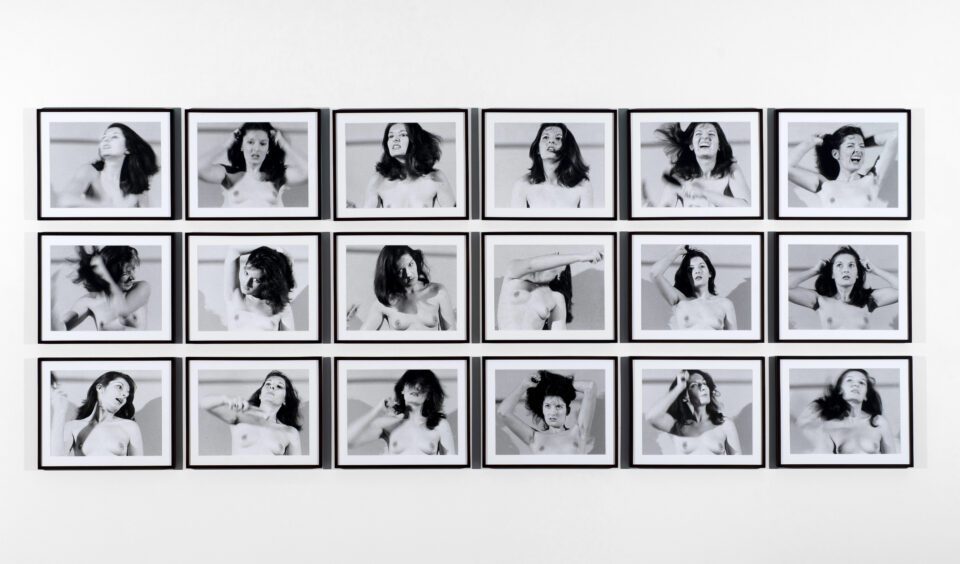
Across a career defined by endurance and confrontation, one practice in the exhibition pushes the body to its limits in order to reveal time as pressure, resistance and psychological charge. Repetition becomes both method and ordeal, particularly in early works such as Art Must Be Beautiful, Artist Must Be Beautiful (1975), where physical action is used to interrogate cultural constructions of femininity, beauty, and artistic labour. The body is never passive here – it operates as a site of testing, registering duration through strain and repetition. Later works drawn from Blue Period and Red Period (1998–2025) fragment performance into still images, shifting intensity into suspended moments that demand slow looking. Presented as part of Video Portrait Gallery (1975–2002), these images compress time into isolated frames, where silence and aftermath coexist. As Abramović states, “Every human being has to discover their own meaning of life.”
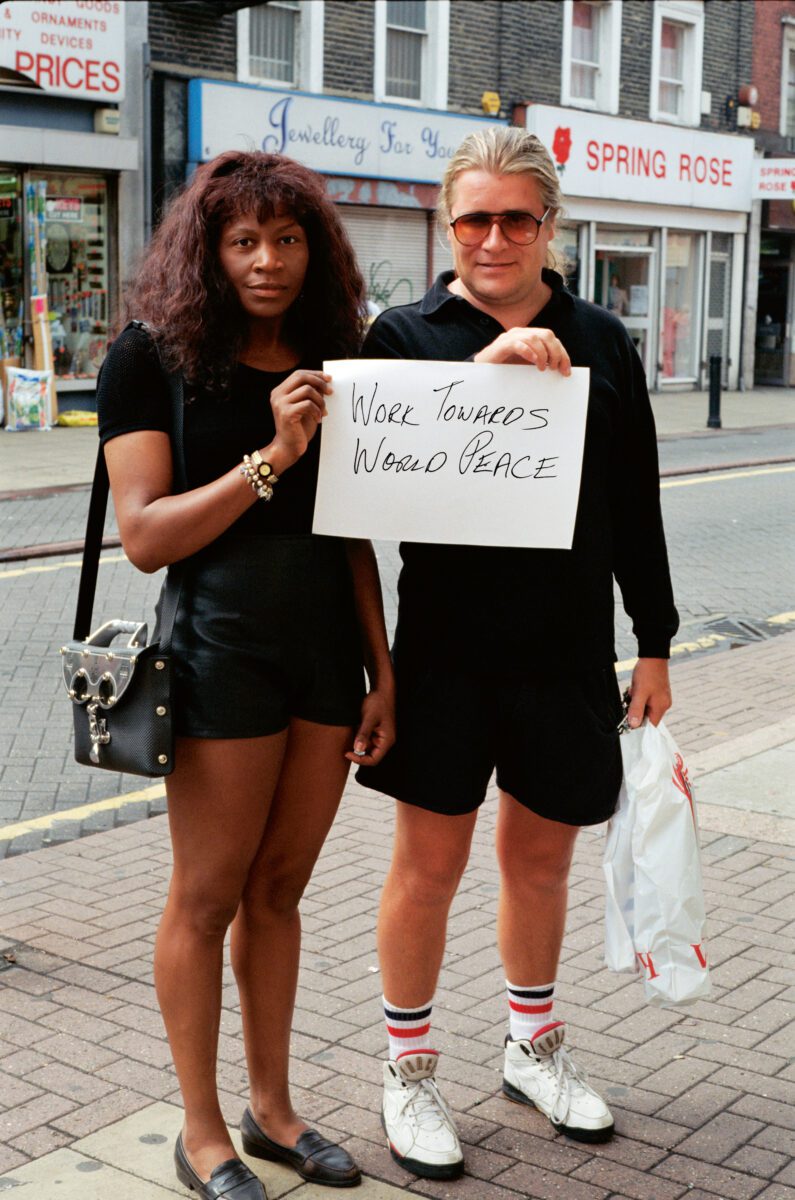
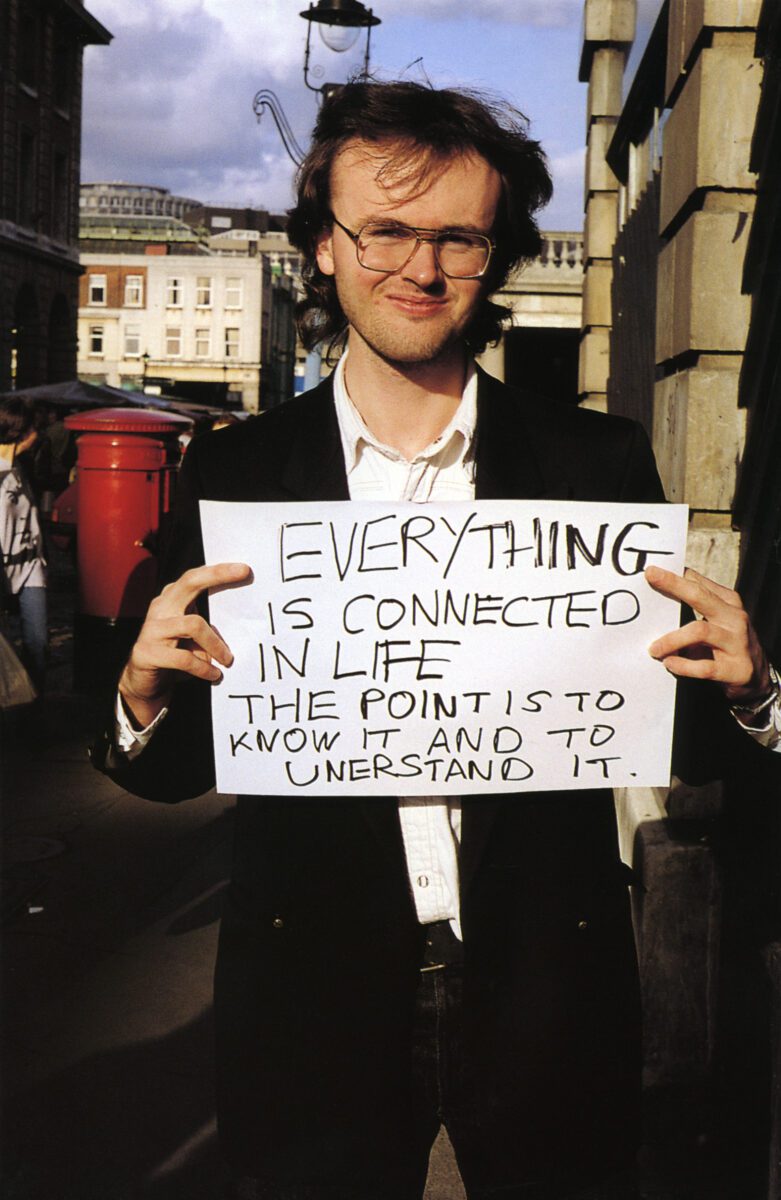
A different register of time emerges through photographic encounter and the staging of language in public space. Here, strangers become co-authors of meaning, their handwritten statements disrupting the neutrality of the image. In Signs that say what you want them to say and not Signs that say what someone else wants you to say (1992–1993), portraiture becomes an exchange rather than a capture, where identity is temporarily held in language. Meaning arises in the tension between visibility and disclosure, as private thought is made public without resolution. The work resists closure, instead holding contradiction and ambiguity as its central condition. Wearing reflects, “What makes life meaningful apart from connection to other people, is the mystery of it all, and the fact that I want to keep navigating the unknowingness of life with curiosity and creativity.” Her practice frames uncertainty not as absence, but as a generative structure through which time accumulates in shifting layers of self-understanding.
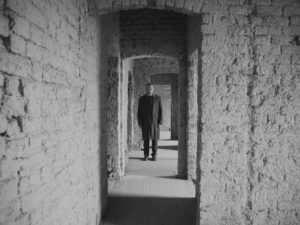
Elsewhere, material and ritual converge in works that treat objects as carriers of transformation rather than static form. Textile, gesture, and installation operate as a shared language of passage, shaped by migration, spirituality and cyclical time. In Ritual Garments (2020–2022), clothing becomes a vessel for inscription and memory, each surface marked by traces of prayer and cultural inheritance. Installed alongside Something is Brewing in the Pond (2023), the works extend into environments where movement and reflection circulate rather than resolve. Time is experienced as looped and recursive, where beginnings and endings are no longer distinct. Lemos writes, “Life is a passage / we enter it translucent / we exit it multi coloured / giving and receiving / getting enriched / our purpose to become / and honour its beauty.” Across this practice, transformation is continuous, unfolding through repetition and return.
The curatorial framing develops this proposition, suggesting that art can alter how time is experienced and understood. Within Joy Like Time, repetition becomes structural rather than decorative, shaping how each work is encountered and revisited across space. The exhibition does not present time as linear progression but as something layered, where different moments remain active within the same frame. Viewing becomes an extended act of attention, in which meaning is formed through duration rather than instant recognition. This is reinforced through the spatial rhythm of the hang, which moves between intensity and stillness, image and environment. The result is less a sequence of works than a field of temporal experience.
Across the show, curatorial statements and artist reflections reinforce a shared emphasis on meaning as process rather than outcome. As curator John Kenneth Paranada notes, “Joy Like Time is a meditation on how we turn seconds into meaning.” The exhibition is positioned against conditions of acceleration, where attention is fragmented and compressed. Here, repetition offers a counter-tempo, allowing meaning to accrue through sustained engagement rather than speed. Director Jago Cooper extends this idea, suggesting that artworks function as “time portals” through which different modes of living can be experienced simultaneously. In this framing, art does not explain time but reorganises its perception.
Joy Like Time resists resolution, instead constructing a space in which meaning remains open, revisable and continuously made. Abramović’s endurance, Wearing’s linguistic encounters, and Lemos’s ritual forms converge around a shared insistence that time is not passive but actively shaped through attention. What binds these practices is not thematic similarity but a commitment to duration as experience – to the idea that looking itself is a temporal act. Meaning emerges not as endpoint but as accumulation, formed through repetition, return and sustained engagement with what persists.
Joy Like Time is at Sainsbury Centre, Norwich from 20 June – 15 November: sainsburycentre.ac.uk
Words: Simon Cartwright
Image Credits:
1. Marina Abramović, Red Period/Blue Period, single channel video, 1998-2025. © Marina Abramović. Courtesy of the Marina Abramović Archives.
2. Gillian Wearing, Signs that say what you want them to say and not Signs that say what someone else wants you to say. Sign reads ‘WORK TOWARDS WORLD PEACE’, 1992–3, c-type print on aluminium. © © Gillian Wearing, courtesy Maureen Paley, London.
3. Marina Abramović, Art Must Be Beautiful, Artist Must Be Beautiful, one hour performance, Charlottenburg Art Festival, Copenhagen, Denmark, 1975. © Marina Abramović. Courtesy of the Marina Abramović Archives.
4. Gillian Wearing, Signs that say what you want them to say and not Signs that say what someone else wants you to say. Sign reads ‘EVERYTHING IS CONNECTED IN LIFETHE POINT IS TO KNOW IT AND TOUNDERSTAND IT.’, 1992-1993, c-type print on aluminium. © Gillian Wearing, courtesy Maureen Paley, London.