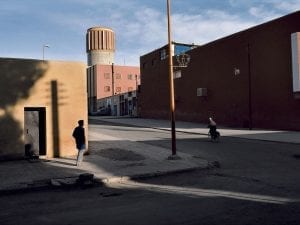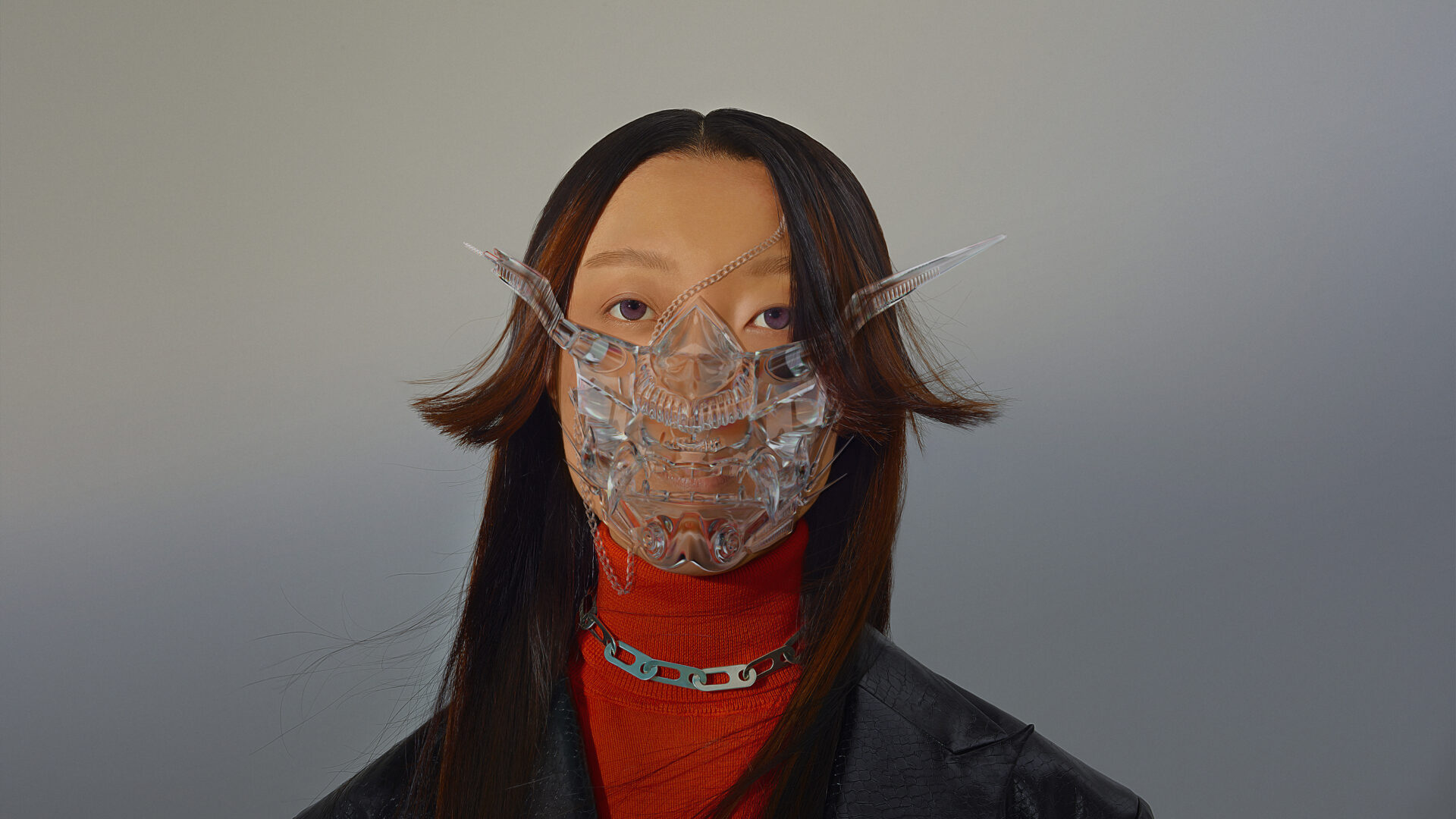
Memory, language and inheritance fracture and converge in Of Walking on Fire. That which cannot be said is the exhibition’s most resonant force. Absence is not positioned as lack, but as an active, shaping presence – one that structures how histories are carried, distorted and reimagined. The project turns on a central question: what is communicated – and what is withheld – across generations. Here, memory is neither stable nor complete, but porous, prone to erosion and reinvention. The work emerges as a survey of the fragility of how stories are communicated – or withheld – across generations. This foregrounds silence as both rupture and residue. In this terrain, images operate as gestures toward what exceeds language.
At the centre of this enquiry is Nhu Xuan Hua, whose practice navigates the unstable terrain between personal history and collective memory. Born in Paris to Vietnamese parents who fled the aftermath of war, Hua grew up at a remove from her cultural inheritance, shaped by distance, displacement and partial knowledge. Her questions about the past were often met with deflection – “Why are you asking? The past belongs to the past” – a refrain that signals both protection and erasure. This sense of dislocation was intensified by the absence of a shared language within the home. Her father, who is oral-deaf, communicates through spoken Vietnamese and a self-taught form of French Sign Language, creating a layered but fractured communicative space. Rather than constructing fixed narratives, Hua works through intuition, allowing images to remain open, unstable and in flux.
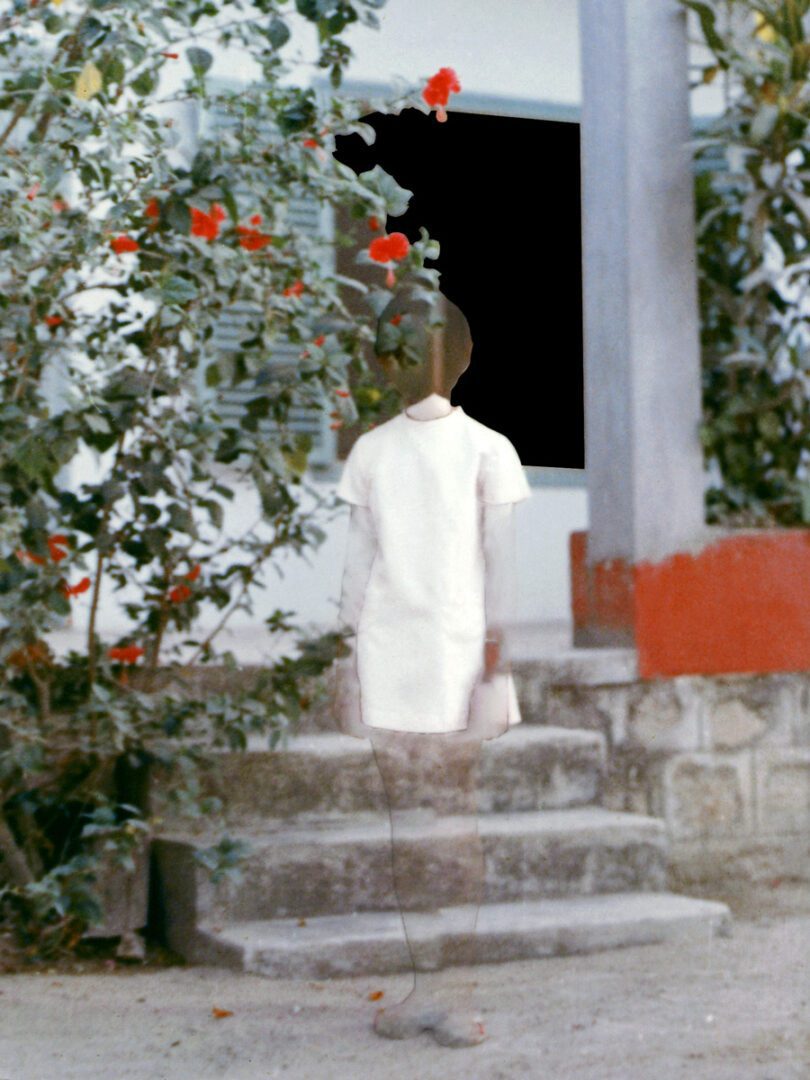
Hosted by Autograph, the exhibition unfolds across two galleries, each tracing different registers of absence and continuity. Gallery 1 centres on the consequences of silence, anchored by Tropism: Consequences of a Displaced Memory. Drawing on family photographs from Belgium and France, Hua reworks archival images through digital manipulation, softening their contours until figures begin to dissolve into one another. Recognition becomes uncertain – bodies blur, faces slip, and the boundaries between collapse. These works articulate how proximity can coexist with distance, how intimacy can be marked by what remains unspoken. Installed alongside ornamental arrangements that echo Vietnamese temple aesthetics, the works occupy a space between domestic familiarity and symbolic reconstruction.
Autograph’s wider programme provides a critical framework for this approach, consistently foregrounding artists who interrogate archives and reframe inherited histories. Within this context, Hua’s work extends beyond the photographic image into a spatial, atmospheric experience. Painted shadows trace the architecture of absent interiors, evoking the quiet persistence of domestic memory. In Let the Horses Ride, inverted images recall photographic negatives, disrupting visual orientation and destabilising perception. Scenes that might suggest closeness instead feel estranged, their emotional register unsettled by subtle distortions. This strategy reinforces the idea that memory is not a fixed record but a site of tension – shaped as much by imagination as by recall. Across the gallery, looking becomes an active process, requiring viewers to navigate uncertainty rather than resolve it.
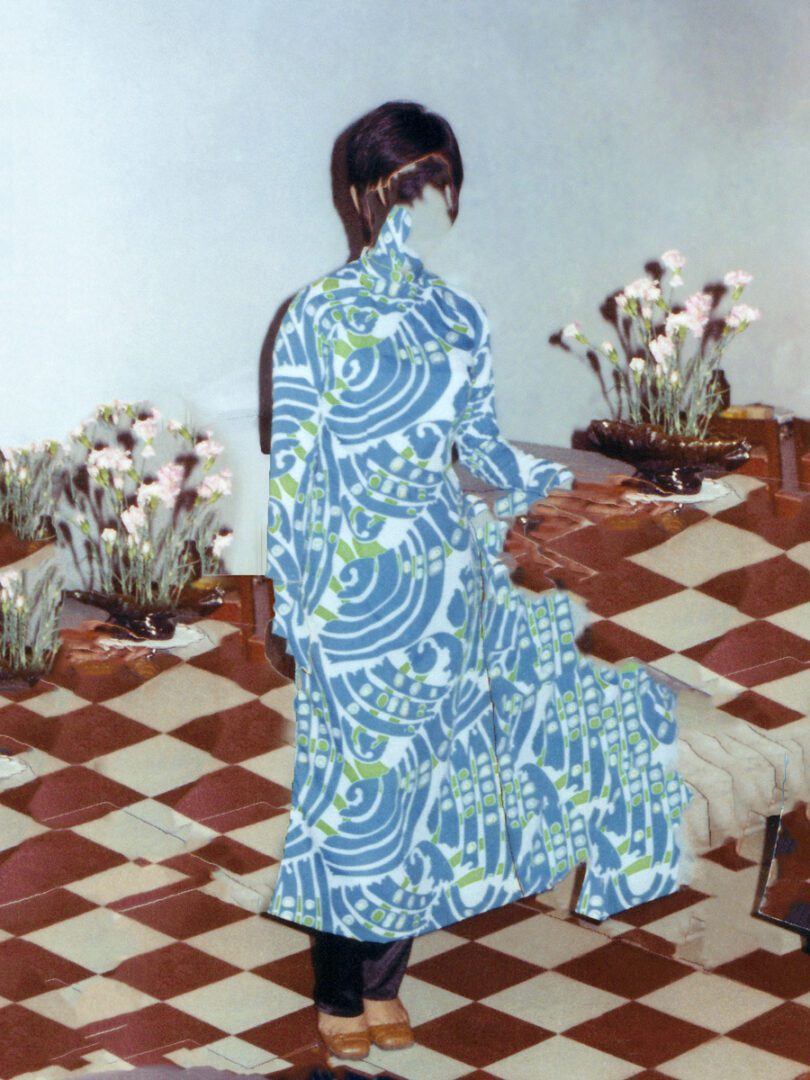
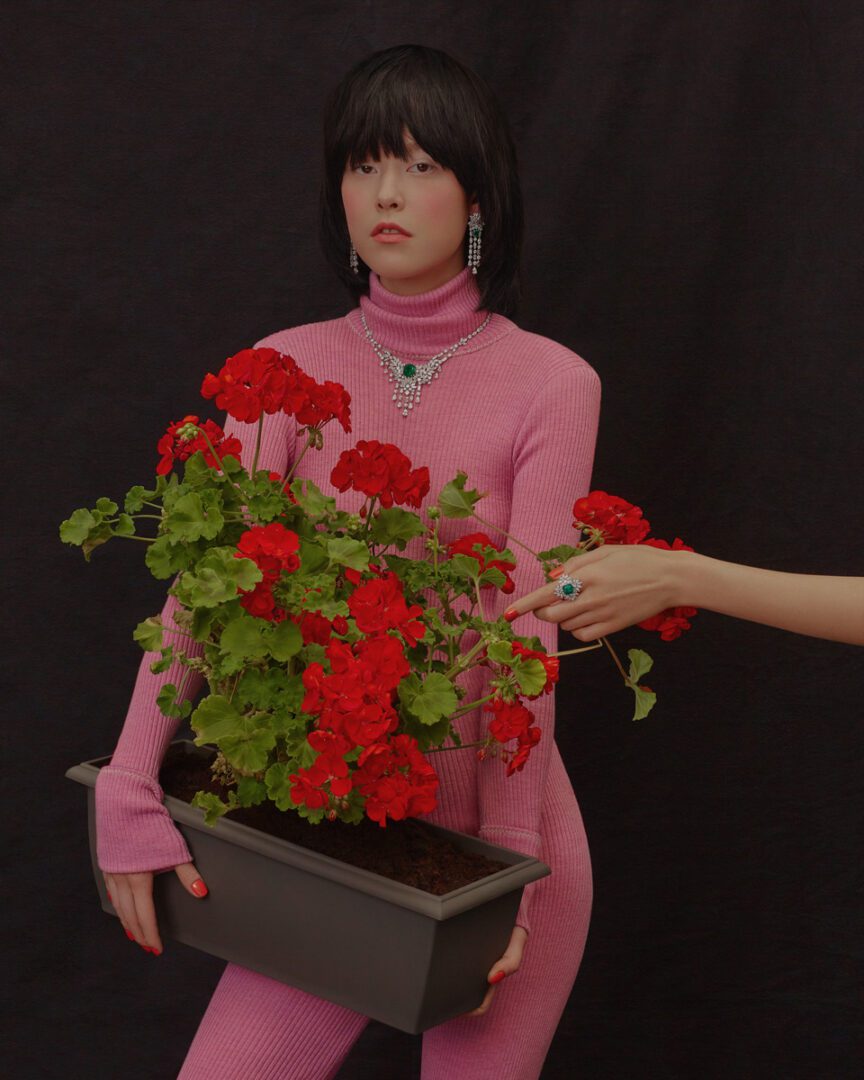
Hua’s background in fashion photography remains visible in her sensitivity to composition, texture and staging, yet her practice has shifted decisively toward introspection and material experimentation. The aesthetic precision associated with fashion is repurposed here as a tool for emotional and conceptual enquiry. Archival images are not preserved but transformed, their authority as documents deliberately unsettled. As Hua reflects: “In recreating scenes from everyday life, drawn from my scattered memories, it is as if events are replayed to reinvent the narrative and the story.” This act of reinvention does not attempt to recover a singular truth but acknowledges the multiplicity of lived experience. It is driven, she notes, by “the immense desire to restore the sacred to the most ordinary things.” In this way, the work elevates the everyday, locating meaning within gestures, fragments and fleeting moments.
This approach resonates with a wider movement in contemporary art that seeks to destabilise the authority of the archive and reframe memory as something fluid, constructed and often unresolved. Dinh Q. Lê, for instance, reconfigures photographic histories through intricate weaving techniques, physically interlacing images from war, media and personal archives to expose how collective memory is layered and mediated. His practice parallels Hua’s in its insistence that images are not neutral records but sites of negotiation, where histories are continually reassembled. Similarly, Zineb Sedira interrogates intergenerational memory through film and installation, often foregrounding the gaps and mistranslations that occur between languages, cultures and lived experience. Her work, like Hua’s, situates silence not simply as absence but as a charged space where meaning is deferred or displaced. Thao Nguyen Phan extends this conversation through a more lyrical, speculative approach, drawing on myth, folklore and fragmented historical narratives to construct dreamlike reflections on identity and nationhood.
What binds these practices is a shared refusal of linear storytelling and a turn toward fragmentation as both method and subject. Across this field, artists are less concerned with reconstructing a coherent past than with exposing its fractures – the points where memory falters, overlaps or contradicts itself. This marks a broader shift within contemporary art, where the archive is no longer treated as stable or authoritative, but as something inherently unstable, shaped by omission, translation and power. Hua’s work enters this discourse with acuity, foregrounding the intimate scale of familial silence as a microcosm of these larger dynamics. Her images do not attempt to resolve the gaps in her history, but instead give form to their persistence, allowing ambiguity to remain visible. In doing so, she contributes a distinct visual language to this evolving conversation – one that is attuned to the quiet, often imperceptible ways in which diasporic memory is carried, fractured and reimagined across generations.
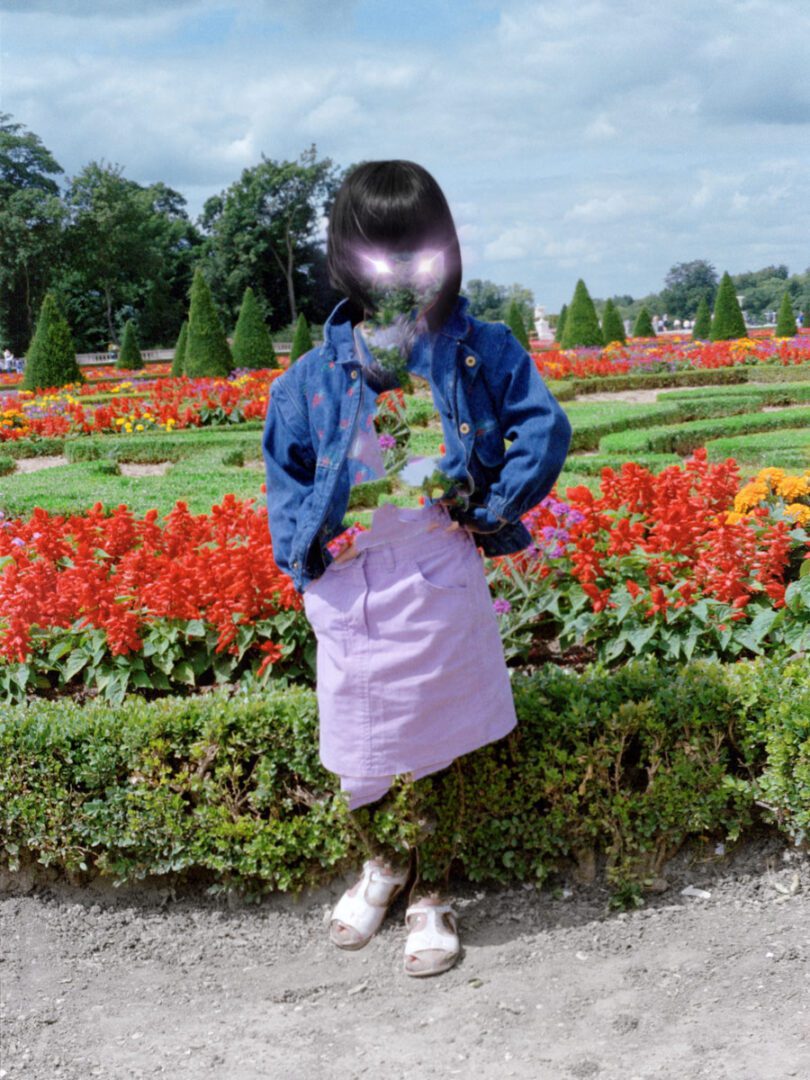
In Gallery 2, the presentation shifts toward a more generative register, exploring how what has been withheld might be reconfigured and carried forward. A new body of work traces a lineage of maternal figures, drawing on the Vietnamese spiritual tradition of Đạo Mẫu. This framework introduces a symbolic vocabulary through which inheritance can be reconsidered, emphasising resilience and continuity. At the centre, Little Super in Versailles – Archive from the year ’88 presents a young girl as both witness and bearer of memory. She becomes a figure through which familial rituals persist, embodying “the endurance required to sustain connection across generations.” Here, the feminine emerges as a restorative force, suggesting alternative modes of transmission beyond language. What was once held in silence begins to gather form.
Of Walking on Fire returns to its central concerns, holding open the tension between absence and presence, silence and expression. It suggests that what is withheld does not disappear but continues to shape the contours of identity in subtle, enduring ways. Hua resists closure, allowing ambiguity to remain an active condition of the work. In doing so, she reframes silence not as void but as structure – something that obscures, protects and transforms. The exhibition invites a slower, more attentive mode of looking, attuned to what lingers at the edges of visibility. Within this space, memory is not recovered but continually remade. What materialises is a quiet, resonant meditation on the fragile processes through which stories are carried – and the forms they take when words fall away.
Nhu Xuan Hua: Of Walking on Fire is at Autograph, London until 19 September: autograph.org.uk
Words: Simon Cartwright
Image Credits:
1. Nhu Xuan Hua, The one who couldn’t talk, 2021. Courtesy of the artist and Anne-Laure Buffard, France. © Nhu Xuan Hua.
2. Nhu Xuan Hua, Little Super in Versailles – Archive from the year ’88, 2026. Commissioned by Autograph, London. © Nhu Xuan Hua.
3. Nhu Xuan Hua, Untitled – Archive from the year ’71, 2017-2022. Courtesy of the artist and Anne-Laure Buffard, France. © Nhu Xuan Hua.
4. Nhu Xuan Hua, Ses geraniums, les siens, 2017. Courtesy of the artist and Anne-Laure Buffard, France. © Nhu Xuan Hua.
5. Nhu Xuan Hua, The White dress, The Roses and the Black Window – Archive from the year ’72, 2017-2022. Courtesy of the artist and Anne-Laure Buffard, France. © Nhu Xuan Hua.